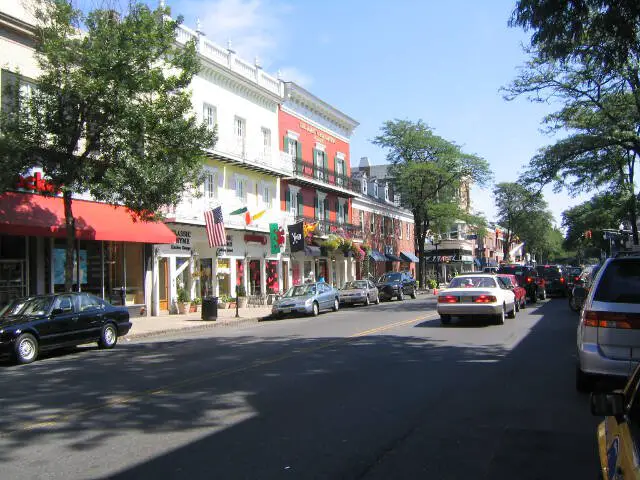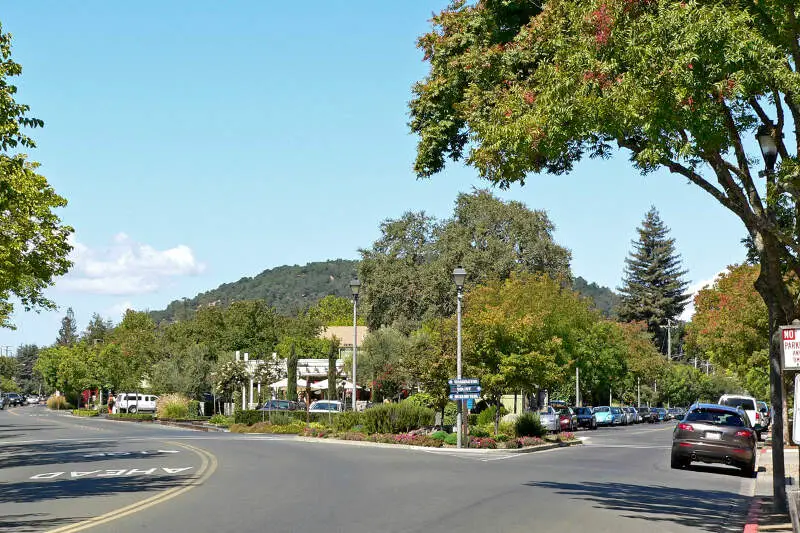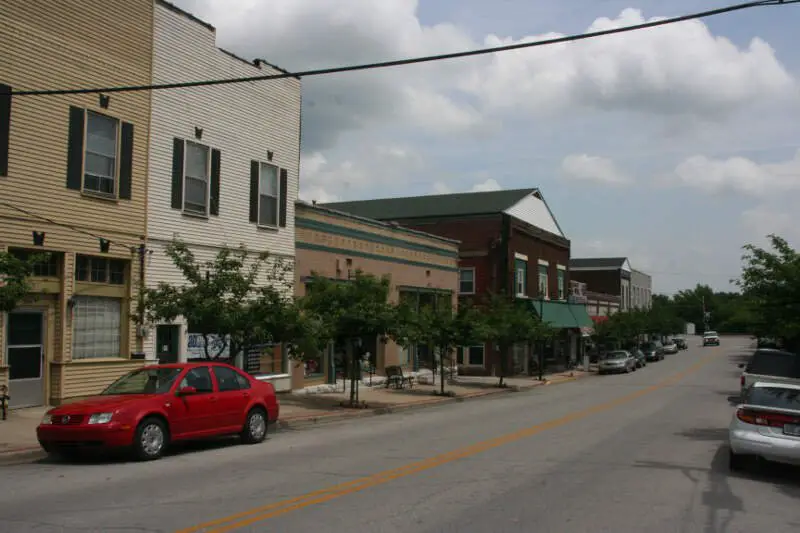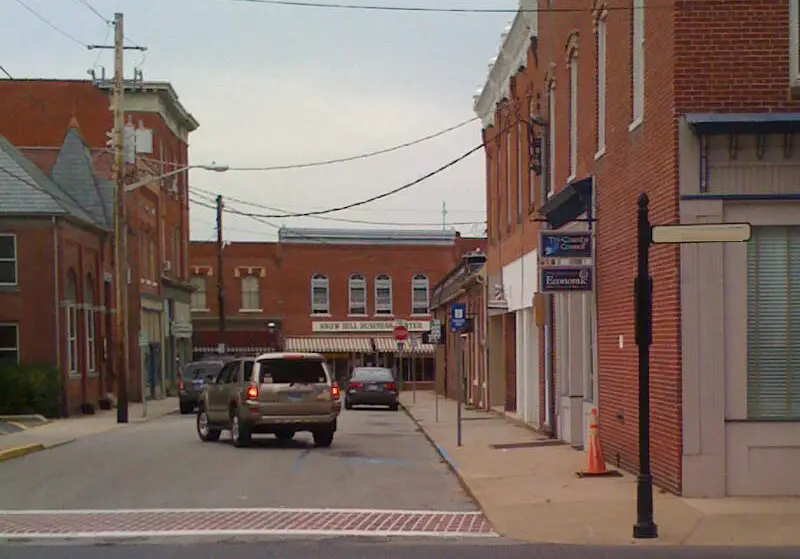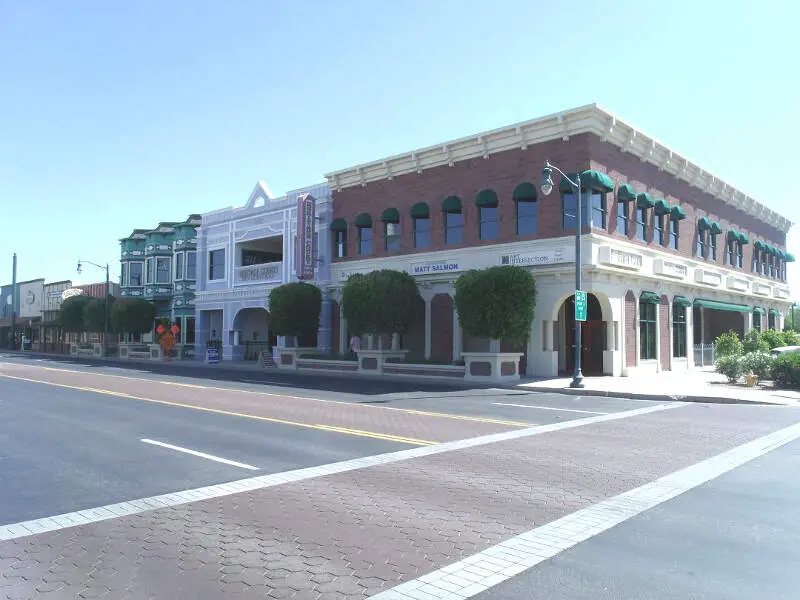
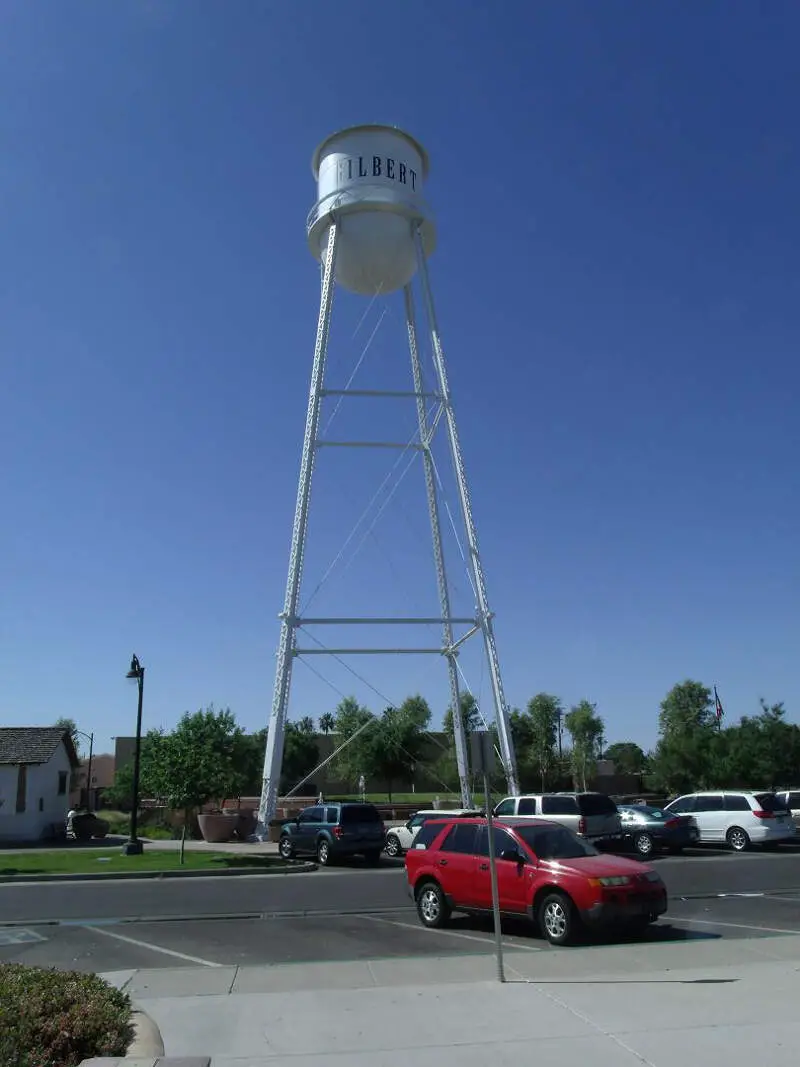
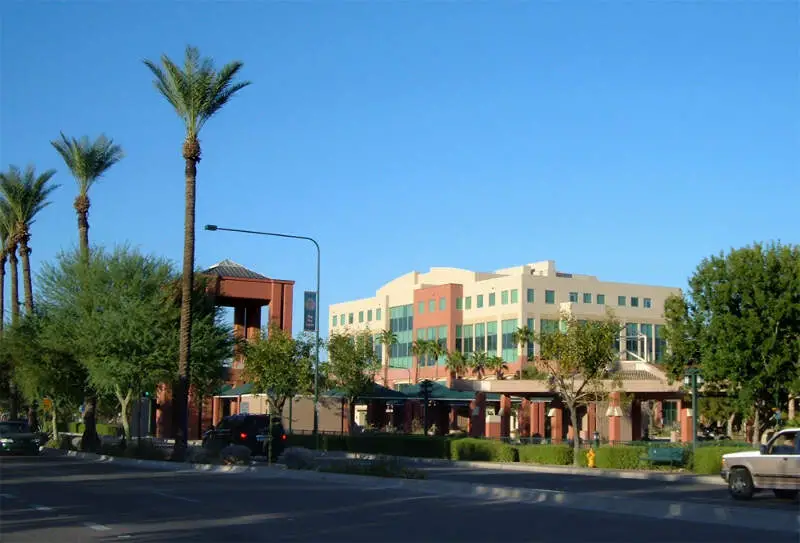
Gilbert vs. Chandler in photos
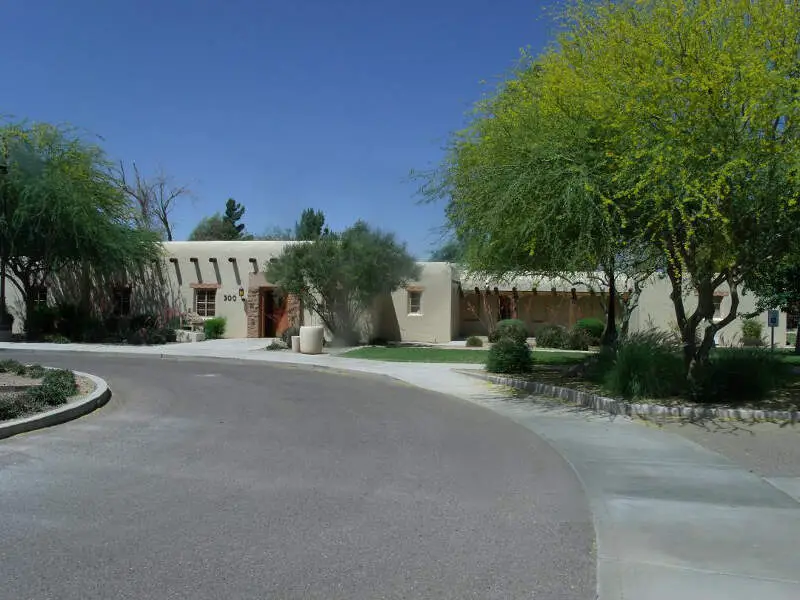
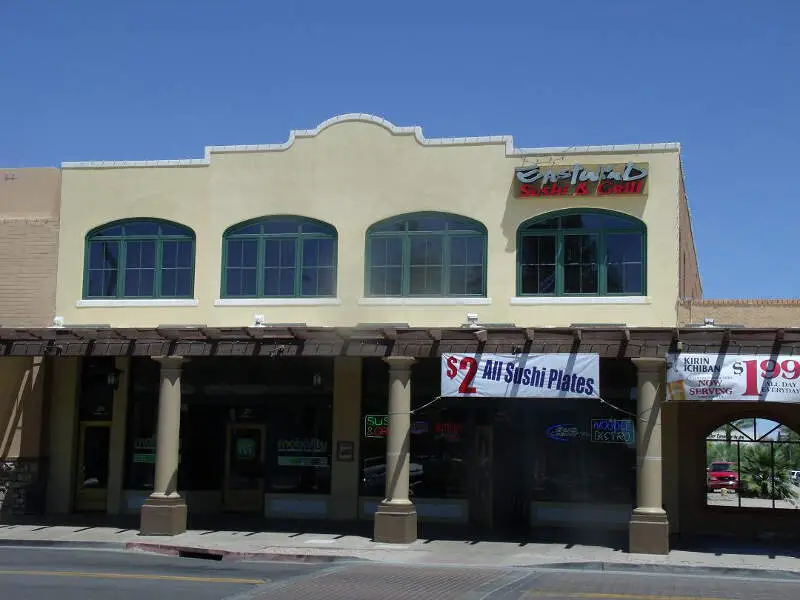
A side-by-side look at each city.
Cost of living
Chandler is the cheaper city overall — 3% higher in Gilbert than its rival. Index baseline: 100 = national average.
| Living expense | Gilbert | Chandler | US average |
|---|---|---|---|
| Overall | 129 | 125 | 100 |
| Services | 105 | 102 | 100 |
| Groceries | 101 | 101 | 100 |
| Health | 182 | 173 | 100 |
| Housing | 107 | 100 | 100 |
| Transportation | 111 | 115 | 100 |
| Utilities | 108 | 108 | 100 |
Lower index = cheaper. 100 = U.S. national average. Bar inside each cell scales relative to the highest value in the table.
Sources: HomeSnacks Cost of Living indices, normalized so 100 = U.S. national average. Drill in: Gilbert cost of living, Chandler cost of living, or the cheapest cities in America.
Housing breakdown
Home prices are higher in Gilbert. Compare absolute price and price-to-income — a $500k home in a $100k-income city is very different from one in a $50k-income city.
| Metric | Gilbert | Chandler | United States |
|---|---|---|---|
| Median Home Value | $572,507 | $524,155 | $332,700 |
| Median Rent | $2,110 | $1,902 | $1,413 |
| Median Income | $122,551 | $108,095 | $80,734 |
| Home Value To Income | 4.7x | 4.8x | 4.1x |
| Rent To Monthly Income | 0.21x | 0.21x | 0.21x |
Source: U.S. Census Bureau ACS 2020-2024. See also states with the highest rent in America.
Crime
Gilbert is the safer city — total crime rate of 1,100 per 100k people vs 1,638 for Chandler. US average: 2,119.
| Crime (per 100k) | Gilbert | Chandler | US average |
|---|---|---|---|
| Total crime | 1,100 | 1,638 | 2,119 |
| Murder | 0 | 1 | 5 |
| Robbery | 11 | 23 | 61 |
| Aggravated Assault | 98 | 92 | 256 |
| Violent Crime | 132 | 133 | 359 |
| Burglary | 80 | 121 | 229 |
| Larceny | 826 | 1,292 | 1,272 |
| Car Theft | 62 | 91 | 259 |
| Property Crime | 968 | 1,504 | 1,760 |
Lower = safer. Bar inside each cell scales relative to the highest crime rate in the table.
Source: FBI Uniform Crime Reporting (2024). All rates are per 100,000 people. City pages: Gilbert crime, Chandler crime. See also: safest cities in America.
Diversity
Chandler is more racially diverse — lower HHI (closer to 0) means a more even mix across groups.
| Group | Gilbert | Chandler | United States |
|---|---|---|---|
| White | 65.6% | 54.2% | 57.4% |
| African American | 3.2% | 5.1% | 11.9% |
| American Indian | 0.7% | 1.3% | 0.5% |
| Asian | 6.7% | 11.7% | 5.9% |
| Hawaiian | 0.0% | 0.2% | 0.2% |
| Other | 0.5% | 0.5% | 0.6% |
| Two Or More | 5.4% | 5.3% | 4.3% |
| Hispanic | 17.9% | 21.7% | 19.3% |
Source: U.S. Census ACS 2020-2024. Lower HHI = more even racial mix. See also: most diverse cities in America.
SnackAbility — overall quality of life
Gilbert scores higher overall — 9/10 vs 8.5/10. SnackAbility is our 1–10 quality-of-life score; the median U.S. city scores a 7.
Scores are 0–10; both bars share the same scale.
SnackAbility is a HomeSnacks proprietary 1–10 score blending jobs, housing, education, commute, amenities, affordability, crime, and diversity. Median U.S. city ≈ 7. Data: Census, BLS, FBI. See also: best places to live in America.
Getting around: Gilbert vs. Chandler
How each city handles commuting, transit, walkability, and car culture — the day-to-day reality that shapes where you'd actually want to live.
Both Gilbert and Chandler sit deep in the East Valley, so car commuting is the norm in either city. The Loop 202 Santan Freeway runs through both, putting downtown Phoenix 30–45 minutes out depending on traffic. The US-60 Superstition Freeway adds another option heading northwest.
Chandler sits a bit closer to the Loop 101 and I-10 interchange, which can shorten trips toward Tempe or the West Valley. Gilbert's road grid is newer, with wide arterials like Gilbert Road and Val Vista keeping local trips moving.
Valley Metro bus routes serve both cities, but light rail doesn't reach either — the eastern terminus stops at downtown Mesa. Chandler has slightly more bus frequency along corridors like Chandler Boulevard and Arizona Avenue. If you're car-free, both cities will feel limiting; if you drive daily, the commute setup is comparable.
Jobs and careers in Gilbert vs. Chandler
The local job market, dominant industries, and which city to choose based on your career.
Chandler has the heavier tech and corporate employment base. The Price Road Corridor, sometimes called Arizona's Silicon Desert, is home to Intel's Ocotillo campus, PayPal, Northrop Grumman, and Wells Fargo operations. If you work in semiconductors, aerospace, or fintech, Chandler puts you minutes from some of the largest employers in the state.
Chandler's median household income is $108,095; Gilbert's is $122,551, which likely reflects a resident workforce that commutes out to Scottsdale, Phoenix, or Tempe. Gilbert's job market leans more toward healthcare (Banner Health and Dignity Health both have large presences there), education, and professional services. Distribution and logistics employers have also moved into its southern edges near the Loop 202.
For tech or defense work, Chandler wins on proximity. For healthcare, education, or remote work, Gilbert holds its own.
Weather and climate
What to expect day-to-day — sun, fog, heat, rain, and the seasonal extremes that shape the lifestyle.
Expect the same essential climate in both cities — they're fewer than ten miles apart and share the same Sonoran Desert conditions. Daytime highs routinely hit 108–112°F from June through August, and overnight lows stay in the mid-80s. You'll run air conditioning continuously from May through September, which shows up in utility bills.
Monsoon season, roughly July through mid-September, brings afternoon thunderstorms that can drop flash flooding in low-lying washes. Both cities have infrastructure for it, but respect road closures.
Winters are the payoff. From November through March, expect daytime temperatures in the 60s and 70s with clear skies and cool mornings. Frost is rare and brief.
Spring (March–April) is arguably the best stretch before the heat builds again. Neither city has a meaningful climate advantage over the other — relocating from the Pacific Northwest or the Midwest means a lifestyle adjustment in either case, and both will suit you fine if you're done with shoveling snow.
Culture, nightlife, and entertainment
Food, music, neighborhoods, and the city vibe that gives each place its personality.
Gilbert's cultural anchor is the Heritage District, a walkable stretch of downtown centered on Gilbert Road and Elliot. You'll find San Tan Brewing Company, Liberty Market, and locally owned restaurants packed on weekend evenings. The vibe skews younger families and food-forward rather than late-night bar scene.
Chandler's downtown is more developed as an entertainment destination. Arizona Avenue has restaurants, wine bars, and cocktail lounges with later hours, and the city hosts the annual Chandler Jazz Festival and a First Friday arts walk. The Chandler Center for the Arts brings touring performances you'd otherwise drive to Phoenix or Scottsdale to see.
Both downtowns have improved considerably over the past decade. If you want more options within a short Uber ride — live music, varied nightlife, cultural events — Chandler's core has more density and range.
Outdoor activities and day trips
Parks, beaches, hikes, and the weekend escapes that define life outside the city limits.
Gilbert's standout outdoor asset is the Riparian Preserve at Water Ranch, a 110-acre constructed wetland off Greenfield Road that attracts over 200 bird species. It's one of the most surprising green spaces in the Valley.
San Tan Mountain Regional Park, just south of Gilbert, covers 10,000 acres of Sonoran Desert terrain with trails ranging from easy loops to rocky ridge hikes. Both are within a 15–20 minute drive from most Gilbert neighborhoods.
Chandler's park system is extensive — Desert Breeze Park, Veterans Oasis Park, and Tumbleweed Park anchor a network of paved trails and recreation facilities — but there's no wild-land equivalent to San Tan Mountain.
Chandler's proximity to the East Valley recreation corridor means Saguaro Lake, the Salt River tubing stretch, and the Superstition Wilderness are all roughly 30–40 minutes away, same as from Gilbert. For everyday outdoor exercise, both cities have well-maintained trail systems; for serious hiking and birding, Gilbert has the slight edge.
Bottom line: which city is right for you?
Based on the head-to-head data above, here's the short version — pick the city that lines up with what you actually care about.
Choose Gilbert if you prioritize…
- lower crime — a safer place to live, work, and raise a family.
- more affordable housing relative to Chandler.
- a higher overall SnackAbility quality-of-life score.
Choose Chandler if you prioritize…
- a lower cost of living (cheaper groceries, services, and day-to-day expenses).
- a more racially diverse community (lower HHI on Census data).
Methodology: winners are picked from public data — U.S. Census Bureau ACS (income, home value, rent, race/HHI), FBI Uniform Crime Reporting (crime rates per 100k), and HomeSnacks' proprietary SnackAbility quality-of-life score, which blends Bureau of Labor Statistics data with the above.
Other comparisons
Still weighing your options? See how these two cities stack up against other places we've compared head-to-head.