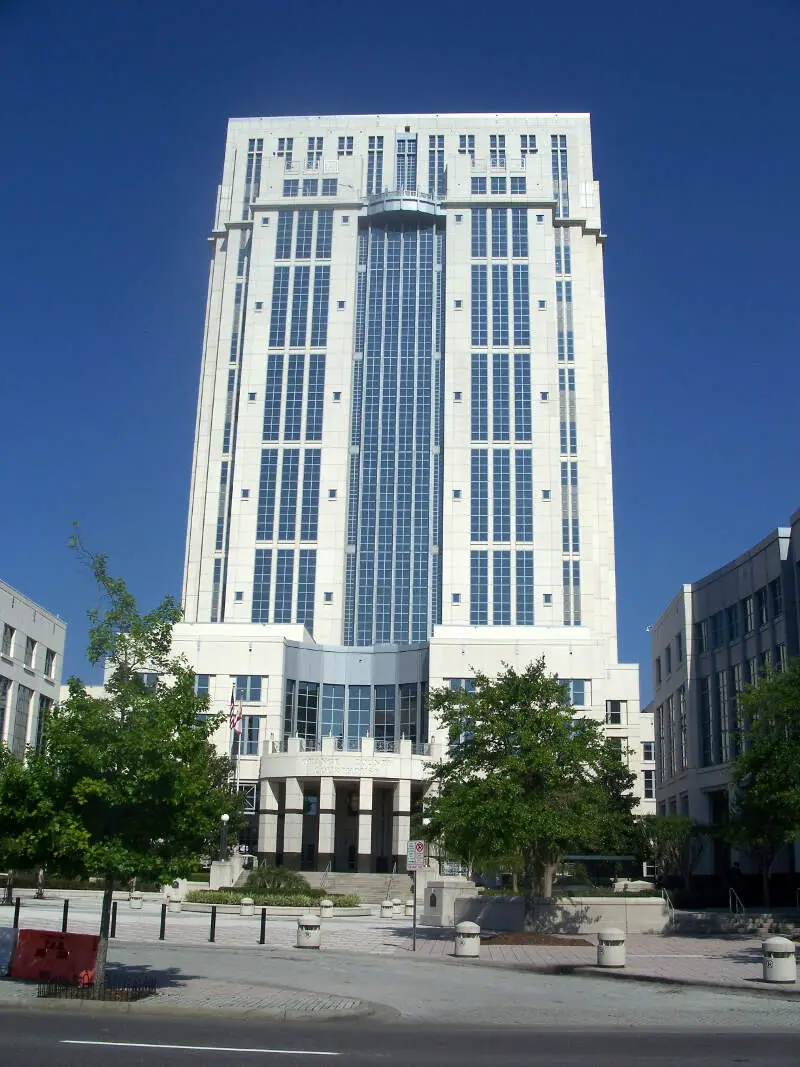
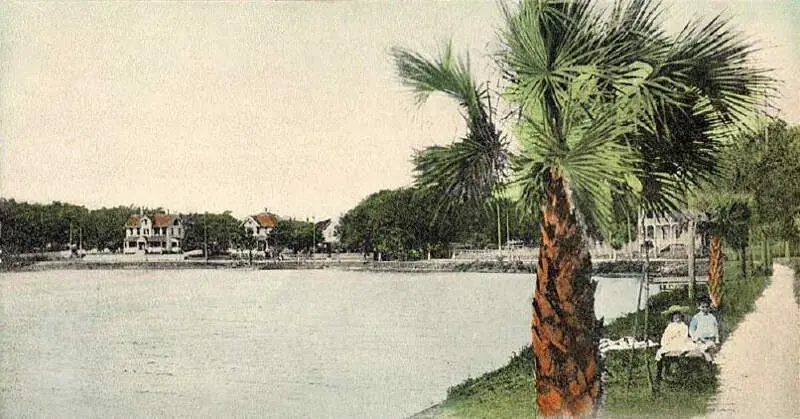
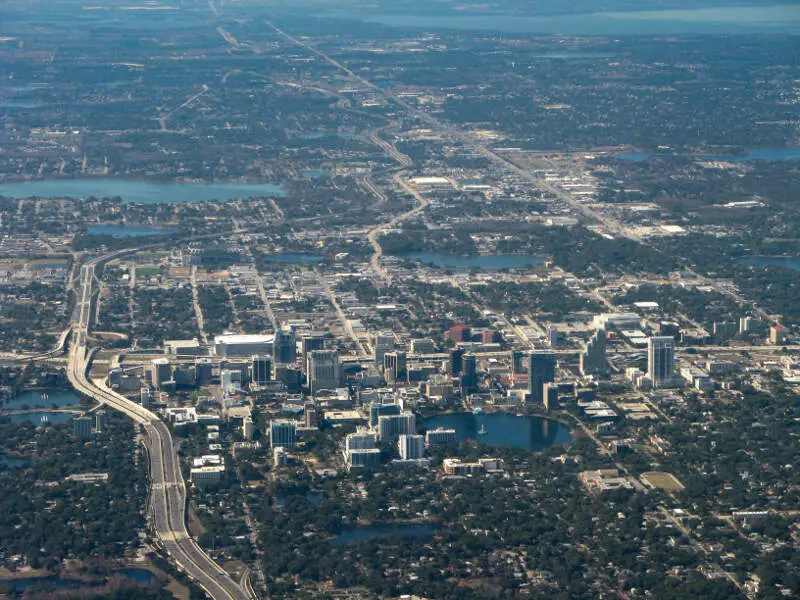
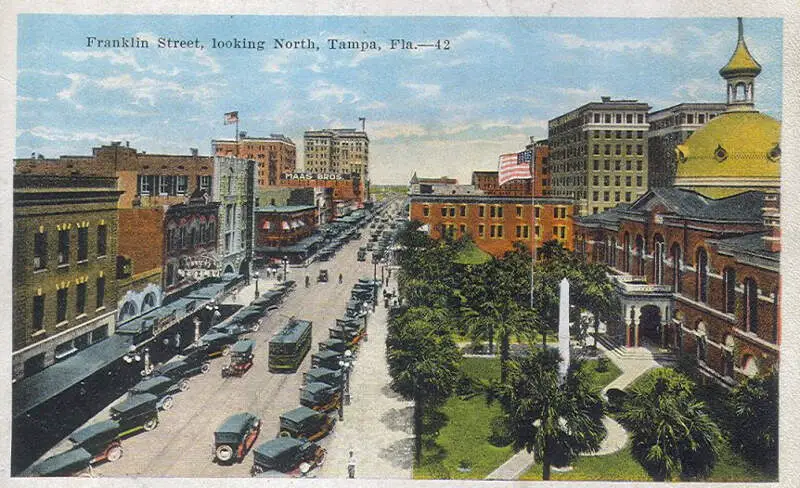
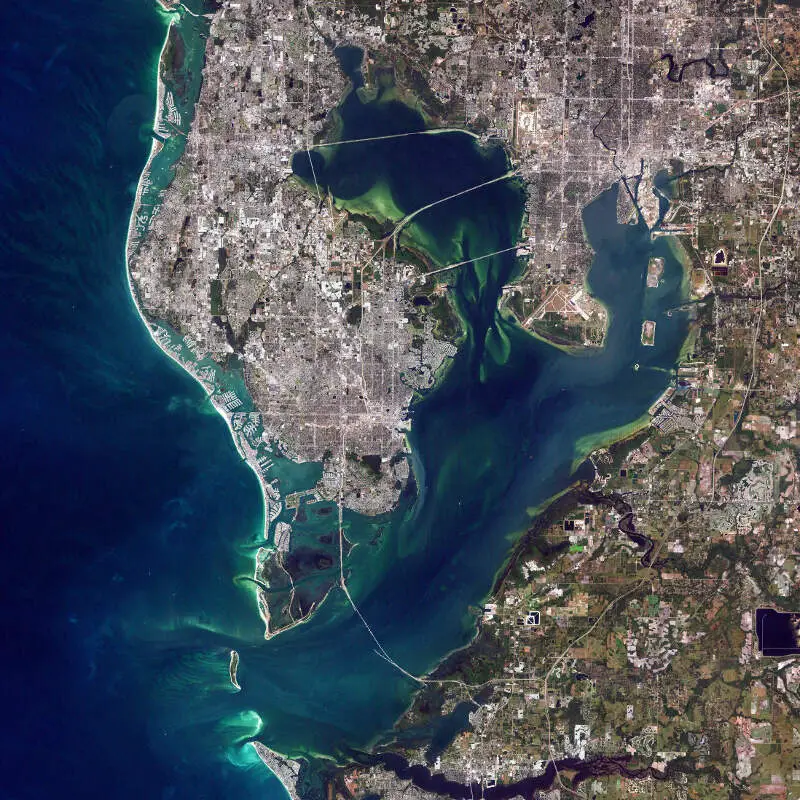
Orlando vs. Tampa in photos
A side-by-side look at each city.

Cost of living
Orlando is the cheaper city overall — same index. Index baseline: 100 = national average.
| Living expense | Orlando | Tampa | US average |
|---|---|---|---|
| Overall | 116 | 116 | 100 |
| Services | 106 | 107 | 100 |
| Groceries | 106 | 105 | 100 |
| Health | 143 | 134 | 100 |
| Housing | 108 | 105 | 100 |
| Transportation | 110 | 113 | 100 |
| Utilities | 103 | 104 | 100 |
Lower index = cheaper. 100 = U.S. national average. Bar inside each cell scales relative to the highest value in the table.
Sources: HomeSnacks Cost of Living indices, normalized so 100 = U.S. national average. Drill in: Orlando cost of living, Tampa cost of living, or the cheapest cities in America.
Housing breakdown
Home prices are higher in Tampa. Compare absolute price and price-to-income — a $500k home in a $100k-income city is very different from one in a $50k-income city.
| Metric | Orlando | Tampa | United States |
|---|---|---|---|
| Median Home Value | $374,135 | $374,888 | $332,700 |
| Median Rent | $1,747 | $1,701 | $1,413 |
| Median Income | $72,336 | $75,475 | $80,734 |
| Home Value To Income | 5.2x | 5.0x | 4.1x |
| Rent To Monthly Income | 0.29x | 0.27x | 0.21x |
Source: U.S. Census Bureau ACS 2020-2024. See also states with the highest rent in America.
Crime
Tampa is the safer city — total crime rate of 1,910 per 100k people vs 4,864 for Orlando. US average: 2,119.
| Crime (per 100k) | Orlando | Tampa | US average |
|---|---|---|---|
| Total crime | 4,864 | 1,910 | 2,119 |
| Murder | 10 | 9 | 5 |
| Robbery | 137 | 59 | 61 |
| Aggravated Assault | 616 | 335 | 256 |
| Violent Crime | 836 | 445 | 359 |
| Burglary | 450 | 167 | 229 |
| Larceny | 3,174 | 1,155 | 1,272 |
| Car Theft | 405 | 143 | 259 |
| Property Crime | 4,028 | 1,465 | 1,760 |
Lower = safer. Bar inside each cell scales relative to the highest crime rate in the table.
Source: FBI Uniform Crime Reporting (2024). All rates are per 100,000 people. City pages: Orlando crime, Tampa crime. See also: safest cities in America.
Diversity
Orlando is more racially diverse — lower HHI (closer to 0) means a more even mix across groups.
| Group | Orlando | Tampa | United States |
|---|---|---|---|
| White | 31.2% | 44.3% | 57.4% |
| African American | 22.2% | 19.5% | 11.9% |
| American Indian | 0.0% | 0.1% | 0.5% |
| Asian | 4.8% | 4.7% | 5.9% |
| Hawaiian | 0.0% | 0.1% | 0.2% |
| Other | 1.0% | 0.7% | 0.6% |
| Two Or More | 5.3% | 4.4% | 4.3% |
| Hispanic | 35.4% | 26.2% | 19.3% |
Source: U.S. Census ACS 2020-2024. Lower HHI = more even racial mix. See also: most diverse cities in America.
SnackAbility — overall quality of life
Orlando and Tampa tied at 6/10.
Scores are 0–10; both bars share the same scale.
SnackAbility is a HomeSnacks proprietary 1–10 score blending jobs, housing, education, commute, amenities, affordability, crime, and diversity. Median U.S. city ≈ 7. Data: Census, BLS, FBI. See also: best places to live in America.
Getting around: Orlando vs. Tampa
How each city handles commuting, transit, walkability, and car culture — the day-to-day reality that shapes where you'd actually want to live.
Both Orlando and Tampa are built around the car. If you commute in Orlando, expect to spend real time on I-4: it threads through downtown and out toward the theme parks, so surface-street alternatives get pulled into the same bottlenecks. Orlando does have SunRail, a commuter rail line running north-south from DeBary to Poinciana, and LYNX buses fill gaps, but transit is a supplement here, not a backbone.
Tampa is similarly car-first, with I-275 and the Selmon Expressway carrying most of the load. HART runs buses across the metro, and the TECO Line Streetcar connects downtown to Ybor City, more charming than utilitarian. Tampa's more compact grid makes short errands easier, and its smaller footprint gives it a slight edge over Orlando for day-to-day navigation.
Jobs and careers in Orlando vs. Tampa
The local job market, dominant industries, and which city to choose based on your career.
Orlando's economy is dominated by tourism and hospitality: Walt Disney World, Universal Orlando, and SeaWorld collectively employ tens of thousands. Lake Nona's Medical City has drawn major healthcare and life-sciences operations, and defense and simulation technology companies cluster around the University of Central Florida corridor. Median household income sits at $72,336, reflecting that hospitality wages pull the average down even as tech and healthcare roles push it up.
Tampa's job market skews toward finance, healthcare, and professional services, which tends to produce more stable mid-career incomes, with a median household income of $75,475. Raymond James Financial is headquartered here, Tampa General Hospital is a major employer, and MacDill Air Force Base anchors a significant defense presence. Remote workers who relocated during the pandemic have added a tech-and-professional-services layer to both cities, but Tampa's downtown office market has absorbed more of that growth.
Weather and climate
What to expect day-to-day — sun, fog, heat, rain, and the seasonal extremes that shape the lifestyle.
You'll get hot, humid subtropical weather in both cities, and that's non-negotiable in Central Florida. Summers run from roughly May through September with daily highs in the low-to-mid 90s, afternoon thunderstorms that arrive like clockwork, and humidity that makes the real-feel temperature noticeably higher. Winters are genuinely mild: expect daytime highs in the 60s and 70s from December through February, with only occasional cold fronts dipping into the 40s overnight.
The meaningful difference is hurricane exposure. Tampa sits on Tampa Bay, and the bay's geography creates significant storm-surge risk; the city went decades without a direct hit, but Hurricane Milton in 2024 showed the threat is real. Orlando's inland position reduces storm-surge danger, though tropical systems still bring heavy rain and wind, so either way you should budget for hurricane preparedness and factor homeowner's insurance costs into your decision.
Culture, nightlife, and entertainment
Food, music, neighborhoods, and the city vibe that gives each place its personality.
Orlando's cultural identity is split between its theme-park-capital reputation and a growing homegrown arts scene. The Dr. Phillips Center for Performing Arts anchors downtown, the Mills 50 district has become a hub for independent restaurants and galleries, and neighborhoods like Thornton Park and College Park have the walkable-village feel that makes a city livable beyond tourist season. International Drive is entertaining if you're in the mood for it, but locals mostly stay out of the tourist corridor.
Tampa's cultural scene is anchored by Ybor City, a historic Cuban and Spanish immigrant neighborhood that still carries genuine character: the Columbia Restaurant has been operating there since 1905, and the area's nightlife is some of the most authentic in the state. The Tampa Riverwalk connects Armature Works (a renovated food hall and event space) to the Tampa Museum of Art and Amalie Arena, making downtown genuinely walkable on a weekend evening. Hyde Park Village offers a more upscale retail-and-dining option, and Tampa edges ahead on neighborhood variety and nightlife depth.
Outdoor activities and day trips
Parks, beaches, hikes, and the weekend escapes that define life outside the city limits.
Orlando is landlocked but surrounded by freshwater lakes and springs. Lake Eola in downtown is the most recognizable green space, but the real outdoor draw is the spring system: Wekiwa Springs State Park and Blue Spring State Park are within an hour and offer swimming in 68-degree water year-round. If you want the Gulf or Atlantic, you're looking at about an hour to either Cocoa Beach or New Smyrna Beach, doable for a day trip but not something you'll do spontaneously.
Tampa's outdoor advantage is proximity to some of the best beaches in the country: St. Pete Beach, Clearwater Beach, and Caladesi Island State Park are all within 30 to 45 minutes across the Howard Frankland or Courtney Campbell bridges. Closer in, Fort De Soto Park offers kayaking, fishing, and birding on the southern tip of Pinellas County. The Hillsborough River runs through the city, and Hillsborough River State Park is a solid option for paddling and trail running; for beach access, Tampa simply wins.
Bottom line: which city is right for you?
Based on the head-to-head data above, here's the short version — pick the city that lines up with what you actually care about.
Choose Orlando if you prioritize…
- a lower cost of living (cheaper groceries, services, and day-to-day expenses).
- a more racially diverse community (lower HHI on Census data).
Choose Tampa if you prioritize…
- lower crime — a safer place to live, work, and raise a family.
- more affordable housing relative to Orlando.
Methodology: winners are picked from public data — U.S. Census Bureau ACS (income, home value, rent, race/HHI), FBI Uniform Crime Reporting (crime rates per 100k), and HomeSnacks' proprietary SnackAbility quality-of-life score, which blends Bureau of Labor Statistics data with the above.
Other comparisons
Still weighing your options? See how these two cities stack up against other places we've compared head-to-head.