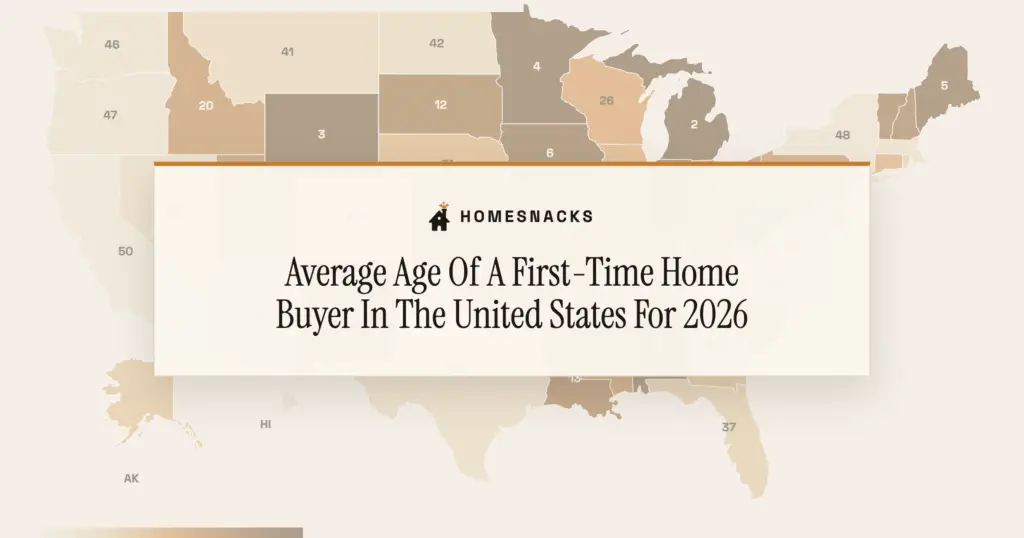
The Second Most Common Way To Get To Work By State In The United States For 2026
Driving alone is #1 everywhere, but the runner-up flipped in one year: work from home is now the #2 commute in 35 states, carpool in 14. See every state.
After driving alone, the second most common way Americans get to work is now working from home, the runner-up commute in 35 states, with carpool second in 14 and public transit in 2. For a quarter century that spot belonged to carpooling almost everywhere, until it flipped in a single year.
Work from home is the #2 commute in 35 states, carpool in 14, and public transit in 2 (New York and Washington, D.C.).
Carpool was #2 in 49 states in 2000 and still 45 in 2019, then fell to 4 in one year while work from home took 46.
Work from home is already receding: it peaked as the #2 mode in 46 states, and carpool has clawed back from 4 to 14.
Three states never let go of carpool as their runner-up: Alaska, Hawaii, and Mississippi.
Two places have run on transit the whole time, in 2000 and today: New York and Washington, D.C.
Here is the #2 mode in every state right now, when it flipped, and where it is heading.
What is the second most common way to get to work?
The second most common way to get to work is now working from home, in most of the country. Work from home is the runner-up commute mode in 35 states, carpool in 14, and public transit in 2. Nationally the story is the same: after driving alone, work from home is #2 at 13.3% of workers, just ahead of carpool at 9.2%.
That was not true a few years ago. Carpool held the #2 spot for a generation. So the map below is really two questions at once: what is second in your state, and did it used to be something else. Drive-alone is still #1 in all 50 states, so this is strictly about the runner-up. The one exception is Washington, D.C., where driving alone barely leads at 29.3%, a mere 1.4 points ahead of transit at 27.9%.
The #2 way to get to work in your state today: work from home vs carpool vs public transit. Each state is shaded by its runner-up commute mode in the most recent data.
Work from homeCarpoolPublic transitToo close to call
State
#1 mode (share)
#2 mode (share)
Note
Alabama
Drove alone 80.8%
WFH 8.3%
Alaska
Drove alone 66.8%
Carpool 12.4%
Arizona
Drove alone 67.5%
WFH 16.3%
Arkansas
Drove alone 78.4%
Carpool 10.0%
California
Drove alone 67.3%
WFH 14.1%
Colorado
Drove alone 65.4%
WFH 19.9%
Connecticut
Drove alone 70.2%
WFH 13.4%
D.C.
Drove alone 29.3%
Public transit 27.9%
Delaware
Drove alone 72.2%
WFH 12.9%
Florida
Drove alone 69.0%
WFH 15.5%
Georgia
Drove alone 71.4%
WFH 14.9%
Hawaii
Drove alone 65.1%
Carpool 14.5%
Idaho
Drove alone 72.9%
WFH 12.7%
Illinois
Drove alone 66.0%
WFH 13.6%
Indiana
Drove alone 76.8%
WFH 9.6%
Iowa
Drove alone 76.6%
WFH 9.9%
Kansas
Drove alone 76.0%
WFH 10.3%
Kentucky
Drove alone 76.4%
Carpool 9.9%
tied with WFH
Louisiana
Drove alone 78.3%
Carpool 9.3%
Maine
Drove alone 70.8%
WFH 14.7%
Maryland
Drove alone 66.4%
WFH 15.6%
Massachusetts
Drove alone 62.0%
WFH 14.8%
Michigan
Drove alone 75.6%
WFH 11.2%
Minnesota
Drove alone 70.7%
WFH 14.7%
Mississippi
Drove alone 81.2%
Carpool 9.5%
Missouri
Drove alone 74.8%
WFH 11.8%
Montana
Drove alone 71.6%
WFH 11.7%
Nebraska
Drove alone 75.8%
Carpool 9.8%
tied with WFH
Nevada
Drove alone 70.0%
Carpool 11.8%
tied with WFH
New Hampshire
Drove alone 72.3%
WFH 16.0%
New Jersey
Drove alone 63.3%
WFH 13.5%
New Mexico
Drove alone 73.8%
Carpool 11.3%
New York
Drove alone 48.7%
Public transit 25.0%
North Carolina
Drove alone 71.6%
WFH 15.4%
North Dakota
Drove alone 76.7%
Carpool 10.2%
Ohio
Drove alone 75.2%
WFH 11.9%
Oklahoma
Drove alone 76.8%
Carpool 10.6%
Oregon
Drove alone 65.2%
WFH 17.1%
Pennsylvania
Drove alone 68.5%
WFH 13.8%
Rhode Island
Drove alone 71.3%
WFH 11.6%
South Carolina
Drove alone 74.9%
WFH 12.3%
South Dakota
Drove alone 78.1%
Carpool 9.4%
Tennessee
Drove alone 75.0%
WFH 12.7%
Texas
Drove alone 71.8%
WFH 12.9%
Utah
Drove alone 67.7%
WFH 15.7%
Vermont
Drove alone 67.9%
WFH 16.0%
Virginia
Drove alone 68.6%
WFH 15.8%
Washington
Drove alone 65.1%
WFH 16.4%
West Virginia
Drove alone 77.6%
Carpool 9.1%
tied with WFH
Wisconsin
Drove alone 75.1%
WFH 11.8%
Wyoming
Drove alone 72.6%
Carpool 11.2%
tied with WFH
Every state’s #1 and #2 commute mode, most recent ACS 1-year data. “Tied with WFH” marks the five states where carpool’s lead over work from home is inside the margin of error. Click any column header to sort.
How the runner-up changed, 2000 to today
Go back to 2000 and the answer was nearly unanimous. Carpool was the #2 commute in 49 states. Only New York and Washington, D.C. ran on transit instead.
That held for a long time. Carpool was still #2 in 45 states as recently as 2019, even as its share slowly slipped from 12.2% of workers to 8.9%. Then came the cliff. In 2021, work from home jumped to the #2 spot in 46 states, and carpool crashed to just 4. No slow erosion. One year.
Here is the whole arc, counted by how many states gave each mode the runner-up spot.
How many states gave each mode the runner-up spot, 2000 to today. The 2021 cliff is one year, not a slow drift.
CarpoolWork from homePublic transit2020 (5-year bridge, not on the trend)
You can also watch it on the map. Pick a year and see the country repaint from carpool orange to work-from-home brown, with the two transit holdouts steady the whole time.
In 2000, the #2 commute mode was carpool in most states.
Work from homeCarpoolPublic transitToo close to call
In 2010, the #2 commute mode was carpool in most states.
Work from homeCarpoolPublic transitToo close to call
In 2019, the #2 commute mode was carpool in most states.
Work from homeCarpoolPublic transitToo close to call
In 2021, the #2 commute mode was work from home in most states.
Work from homeCarpoolPublic transitToo close to call
In 2024, the #2 commute mode was work from home in most states.
Work from homeCarpoolPublic transitToo close to call
Which states flipped, and when
Almost everyone flipped at once. In 45 states, work from home overtook carpool for the #2 spot in the same pandemic year, 2021. That is the cliff you see in the numbers.
A couple of states are exceptions. Colorado saw it coming: work from home edged out carpool for #2 by 2019, two years early. Wyoming was the last to go, holding carpool at #2 until 2022. And three states never flipped at all. In Alaska, Hawaii, and Mississippi, carpool has been the runner-up the whole way from 2000 to today.
Here is the part people miss. Flipping to work from home in 2021 did not lock it in. Ten of those states handed the #2 spot back to carpool by the latest data, which is exactly why carpool has climbed from 4 states to 14.
When each state handed the runner-up spot to work from home.
2019
Coloradosaw it coming, two years early
2021
45 statesflipped to work from home all at once
2022
Wyomingthe last state to flip
never
Alaska, Hawaii, Mississippicarpool held the whole way
Work from home is already receding
The remote-work era already has a downslope. Work from home was the #2 commute in 46 states in 2021. It has slipped every year since, to 44, then 39, and now 35. Over the same stretch, carpool climbed back into second place in 14 states.
But receding is not collapsing. Work from home is still #2 in a clear majority of states, and nationally its 13.3% share is still more than twice its 2019 level. Solo driving tells the same in-between story. It fell from 75.9% of workers in 2019 to 67.8% in 2021, then bounced part way back to 69.2%, still the #1 mode everywhere but well below where it started. For the wider view on how remote work reshuffled where people live and move, our moving statistics tell that half of the story.
The carpool comeback comes with a catch. Of the 14 states where carpool now runs second, 9 lead work from home clearly. In the other 5, Kentucky, Nebraska, Nevada, West Virginia, and Wyoming, carpool and work from home sit close enough to be a statistical tie, too close to call.
The national #2-mode share. Carpool bled down for two decades, then work from home spiked and started to fade. Driving alone dipped and came part way back.
Drove alone (#1)CarpoolWork from home
The states that never changed lanes
A few places stayed exactly where they were. In Alaska, Hawaii, and Mississippi, carpool has been the #2 commute since 2000 and still is. Hawaii carpools the most of any state, at 14.5% of workers, with Alaska close behind at 12.4%.
Why these three hold on is mostly about the work and the geography. Long distances, tourism and military jobs, and fewer roles you can do from a laptop all keep more people sharing a ride. In a few corridors carpooling even has its own infrastructure. Northern Virginia’s decades-old “slugging” system lets drivers use the carpool lane if they pick up strangers waiting at set lots, and the riders go free. It is a live example of why organized carpooling survives where the payoff is built in.
The other constant is transit. New York and Washington, D.C. had public transit as their #2 mode in 2000, and they still do today, the only two places that never ran mainly on cars. In New York transit is second at 25.0%. In D.C. it is second at 27.9%, a hair behind driving alone.
The two constants: the states that kept carpool as their runner-up, and the two that kept transit.
Hawaii Carpool
14.5%
Alaska Carpool
12.4%
New York Public transit
25.0%
D.C. Public transit
27.9%
Methodology
We measured each worker’s primary means of transportation to work, then ranked every state’s modes to find its #1 and #2. Drive-alone, carpool, public transit, walking, biking, working from home, and a few smaller categories each count as a mode. A state’s “#2 mode” is simply the runner-up by share of workers.
The figures are American Community Survey 1-year estimates for the most recent available year, table B08301, with the 2000 Census long-form (table P030) as the pre-2000 anchor for the over-time view. The 2020 point uses the ACS 5-year estimate because the standard 2020 1-year release was never produced, so we show it only as a labeled bridge and never connect it to the 1-year trend line. The 2000 form counts taxicab trips inside public transit while the modern survey breaks them out, a tiny category we fold back together for a clean comparison; it never changes any state’s #2.
Two limits are worth stating plainly. Some races for second place are close. In five states carpool and work from home sit inside each other’s margin of error, so we call those ties rather than wins. And in Washington, D.C., driving alone is not reliably #1, so we report its #1 and #2 directly instead of forcing it into the “after driving alone” frame.
Current snapshot and trend: ACS 1-year estimates, table B08301, latest release
Annual trend: ACS 1-year, 2010 through the latest year (the 2020 1-year was never released)
2020 bridge: ACS 5-year estimate, shown as a labeled point only, never spliced into the 1-year line
Pre-ACS anchor: Census 2000 long-form, table P030
Bottom line
Driving alone still wins everywhere, but the race for second place got interesting. For a generation it was carpool, in almost every state. Now it is working from home in 35 states, and the question is which way it drifts next as offices call people back and carpool creeps up again.
The short version: check your own state on the map. The runner-up is not what it was, and it may not stay what it is.
Frequently asked questions
What percentage of Americans carpool to work?
About 9.2% of American workers carpool to work in the most recent data, down from 12.2% in 2000 and 8.9% in 2019. Carpool is no longer the #2 commute nationally, but it is still the runner-up in 14 states, led by Hawaii at 14.5% and Alaska at 12.4%.
Which states rely on public transit as their #2 way to get to work?
Only two places have public transit as their #2 commute mode: New York, where transit carries 25.0% of workers, and Washington, D.C., where it carries 27.9%. They are also the only two that had transit as their runner-up back in 2000, so the transit map has not moved in a quarter century.
What is the most common transportation in the United States?
The most common way Americans get to work is driving alone, at 69.2% of workers, and it is the #1 mode in all 50 states. That share dipped to 67.8% during the peak remote-work year and has since edged back up to 69.2%, still well below its 75.9% level a few years earlier.
What state has the longest work commute?
Commute length is a separate measure from commute mode, and it is not part of this ranking. For context, other Census figures put New York around the longest average one-way commute at about 33 minutes and North Dakota near the shortest at about 18 minutes, but those numbers describe travel time, not how people get there.
U.S. Census Bureau. “Census 2000 Summary File 3 (SF3), Table P030: Means of Transportation to Work for Workers 16 Years and Over.” data.census.gov/table/DECENNIALSF32000.P030
Chris Kolmar has been in the real estate business for almost ten years now. He originally worked for Movoto Real Estate as the director of marketing before founding HomeSnacks.
He believes the key to finding the right place to live comes down to looking at the data, reading about things to do, and, most importantly, checking it out yourself before you move.
If you've been looking for a place to live in the past several years, you've probably stumbled upon his writing already.