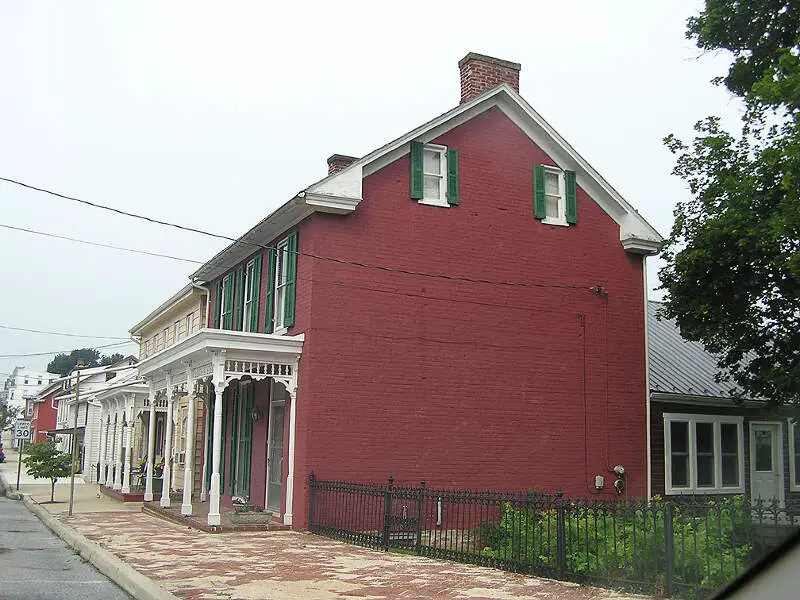
Post Falls SnackAbility
Overall SnackAbility
Crime in Post Falls summary. We use data from the FBI to determine the crime rates in Post Falls. Key points include:
There were 372 total crimes in Post Falls in the last reporting year.
The overall crime rate per 100,000 people in Post Falls is 794.3 / 100k people.
The violent crime rate per 100,000 people in Post Falls is 151.6 / 100k people.
The property crime rate per 100,000 people in Post Falls is 642.7 / 100k people.
Overall, crime in Post Falls is -62.52% below the national average.
Total Crimes
Below National Average
Crime In Post Falls Comparison Table
| Statistic | Count Raw |
Post Falls / 100k People |
Idaho / 100k People |
National / 100k People |
|---|---|---|---|---|
| Total Crimes Per 100K | 372 | 794.3 | 966.9 | 2,119.2 |
| Violent Crime | 71 | 151.6 | 230.6 | 359.0 |
| Murder | 1 | 2.1 | 1.6 | 5.0 |
| Robbery | 5 | 10.7 | 7.0 | 61.0 |
| Aggravated Assault | 61 | 130.2 | 177.3 | 256.0 |
| Property Crime | 301 | 642.7 | 736.3 | 1,760.0 |
| Burglary | 41 | 87.5 | 116.2 | 229.0 |
| Larceny | 238 | 508.2 | 552.6 | 1,272.0 |
| Car Theft | 22 | 47.0 | 67.4 | 259.0 |
Source: FBI Uniform Crime Reporting (2024)
Cost of living in Post Falls summary. We use data on the cost of living to determine how expensive it is to live in Post Falls. Real estate prices drive most of the variance in cost of living around Idaho. Key points include:
The cost of living in Post Falls is 109 with 100 being average.
The cost of living in Post Falls is 1.1x higher than the national average.
The median home value in Post Falls is $526,055.
The median income in Post Falls is $82,183.
Post Falls's Overall Cost Of Living
Higher Than The National Average
Cost Of Living In Post Falls Comparison Table
| Living Expense | Post Falls | Idaho | National Average |
|---|---|---|---|
| Overall | 109 | 100 | 100 |
| Services | 102 | 100 | 100 |
| Groceries | 99 | 101 | 100 |
| Health | 129 | 89 | 100 |
| Housing | 104 | 104 | 100 |
| Transportation | 100 | 103 | 100 |
| Utilities | 106 | 107 | 100 |
Source: Cost of living index, normalized to US average = 100
Post Falls, ID Weather
The average high in Post Falls is 58.0° and the average low is 36.7°.
There are 75.1 days of precipitation each year.
Expect an average of 22.3 inches of precipitation each year with 38.7 inches of snow.
| Stat | Post Falls |
|---|---|
| Average Annual High | 58.0 |
| Average Annual Low | 36.7 |
| Annual Precipitation Days | 75.1 |
| Average Annual Precipitation | 22.3 |
| Average Annual Snowfall | 38.7 |
Average High
Days of Rain
Source: NOAA climate normals (30-year)
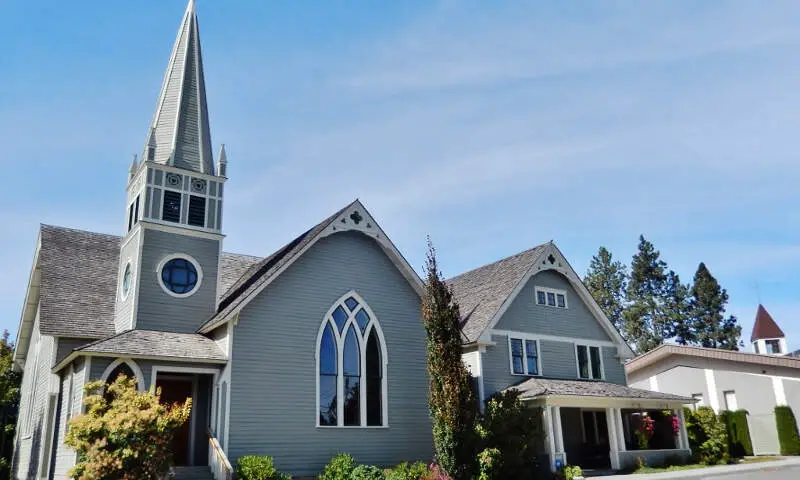
Post Falls, ID Photos
Rankings & Articles For Post Falls
Locations Around Post Falls
Map Of Post Falls, ID
Best Places Around Post Falls
Spokane Valley, WA
Population 106,365
Liberty Lake, WA
Population 12,737
Mead, WA
Population 6,893
Otis Orchards-East Farms, WA
Population 5,454
Hayden, ID
Population 16,338
Coeur d'Alene, ID
Population 56,447
Rathdrum, ID
Population 10,874
Post Falls Demographics And Statistics
Population over time in Post Falls
The current population in Post Falls is 43,391. The population has increased 65.7% from 2010.
| Year | Population | % Change |
|---|---|---|
| 2024 | 43,391 | 4.0% |
| 2023 | 41,716 | 4.3% |
| 2022 | 40,002 | 4.8% |
| 2021 | 38,162 | 9.1% |
| 2020 | 34,971 | 5.3% |
| 2019 | 33,225 | 4.0% |
| 2018 | 31,945 | 3.4% |
| 2017 | 30,886 | 2.4% |
| 2016 | 30,157 | 2.9% |
| 2015 | 29,320 | 1.9% |
| 2014 | 28,786 | 1.9% |
| 2013 | 28,236 | 2.3% |
| 2012 | 27,609 | 2.6% |
| 2011 | 26,913 | 2.8% |
| 2010 | 26,179 | - |
Race / Ethnicity in Post Falls
See the full breakdown
Post Falls is:
84.4% White with 36,605 White residents.
0.2% African American with 95 African American residents.
0.8% American Indian with 341 American Indian residents.
0.6% Asian with 241 Asian residents.
0.0% Hawaiian with 0 Hawaiian residents.
0.2% Other with 85 Other residents.
6.8% Two Or More with 2,964 Two Or More residents.
7.1% Hispanic with 3,060 Hispanic residents.
| Race | Post Falls | ID | USA |
|---|---|---|---|
| White | 84.4% | 78.6% | 57.4% |
| African American | 0.2% | 0.7% | 11.9% |
| American Indian | 0.8% | 0.7% | 0.5% |
| Asian | 0.6% | 1.3% | 5.9% |
| Hawaiian | 0.0% | 0.1% | 0.2% |
| Other | 0.2% | 0.6% | 0.6% |
| Two Or More | 6.8% | 4.2% | 4.3% |
| Hispanic | 7.1% | 13.6% | 19.3% |
Gender in Post Falls
See the full breakdown
Post Falls is 50.5% female with 21,905 female residents.
Post Falls is 49.5% male with 21,486 male residents.
| Gender | Post Falls | ID | USA |
|---|---|---|---|
| Female | 50.5% | 49.7% | 50.5% |
| Male | 49.5% | 50.3% | 49.5% |
Highest level of educational attainment in Post Falls for adults over 25
See the full breakdown
1.0% of adults in Post Falls completed < 9th grade.
5.0% of adults in Post Falls completed 9-12th grade.
27.0% of adults in Post Falls completed high school / ged.
29.0% of adults in Post Falls completed some college.
12.0% of adults in Post Falls completed associate's degree.
20.0% of adults in Post Falls completed bachelor's degree.
4.0% of adults in Post Falls completed master's degree.
1.0% of adults in Post Falls completed professional degree.
1.0% of adults in Post Falls completed doctorate degree.
| Education | Post Falls | ID | USA |
|---|---|---|---|
| < 9th Grade | 1.0% | 4.0% | 4.0% |
| 9-12th Grade | 5.0% | 5.0% | 6.0% |
| High School / GED | 27.0% | 26.0% | 26.0% |
| Some College | 29.0% | 24.0% | 19.0% |
| Associate's Degree | 12.0% | 10.0% | 9.0% |
| Bachelor's Degree | 20.0% | 21.0% | 22.0% |
| Master's Degree | 4.0% | 7.0% | 10.0% |
| Professional Degree | 1.0% | 2.0% | 2.0% |
| Doctorate Degree | 1.0% | 1.0% | 2.0% |
Household Income For Post Falls, Idaho
See the full breakdown
3.9% of households in Post Falls earn Less than $10,000.
2.5% of households in Post Falls earn $10,000 to $14,999.
6.6% of households in Post Falls earn $15,000 to $24,999.
5.3% of households in Post Falls earn $25,000 to $34,999.
9.1% of households in Post Falls earn $35,000 to $49,999.
18.7% of households in Post Falls earn $50,000 to $74,999.
15.1% of households in Post Falls earn $75,000 to $99,999.
23.5% of households in Post Falls earn $100,000 to $149,999.
8.9% of households in Post Falls earn $150,000 to $199,999.
6.3% of households in Post Falls earn $200,000 or more.
| Income | Post Falls | ID | USA |
|---|---|---|---|
| Less than $10,000 | 3.9% | 3.6% | 5.0% |
| $10,000 to $14,999 | 2.5% | 2.7% | 3.4% |
| $15,000 to $24,999 | 6.6% | 6.1% | 6.3% |
| $25,000 to $34,999 | 5.3% | 6.6% | 6.6% |
| $35,000 to $49,999 | 9.1% | 11.0% | 10.1% |
| $50,000 to $74,999 | 18.7% | 18.1% | 15.5% |
| $75,000 to $99,999 | 15.1% | 14.7% | 12.6% |
| $100,000 to $149,999 | 23.5% | 19.3% | 17.5% |
| $150,000 to $199,999 | 8.9% | 8.7% | 9.6% |
| $200,000 or more | 6.3% | 9.2% | 13.4% |
Source: U.S. Census ACS 5-year estimates (2024)