
Sure, a Saturday morning right after a foot of fluffy snow is the best thing ever. But that same amount of snow on Tuesday in Rhode Island can make a commute last forever. Imagine it’s the dead of winter and the time of year when the ground is frozen, the air is bone-chilling, and there are piles of dirty, nasty, ice-encrusted snow all over the place.
This is about the time of year when you’re just about ready for spring — especially in Valley Falls, the snowiest place in Rhode Island.
So, put on your parkas, snow boots, and gloves, and let’s go outside to see which Rhode Island cities get dumped on the most every year. After analyzing all the cities in Rhode Island with Saturday Night Science, we came up with this list as the 10 snowiest cities in Ocean State.
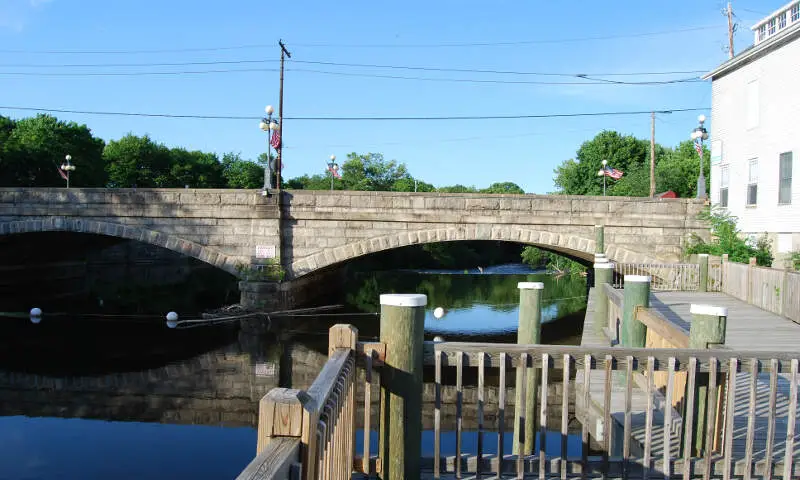
39.6 inches of snow per year
 Located in
Providence County, Rhode Island
Located in
Providence County, Rhode Island
Data | Crime | Cost of living | Movers
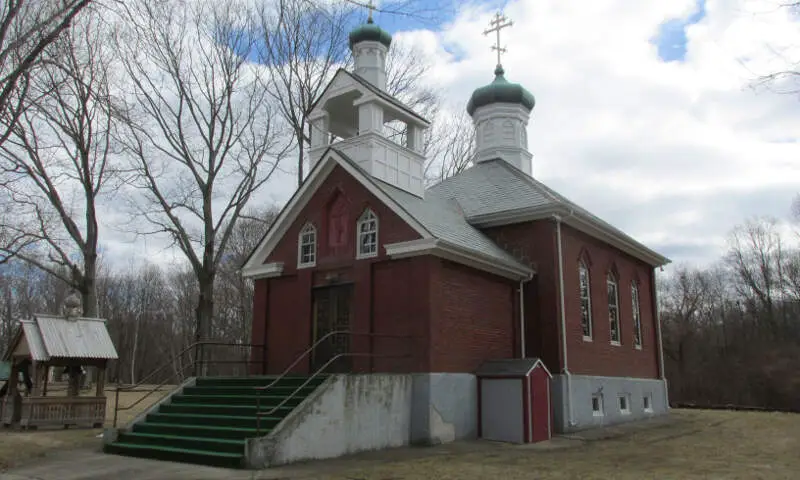
39.6 inches of snow per year
 Located in
Providence County, Rhode Island
Located in
Providence County, Rhode Island
Data | Crime | Cost of living | Movers
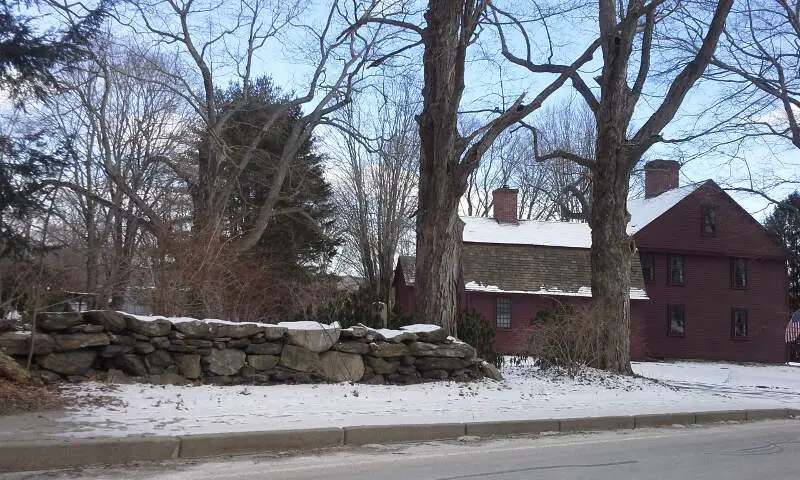
39.6 inches of snow per year
 Located in
Providence County, Rhode Island
Located in
Providence County, Rhode Island
Data | Crime | Cost of living | Movers

39.6 inches of snow per year
Data | Crime | Cost of living | Movers
39.6 inches of snow per year
39.6 inches of snow per year
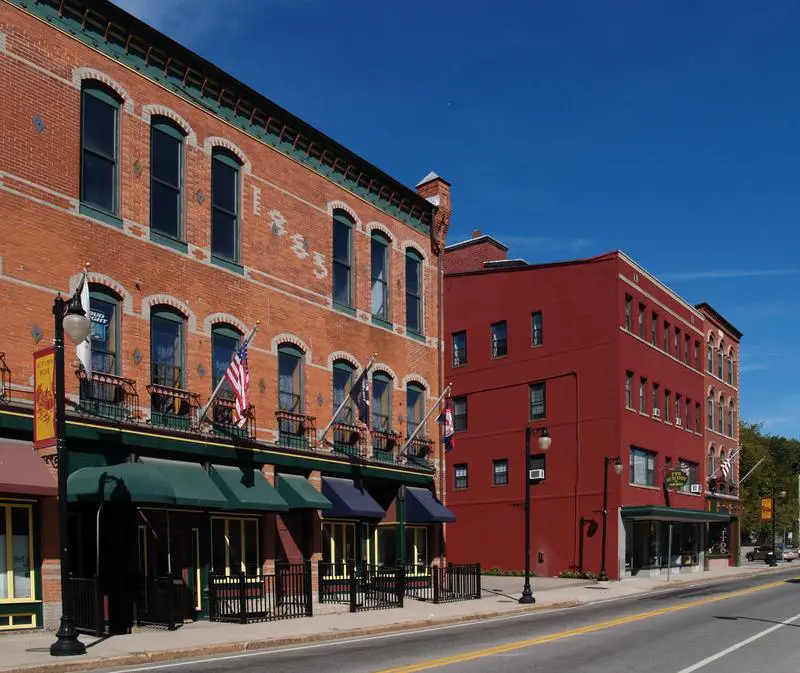
37.9 inches of snow per year
 Located in
Providence County, Rhode Island
Located in
Providence County, Rhode Island
Woonsocket is a city in Providence County, Rhode Island, United States. The population was 41,186 at the 2010 census, making it the sixth largest city in the state. Woonsocket lies directly south of the Massachusetts state line and constitutes part of both the Providence metropolitan area and the larger Greater Boston Combined Statistical Area.
Data | Crime | Cost of living | Movers
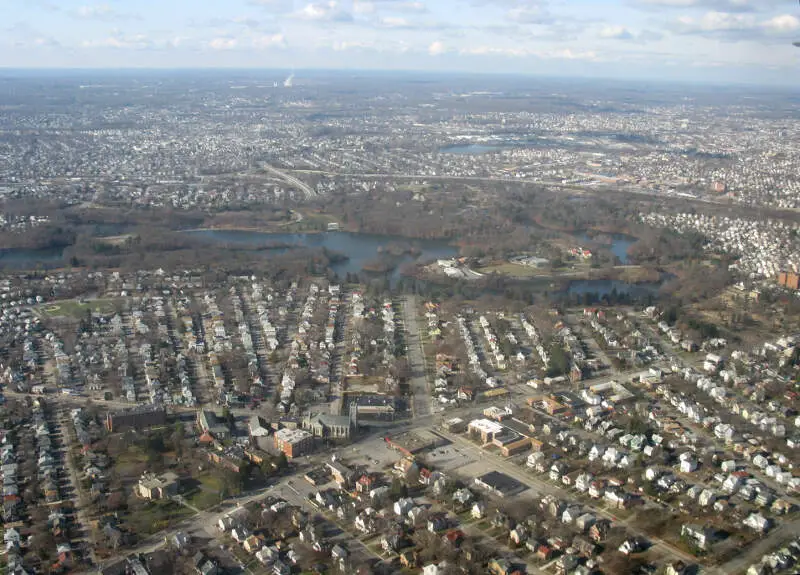
37.1 inches of snow per year
 Located in
Providence County, Rhode Island
Located in
Providence County, Rhode Island
Cranston, once known as Pawtuxet, is a city in the U.S. state of Rhode Island. With a population of 80,529 at the 2010 census, it is the third largest city in the state. The center of population of Rhode Island is located in Cranston. Cranston is a part of the Providence metropolitan area.
Data | Crime | Cost of living | Movers
36.8 inches of snow per year
 Located in
Providence County, Rhode Island
Located in
Providence County, Rhode Island
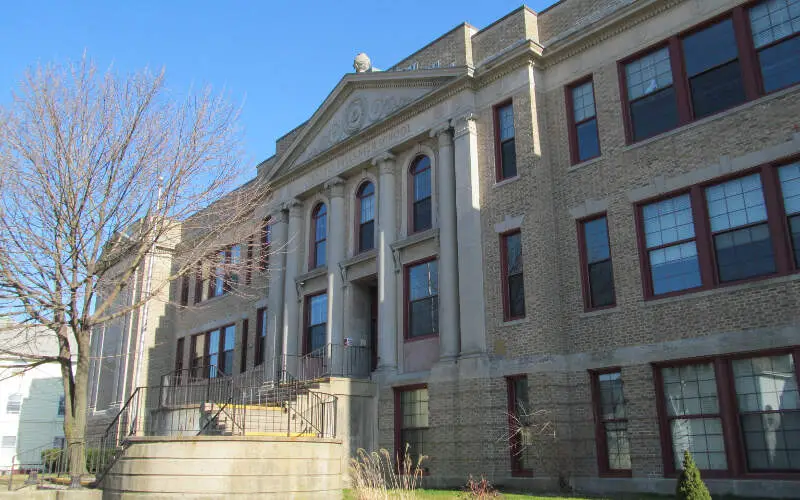
Central Falls is a city in Providence County, Rhode Island, United States. The population was 19,376 at the 2010 census. With an area of only 1.29 square miles, it is the smallest and most densely populated city in the smallest state, and the 27th most densely populated incorporated place in the United States. It is also one of only four incorporated places in New England that have a higher population density than the city of Boston. The city takes its name from a waterfall on the Blackstone River.
Data | Crime | Cost of living | Movers
36.7 inches of snow per year
 Located in
Providence County, Rhode Island
Located in
Providence County, Rhode Island
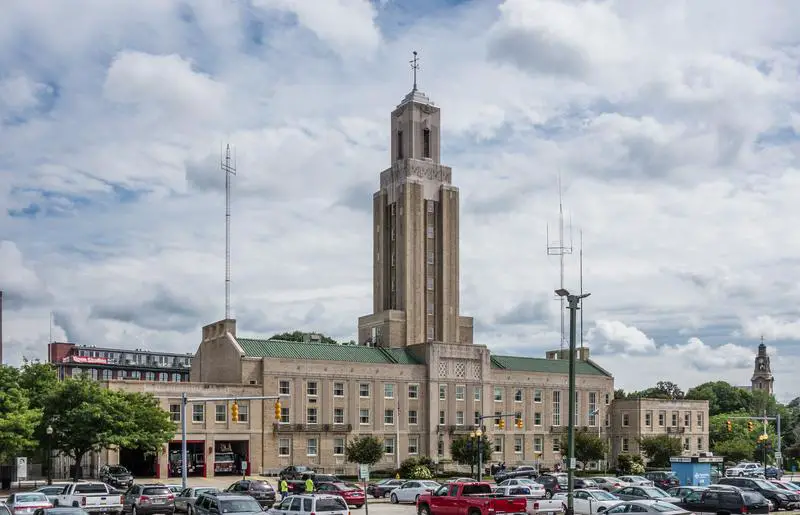
Pawtucket is a city in Providence County, Rhode Island, United States. The population was 71,148 at the 2010 census. It is the fourth largest city in the state.
Data | Crime | Cost of living | Movers
The receipts
Compare the top ten
Pick a metric. The bars rescale. The red line is Rhode Island’s statewide median.
On the map
Where Rhode Island’s snowiest cities are
Saturday Night Science
How We Determined The Cities In Rhode Island With The Most Snow
In order to rank the snowiest cities in Rhode Island, we used Saturday Night Science and the National Oceanic and Atmospheric Administration (NOAA) database, to see which cities in the Ocean State get the most annual snowfall.
We updated this article for 2026. This is our second time ranking the snowiest cities in Rhode Island.
Before we get too far, here are the annual snowfall rates for major cities: Providence (35.7 inches), Warwick (33.3 inches), and Cranston (37.1 inches).
The snowiest cities in Rhode Island are Valley Falls, Cumberland Hill, Greenville, Pascoag, Harrisville, Chepachet, Woonsocket, Cranston, Central Falls, and Pawtucket.
There’s a complete chart at the bottom.
The full plate
Detailed List Of The Snowiest Places In Rhode Island
Click any column to sort. Search by city name.
| Rank | City | Snow (Inches) | Population |
|---|---|---|---|
| 1 | Valley Falls | 39.6 | 12,088 |
| 2 | Cumberland Hill | 39.6 | 8,439 |
| 3 | Greenville | 39.6 | 8,419 |
| 4 | Pascoag | 39.6 | 4,583 |
| 5 | Harrisville | 39.6 | 1,833 |
| 6 | Chepachet | 39.6 | 1,656 |
| 7 | Woonsocket | 37.9 | 41,213 |
| 8 | Cranston | 37.1 | 80,761 |
| 9 | Central Falls | 36.8 | 19,378 |
| 10 | Pawtucket | 36.7 | 71,395 |
| 11 | Providence | 35.7 | 178,680 |
| 12 | East Providence | 35.5 | 47,266 |
| 13 | Warwick | 33.3 | 81,855 |
| 14 | Wakefield-Peacedale | 30.5 | 8,862 |
| 15 | Kingston | 30.5 | 6,969 |
| 16 | Hope Valley | 30.5 | 1,733 |
| 17 | Melville | 30.5 | 1,327 |
| 18 | Bradford | 30.5 | 1,158 |
| 19 | Ashaway | 30.5 | 1,108 |
| 20 | Newport | 27.7 | 24,459 |
| 21 | Westerly | 17,957 | |
| 22 | Newport East | 11,091 | |
| 23 | Tiverton | 7,407 | |
| 24 | Narragansett Pier | 3,957 |
Source: NOAA snowfall data via Saturday Night Science. 24 Rhode Island cities ranked.
Summary
Summary: The Snowiest Cities In Rhode Island For 2026
If you’re looking for the Rhode Island cities that get buried in snow each winter, this is an accurate list.
The snowiest cities in Rhode Island are Valley Falls, Cumberland Hill, Greenville, Pascoag, Harrisville, Chepachet, Woonsocket, Cranston, Central Falls, and Pawtucket. Not sold on Rhode Island? Take the two-minute Find Your Place quiz and see which state actually fits you.
Questions and answers
Snowiest Cities In Rhode Island FAQs
What is the snowiest city in Rhode Island?
Valley Falls is the snowiest city in Rhode Island for 2026, with 39.6 inches of snow in an average year, per NOAA data. Cumberland Hill and Greenville are next.
What are the snowiest cities in Rhode Island?
The snowiest cities in Rhode Island are Valley Falls, Cumberland Hill, Greenville, Pascoag, Harrisville, Chepachet, Woonsocket, Cranston, Central Falls, and Pawtucket. We ranked all 24 Rhode Island cities with measurable snowfall.
How much snow do Rhode Island’s biggest cities get?
Providence averages 35.7 inches of snow a year, Warwick gets 33.3, and Cranston gets 37.1. Wherever you land in Rhode Island, the shovel situation varies a lot.
Which city on the list gets the least snow?
Narragansett Pier gets the least snow of the 24 Rhode Island cities with measurable snowfall. It still made the list, which is more than most of the Sun Belt can say.
Where does the snowfall data come from?
Average annual snowfall comes from NOAA weather station records. Cities are ranked purely on that average — no bonus points for dramatic blizzard stories.