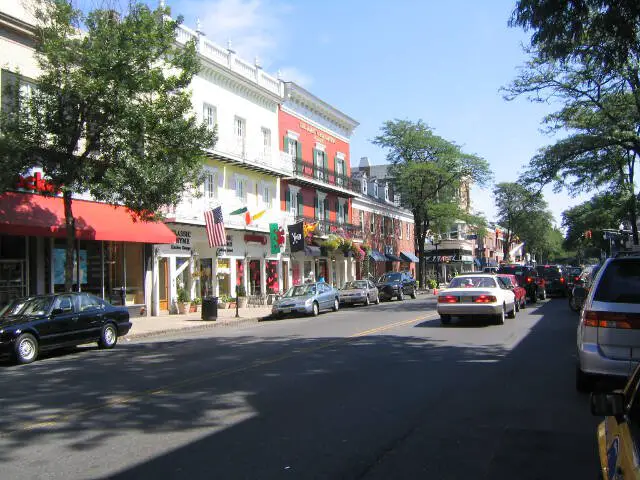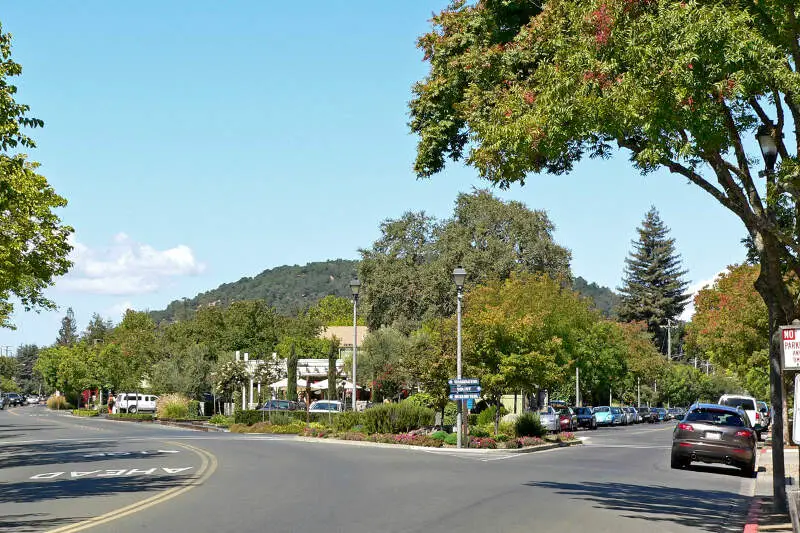
Tucson vs. Santa Fe in photos
A side-by-side look at each city.
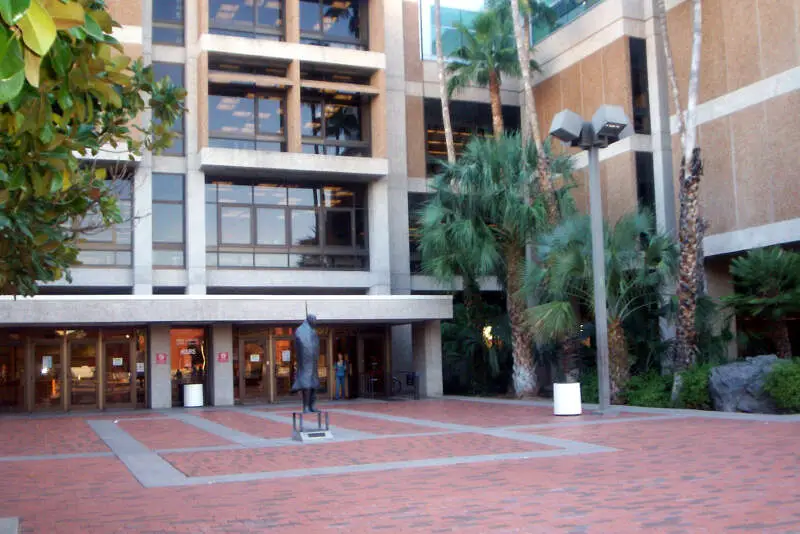
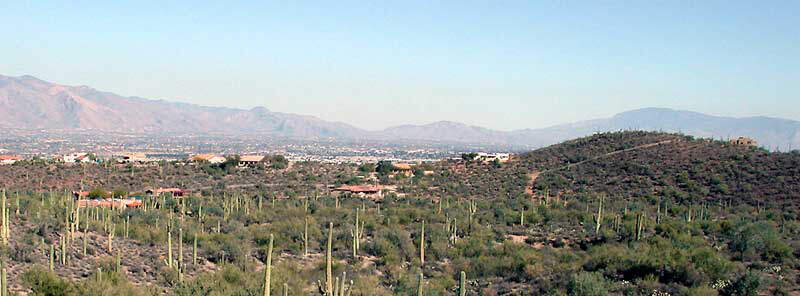
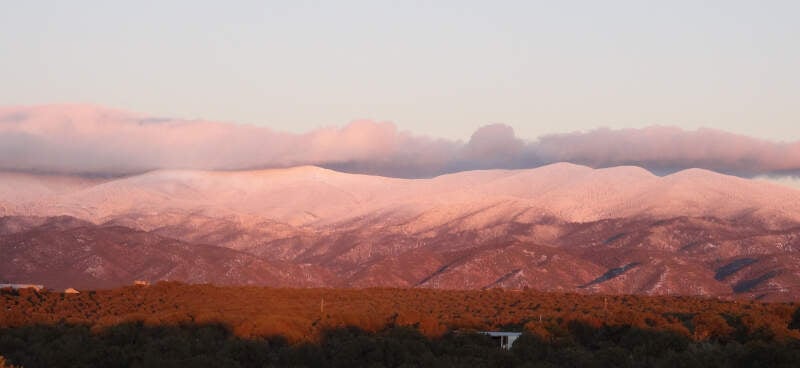
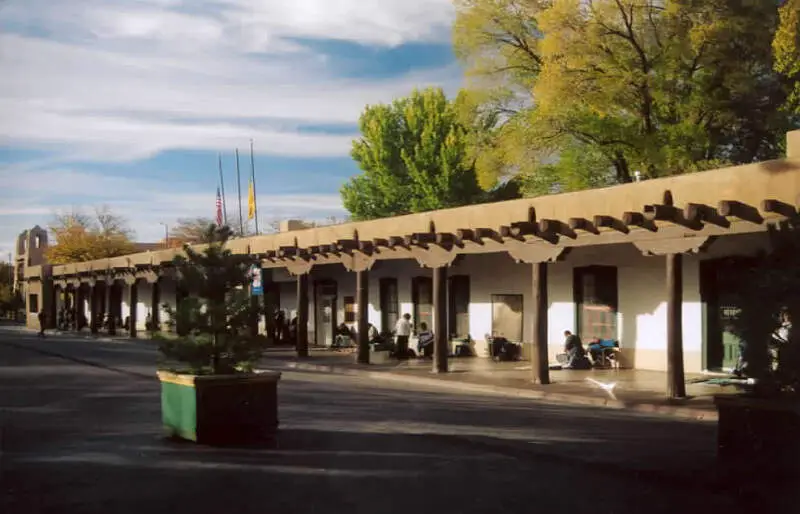
Cost of living
Tucson is the cheaper city overall — 10% higher in Santa Fe than its rival. Index baseline: 100 = national average.
| Living expense | Tucson | Santa Fe | US average |
|---|---|---|---|
| Overall | 102 | 113 | 100 |
| Services | 104 | 96 | 100 |
| Groceries | 102 | 97 | 100 |
| Health | 91 | 143 | 100 |
| Housing | 99 | 93 | 100 |
| Transportation | 112 | 99 | 100 |
| Utilities | 107 | 99 | 100 |
Lower index = cheaper. 100 = U.S. national average. Bar inside each cell scales relative to the highest value in the table.
Sources: HomeSnacks Cost of Living indices, normalized so 100 = U.S. national average. Drill in: Tucson cost of living, Santa Fe cost of living, or the cheapest cities in America.
Housing breakdown
Home prices are higher in Santa Fe. Compare absolute price and price-to-income — a $500k home in a $100k-income city is very different from one in a $50k-income city.
| Metric | Tucson | Santa Fe | United States |
|---|---|---|---|
| Median Home Value | $324,023 | $580,021 | $332,700 |
| Median Rent | $1,145 | $1,463 | $1,413 |
| Median Income | $57,073 | $73,482 | $80,734 |
| Home Value To Income | 5.7x | 7.9x | 4.1x |
| Rent To Monthly Income | 0.24x | 0.24x | 0.21x |
Source: U.S. Census Bureau ACS 2020-2024. See also states with the highest rent in America.
Crime
Tucson is the safer city — total crime rate of 3,902 per 100k people vs 5,999 for Santa Fe. US average: 2,119.
| Crime (per 100k) | Tucson | Santa Fe | US average |
|---|---|---|---|
| Total crime | 3,902 | 5,999 | 2,119 |
| Murder | 7 | 4 | 5 |
| Robbery | 108 | 89 | 61 |
| Aggravated Assault | 426 | 684 | 256 |
| Violent Crime | 589 | 842 | 359 |
| Burglary | 297 | 974 | 229 |
| Larceny | 2,501 | 3,381 | 1,272 |
| Car Theft | 516 | 802 | 259 |
| Property Crime | 3,313 | 5,157 | 1,760 |
Lower = safer. Bar inside each cell scales relative to the highest crime rate in the table.
Source: FBI Uniform Crime Reporting (2024). All rates are per 100,000 people. City pages: Tucson crime, Santa Fe crime. See also: safest cities in America.
Diversity
Tucson is more racially diverse — lower HHI (closer to 0) means a more even mix across groups.
| Group | Tucson | Santa Fe | United States |
|---|---|---|---|
| White | 43.3% | 42.5% | 57.4% |
| African American | 4.8% | 1.1% | 11.9% |
| American Indian | 1.2% | 1.4% | 0.5% |
| Asian | 3.1% | 1.9% | 5.9% |
| Hawaiian | 0.2% | 0.1% | 0.2% |
| Other | 0.4% | 0.6% | 0.6% |
| Two Or More | 4.3% | 3.0% | 4.3% |
| Hispanic | 42.8% | 49.5% | 19.3% |
Source: U.S. Census ACS 2020-2024. Lower HHI = more even racial mix. See also: most diverse cities in America.
SnackAbility — overall quality of life
Santa Fe scores higher overall — 7/10 vs 4/10. SnackAbility is our 1–10 quality-of-life score; the median U.S. city scores a 7.
Scores are 0–10; both bars share the same scale.
SnackAbility is a HomeSnacks proprietary 1–10 score blending jobs, housing, education, commute, amenities, affordability, crime, and diversity. Median U.S. city ≈ 7. Data: Census, BLS, FBI. See also: best places to live in America.
Getting around: Tucson vs. Santa Fe
How each city handles commuting, transit, walkability, and car culture — the day-to-day reality that shapes where you'd actually want to live.
Tucson is large and spread out, but Sun Tran buses and the Sun Link streetcar cover downtown, the University of Arizona corridor, and several major routes reasonably well. If you commute by car, expect a mid-size city grid that rarely hits true gridlock. Parking is generally easy and cheap.
Santa Fe is smaller but more car-dependent. The downtown Plaza is walkable and Canyon Road is strollable, but getting to groceries, employers, or the South Side without a car is genuinely inconvenient. The New Mexico Rail Runner Express connects Santa Fe to Albuquerque in about 90 minutes, handy if you work in ABQ, though nothing comparable exists in Tucson.
For most residents in both cities, owning a car is not optional.
Jobs and careers in Tucson vs. Santa Fe
The local job market, dominant industries, and which city to choose based on your career.
Tucson's job market is anchored by the University of Arizona, Raytheon Missiles and Defense, Davis-Monthan Air Force Base, Banner Health, and Tucson Unified School District. Government, defense, healthcare, and higher ed dominate, keeping the market relatively stable when the broader economy softens. Median household income sits at $57,073, below the national average, reflecting the heavy share of service and public-sector work.
Santa Fe's economy leans heavily on state government (it's New Mexico's capital), tourism, the arts industry, and healthcare. Los Alamos National Laboratory, about 35 miles north, pulls in a significant professional and scientific workforce and helps push median household income to $73,482. Both cities sit above the U.S. cost-of-living average, Tucson at 102 on the index and Santa Fe at 113, so the income gap is smaller in practice than on paper.
Weather and climate
What to expect day-to-day — sun, fog, heat, rain, and the seasonal extremes that shape the lifestyle.
Tucson sits in the Sonoran Desert at around 2,400 feet and delivers more than 300 sunny days a year. Summers are genuinely brutal — June highs regularly top 105°F — but the July-through-September monsoon season breaks the heat with dramatic afternoon thunderstorms. Winters are mild and nearly snow-free, so outdoor activity stays comfortable from October through May.
Santa Fe sits at roughly 7,000 feet in the high desert. Summers are warm and pleasant, rarely cracking 90°F, with low humidity. Winters are a real season: snow is common from November through March, and overnight lows can drop well below freezing.
If you're coming from a colder climate, Santa Fe's winters feel manageable; if you want year-round shorts weather, Tucson wins easily. Both cities get abundant sunshine, but they deliver very different versions of it.
Culture, nightlife, and entertainment
Food, music, neighborhoods, and the city vibe that gives each place its personality.
Tucson has a gritty, eclectic energy shaped by the University of Arizona and a deep Mexican-American cultural identity. The 4th Avenue strip and the Congress Street corridor anchor the bar and live-music scene — Hotel Congress alone has hosted touring acts and local bands for decades. The Barrio Viejo and the Mercado San Agustin give the west side a distinct flavor, and the city's food scene punches well above its income level for tacos, Sonoran-style cooking, and independent restaurants.
Santa Fe takes arts seriously. Canyon Road is lined with galleries, and the Santa Fe Opera runs a nationally recognized summer season in an open-air amphitheater. The Georgia O'Keeffe Museum is a genuine draw, and nightlife leans toward wine bars and chef-driven restaurants rather than Tucson's dive bars and live-music rooms.
Median rent is $1,463 in Santa Fe versus $1,145 in Tucson, so the lifestyle costs more.
Outdoor activities and day trips
Parks, beaches, hikes, and the weekend escapes that define life outside the city limits.
Tucson sits between the East and West units of Saguaro National Park and is ringed by five distinct mountain ranges. Sabino Canyon puts accessible canyon hiking minutes from the city, and Mount Lemmon in the Santa Catalinas tops nearly 9,200 feet and gets snow in winter. Madera Canyon to the south is one of the top birding sites in North America, and the metro has serious infrastructure for road cyclists and mountain bikers.
Santa Fe puts the Sangre de Cristo Mountains right behind the city. The Dale Ball Trail system threads through the foothills above town, and Ski Santa Fe is a legitimate ski area less than 30 minutes from the Plaza. Santa Fe National Forest and easy day trips to Bandelier National Monument and the Valles Caldera National Preserve add plenty of backcountry access.
If skiing and high-elevation hiking matter to you, Santa Fe has an edge; if warm-weather desert trails and saguaro-country hiking are your thing, Tucson is hard to beat.
Bottom line: which city is right for you?
Based on the head-to-head data above, here's the short version — pick the city that lines up with what you actually care about.
Choose Tucson if you prioritize…
- a lower cost of living (cheaper groceries, services, and day-to-day expenses).
- lower crime — a safer place to live, work, and raise a family.
- a more racially diverse community (lower HHI on Census data).
Choose Santa Fe if you prioritize…
- more affordable housing relative to Tucson.
- a higher overall SnackAbility quality-of-life score.
Methodology: winners are picked from public data — U.S. Census Bureau ACS (income, home value, rent, race/HHI), FBI Uniform Crime Reporting (crime rates per 100k), and HomeSnacks' proprietary SnackAbility quality-of-life score, which blends Bureau of Labor Statistics data with the above.
Other comparisons
Still weighing your options? See how these two cities stack up against other places we've compared head-to-head.