Compare St. Paul to…
St. Paul SnackAbility
Overall SnackAbility
Crime in St. Paul summary. We use data from the FBI to determine the crime rates in St. Paul. Key points include:
There were 11,156 total crimes in St. Paul in the last reporting year.
The overall crime rate per 100,000 people in St. Paul is 3,714.1 / 100k people.
The violent crime rate per 100,000 people in St. Paul is 623.9 / 100k people.
The property crime rate per 100,000 people in St. Paul is 3,090.2 / 100k people.
Overall, crime in St. Paul is 75.26% above the national average.
Total Crimes
Above National Average
Crime In St. Paul Comparison Table
| Statistic | Count Raw |
St. Paul / 100k People |
Minnesota / 100k People |
National / 100k People |
|---|---|---|---|---|
| Total Crimes Per 100K | 11,156 | 3,714.1 | 1,862.9 | 2,119.2 |
| Violent Crime | 1,874 | 623.9 | 256.6 | 359.0 |
| Murder | 27 | 9.0 | 2.9 | 5.0 |
| Robbery | 381 | 126.8 | 48.9 | 61.0 |
| Aggravated Assault | 1,264 | 420.8 | 168.0 | 256.0 |
| Property Crime | 9,282 | 3,090.2 | 1,606.3 | 1,760.0 |
| Burglary | 1,305 | 434.5 | 184.7 | 229.0 |
| Larceny | 5,896 | 1,962.9 | 1,208.5 | 1,272.0 |
| Car Theft | 2,081 | 692.8 | 213.1 | 259.0 |
Source: FBI Uniform Crime Reporting (2024)
Cost of living in St. Paul summary. We use data on the cost of living to determine how expensive it is to live in St. Paul. Real estate prices drive most of the variance in cost of living around Minnesota. Key points include:
The cost of living in St. Paul is 103 with 100 being average.
The cost of living in St. Paul is 1.0x higher than the national average.
The median home value in St. Paul is $293,972.
The median income in St. Paul is $73,394.
St. Paul's Overall Cost Of Living
Higher Than The National Average
Cost Of Living In St. Paul Comparison Table
| Living Expense | St. Paul | Minnesota | National Average |
|---|---|---|---|
| Overall | 103 | 101 | 100 |
| Services | 98 | 101 | 100 |
| Groceries | 105 | 99 | 100 |
| Health | 112 | 99 | 100 |
| Housing | 99 | 101 | 100 |
| Transportation | 107 | 103 | 100 |
| Utilities | 95 | 101 | 100 |
Source: Cost of living index, normalized to US average = 100
St. Paul, MN Weather
The average high in St. Paul is 55.4° and the average low is 36.9°.
There are 61.3 days of precipitation each year.
Expect an average of 32.5 inches of precipitation each year with 51.0 inches of snow.
| Stat | St. Paul |
|---|---|
| Average Annual High | 55.4 |
| Average Annual Low | 36.9 |
| Annual Precipitation Days | 61.3 |
| Average Annual Precipitation | 32.5 |
| Average Annual Snowfall | 51.0 |
Average High
Days of Rain
Source: NOAA climate normals (30-year)
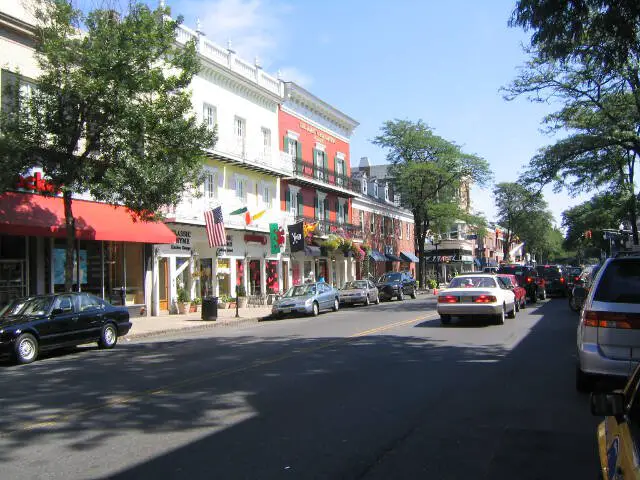
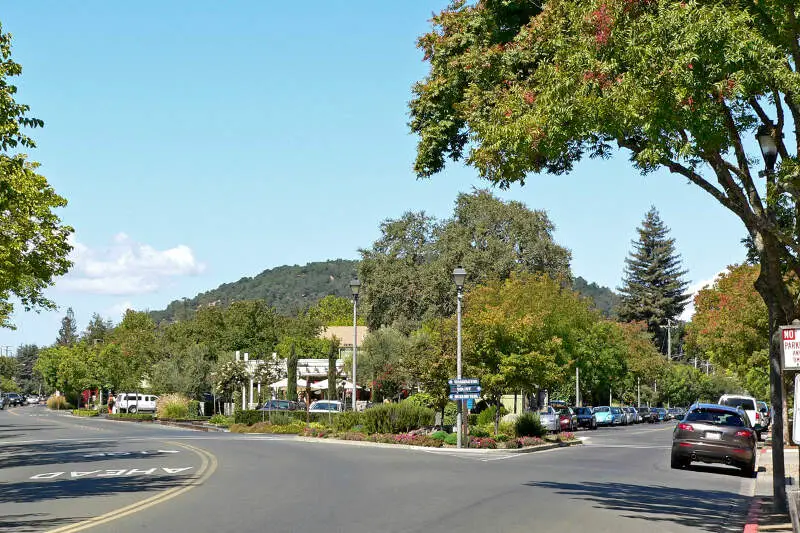
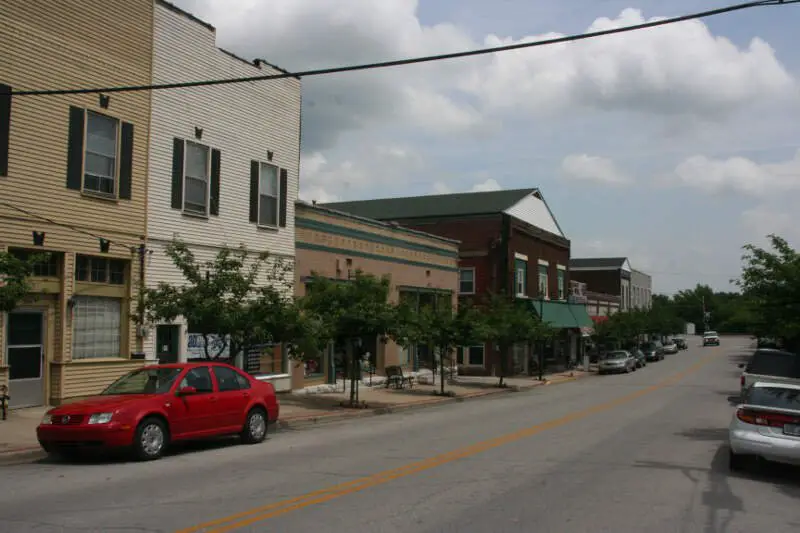
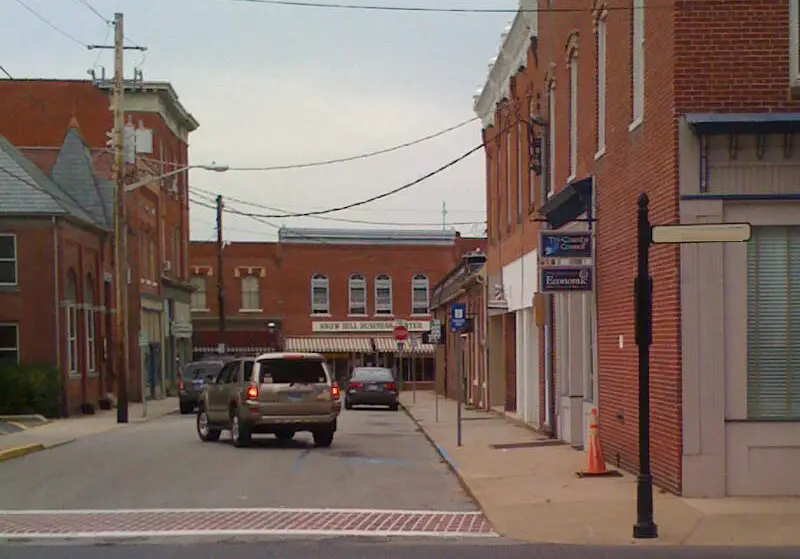
St. Paul, MN Photos

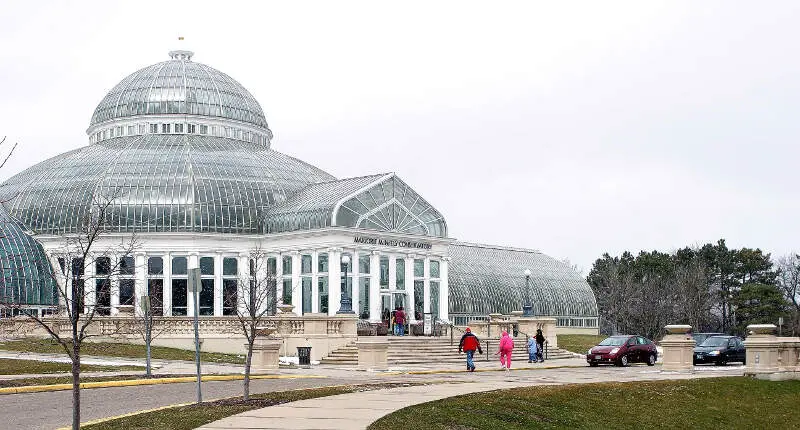



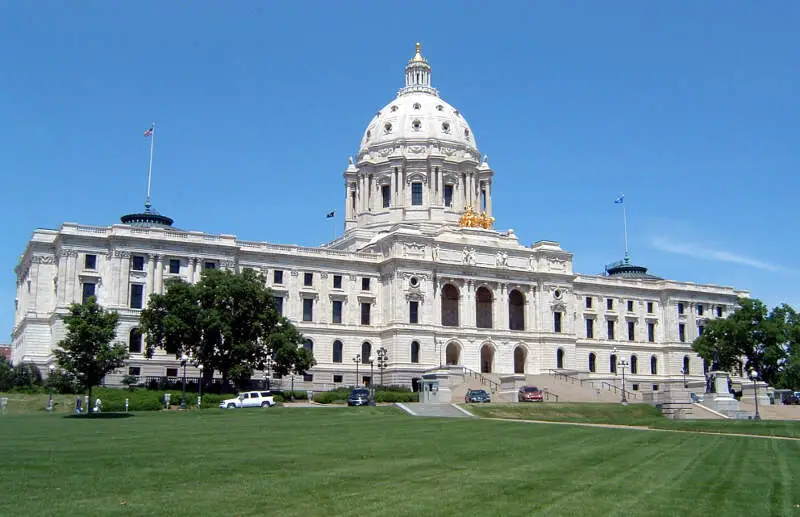
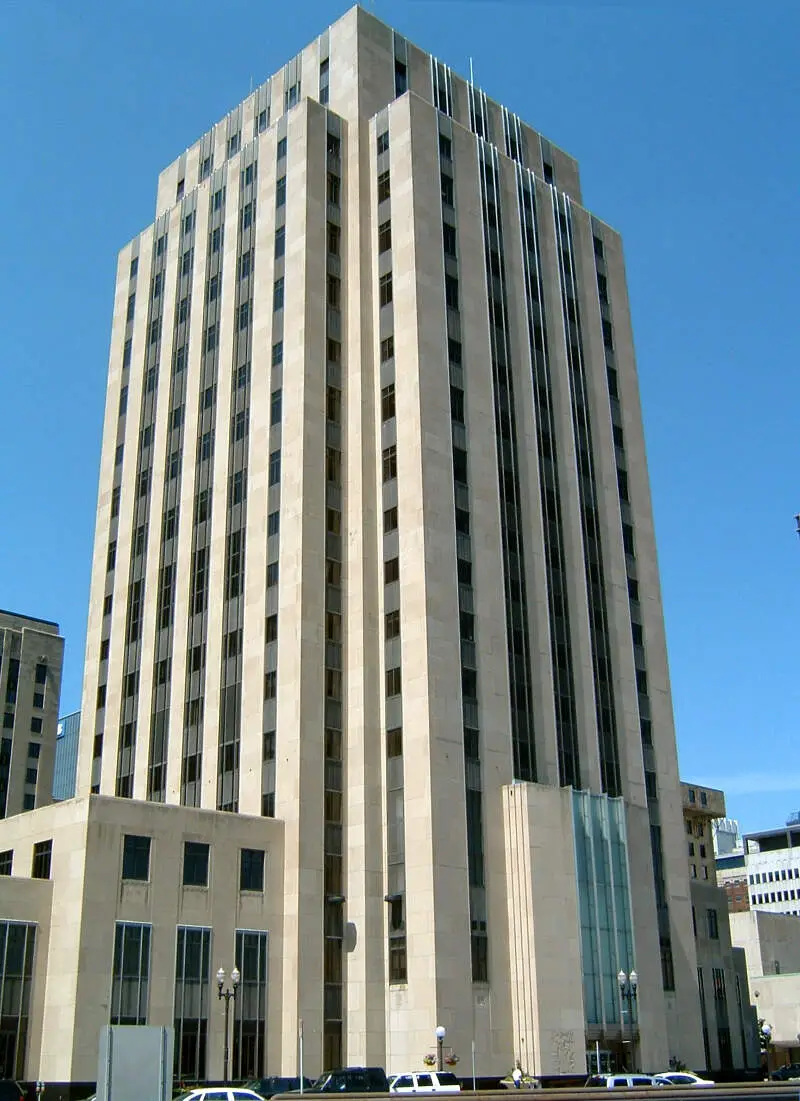
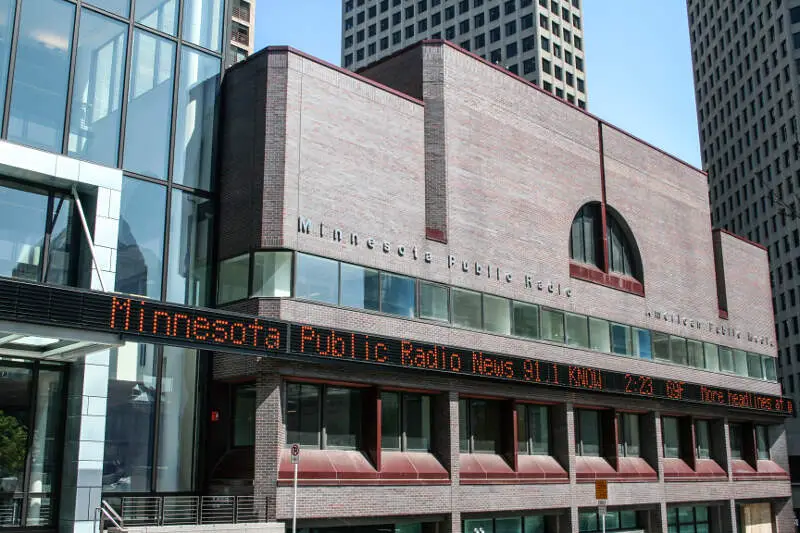
2 Reviews & Comments About St. Paul

I was born and raised in St. Paul but I've been everywhere in this country and I can say MN ain't s**t!! Worst place in MN is the Northside/Southside Minneapolis.
I've been to Harlem, Philly, Brooklyn,L.A., Baltimore,Dallas, Miami, Memphis,Las Vegas, Detroit, Chicago, Fresno, Cleveland, both of the KC's and all these places are way worse than Minneapolis/st.paul, and the whole state lol.
We have it good in MN pretty much all the crime other than the cities are just a bunch of suburban m**h heads lookin to steal your car radio. But the killing is at a minimum in the whole state which is good but I hate how people say Minneapolis and st.paul is ghetto af because it's not.
It's a little ghetto but not nearly as bad as a lot of other places.
The weather s***s! It's now May, and we have snow up north-! Winters are freezing cold, summers are super hot with mosquitoes, the State bird! Taxes are ridiculous and the roads have potholes the size of Texas!
Stillwater is a beautiful city on the river, with lots of cute shops and restaurants, which is worth your trip!
Rankings & Articles For St. Paul
Locations Around St. Paul
Map Of St. Paul, MN
Best Places Around St. Paul
Edina, MN
Population 53,262
Shoreview, MN
Population 26,714
Plymouth, MN
Population 79,220
Eden Prairie, MN
Population 63,051
Mahtomedi, MN
Population 8,133
Woodbury, MN
Population 78,305
Minnetonka, MN
Population 53,064
Lakeville, MN
Population 74,354
Mendota Heights, MN
Population 11,612
Apple Valley, MN
Population 55,679
St. Paul Demographics And Statistics
Population over time in St. Paul
The current population in St. Paul is 307,284. The population has increased 8.9% from 2010.
| Year | Population | % Change |
|---|---|---|
| 2024 | 307,284 | -0.2% |
| 2023 | 307,762 | -0.3% |
| 2022 | 308,806 | -0.3% |
| 2021 | 309,751 | 1.3% |
| 2020 | 305,877 | 0.4% |
| 2019 | 304,547 | 0.6% |
| 2018 | 302,760 | 0.6% |
| 2017 | 300,820 | 1.2% |
| 2016 | 297,160 | 0.7% |
| 2015 | 295,043 | 1.1% |
| 2014 | 291,728 | 1.0% |
| 2013 | 288,802 | 0.9% |
| 2012 | 286,171 | 0.8% |
| 2011 | 283,991 | 0.7% |
| 2010 | 282,079 | - |
Race / Ethnicity in St. Paul
See the full breakdown
St. Paul is:
50.0% White with 153,612 White residents.
15.7% African American with 48,284 African American residents.
0.4% American Indian with 1,283 American Indian residents.
17.8% Asian with 54,722 Asian residents.
0.0% Hawaiian with 84 Hawaiian residents.
0.4% Other with 1,360 Other residents.
6.1% Two Or More with 18,857 Two Or More residents.
9.5% Hispanic with 29,082 Hispanic residents.
| Race | St. Paul | MN | USA |
|---|---|---|---|
| White | 50.0% | 75.9% | 57.4% |
| African American | 15.7% | 6.9% | 11.9% |
| American Indian | 0.4% | 0.7% | 0.5% |
| Asian | 17.8% | 5.1% | 5.9% |
| Hawaiian | 0.0% | 0.0% | 0.2% |
| Other | 0.4% | 0.5% | 0.6% |
| Two Or More | 6.1% | 4.5% | 4.3% |
| Hispanic | 9.5% | 6.4% | 19.3% |
Gender in St. Paul
See the full breakdown
St. Paul is 50.9% female with 156,470 female residents.
St. Paul is 49.1% male with 150,814 male residents.
| Gender | St. Paul | MN | USA |
|---|---|---|---|
| Female | 50.9% | 49.9% | 50.5% |
| Male | 49.1% | 50.1% | 49.5% |
Highest level of educational attainment in St. Paul for adults over 25
See the full breakdown
7.0% of adults in St. Paul completed < 9th grade.
4.0% of adults in St. Paul completed 9-12th grade.
21.0% of adults in St. Paul completed high school / ged.
17.0% of adults in St. Paul completed some college.
7.0% of adults in St. Paul completed associate's degree.
25.0% of adults in St. Paul completed bachelor's degree.
12.0% of adults in St. Paul completed master's degree.
4.0% of adults in St. Paul completed professional degree.
3.0% of adults in St. Paul completed doctorate degree.
| Education | St. Paul | MN | USA |
|---|---|---|---|
| < 9th Grade | 7.0% | 3.0% | 4.0% |
| 9-12th Grade | 4.0% | 3.0% | 6.0% |
| High School / GED | 21.0% | 23.0% | 26.0% |
| Some College | 17.0% | 19.0% | 19.0% |
| Associate's Degree | 7.0% | 12.0% | 9.0% |
| Bachelor's Degree | 25.0% | 26.0% | 22.0% |
| Master's Degree | 12.0% | 10.0% | 10.0% |
| Professional Degree | 4.0% | 2.0% | 2.0% |
| Doctorate Degree | 3.0% | 2.0% | 2.0% |
Household Income For St. Paul, Minnesota
See the full breakdown
5.6% of households in St. Paul earn Less than $10,000.
3.9% of households in St. Paul earn $10,000 to $14,999.
6.6% of households in St. Paul earn $15,000 to $24,999.
6.5% of households in St. Paul earn $25,000 to $34,999.
10.5% of households in St. Paul earn $35,000 to $49,999.
18.0% of households in St. Paul earn $50,000 to $74,999.
12.3% of households in St. Paul earn $75,000 to $99,999.
16.7% of households in St. Paul earn $100,000 to $149,999.
9.3% of households in St. Paul earn $150,000 to $199,999.
10.7% of households in St. Paul earn $200,000 or more.
| Income | St. Paul | MN | USA |
|---|---|---|---|
| Less than $10,000 | 5.6% | 3.8% | 5.0% |
| $10,000 to $14,999 | 3.9% | 2.7% | 3.4% |
| $15,000 to $24,999 | 6.6% | 5.2% | 6.3% |
| $25,000 to $34,999 | 6.5% | 5.6% | 6.6% |
| $35,000 to $49,999 | 10.5% | 9.3% | 10.1% |
| $50,000 to $74,999 | 18.0% | 15.6% | 15.5% |
| $75,000 to $99,999 | 12.3% | 13.2% | 12.6% |
| $100,000 to $149,999 | 16.7% | 19.6% | 17.5% |
| $150,000 to $199,999 | 9.3% | 11.2% | 9.6% |
| $200,000 or more | 10.7% | 13.8% | 13.4% |
Source: U.S. Census ACS 5-year estimates (2024)