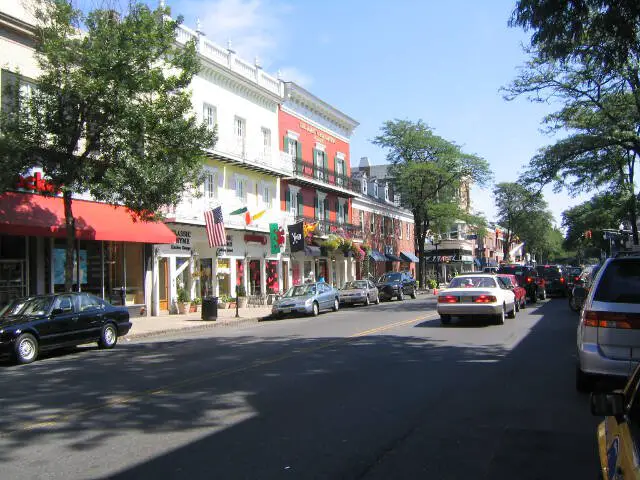
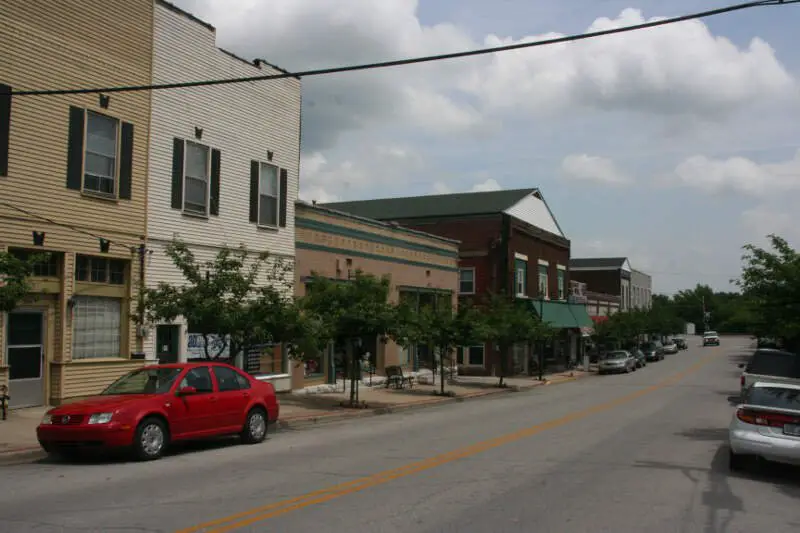
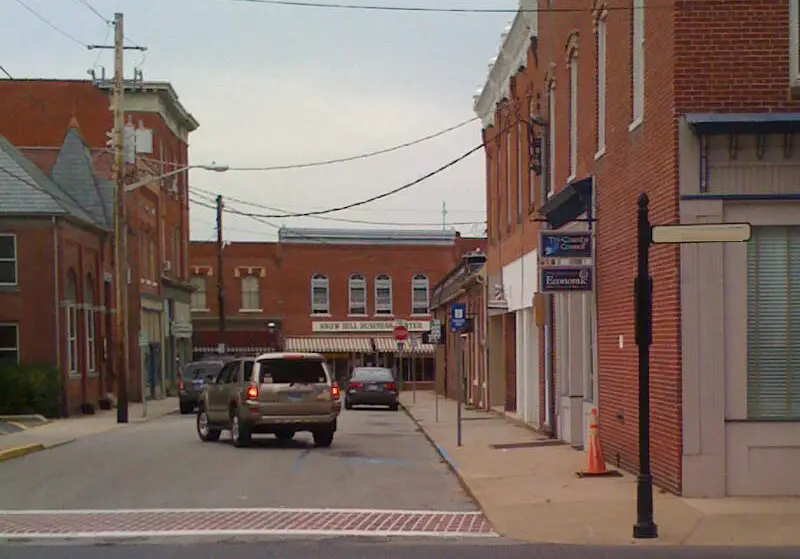
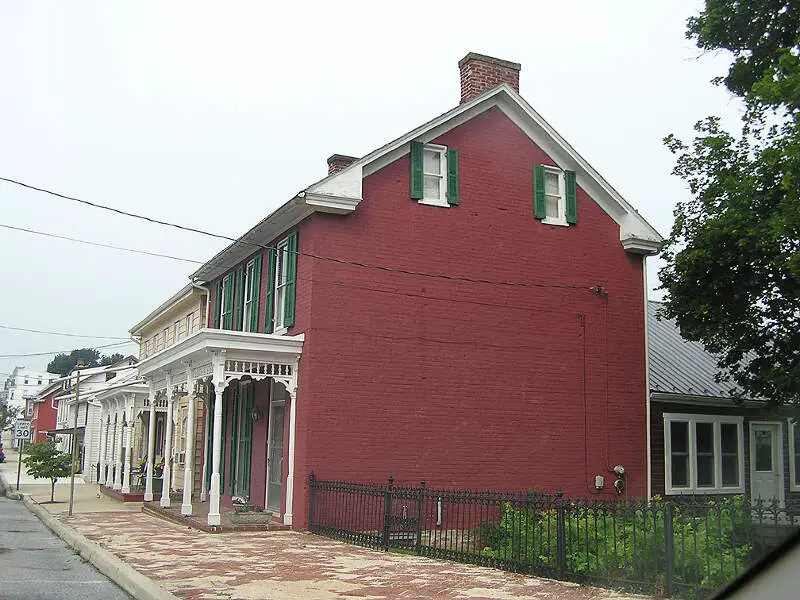
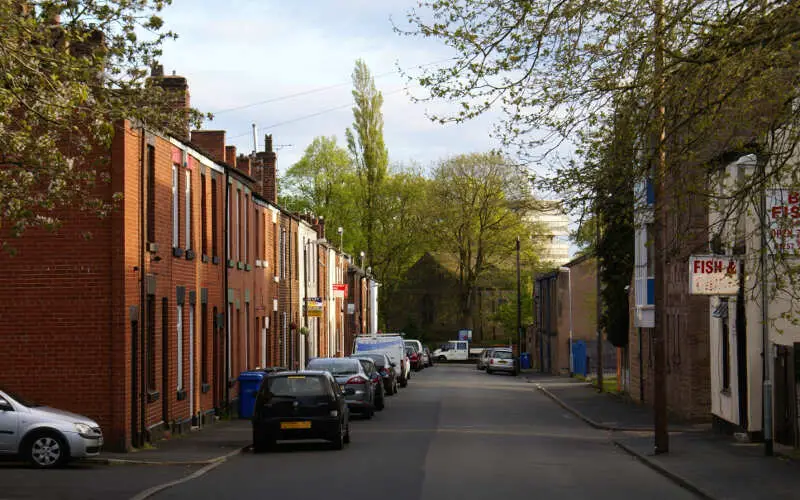
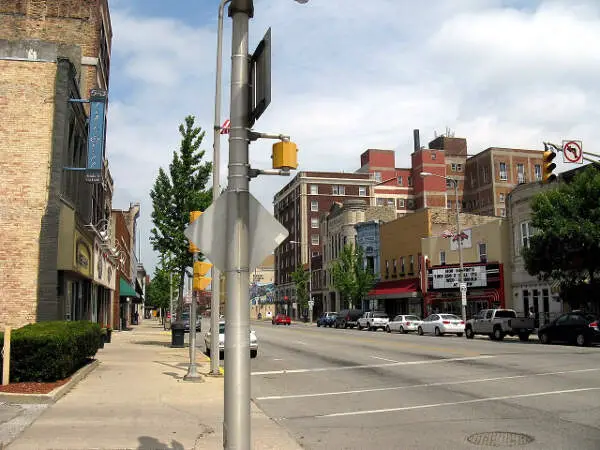
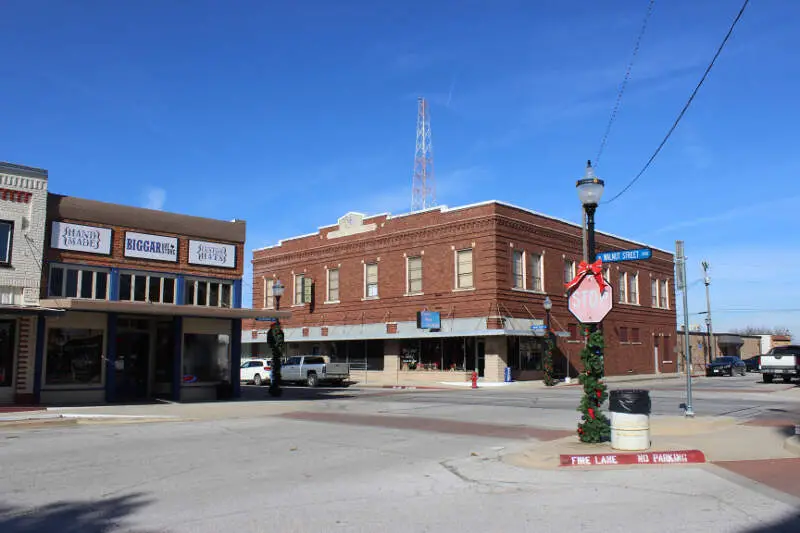
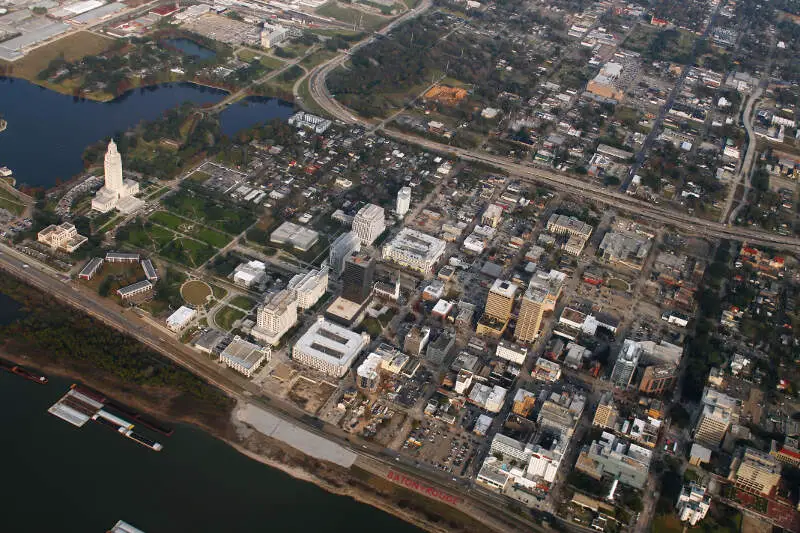
Baton Rouge vs. Chicago in photos
A side-by-side look at each city.




Cost of living
Baton Rouge is the cheaper city overall — 12% higher in Chicago than its rival. Index baseline: 100 = national average.
| Living expense | Baton Rouge | Chicago | US average |
|---|---|---|---|
| Overall | 100 | 114 | 100 |
| Services | 103 | 103 | 100 |
| Groceries | 97 | 99 | 100 |
| Health | 97 | 140 | 100 |
| Housing | 101 | 107 | 100 |
| Transportation | 101 | 104 | 100 |
| Utilities | 95 | 103 | 100 |
Lower index = cheaper. 100 = U.S. national average. Bar inside each cell scales relative to the highest value in the table.
Sources: HomeSnacks Cost of Living indices, normalized so 100 = U.S. national average. Drill in: Baton Rouge cost of living, Chicago cost of living, or the cheapest cities in America.
Housing breakdown
Home prices are higher in Chicago. Compare absolute price and price-to-income — a $500k home in a $100k-income city is very different from one in a $50k-income city.
| Metric | Baton Rouge | Chicago | United States |
|---|---|---|---|
| Median Home Value | $228,414 | $317,282 | $332,700 |
| Median Rent | $1,067 | $1,440 | $1,413 |
| Median Income | $49,994 | $77,902 | $80,734 |
| Home Value To Income | 4.6x | 4.1x | 4.1x |
| Rent To Monthly Income | 0.26x | 0.22x | 0.21x |
Source: U.S. Census Bureau ACS 2020-2024. See also states with the highest rent in America.
Crime
Chicago is the safer city — total crime rate of 4,012 per 100k people vs 6,530 for Baton Rouge. US average: 2,119.
| Crime (per 100k) | Baton Rouge | Chicago | US average |
|---|---|---|---|
| Total crime | 6,530 | 4,012 | 2,119 |
| Murder | 24 | 17 | 5 |
| Robbery | 137 | 335 | 61 |
| Aggravated Assault | 778 | 128 | 256 |
| Violent Crime | 1,004 | 540 | 359 |
| Burglary | 1,299 | 295 | 229 |
| Larceny | 3,322 | 2,319 | 1,272 |
| Car Theft | 906 | 859 | 259 |
| Property Crime | 5,527 | 3,472 | 1,760 |
Lower = safer. Bar inside each cell scales relative to the highest crime rate in the table.
Source: FBI Uniform Crime Reporting (2024). All rates are per 100,000 people. City pages: Baton Rouge crime, Chicago crime. See also: safest cities in America.
Diversity
Chicago is more racially diverse — lower HHI (closer to 0) means a more even mix across groups.
| Group | Baton Rouge | Chicago | United States |
|---|---|---|---|
| White | 34.8% | 32.1% | 57.4% |
| African American | 50.4% | 27.4% | 11.9% |
| American Indian | 0.1% | 0.1% | 0.5% |
| Asian | 4.0% | 7.2% | 5.9% |
| Hawaiian | 0.0% | 0.0% | 0.2% |
| Other | 0.6% | 0.4% | 0.6% |
| Two Or More | 4.0% | 3.0% | 4.3% |
| Hispanic | 6.2% | 29.7% | 19.3% |
Source: U.S. Census ACS 2020-2024. Lower HHI = more even racial mix. See also: most diverse cities in America.
SnackAbility — overall quality of life
Chicago scores higher overall — 7/10 vs 4/10. SnackAbility is our 1–10 quality-of-life score; the median U.S. city scores a 7.
Scores are 0–10; both bars share the same scale.
SnackAbility is a HomeSnacks proprietary 1–10 score blending jobs, housing, education, commute, amenities, affordability, crime, and diversity. Median U.S. city ≈ 7. Data: Census, BLS, FBI. See also: best places to live in America.
Getting around: Baton Rouge vs. Chicago
How each city handles commuting, transit, walkability, and car culture — the day-to-day reality that shapes where you'd actually want to live.
If you own a car, Baton Rouge was built for you, and you'll almost certainly need one. The Capital Area Transit System (CATS) runs buses, but routes are sparse and infrequent enough that very few residents rely on them daily. Traffic on I-10 and I-12 can be genuinely brutal during peak hours, and road infrastructure has struggled to keep pace with growth in the surrounding parishes.
Chicago's setup is the opposite. The CTA's "L" train connects neighborhoods from Rogers Park down to Hyde Park, and the Metra commuter rail extends deep into the suburbs. If you live near a Blue, Red, or Green Line stop, a car is optional rather than mandatory.
Cycling infrastructure has expanded along the lakefront and into neighborhoods like Wicker Park and Logan Square. Parking, though, is a real ongoing cost if you do drive, something Baton Rouge residents rarely budget for.
Jobs and careers in Baton Rouge vs. Chicago
The local job market, dominant industries, and which city to choose based on your career.
Baton Rouge's economy leans heavily on petrochemical and refining (ExxonMobil and Turner Industries have major presences along the Mississippi corridor), state government, healthcare anchored by Our Lady of the Lake and Baton Rouge General, and LSU. The median household income sits at $49,994, below the national average. High-paying private-sector roles outside of energy are limited.
Chicago's job market spans finance (CME Group, Northern Trust), healthcare (Northwestern Medicine, Advocate Health), consumer goods (Kraft Heinz, Mondelez), and a growing tech sector. Median household income is $77,902, though the cost of living index of 114 versus Baton Rouge's 100 means your dollar goes less far. If career mobility and industry variety matter to you, Chicago has considerably more to offer.
Weather and climate
What to expect day-to-day — sun, fog, heat, rain, and the seasonal extremes that shape the lifestyle.
Baton Rouge is in the humid subtropical zone, with heat indices above 100°F from June through September. The humidity makes every outdoor errand feel like a workout. Winters are mild and brief, hard freezes are rare, and you'll rarely need a heavy coat.
The real tradeoff is hurricane season. Gulf storms regularly threaten the region, and the aftermath of major storms like Katrina and Ida still shapes how locals prepare and plan.
Chicago earns its "Windy City" reputation in January and February, when Lake Michigan funnels Arctic air across the city and wind chills can drop to -20°F or colder. Summers are warm, breezy, and full of festival energy along the lakefront. If you're coming from Baton Rouge, the four distinct seasons will feel like a novelty at first, but a Chicago winter is not something to underestimate before signing a lease.
Culture, nightlife, and entertainment
Food, music, neighborhoods, and the city vibe that gives each place its personality.
Baton Rouge's cultural identity is shaped by LSU football Saturdays, Cajun and Creole food traditions, and its proximity to New Orleans, about 80 miles down I-10. The Perkins Road Overpass corridor, the Shaw Center for the Arts, and venues like the Varsity Theatre give the city a local arts and music scene that punches above its size. Restaurants along Government Street and in Mid City are genuinely excellent, especially if you love Southern and Louisiana cooking.
Chicago operates at a different scale. The Art Institute, the Field Museum, the Chicago Symphony Orchestra, and Broadway in Chicago place it among the top cultural cities in North America. Neighborhoods like Pilsen, Bronzeville, Andersonville, and Wicker Park each carry their own character and nightlife.
The city's deep blues and house music heritage still surfaces in live-music venues citywide. At a cost of living index of 114 versus Baton Rouge's 100, you'll pay more to live here, but the cultural options are hard to match.
Outdoor activities and day trips
Parks, beaches, hikes, and the weekend escapes that define life outside the city limits.
Baton Rouge's outdoor life centers on water and green space. City Park and the LSU lakes offer easy running and cycling loops, and the Mississippi River levee trail is a surprisingly peaceful escape given how urban the surroundings are. Venture farther and you'll reach Tunica Hills and Kisatchie National Forest for hiking.
Head east into the Atchafalaya Basin for kayaking through one of the largest river swamps in North America, a day trip worth the drive.
Chicago's 18-mile Lakefront Trail connects beaches, parks, and neighborhoods along Lake Michigan in one continuous greenway. Lincoln Park, Millennium Park, and Grant Park are heavily used and well-maintained year-round.
Indiana Dunes National Park is about an hour east, with swimmable beaches and dune hiking that most visitors don't expect this close to a major metro. The Forest Preserves of Cook County add over 70,000 acres of trails within reach of the city.
Bottom line: which city is right for you?
Based on the head-to-head data above, here's the short version — pick the city that lines up with what you actually care about.
Choose Baton Rouge if you prioritize…
- a lower cost of living (cheaper groceries, services, and day-to-day expenses).
Choose Chicago if you prioritize…
- lower crime — a safer place to live, work, and raise a family.
- more affordable housing relative to Baton Rouge.
- a more racially diverse community (lower HHI on Census data).
- a higher overall SnackAbility quality-of-life score.
Methodology: winners are picked from public data — U.S. Census Bureau ACS (income, home value, rent, race/HHI), FBI Uniform Crime Reporting (crime rates per 100k), and HomeSnacks' proprietary SnackAbility quality-of-life score, which blends Bureau of Labor Statistics data with the above.
Other comparisons
Still weighing your options? See how these two cities stack up against other places we've compared head-to-head.