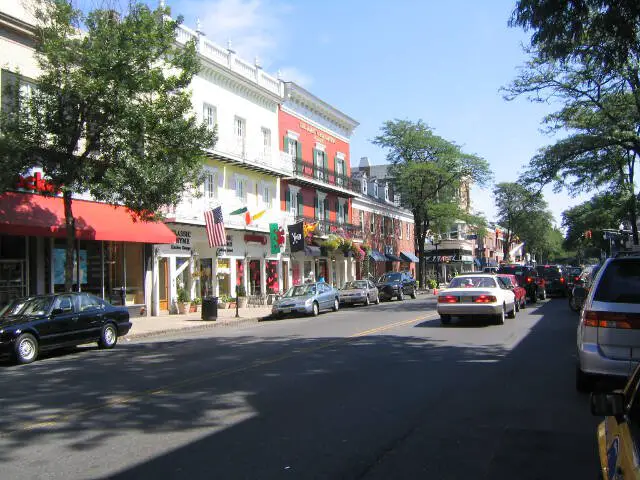
Chicago vs. Detroit in photos
A side-by-side look at each city.





Cost of living
Detroit is the cheaper city overall — 37% higher in Chicago than its rival. Index baseline: 100 = national average.
| Living expense | Chicago | Detroit | US average |
|---|---|---|---|
| Overall | 114 | 83 | 100 |
| Services | 103 | 100 | 100 |
| Groceries | 99 | 98 | 100 |
| Health | 140 | 45 | 100 |
| Housing | 107 | 94 | 100 |
| Transportation | 104 | 102 | 100 |
| Utilities | 103 | 99 | 100 |
Lower index = cheaper. 100 = U.S. national average. Bar inside each cell scales relative to the highest value in the table.
Sources: HomeSnacks Cost of Living indices, normalized so 100 = U.S. national average. Drill in: Chicago cost of living, Detroit cost of living, or the cheapest cities in America.
Housing breakdown
Home prices are higher in Detroit. Compare absolute price and price-to-income — a $500k home in a $100k-income city is very different from one in a $50k-income city.
| Metric | Chicago | Detroit | United States |
|---|---|---|---|
| Median Home Value | $317,282 | $75,357 | $332,700 |
| Median Rent | $1,440 | $1,074 | $1,413 |
| Median Income | $77,902 | $39,938 | $80,734 |
| Home Value To Income | 4.1x | 1.9x | 4.1x |
| Rent To Monthly Income | 0.22x | 0.32x | 0.21x |
Source: U.S. Census Bureau ACS 2020-2024. See also states with the highest rent in America.
Crime
Chicago is the safer city — total crime rate of 4,012 per 100k people vs 6,087 for Detroit. US average: 2,119.
| Crime (per 100k) | Chicago | Detroit | US average |
|---|---|---|---|
| Total crime | 4,012 | 6,087 | 2,119 |
| Murder | 17 | 31 | 5 |
| Robbery | 335 | 184 | 61 |
| Aggravated Assault | 128 | 1,474 | 256 |
| Violent Crime | 540 | 1,781 | 359 |
| Burglary | 295 | 703 | 229 |
| Larceny | 2,319 | 2,344 | 1,272 |
| Car Theft | 859 | 1,258 | 259 |
| Property Crime | 3,472 | 4,305 | 1,760 |
Lower = safer. Bar inside each cell scales relative to the highest crime rate in the table.
Source: FBI Uniform Crime Reporting (2024). All rates are per 100,000 people. City pages: Chicago crime, Detroit crime. See also: safest cities in America.
Diversity
Chicago is more racially diverse — lower HHI (closer to 0) means a more even mix across groups.
| Group | Chicago | Detroit | United States |
|---|---|---|---|
| White | 32.1% | 10.8% | 57.4% |
| African American | 27.4% | 75.0% | 11.9% |
| American Indian | 0.1% | 0.2% | 0.5% |
| Asian | 7.2% | 1.7% | 5.9% |
| Hawaiian | 0.0% | 0.0% | 0.2% |
| Other | 0.4% | 0.6% | 0.6% |
| Two Or More | 3.0% | 3.4% | 4.3% |
| Hispanic | 29.7% | 8.3% | 19.3% |
Source: U.S. Census ACS 2020-2024. Lower HHI = more even racial mix. See also: most diverse cities in America.
SnackAbility — overall quality of life
Chicago scores higher overall — 7/10 vs 3/10. SnackAbility is our 1–10 quality-of-life score; the median U.S. city scores a 7.
Scores are 0–10; both bars share the same scale.
SnackAbility is a HomeSnacks proprietary 1–10 score blending jobs, housing, education, commute, amenities, affordability, crime, and diversity. Median U.S. city ≈ 7. Data: Census, BLS, FBI. See also: best places to live in America.
Getting around: Chicago vs. Detroit
How each city handles commuting, transit, walkability, and car culture — the day-to-day reality that shapes where you'd actually want to live.
Chicago's transit network is one of the most functional in the country. The CTA's eight 'L' lines reach most neighborhoods, and a dense bus grid fills the gaps. Metra commuter rail extends that reach into suburbs like Evanston, Oak Park, and Naperville.
If you commute downtown without a car, Chicago is genuinely practical. O'Hare and Midway give you strong flight options, and the city is walkable in dense corridors like the Loop, Lincoln Park, and Wicker Park.
Detroit was built around the car and still runs on that assumption. The QLINE streetcar and the downtown People Mover are novelties rather than commuter tools, covering limited ground. For most residents, daily life without a vehicle is frustrating.
If you're relocating from Chicago and expect to sell your car, Detroit will require an adjustment. Budget for parking, fuel, and a reliable vehicle if you move there.
Jobs and careers in Chicago vs. Detroit
The local job market, dominant industries, and which city to choose based on your career.
Chicago's economy is broad. Finance anchors the Loop, with CME Group, Northern Trust, and Morningstar all headquartered here. You'll also find major tech offices, Northwestern Medicine and Rush in healthcare, and corporate headquarters for Boeing, United Airlines, and Allstate.
The professional services market is competitive, and the median household income of $77,902 reflects that. The cost of living index is 114, so salaries need to be read against higher costs.
Detroit's economy runs on auto. Ford, GM, and Stellantis all have a significant presence, with suppliers and engineering firms clustered around them. Henry Ford Health is another major employer.
There's a real startup scene in Corktown and Midtown, but the job market is narrower overall. The median household income of $39,938 reflects that gap, though a cost of living index of 83 means your dollar goes considerably further.
Weather and climate
What to expect day-to-day — sun, fog, heat, rain, and the seasonal extremes that shape the lifestyle.
Both cities sit in the Great Lakes region and share a broadly similar climate, but Chicago edges toward the harsher end. Winters bring cold temperatures, frequent snow, and the wind off Lake Michigan that earns the city its unofficial nickname. Expect lake-effect snow events and icy lakefront stretches from December through February.
Spring arrives later than you'd hope. Summers are warm and humid with stretches of genuine heat, and May and September offer the most pleasant weather.
Detroit winters are cold and snowy too, with Lake Erie and Lake St. Clair contributing lake-effect precipitation, but the city generally sees slightly less wind chill than Chicago. Summers are similar: humid and warm, with a few real heat waves. Neither city is a climate draw.
If mild winters are a priority, both will disappoint you equally. The meaningful choice is made on other factors.
Culture, nightlife, and entertainment
Food, music, neighborhoods, and the city vibe that gives each place its personality.
Chicago delivers a cultural menu that punches at a national level. The Art Institute, the Field Museum, and the Chicago Symphony Orchestra all have genuine international reputations. The comedy scene around Second City has launched careers for decades.
Neighborhoods like Wicker Park, Pilsen, and Andersonville have distinct personalities, strong restaurant scenes, and consistent nightlife. Deep-dish pizza is just the start — the dining range runs from Michelin-starred tasting menus to some of the best taquerias in the Midwest.
Detroit's cultural identity is fierce and specific. Motown was built here and so was techno, and that history still runs through the city's venues and festivals. Movement, the annual electronic music festival at Hart Plaza, draws serious crowds.
Greektown, Corktown, and Eastern Market anchor neighborhood life with food and weekend energy. The Detroit Institute of Arts has a world-class collection that surprises most first-time visitors. Detroit's culture rewards curiosity — it's less immediately legible than Chicago but just as real.
Outdoor activities and day trips
Parks, beaches, hikes, and the weekend escapes that define life outside the city limits.
Chicago's lakefront is its outdoor centerpiece. The 18-mile Lakefront Trail from Edgewater to South Shore puts running, cycling, and swimming within walking distance of most North Side neighborhoods. Grant Park and Lincoln Park are Chicago's front yards.
The North Shore suburbs offer forest preserve trails and beach access. For longer trips, Indiana Dunes National Park is under two hours south, and Galena's rolling hills are a popular weekend destination to the northwest.
Detroit's marquee outdoor space is Belle Isle, a 982-acre island park in the Detroit River with a beach, a conservatory, and views of both the Windsor and Detroit skylines. The Detroit Riverfront has improved considerably, with the RiverWalk connecting downtown and Midtown on the water.
For day trips, Sleeping Bear Dunes National Lakeshore on Lake Michigan is roughly three hours north and worth the drive. Detroit's outdoor scene is smaller in scale than Chicago's, but Belle Isle and the river give the city a genuine natural anchor.
Bottom line: which city is right for you?
Based on the head-to-head data above, here's the short version — pick the city that lines up with what you actually care about.
Choose Chicago if you prioritize…
- lower crime — a safer place to live, work, and raise a family.
- a more racially diverse community (lower HHI on Census data).
- a higher overall SnackAbility quality-of-life score.
Choose Detroit if you prioritize…
- a lower cost of living (cheaper groceries, services, and day-to-day expenses).
- more affordable housing relative to Chicago.
Methodology: winners are picked from public data — U.S. Census Bureau ACS (income, home value, rent, race/HHI), FBI Uniform Crime Reporting (crime rates per 100k), and HomeSnacks' proprietary SnackAbility quality-of-life score, which blends Bureau of Labor Statistics data with the above.
Other comparisons
Still weighing your options? See how these two cities stack up against other places we've compared head-to-head.