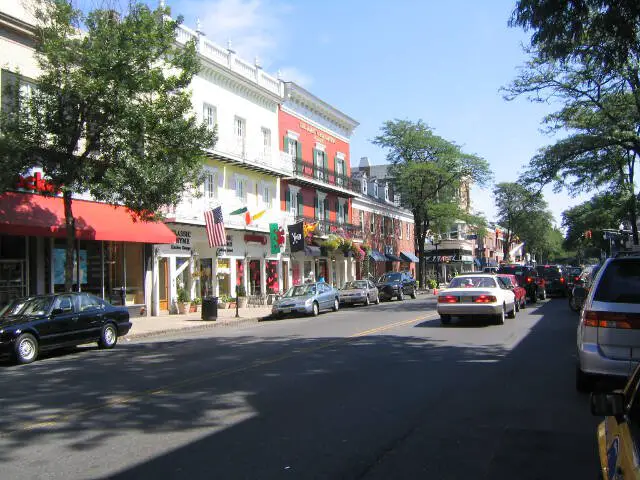
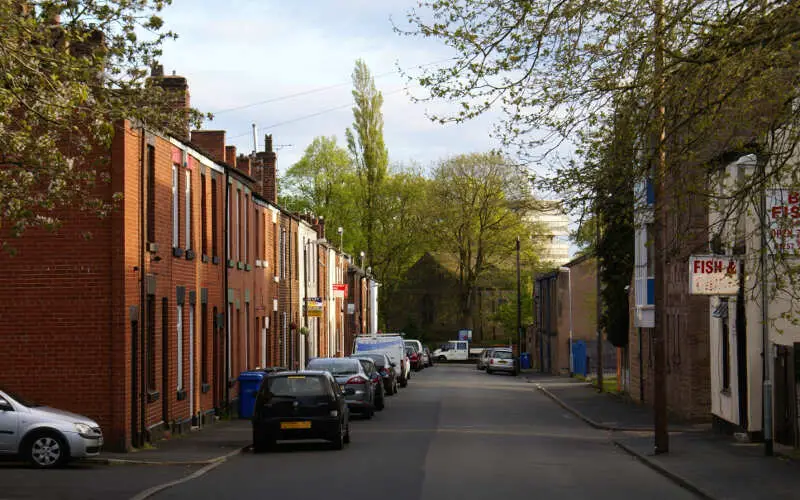
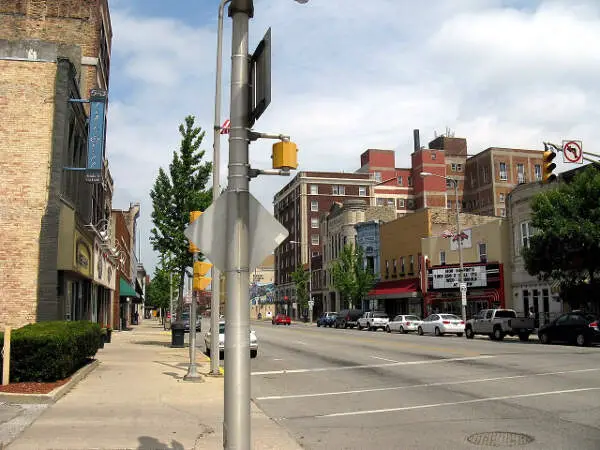
Boston vs. Miami in photos
A side-by-side look at each city.
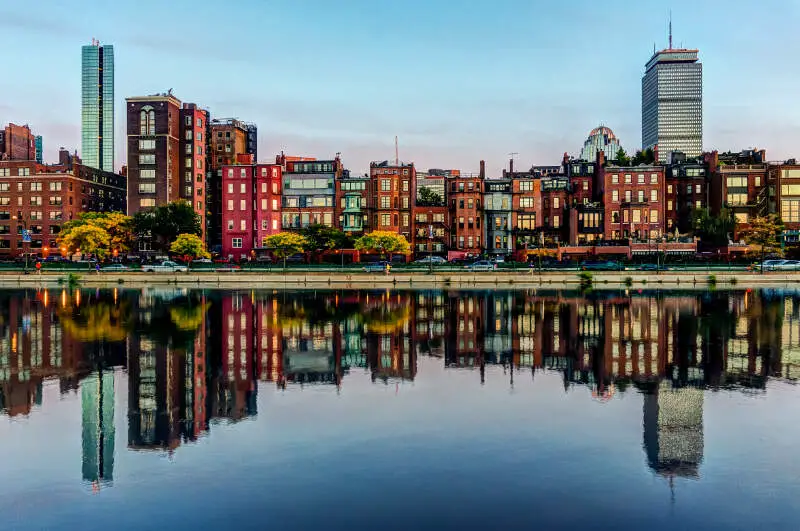

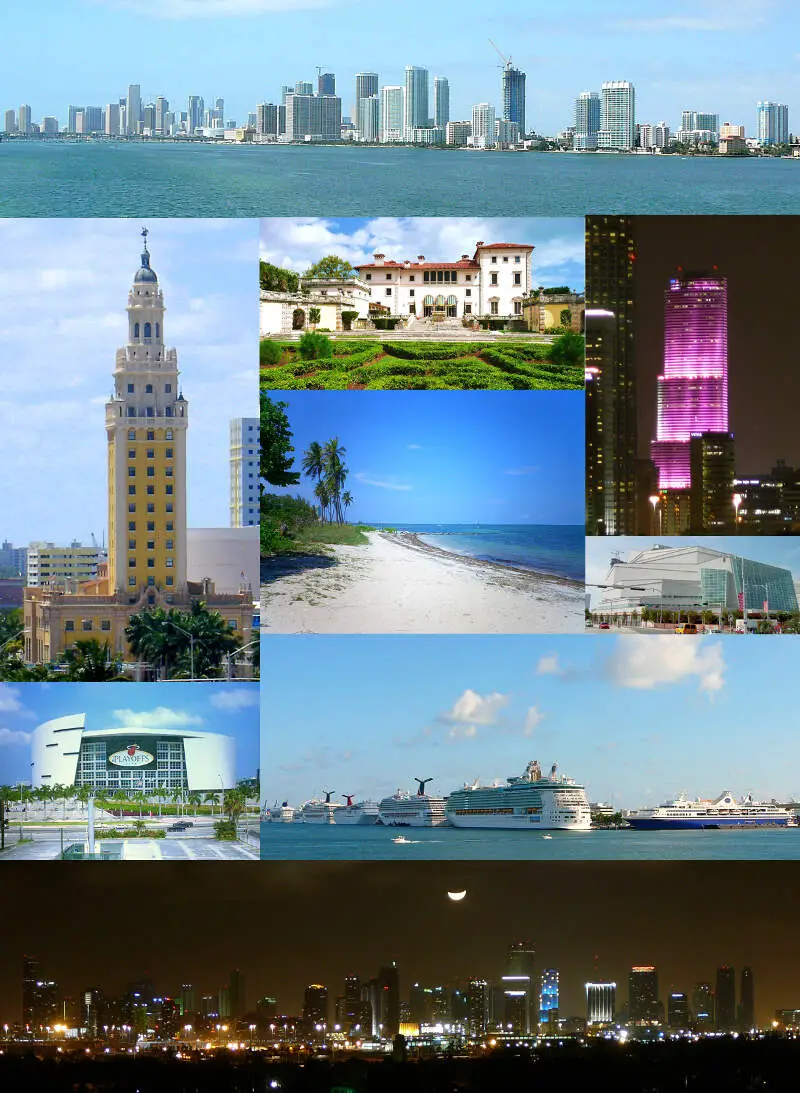
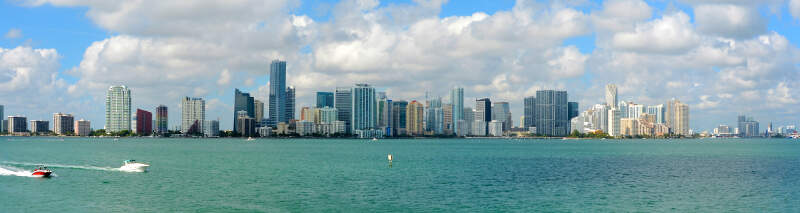

Cost of living
Miami is the cheaper city overall — 31% higher in Boston than its rival. Index baseline: 100 = national average.
| Living expense | Boston | Miami | US average |
|---|---|---|---|
| Overall | 171 | 131 | 100 |
| Services | 109 | 106 | 100 |
| Groceries | 122 | 110 | 100 |
| Health | 276 | 169 | 100 |
| Housing | 120 | 108 | 100 |
| Transportation | 127 | 121 | 100 |
| Utilities | 132 | 120 | 100 |
Lower index = cheaper. 100 = U.S. national average. Bar inside each cell scales relative to the highest value in the table.
Sources: HomeSnacks Cost of Living indices, normalized so 100 = U.S. national average. Drill in: Boston cost of living, Miami cost of living, or the cheapest cities in America.
Housing breakdown
Home prices are higher in Boston. Compare absolute price and price-to-income — a $500k home in a $100k-income city is very different from one in a $50k-income city.
| Metric | Boston | Miami | United States |
|---|---|---|---|
| Median Home Value | $798,216 | $579,563 | $332,700 |
| Median Rent | $2,147 | $1,758 | $1,413 |
| Median Income | $97,344 | $62,462 | $80,734 |
| Home Value To Income | 8.2x | 9.3x | 4.1x |
| Rent To Monthly Income | 0.26x | 0.34x | 0.21x |
Source: U.S. Census Bureau ACS 2020-2024. See also states with the highest rent in America.
Crime
Boston is the safer city — total crime rate of 2,650 per 100k people vs 3,468 for Miami. US average: 2,119.
| Crime (per 100k) | Boston | Miami | US average |
|---|---|---|---|
| Total crime | 2,650 | 3,468 | 2,119 |
| Murder | 4 | 6 | 5 |
| Robbery | 126 | 95 | 61 |
| Aggravated Assault | 472 | 348 | 256 |
| Violent Crime | 628 | 473 | 359 |
| Burglary | 178 | 294 | 229 |
| Larceny | 1,687 | 2,290 | 1,272 |
| Car Theft | 157 | 410 | 259 |
| Property Crime | 2,022 | 2,995 | 1,760 |
Lower = safer. Bar inside each cell scales relative to the highest crime rate in the table.
Source: FBI Uniform Crime Reporting (2024). All rates are per 100,000 people. City pages: Boston crime, Miami crime. See also: safest cities in America.
Diversity
Boston is more racially diverse — lower HHI (closer to 0) means a more even mix across groups.
| Group | Boston | Miami | United States |
|---|---|---|---|
| White | 44.1% | 12.1% | 57.4% |
| African American | 19.3% | 11.9% | 11.9% |
| American Indian | 0.1% | 0.1% | 0.5% |
| Asian | 10.3% | 1.6% | 5.9% |
| Hawaiian | 0.0% | 0.0% | 0.2% |
| Other | 1.0% | 0.6% | 0.6% |
| Two Or More | 5.9% | 2.2% | 4.3% |
| Hispanic | 19.3% | 71.5% | 19.3% |
Source: U.S. Census ACS 2020-2024. Lower HHI = more even racial mix. See also: most diverse cities in America.
SnackAbility — overall quality of life
Boston scores higher overall — 8/10 vs 5/10. SnackAbility is our 1–10 quality-of-life score; the median U.S. city scores a 7.
Scores are 0–10; both bars share the same scale.
SnackAbility is a HomeSnacks proprietary 1–10 score blending jobs, housing, education, commute, amenities, affordability, crime, and diversity. Median U.S. city ≈ 7. Data: Census, BLS, FBI. See also: best places to live in America.
Getting around: Boston vs. Miami
How each city handles commuting, transit, walkability, and car culture — the day-to-day reality that shapes where you'd actually want to live.
The MBTA (locals call it the T) covers Boston with four subway lines, commuter rail reaching Providence and Newburyport, and a dense bus network. Car-free living works in the South End, Back Bay, and Cambridge, though the T's reliability is a known frustration.
Driving in Boston means narrow colonial-era streets, aggressive traffic, and some of the priciest parking in the country. Budget extra time for I-93 or the Pike if you commute by car.
Miami runs almost entirely on cars. The Metrorail works between downtown, Brickell, and Coral Gables, and the free Metromover loops through downtown, but Wynwood, Coconut Grove, Doral, and the Beach all need wheels.
Brightline connects Miami to Fort Lauderdale and Orlando, helpful for trips but not daily errands. Traffic on I-95 and the 836 can be brutal during rush hour.
Jobs and careers in Boston vs. Miami
The local job market, dominant industries, and which city to choose based on your career.
Boston punches well above its population weight on high-skill employment. Kendall Square is one of the densest biotech and life-sciences corridors on earth, with Biogen, Moderna, and Novartis all running major operations there. The broader healthcare cluster, anchored by Mass General, Brigham and Women's, and Dana-Farber, draws talent nationally.
Finance, tech, and a deep roster of universities (Harvard, MIT, BU, Northeastern) round out the economy. The median household income of $97,344 reflects that concentration of professional jobs.
Miami's economy runs on international finance, tourism and hospitality, real estate, and Latin American trade through the Port of Miami. Brickell has grown into a legitimate financial district with a growing tech scene, and remote workers have flooded in since 2020.
The median household income is $62,462, notably lower than Boston's. Much of that gap comes from the weight of service-industry jobs, where wages stay modest.
Weather and climate
What to expect day-to-day — sun, fog, heat, rain, and the seasonal extremes that shape the lifestyle.
Boston has four genuine seasons. Winters run December through March with regular snowstorms, sub-freezing stretches, and nor'easters.
Summers are warm and humid, with July highs typically reaching the mid-80s. Fall foliage peaks across the region in October, and spring arrives late but earns it.
Miami's climate is tropical: hot and humid summers with daily afternoon thunderstorms from May through October, and mild, low-humidity winters where highs hover in the mid-70s. Hurricane season runs June through November and demands real preparedness, especially in low-lying neighborhoods.
If you hate cold weather, Miami wins easily. If relentless heat and humidity drain you, Boston's seasonal variety may suit you better despite the winters.
Culture, nightlife, and entertainment
Food, music, neighborhoods, and the city vibe that gives each place its personality.
Boston's cultural identity runs on deep history, fierce sports loyalty, and a college-town energy that keeps the population young. Fenway Park is practically a civic religion.
The MFA and Isabella Stewart Gardner Museum anchor a serious arts scene, and neighborhoods like the North End and Chinatown give the city genuine culinary range. Nightlife skews earlier (last call at 2 a.m. is the law), and the Irish pub tradition along Boylston and in Southie is well earned.
Miami's culture is louder, later, and more international. South Beach still draws the big clubs, but Wynwood has become a legitimate arts district year-round, and Art Basel in December is one of the marquee cultural events in North America.
Little Havana along Calle Ocho and the broader Latin Caribbean identity give Miami a flavor Boston simply doesn't have. If you want nightlife past 4 a.m. and a city that feels like Latin America and Europe in the same weekend, Miami wins.
Outdoor activities and day trips
Parks, beaches, hikes, and the weekend escapes that define life outside the city limits.
Boston's outdoor life centers on the Emerald Necklace, Frederick Law Olmsted's urban green network connecting the Public Garden to Franklin Park, plus the Charles River Esplanade, where runners and cyclists log miles with the skyline as a backdrop.
Day trips open things up considerably: Cape Cod is 90 minutes away, the White Mountains are two hours north for hiking and skiing, and Acadia National Park in Maine makes for a strong long weekend. Four seasons mean true variety, even if February running requires real commitment.
Miami's outdoors are defined by water and warmth. Everglades National Park and Biscayne National Park are both a short drive away, and beach access at South Beach, Key Biscayne, and Haulover is hard to match anywhere in the continental U.S.
Kayaking, paddleboarding, fishing, and boating are year-round activities here, not seasonal treats. Summer heat and humidity can limit midday exertion, but if the ocean is your priority, Miami offers something Boston simply cannot.
Bottom line: which city is right for you?
Based on the head-to-head data above, here's the short version — pick the city that lines up with what you actually care about.
Choose Boston if you prioritize…
- lower crime — a safer place to live, work, and raise a family.
- more affordable housing relative to Miami.
- a more racially diverse community (lower HHI on Census data).
- a higher overall SnackAbility quality-of-life score.
Choose Miami if you prioritize…
- a lower cost of living (cheaper groceries, services, and day-to-day expenses).
Methodology: winners are picked from public data — U.S. Census Bureau ACS (income, home value, rent, race/HHI), FBI Uniform Crime Reporting (crime rates per 100k), and HomeSnacks' proprietary SnackAbility quality-of-life score, which blends Bureau of Labor Statistics data with the above.
Other comparisons
Still weighing your options? See how these two cities stack up against other places we've compared head-to-head.