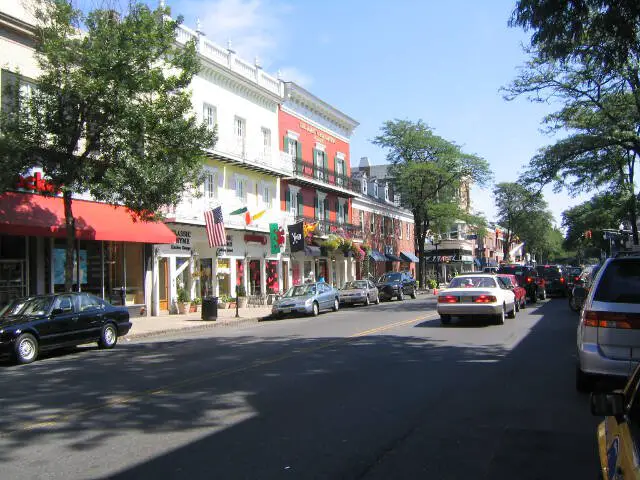
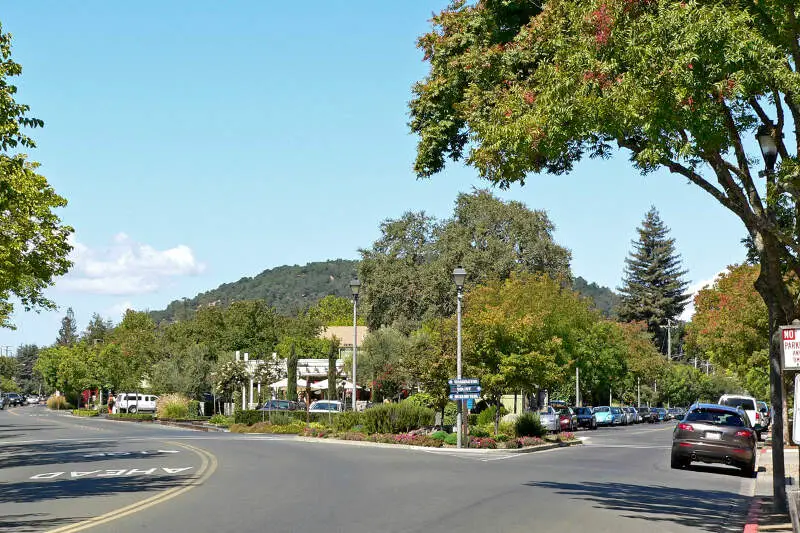
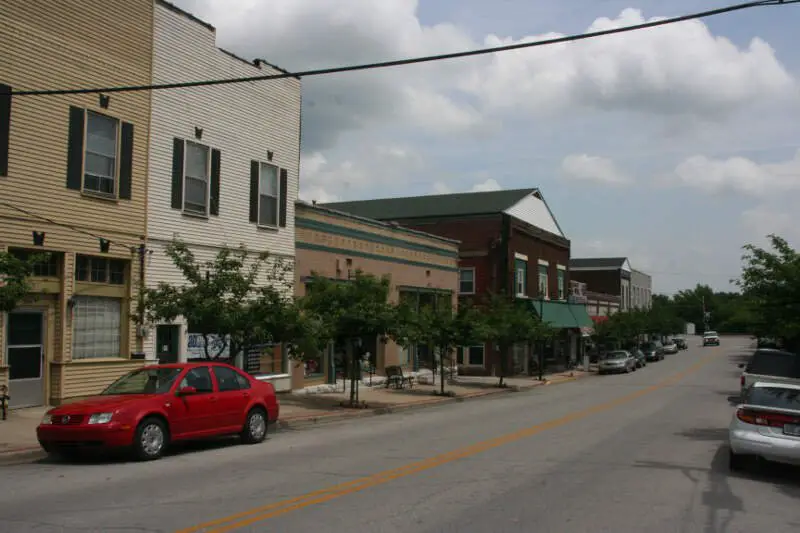
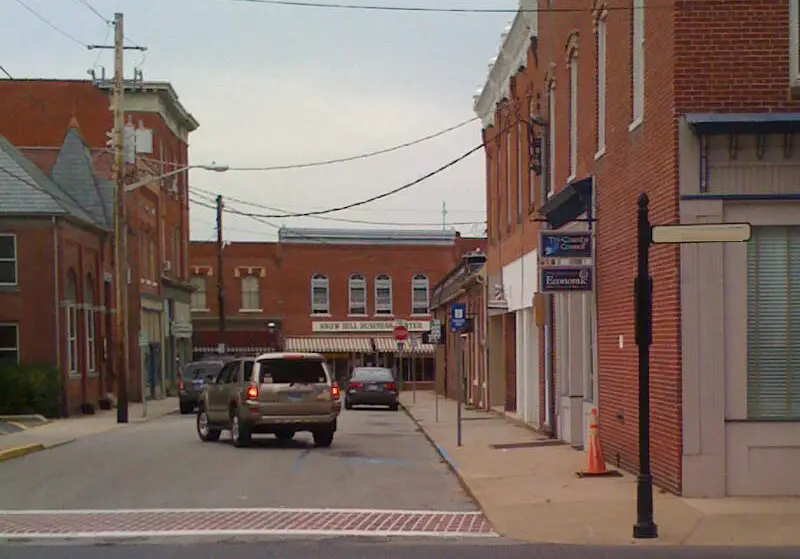
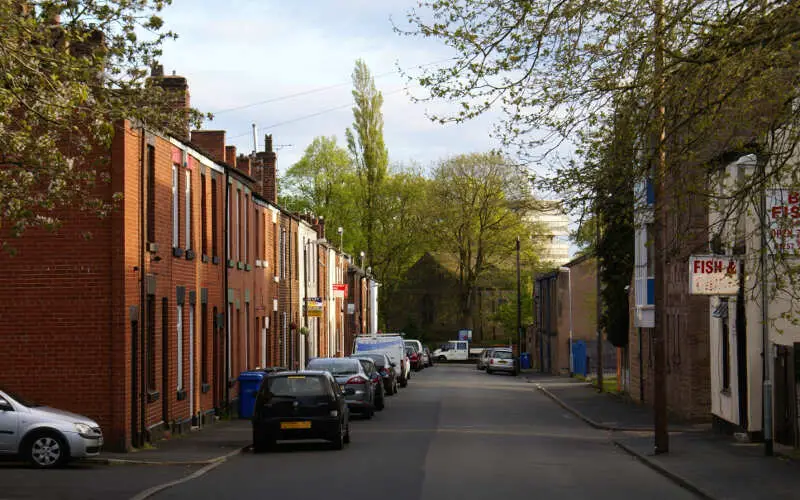
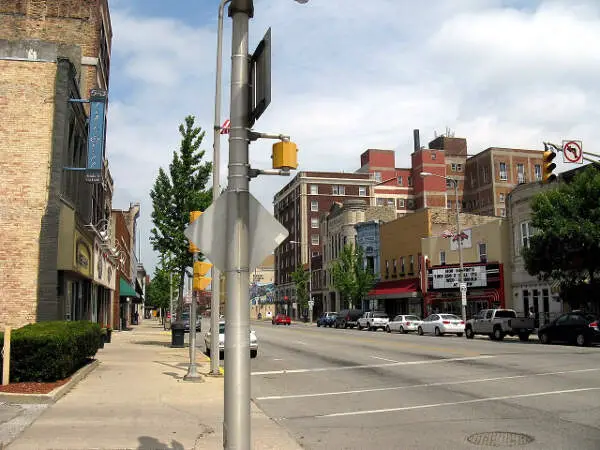
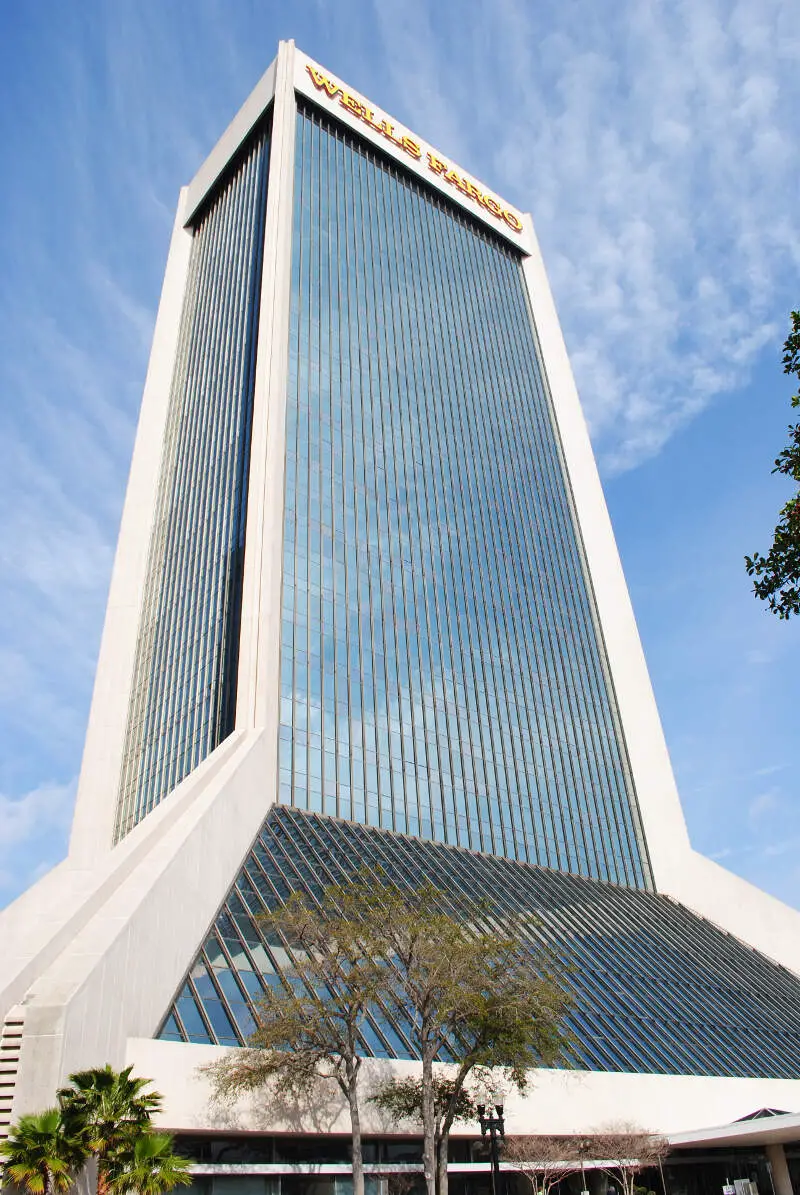
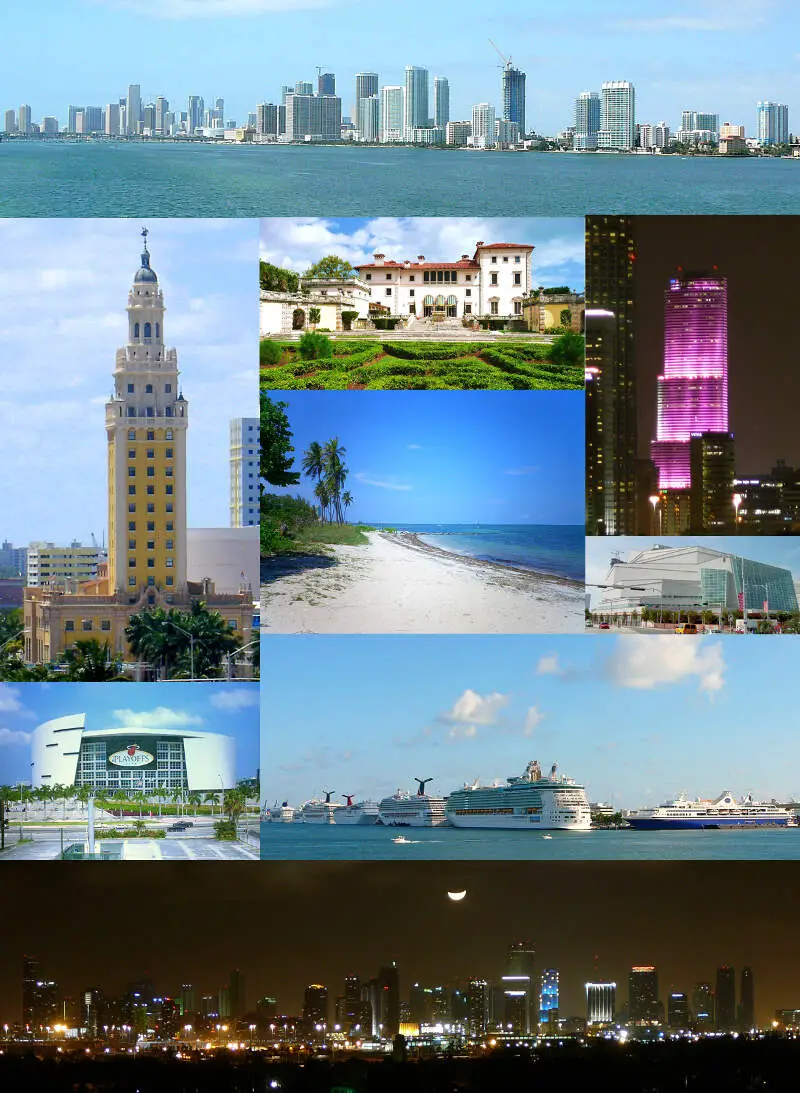
Jacksonville vs. Miami in photos
A side-by-side look at each city.


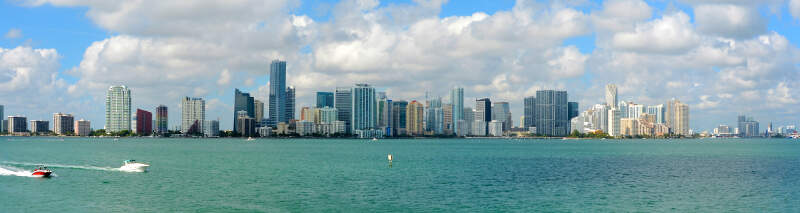

Cost of living
Jacksonville is the cheaper city overall — 17% higher in Miami than its rival. Index baseline: 100 = national average.
| Living expense | Jacksonville | Miami | US average |
|---|---|---|---|
| Overall | 109 | 131 | 100 |
| Services | 102 | 106 | 100 |
| Groceries | 109 | 110 | 100 |
| Health | 109 | 169 | 100 |
| Housing | 108 | 108 | 100 |
| Transportation | 118 | 121 | 100 |
| Utilities | 112 | 120 | 100 |
Lower index = cheaper. 100 = U.S. national average. Bar inside each cell scales relative to the highest value in the table.
Sources: HomeSnacks Cost of Living indices, normalized so 100 = U.S. national average. Drill in: Jacksonville cost of living, Miami cost of living, or the cheapest cities in America.
Housing breakdown
Home prices are higher in Miami. Compare absolute price and price-to-income — a $500k home in a $100k-income city is very different from one in a $50k-income city.
| Metric | Jacksonville | Miami | United States |
|---|---|---|---|
| Median Home Value | $282,894 | $579,563 | $332,700 |
| Median Rent | $1,465 | $1,758 | $1,413 |
| Median Income | $69,872 | $62,462 | $80,734 |
| Home Value To Income | 4.0x | 9.3x | 4.1x |
| Rent To Monthly Income | 0.25x | 0.34x | 0.21x |
Source: U.S. Census Bureau ACS 2020-2024. See also states with the highest rent in America.
Crime
Miami is the safer city — total crime rate of 3,468 per 100k people vs 3,569 for Jacksonville. US average: 2,119.
| Crime (per 100k) | Jacksonville | Miami | US average |
|---|---|---|---|
| Total crime | 3,569 | 3,468 | 2,119 |
| Murder | 15 | 6 | 5 |
| Robbery | 101 | 95 | 61 |
| Aggravated Assault | 532 | 348 | 256 |
| Violent Crime | 698 | 473 | 359 |
| Burglary | 419 | 294 | 229 |
| Larceny | 2,129 | 2,290 | 1,272 |
| Car Theft | 323 | 410 | 259 |
| Property Crime | 2,871 | 2,995 | 1,760 |
Lower = safer. Bar inside each cell scales relative to the highest crime rate in the table.
Source: FBI Uniform Crime Reporting (2024). All rates are per 100,000 people. City pages: Jacksonville crime, Miami crime. See also: safest cities in America.
Diversity
Jacksonville is more racially diverse — lower HHI (closer to 0) means a more even mix across groups.
| Group | Jacksonville | Miami | United States |
|---|---|---|---|
| White | 46.8% | 12.1% | 57.4% |
| African American | 29.3% | 11.9% | 11.9% |
| American Indian | 0.1% | 0.1% | 0.5% |
| Asian | 5.0% | 1.6% | 5.9% |
| Hawaiian | 0.1% | 0.0% | 0.2% |
| Other | 0.8% | 0.6% | 0.6% |
| Two Or More | 5.3% | 2.2% | 4.3% |
| Hispanic | 12.6% | 71.5% | 19.3% |
Source: U.S. Census ACS 2020-2024. Lower HHI = more even racial mix. See also: most diverse cities in America.
SnackAbility — overall quality of life
Jacksonville and Miami tied at 5/10.
Scores are 0–10; both bars share the same scale.
SnackAbility is a HomeSnacks proprietary 1–10 score blending jobs, housing, education, commute, amenities, affordability, crime, and diversity. Median U.S. city ≈ 7. Data: Census, BLS, FBI. See also: best places to live in America.
Getting around: Jacksonville vs. Miami
How each city handles commuting, transit, walkability, and car culture — the day-to-day reality that shapes where you'd actually want to live.
Jacksonville is one of the most car-dependent large cities in the country: its 747-square-mile footprint means most residents commute by personal vehicle along I-95, I-10, or the tolled First Coast Expressway. The Jacksonville Transportation Authority runs bus routes, and the Skyway automated monorail connects a handful of downtown stops, but neither is practical for most commutes. If you're driving, expect inner-loop congestion at rush hour but nothing close to Miami's gridlock.
Miami's Metrorail and Metromover give Brickell and downtown workers a real transit alternative, and Tri-Rail connects to Fort Lauderdale and West Palm Beach. Driving in Miami, especially along I-95, the Palmetto, or the Dolphin Expressway, can be brutal at peak hours. Ride-share and scooters are easy to find in Wynwood and South Beach, and if you work downtown and live nearby, Miami rewards car-free living far better than Jacksonville does.
Jobs and careers in Jacksonville vs. Miami
The local job market, dominant industries, and which city to choose based on your career.
Jacksonville is a real white-collar hub. Fidelity Investments, Deutsche Bank, Bank of America, and Vystar Credit Union all run major back-office operations here, while Mayo Clinic's Jacksonville campus, Baptist Health, and UF Health anchor a solid healthcare sector. The deep-water port and Naval Air Station Jacksonville add logistics and defense jobs, and with a median household income of $69,872 against a cost of living index of 109, paychecks stretch further here than in most Sun Belt metros.
Miami's job market leans on tourism, hospitality, and international trade (the Port of Miami handles major cargo and cruise volumes), but the past decade has built a real tech and venture-capital scene around Brickell. Major employers include Carnival Corporation and Lennar, alongside fintech and crypto firms drawn by the mayor's public recruitment push. Miami's median household income of $62,462 meets a cost of living index of 131, so many residents feel financial pressure that Jacksonville workers largely avoid.
Weather and climate
What to expect day-to-day — sun, fog, heat, rain, and the seasonal extremes that shape the lifestyle.
Both cities are hot and humid May through September, but the degree matters. Jacksonville sits at the northern edge of Florida's subtropical belt, so temperatures can dip into the 30s in January, light frost is possible, and fall feels noticeably different from summer. Summers are punishing, with high humidity and regular afternoon thunderstorms from June onward, and hurricane risk is statistically lower than further south.
Miami is firmly tropical: winter highs regularly reach the low 80s, and "cold" means a jacket over a t-shirt. That changes in June, when heat indexes climb well above 100°F and the humidity makes a walk to the car feel like an event. Miami sits in the Atlantic hurricane corridor, so storm prep and flood insurance are real budget items.
If year-round warmth with no frost is non-negotiable, Miami wins. If you want seasons without true winters, Jacksonville is the better fit.
Culture, nightlife, and entertainment
Food, music, neighborhoods, and the city vibe that gives each place its personality.
Jacksonville's cultural scene is smaller but earnest and growing. The Cummer Museum of Art sits along the St. Johns River in Riverside, and Five Points and Avondale have a solid mix of independent restaurants, vintage shops, and live music venues. San Marco and the Beaches area have the most consistent bar and dining density, and on Jaguars game days downtown picks up noticeably, but the after-hours scene doesn't approach big-city scale.
Miami's cultural identity is in a different league. Little Havana, Little Haiti, and Wynwood are distinct worlds within the city, and Art Basel Miami Beach in December draws a global crowd that has turned Wynwood into a year-round gallery and restaurant district. South Beach is one of the most recognized nightlife spots in the Western Hemisphere, the Adrienne Arsht Center anchors a serious performing arts scene, and if culture and nightlife are priorities, Jacksonville isn't close competition.
Outdoor activities and day trips
Parks, beaches, hikes, and the weekend escapes that define life outside the city limits.
Jacksonville's sheer size works in its favor outdoors. The Timucuan Ecological and Historic Preserve covers more than 46,000 acres of marshlands, coastal wetlands, and tidal rivers, putting rare wilderness minutes from the city center. Jacksonville Beach, Neptune Beach, and Atlantic Beach offer wide, uncrowded sand without the South Florida price tag; Kathryn Abbey Hanna Park adds mountain biking and surfing; and Amelia Island or Cumberland Island National Seashore are easy day trips.
Miami's outdoor life is built around water. Biscayne National Park puts excellent snorkeling and diving practically in the city's backyard, while Everglades National Park, one of the most ecologically unique places in North America, is about an hour's drive southwest. Key Biscayne's Bill Baggs Cape Florida State Park offers a quieter beach than South Beach, and sailors, windsurfers, kiteboarders, and deep-sea anglers will find Miami's proximity to the Everglades and the Keys a genuine advantage over Jacksonville.
Bottom line: which city is right for you?
Based on the head-to-head data above, here's the short version — pick the city that lines up with what you actually care about.
Choose Jacksonville if you prioritize…
- a lower cost of living (cheaper groceries, services, and day-to-day expenses).
- a more racially diverse community (lower HHI on Census data).
Choose Miami if you prioritize…
- lower crime — a safer place to live, work, and raise a family.
- more affordable housing relative to Jacksonville.
Methodology: winners are picked from public data — U.S. Census Bureau ACS (income, home value, rent, race/HHI), FBI Uniform Crime Reporting (crime rates per 100k), and HomeSnacks' proprietary SnackAbility quality-of-life score, which blends Bureau of Labor Statistics data with the above.
Other comparisons
Still weighing your options? See how these two cities stack up against other places we've compared head-to-head.