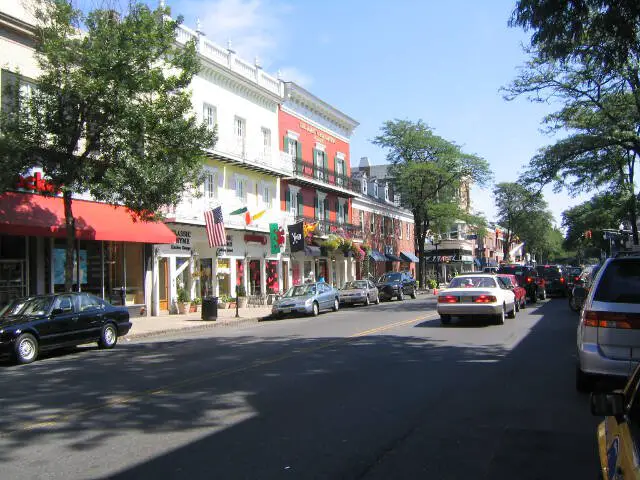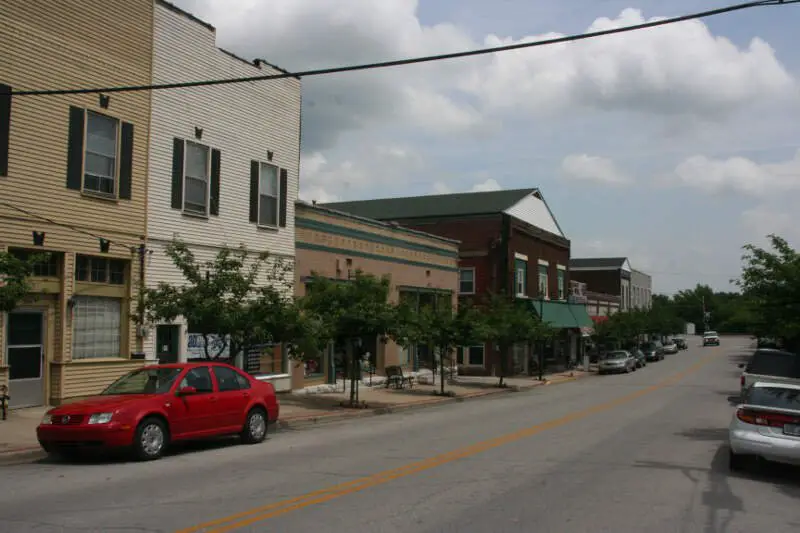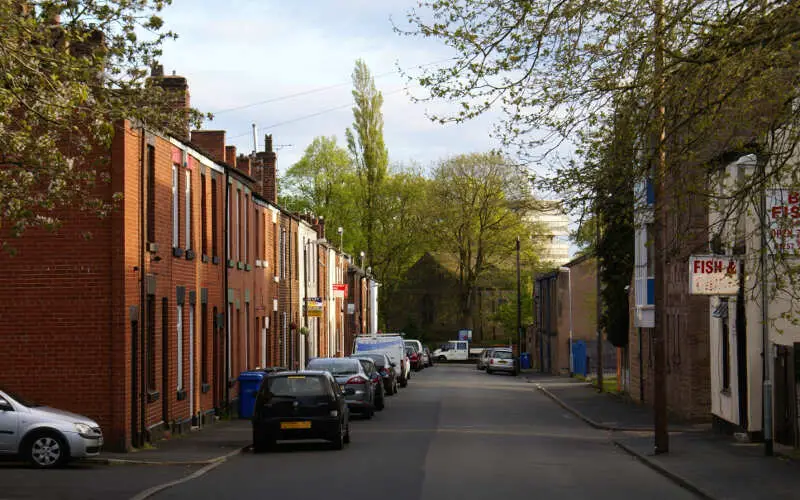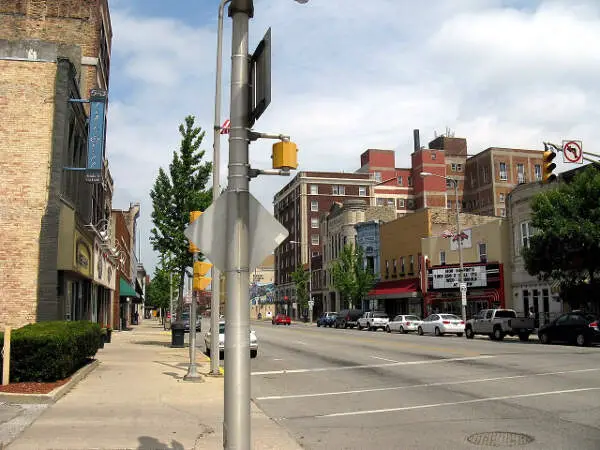
Boston vs. New York in photos
A side-by-side look at each city.


Cost of living
Boston is the cheaper city overall — 5% higher in New York than its rival. Index baseline: 100 = national average.
| Living expense | Boston | New York | US average |
|---|---|---|---|
| Overall | 171 | 180 | 100 |
| Services | 109 | 119 | 100 |
| Groceries | 122 | 124 | 100 |
| Health | 276 | 298 | 100 |
| Housing | 120 | 134 | 100 |
| Transportation | 127 | 119 | 100 |
| Utilities | 132 | 134 | 100 |
Lower index = cheaper. 100 = U.S. national average. Bar inside each cell scales relative to the highest value in the table.
Sources: HomeSnacks Cost of Living indices, normalized so 100 = U.S. national average. Drill in: Boston cost of living, New York cost of living, or the cheapest cities in America.
Housing breakdown
Home prices are higher in New York. Compare absolute price and price-to-income — a $500k home in a $100k-income city is very different from one in a $50k-income city.
| Metric | Boston | New York | United States |
|---|---|---|---|
| Median Home Value | $798,216 | $812,861 | $332,700 |
| Median Rent | $2,147 | $1,821 | $1,413 |
| Median Income | $97,344 | $80,483 | $80,734 |
| Home Value To Income | 8.2x | 10.1x | 4.1x |
| Rent To Monthly Income | 0.26x | 0.27x | 0.21x |
Source: U.S. Census Bureau ACS 2020-2024. See also states with the highest rent in America.
Crime
Boston is the safer city — total crime rate of 2,650 per 100k people vs 3,039 for New York. US average: 2,119.
| Crime (per 100k) | Boston | New York | US average |
|---|---|---|---|
| Total crime | 2,650 | 3,039 | 2,119 |
| Murder | 4 | 4 | 5 |
| Robbery | 126 | 187 | 61 |
| Aggravated Assault | 472 | 456 | 256 |
| Violent Crime | 628 | 671 | 359 |
| Burglary | 178 | 155 | 229 |
| Larceny | 1,687 | 2,015 | 1,272 |
| Car Theft | 157 | 199 | 259 |
| Property Crime | 2,022 | 2,368 | 1,760 |
Lower = safer. Bar inside each cell scales relative to the highest crime rate in the table.
Source: FBI Uniform Crime Reporting (2024). All rates are per 100,000 people. City pages: Boston crime, New York crime. See also: safest cities in America.
Diversity
New York is more racially diverse — lower HHI (closer to 0) means a more even mix across groups.
| Group | Boston | New York | United States |
|---|---|---|---|
| White | 44.1% | 31.0% | 57.4% |
| African American | 19.3% | 20.4% | 11.9% |
| American Indian | 0.1% | 0.2% | 0.5% |
| Asian | 10.3% | 14.6% | 5.9% |
| Hawaiian | 0.0% | 0.0% | 0.2% |
| Other | 1.0% | 1.4% | 0.6% |
| Two Or More | 5.9% | 3.9% | 4.3% |
| Hispanic | 19.3% | 28.5% | 19.3% |
Source: U.S. Census ACS 2020-2024. Lower HHI = more even racial mix. See also: most diverse cities in America.
SnackAbility — overall quality of life
Boston and New York tied at 8/10.
Scores are 0–10; both bars share the same scale.
SnackAbility is a HomeSnacks proprietary 1–10 score blending jobs, housing, education, commute, amenities, affordability, crime, and diversity. Median U.S. city ≈ 7. Data: Census, BLS, FBI. See also: best places to live in America.
Getting around: Boston vs. New York
How each city handles commuting, transit, walkability, and car culture — the day-to-day reality that shapes where you'd actually want to live.
Boston's MBTA (the oldest subway in North America) covers the core of the city reasonably well, with the Red, Green, Orange, and Blue lines connecting neighborhoods like Cambridge, the South End, and Fenway. The commuter rail extends your range to suburbs like Newton and Quincy. The catch is that service ends around 12:30 a.m., the Green Line's surface segments can be maddeningly slow, and if you commute by car, the Expressway and Storrow Drive are notorious bottlenecks.
New York's MTA subway runs 24 hours a day, seven days a week, which alone changes how you live. With 472 stations across five boroughs, you can reach most of Manhattan, Brooklyn, Queens, and the Bronx without a car; the PATH train also bridges New Jersey commuters. For day-to-day errands, New York wins on transit frequency and overnight access, while Boston's system is more manageable in scale but closes up earlier.
Jobs and careers in Boston vs. New York
The local job market, dominant industries, and which city to choose based on your career.
Boston punches well above its population weight in knowledge-economy jobs. Kendall Square in Cambridge is one of the densest biotech and life-sciences clusters in the world, with Moderna, Biogen, and dozens of startups within walking distance of each other. Finance, healthcare, and higher education (Mass General, Fidelity, and a constellation of universities) round out the major employers, and the median household income of $97,344 reflects a well-educated, highly compensated workforce.
New York's economy is larger and more diversified. Wall Street and financial services remain the backbone, but media, advertising, fashion, and a growing tech sector centered in Midtown and Hudson Yards add considerable breadth. New York's median household income of $80,483 is notably lower than Boston's, and a cost-of-living index of 180 versus Boston's 171 means your dollars stretch slightly further in Boston despite the lower nominal salaries in New York.
Weather and climate
What to expect day-to-day — sun, fog, heat, rain, and the seasonal extremes that shape the lifestyle.
Boston and New York share a humid continental climate, but Boston's winters hit harder. Expect regular nor'easters between December and March, meaningful snow accumulation, and wind chills that make the harbor waterfront genuinely brutal. Summers are warm and humid, with July highs routinely in the upper 80s, though sea breezes off Boston Harbor keep it tolerable in waterfront neighborhoods.
New York sits far enough south and inland enough to shave a few degrees off the worst winter cold, and it tends to see slightly more rain and slightly less snow than Boston. Summers in New York can feel more oppressive: the urban heat island effect is significant across a metro of 8.4 million people, and heat advisories are a regular occurrence in July and August. If you hate shoveling, New York has a mild but real edge; if you hate sweltering subway platforms in August, neither city is your paradise.
Culture, nightlife, and entertainment
Food, music, neighborhoods, and the city vibe that gives each place its personality.
Boston's cultural life is shaped by its concentration of universities and its deep sense of neighborhood identity. The North End serves some of the best Italian food outside of Italy, the South End has evolved into a gallery and restaurant corridor, and Fenway Park remains a civic institution unto itself. The MFA, the Isabella Stewart Gardner Museum, and the BSO at Symphony Hall make the arts scene genuinely world-class, even if the nightlife has a hard stop around 2 a.m.
New York operates at a different scale. Broadway, Lincoln Center, the Met, MoMA, and dozens of mid-size music venues give the city a cultural depth that is hard to match anywhere, and bars and clubs in Manhattan and Brooklyn regularly stay open until 4 a.m. Neighborhoods like Williamsburg, Astoria, and the West Village each sustain distinct food and nightlife identities, so if late nights and live performance variety matter to you, New York is in a category of its own.
Outdoor activities and day trips
Parks, beaches, hikes, and the weekend escapes that define life outside the city limits.
Boston's Emerald Necklace, Frederick Law Olmsted's connected chain of parks stretching from the Back Bay Fens to Franklin Park, gives the city a surprising amount of green space for its density. The Charles River Esplanade is a genuine recreational asset for cyclists and rowers, and Boston Harbor Islands State Park puts 34 islands within a 45-minute ferry ride. For longer escapes, the White Mountains and Cape Cod are both reachable in under two hours.
New York's Central Park (843 acres) and Prospect Park in Brooklyn offer serious outdoor breathing room within city limits, and the Rockaways and Jones Beach put ocean swimming within an hour by train. The Hudson Valley and Catskills, accessible via Metro-North, offer hiking and weekend getaways that rival anything within day-trip range of Boston. Both cities are good for outdoor recreation given their size; Boston's edge is slightly easier access to mountains, while New York's is more varied terrain reachable by public transit.
Bottom line: which city is right for you?
Based on the head-to-head data above, here's the short version — pick the city that lines up with what you actually care about.
Choose Boston if you prioritize…
- a lower cost of living (cheaper groceries, services, and day-to-day expenses).
- lower crime — a safer place to live, work, and raise a family.
Choose New York if you prioritize…
- more affordable housing relative to Boston.
- a more racially diverse community (lower HHI on Census data).
Methodology: winners are picked from public data — U.S. Census Bureau ACS (income, home value, rent, race/HHI), FBI Uniform Crime Reporting (crime rates per 100k), and HomeSnacks' proprietary SnackAbility quality-of-life score, which blends Bureau of Labor Statistics data with the above.
Other comparisons
Still weighing your options? See how these two cities stack up against other places we've compared head-to-head.