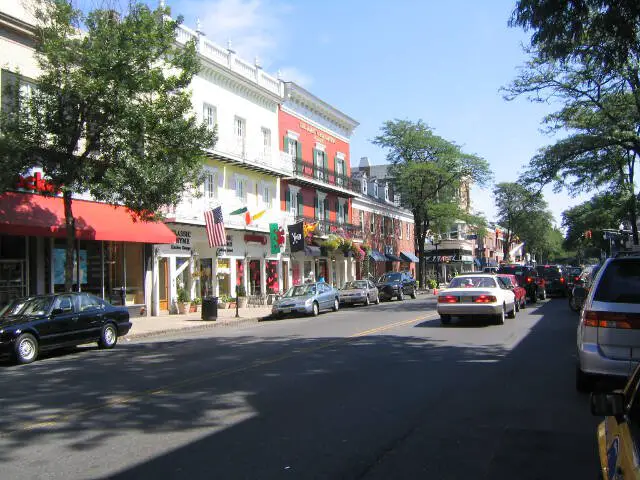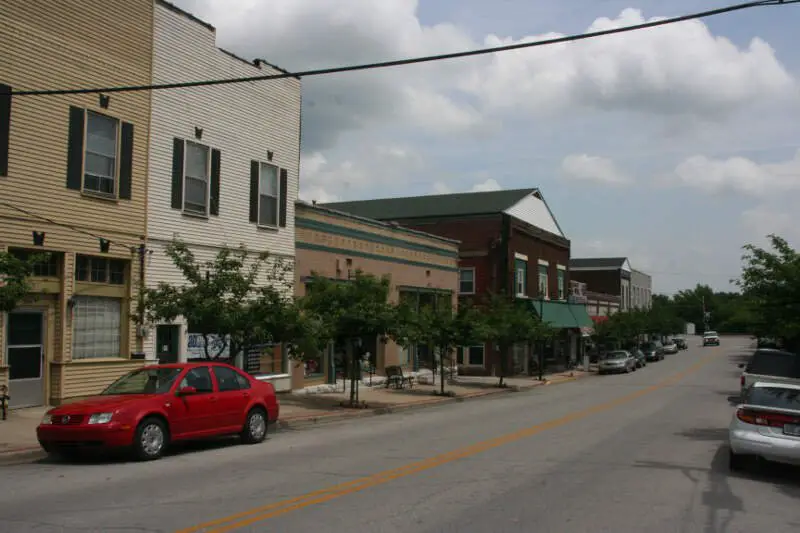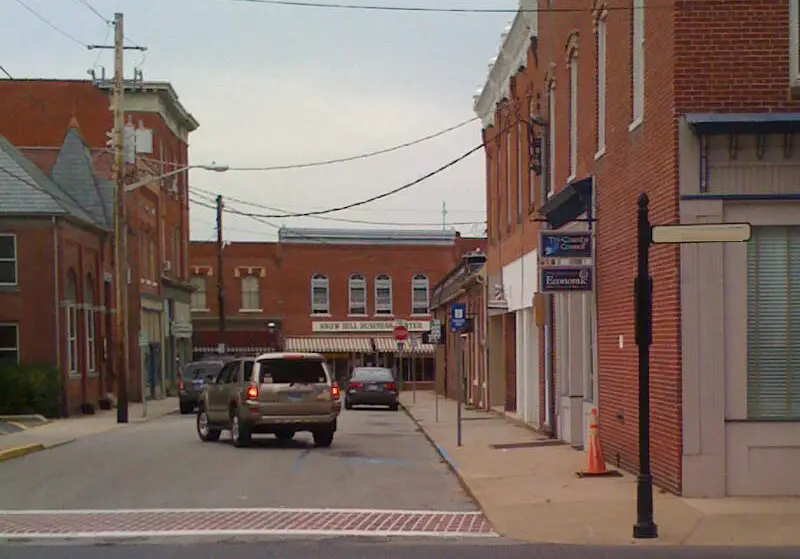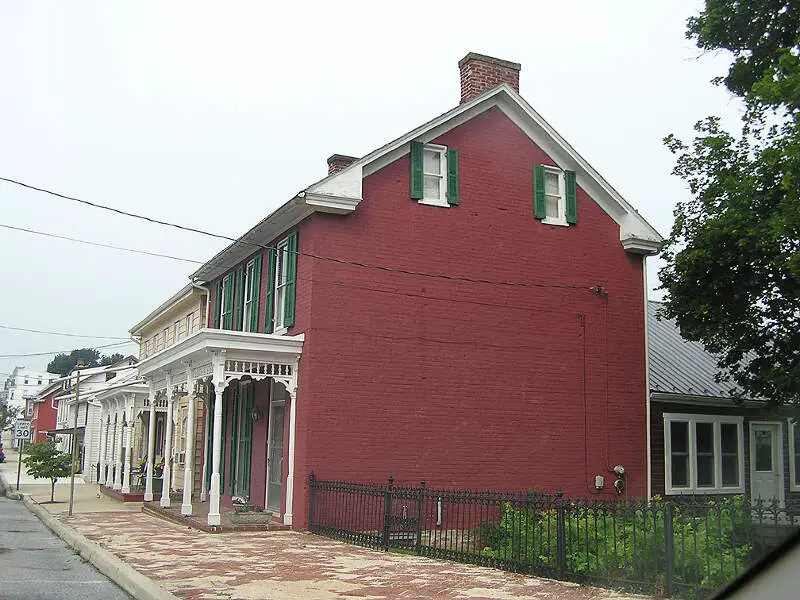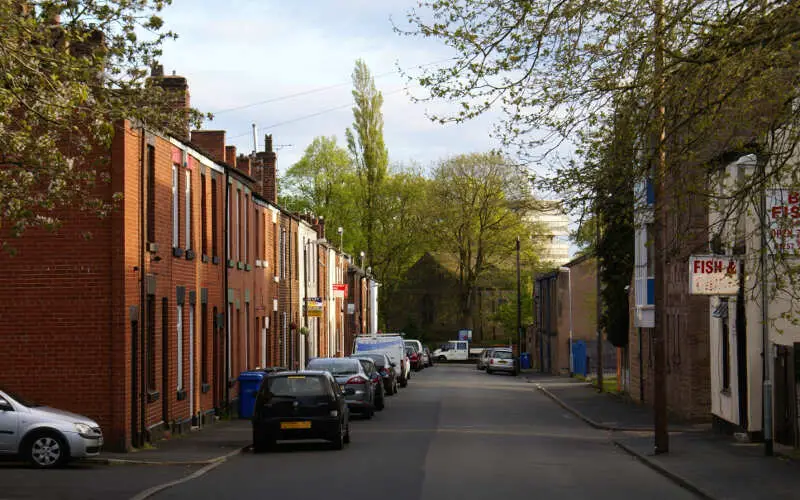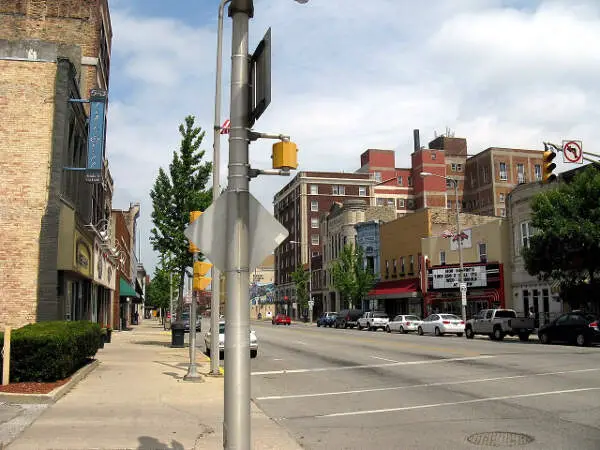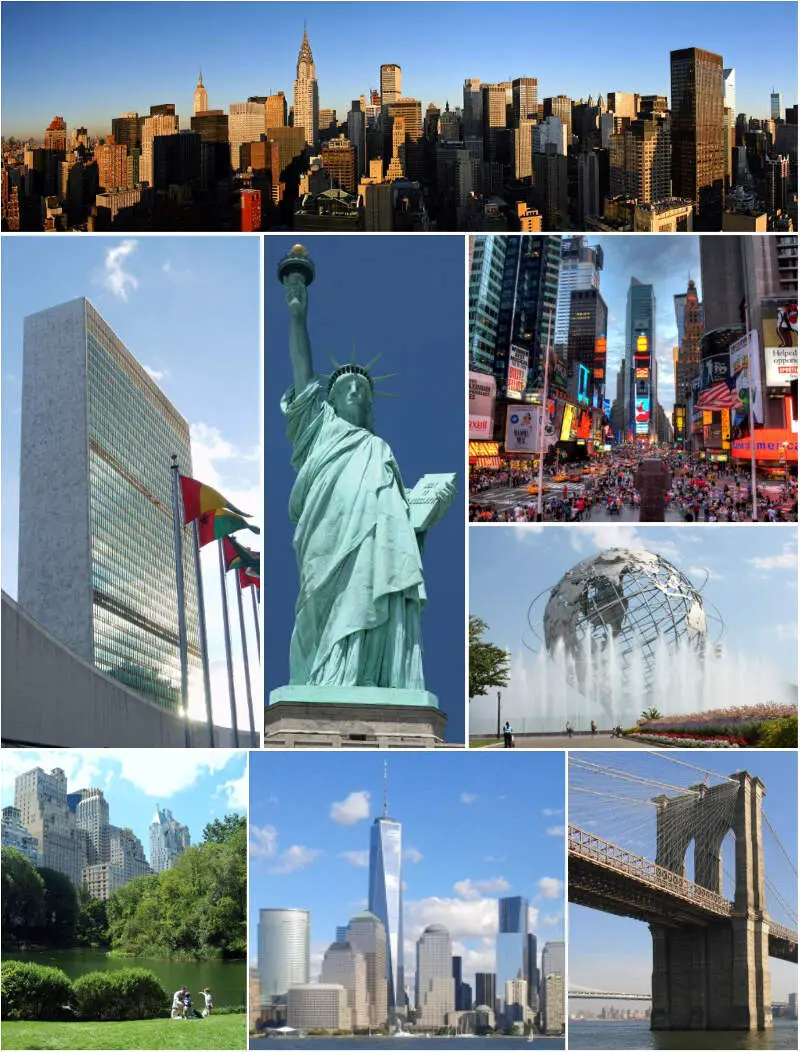
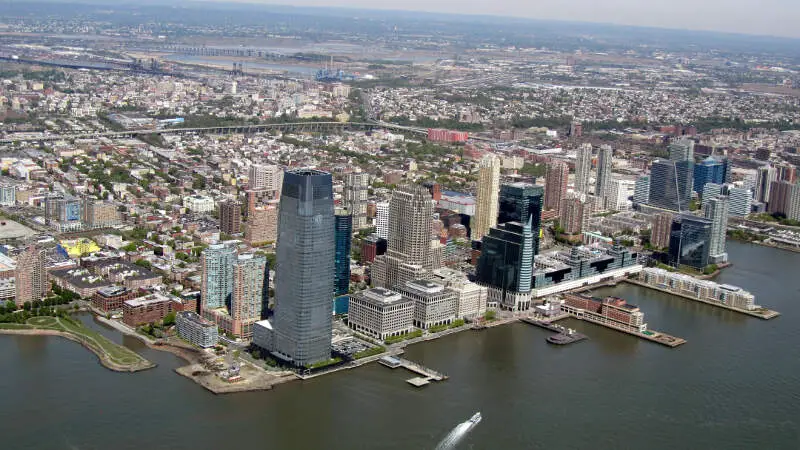
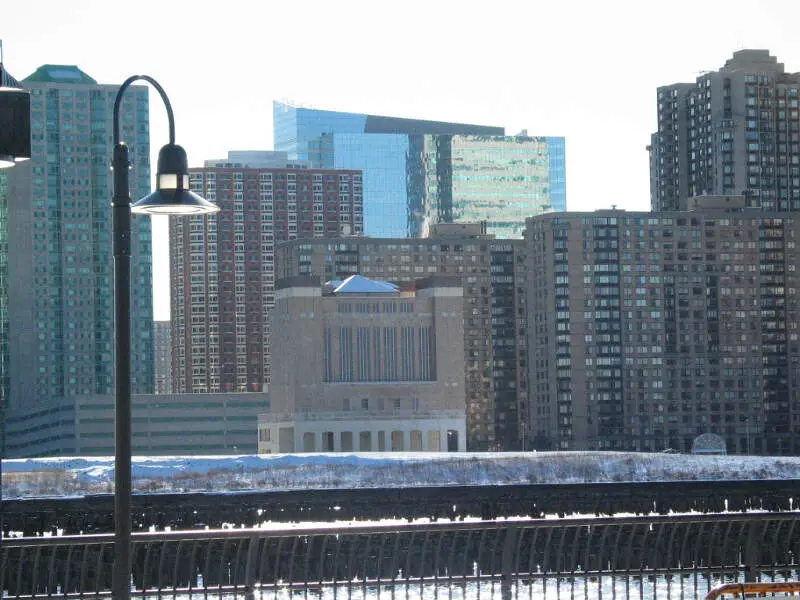
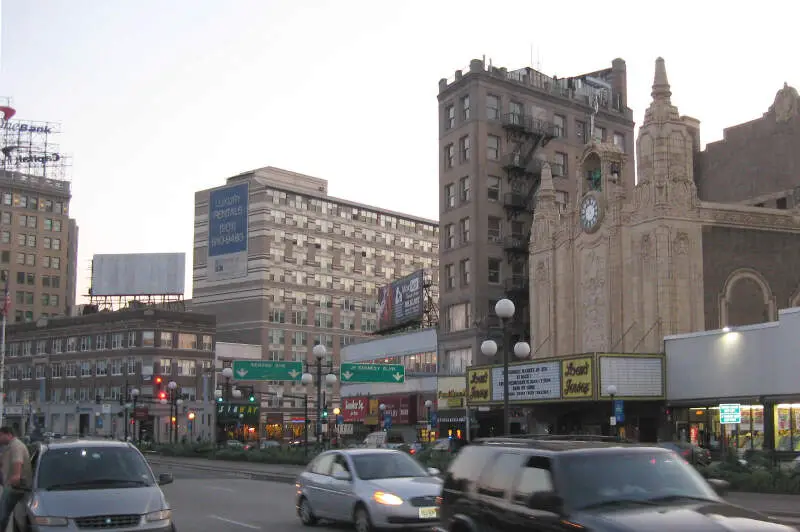
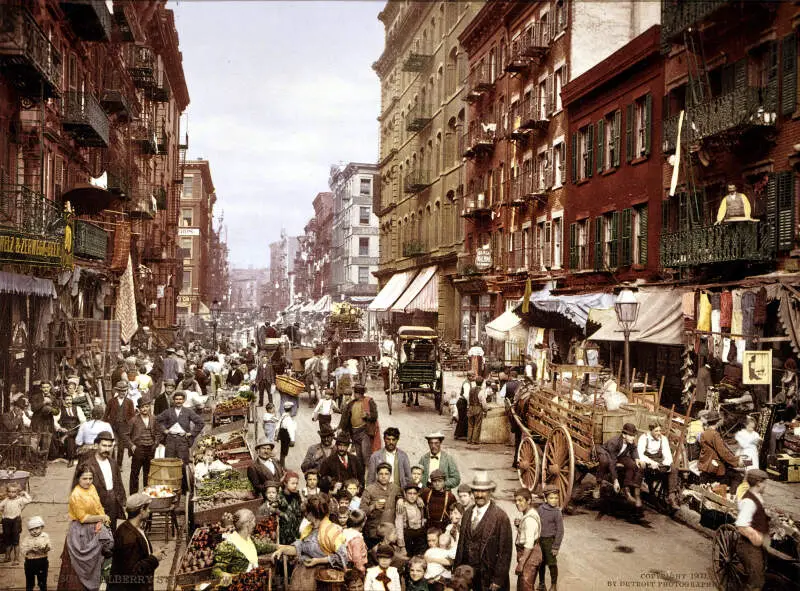
Jersey City vs. New York in photos
A side-by-side look at each city.

Cost of living
Jersey City is the cheaper city overall — 19% higher in New York than its rival. Index baseline: 100 = national average.
| Living expense | Jersey City | New York | US average |
|---|---|---|---|
| Overall | 146 | 180 | 100 |
| Services | 113 | 119 | 100 |
| Groceries | 116 | 124 | 100 |
| Health | 202 | 298 | 100 |
| Housing | 125 | 134 | 100 |
| Transportation | 115 | 119 | 100 |
| Utilities | 125 | 134 | 100 |
Lower index = cheaper. 100 = U.S. national average. Bar inside each cell scales relative to the highest value in the table.
Sources: HomeSnacks Cost of Living indices, normalized so 100 = U.S. national average. Drill in: Jersey City cost of living, New York cost of living, or the cheapest cities in America.
Housing breakdown
Home prices are higher in New York. Compare absolute price and price-to-income — a $500k home in a $100k-income city is very different from one in a $50k-income city.
| Metric | Jersey City | New York | United States |
|---|---|---|---|
| Median Home Value | $658,269 | $812,861 | $332,700 |
| Median Rent | $2,007 | $1,821 | $1,413 |
| Median Income | $97,710 | $80,483 | $80,734 |
| Home Value To Income | 6.7x | 10.1x | 4.1x |
| Rent To Monthly Income | 0.25x | 0.27x | 0.21x |
Source: U.S. Census Bureau ACS 2020-2024. See also states with the highest rent in America.
Crime
Jersey City is the safer city — total crime rate of 2,591 per 100k people vs 3,039 for New York. US average: 2,119.
| Crime (per 100k) | Jersey City | New York | US average |
|---|---|---|---|
| Total crime | 2,591 | 3,039 | 2,119 |
| Murder | 2 | 4 | 5 |
| Robbery | 173 | 187 | 61 |
| Aggravated Assault | 357 | 456 | 256 |
| Violent Crime | 562 | 671 | 359 |
| Burglary | 206 | 155 | 229 |
| Larceny | 1,526 | 2,015 | 1,272 |
| Car Theft | 297 | 199 | 259 |
| Property Crime | 2,029 | 2,368 | 1,760 |
Lower = safer. Bar inside each cell scales relative to the highest crime rate in the table.
Source: FBI Uniform Crime Reporting (2024). All rates are per 100,000 people. City pages: Jersey City crime, New York crime. See also: safest cities in America.
Diversity
Jersey City is more racially diverse — lower HHI (closer to 0) means a more even mix across groups.
| Group | Jersey City | New York | United States |
|---|---|---|---|
| White | 23.5% | 31.0% | 57.4% |
| African American | 19.2% | 20.4% | 11.9% |
| American Indian | 0.2% | 0.2% | 0.5% |
| Asian | 26.5% | 14.6% | 5.9% |
| Hawaiian | 0.0% | 0.0% | 0.2% |
| Other | 1.2% | 1.4% | 0.6% |
| Two Or More | 3.7% | 3.9% | 4.3% |
| Hispanic | 25.7% | 28.5% | 19.3% |
Source: U.S. Census ACS 2020-2024. Lower HHI = more even racial mix. See also: most diverse cities in America.
SnackAbility — overall quality of life
Jersey City and New York tied at 8/10.
Scores are 0–10; both bars share the same scale.
SnackAbility is a HomeSnacks proprietary 1–10 score blending jobs, housing, education, commute, amenities, affordability, crime, and diversity. Median U.S. city ≈ 7. Data: Census, BLS, FBI. See also: best places to live in America.
Getting around: Jersey City vs. New York
How each city handles commuting, transit, walkability, and car culture — the day-to-day reality that shapes where you'd actually want to live.
Jersey City and New York share the same transit spine, the PATH train, but your daily experience differs a lot depending on which side of the Hudson you live on. From Exchange Place or Grove Street, a PATH ride drops you at the World Trade Center or 33rd Street in roughly 10–20 minutes. The Hudson-Bergen Light Rail also connects Hoboken, Newport, and Bayonne without crossing into Manhattan.
If you commute by car, expect bridge and tunnel tolls plus the grim reality of New York traffic.
New York's MTA subway has over 400 stations, runs 24 hours, and reaches every outer borough — you'll rarely need a car in Manhattan, Brooklyn, or Queens. That said, reliability is a known problem, and buses can crawl. For outer-borough commuters, MTA commuter rail (LIRR, Metro-North) fills the gaps.
If you're weighing both cities, Jersey City gives you genuine PATH convenience at lower cost, while New York gives you more transit options the moment you step outside your door.
Jobs and careers in Jersey City vs. New York
The local job market, dominant industries, and which city to choose based on your career.
Jersey City's median household income of $97,710 outpaces New York's $80,483, which may surprise people who assume Manhattan means bigger paychecks. The gap partly reflects Jersey City's concentration of high-earning finance and tech workers: the Exchange Place corridor is sometimes called "Wall Street West," home to Goldman Sachs, JPMorgan Chase operations, Fidelity, and Verisk. If you work in financial services or back-office roles, Jersey City puts you close to those campuses without the full New York cost burden.
New York's job market is larger and more diverse, with finance, media, healthcare, tech, and the creative industries all running deep. Firms like Google (Hudson Square), JPMorgan's main offices, and Condé Nast in One World Trade Center are among thousands of major employers. You can change careers without changing cities.
The tradeoff is competition: the applicant pool is enormous. Jersey City suits you if your industry already clusters there; New York makes more sense if you want to keep your options open across sectors.
Weather and climate
What to expect day-to-day — sun, fog, heat, rain, and the seasonal extremes that shape the lifestyle.
Both cities sit in the same mid-Atlantic climate zone, so you're not choosing between dramatically different skies — you're choosing how to experience the same seasons. Expect hot, humid summers with July temperatures regularly hitting the upper 80s°F, cold winters that can dip into the teens, and genuinely pleasant springs and falls. Neither city coddles you with mild weather; both get snow, ice, and the occasional nor'easter.
The practical difference is subtle: New York's dense urban core runs a few degrees warmer at night thanks to the heat island effect, while Jersey City gets Hudson River breezes that help in summer. Winter wind off the water can make Jersey City feel rawer than inland Brooklyn. If you're acclimated to one city's winters, you'll handle the other just fine.
Culture, nightlife, and entertainment
Food, music, neighborhoods, and the city vibe that gives each place its personality.
New York's cultural scale is hard to match: the Met, MoMA, Lincoln Center, Broadway, Madison Square Garden, and hundreds of neighborhood music venues mean you'll never exhaust your options. Neighborhoods like the East Village, Williamsburg, Astoria, and Harlem each have distinct food and nightlife identities. If you prioritize access to major cultural institutions, no other American city comes close.
Jersey City's cultural scene is smaller but genuinely its own. The Grove Street and Newark Avenue corridor has a dense cluster of bars and restaurants drawing a young professional crowd, and Mana Contemporary, one of the largest contemporary art spaces in the U.S., anchors a growing arts district near Journal Square.
The city's demographic diversity shows up directly on the plate: Sikh-run restaurants along Newark Avenue and a strong Latin American food scene in the Heights give Jersey City real culinary depth. For nightlife at scale, the PATH makes Manhattan 15 minutes away, and many residents treat both cities as one cultural geography.
Outdoor activities and day trips
Parks, beaches, hikes, and the weekend escapes that define life outside the city limits.
Jersey City's standout outdoor asset is Liberty State Park, a 1,212-acre waterfront park with unobstructed views of the Statue of Liberty, Ellis Island, and the Manhattan skyline. The ferry from there gives you National Monument access without the Midtown tourist scrum. The Hudson River Waterfront Walkway runs for miles along the river, connecting Jersey City to Hoboken and Weehawken for cycling and running with skyline views the whole way.
New York counters with more variety. Central Park's 843 acres cover everything from serious trail running to kayaking on the Harlem Meer. Prospect Park in Brooklyn, the Jamaica Bay Wildlife Refuge in Queens, and the High Line in Chelsea each give you a different outdoor experience.
Both cities are well-positioned for day trips: the Catskills and Delaware Water Gap are under two hours from either, and the Jersey Shore beaches are more accessible from Jersey City than from most of Manhattan.
Bottom line: which city is right for you?
Based on the head-to-head data above, here's the short version — pick the city that lines up with what you actually care about.
Choose Jersey City if you prioritize…
- a lower cost of living (cheaper groceries, services, and day-to-day expenses).
- lower crime — a safer place to live, work, and raise a family.
- a more racially diverse community (lower HHI on Census data).
Choose New York if you prioritize…
- more affordable housing relative to Jersey City.
Methodology: winners are picked from public data — U.S. Census Bureau ACS (income, home value, rent, race/HHI), FBI Uniform Crime Reporting (crime rates per 100k), and HomeSnacks' proprietary SnackAbility quality-of-life score, which blends Bureau of Labor Statistics data with the above.
Other comparisons
Still weighing your options? See how these two cities stack up against other places we've compared head-to-head.