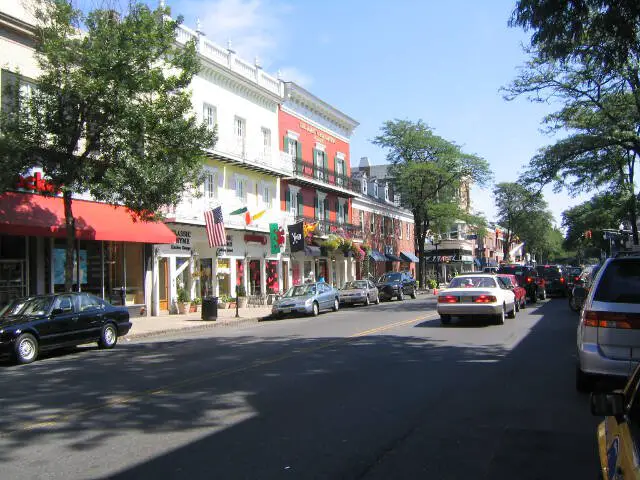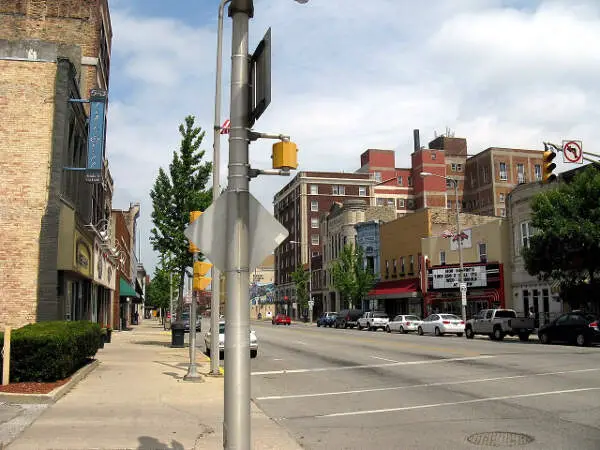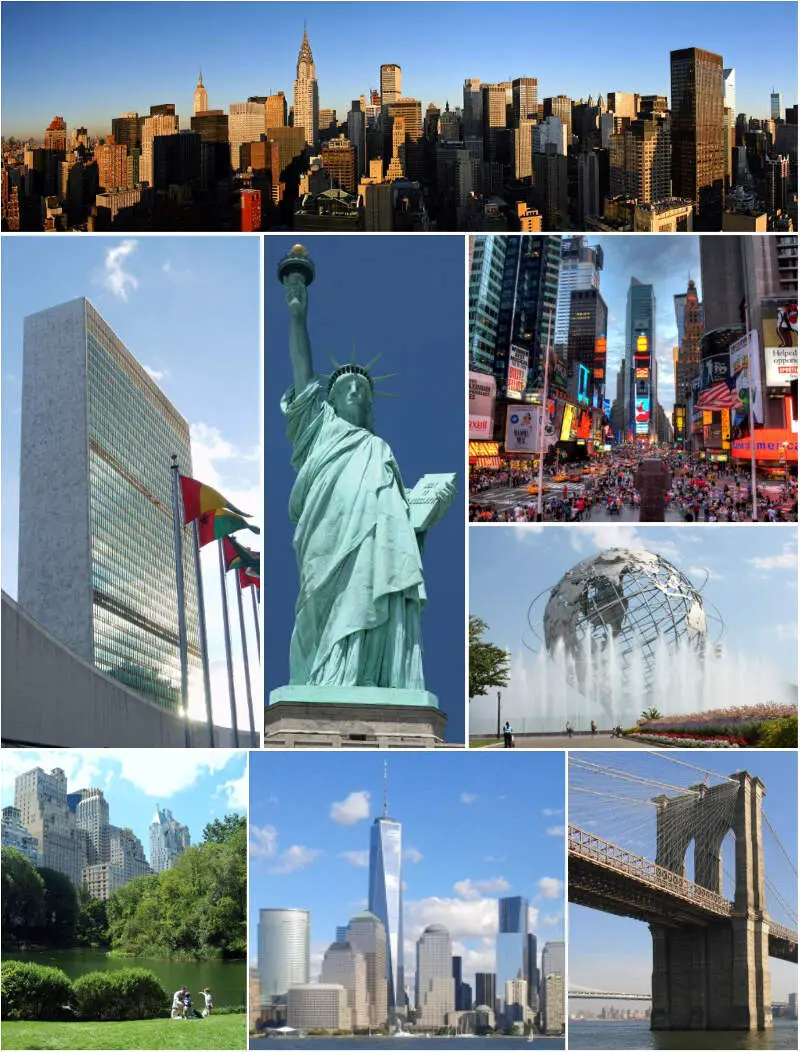
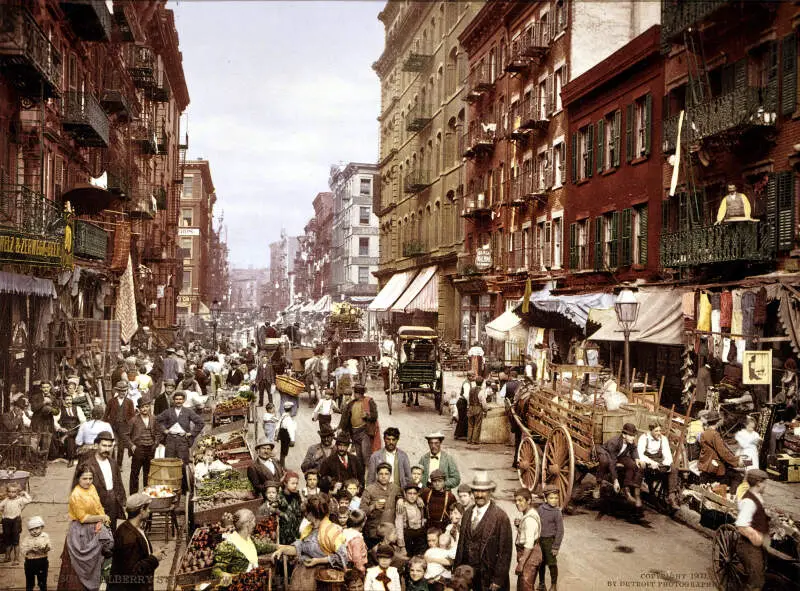
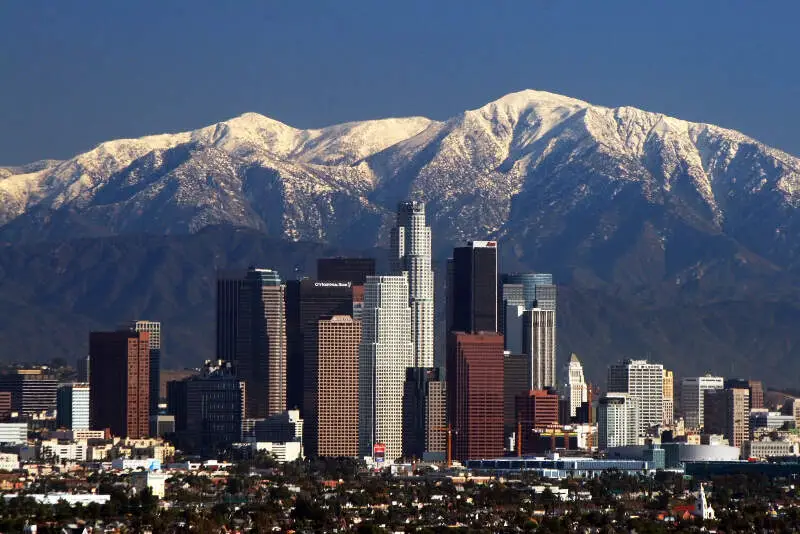
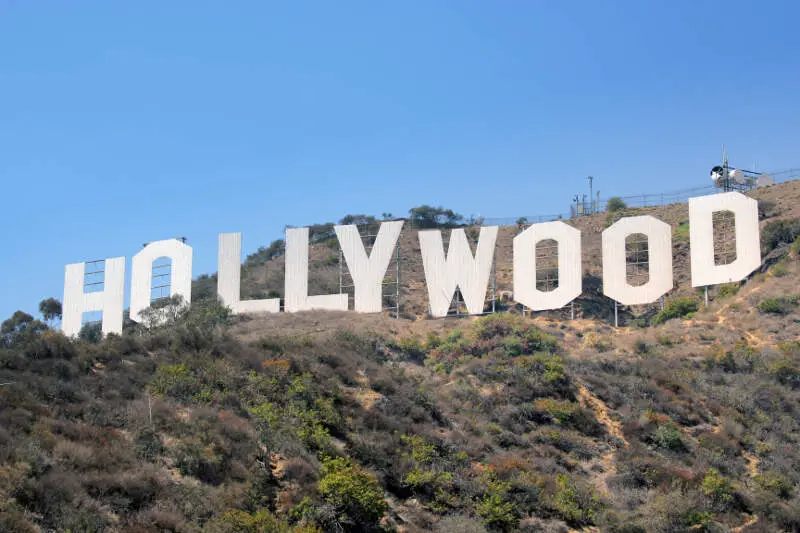
New York vs. Los Angeles in photos
A side-by-side look at each city.


Cost of living
Los Angeles is the cheaper city overall — 1% higher in New York than its rival. Index baseline: 100 = national average.
| Living expense | New York | Los Angeles | US average |
|---|---|---|---|
| Overall | 180 | 179 | 100 |
| Services | 119 | 117 | 100 |
| Groceries | 124 | 123 | 100 |
| Health | 298 | 309 | 100 |
| Housing | 134 | 128 | 100 |
| Transportation | 119 | 128 | 100 |
| Utilities | 134 | 134 | 100 |
Lower index = cheaper. 100 = U.S. national average. Bar inside each cell scales relative to the highest value in the table.
Sources: HomeSnacks Cost of Living indices, normalized so 100 = U.S. national average. Drill in: New York cost of living, Los Angeles cost of living, or the cheapest cities in America.
Housing breakdown
Home prices are higher in Los Angeles. Compare absolute price and price-to-income — a $500k home in a $100k-income city is very different from one in a $50k-income city.
| Metric | New York | Los Angeles | United States |
|---|---|---|---|
| Median Home Value | $812,861 | $952,183 | $332,700 |
| Median Rent | $1,821 | $1,933 | $1,413 |
| Median Income | $80,483 | $81,939 | $80,734 |
| Home Value To Income | 10.1x | 11.6x | 4.1x |
| Rent To Monthly Income | 0.27x | 0.28x | 0.21x |
Source: U.S. Census Bureau ACS 2020-2024. See also states with the highest rent in America.
Crime
Los Angeles is the safer city — total crime rate of 2,212 per 100k people vs 3,039 for New York. US average: 2,119.
| Crime (per 100k) | New York | Los Angeles | US average |
|---|---|---|---|
| Total crime | 3,039 | 2,212 | 2,119 |
| Murder | 4 | 7 | 5 |
| Robbery | 187 | 210 | 61 |
| Aggravated Assault | 456 | 471 | 256 |
| Violent Crime | 671 | 728 | 359 |
| Burglary | 155 | 373 | 229 |
| Larceny | 2,015 | 852 | 1,272 |
| Car Theft | 199 | 260 | 259 |
| Property Crime | 2,368 | 1,484 | 1,760 |
Lower = safer. Bar inside each cell scales relative to the highest crime rate in the table.
Source: FBI Uniform Crime Reporting (2024). All rates are per 100,000 people. City pages: New York crime, Los Angeles crime. See also: safest cities in America.
Diversity
New York is more racially diverse — lower HHI (closer to 0) means a more even mix across groups.
| Group | New York | Los Angeles | United States |
|---|---|---|---|
| White | 31.0% | 28.1% | 57.4% |
| African American | 20.4% | 8.1% | 11.9% |
| American Indian | 0.2% | 0.1% | 0.5% |
| Asian | 14.6% | 11.9% | 5.9% |
| Hawaiian | 0.0% | 0.1% | 0.2% |
| Other | 1.4% | 0.7% | 0.6% |
| Two Or More | 3.9% | 3.8% | 4.3% |
| Hispanic | 28.5% | 47.2% | 19.3% |
Source: U.S. Census ACS 2020-2024. Lower HHI = more even racial mix. See also: most diverse cities in America.
SnackAbility — overall quality of life
New York scores higher overall — 8/10 vs 6/10. SnackAbility is our 1–10 quality-of-life score; the median U.S. city scores a 7.
Scores are 0–10; both bars share the same scale.
SnackAbility is a HomeSnacks proprietary 1–10 score blending jobs, housing, education, commute, amenities, affordability, crime, and diversity. Median U.S. city ≈ 7. Data: Census, BLS, FBI. See also: best places to live in America.
Getting around: New York vs. Los Angeles
How each city handles commuting, transit, walkability, and car culture — the day-to-day reality that shapes where you'd actually want to live.
Getting around New York without a car works fine. The MTA subway runs 24 hours a day, seven days a week, and Metro-North, the LIRR, and the bus network extend your reach well beyond Manhattan. Midtown to Brooklyn costs $2.90 and a few minutes on the platform.
Rush-hour trains are crowded, delays are real, and lugging anything bigger than a backpack is a hassle.
Los Angeles is a different story. The Metro rail system has expanded in recent years, with the A and E lines connecting downtown to the Westside and Long Beach, but most Angelenos still drive.
The 405 and I-10 are punishing during peak hours, and surface streets in Silver Lake or Culver City can be just as slow. If you commute by car in LA, budget extra time. If life without a subway sounds impossible, New York wins this one.
Jobs and careers in New York vs. Los Angeles
The local job market, dominant industries, and which city to choose based on your career.
New York and Los Angeles have nearly identical household incomes, $80,483 in New York versus $81,939 in Los Angeles, but the industries behind those numbers look very different. New York is the country's financial capital: if you work in banking, asset management, or fintech, JPMorgan, Goldman Sachs, and Bloomberg are all headquartered or heavily staffed here. Media and fashion are also concentrated in Manhattan and increasingly in Brooklyn.
Los Angeles runs on entertainment. The major studios, Warner Bros., Disney, Universal, and Netflix's Burbank campus, anchor a supply chain of production companies, agencies, and post-production houses. Tech has taken real root in Silicon Beach, with Google, Snap, and a dense startup scene in Playa Vista and Santa Monica.
Aerospace and defense (SpaceX, Northrop Grumman, Raytheon) make up a major employment sector that New York largely lacks. Both cities have tight labor markets and high costs, with cost-of-living indexes nearly tied at 180 and 179 respectively.
Weather and climate
What to expect day-to-day — sun, fog, heat, rain, and the seasonal extremes that shape the lifestyle.
New York gives you all four seasons, which is either a feature or a bug depending on your perspective. January lows often dip into the twenties, and wind tunnels between skyscrapers make it feel colder still. Summers are warm and humid, with July temperatures regularly hitting the upper eighties.
Spring and fall are the payoff: crisp, golden weather that makes the cold winters feel worth it.
Los Angeles is hard to argue with on climate. Winters rarely fall below fifty degrees, and summers along the coast stay in the low-to-mid eighties, though the San Fernando Valley and inland areas push into the nineties or beyond. The catch is a dry season running roughly May through October, with wildfire smoke hitting air quality in late summer and fall.
If you have seasonal affective disorder or own exactly one heavy coat, LA probably settles the question.
Culture, nightlife, and entertainment
Food, music, neighborhoods, and the city vibe that gives each place its personality.
New York has the Met, MoMA, and the Guggenheim within a few miles of each other. Broadway is the country's top destination for live theater. Neighborhoods like the West Village, Harlem, Flushing, and Astoria each carry distinct identities built up over generations.
The bar and club scene runs late, from jazz rooms in the West Village to warehouse parties in Bushwick.
Los Angeles has a different cultural tempo, more spread out and car-dependent. The Getty Center and LACMA are serious institutions. The live music scene runs from the Troubadour in West Hollywood to the Hollywood Bowl under summer stars.
Koreatown, Boyle Heights, and Little Tokyo have cultural depth that the city's beach image tends to hide. Bars close earlier than in New York by law, and the drive from Silver Lake to the Westside after midnight is a real commitment, but the options are there.
Outdoor activities and day trips
Parks, beaches, hikes, and the weekend escapes that define life outside the city limits.
Central Park is 843 acres of green space in the middle of the city, and it gets used hard. The Hudson River Greenway is a solid cycling corridor running along the waterfront. Prospect Park in Brooklyn fills up on every warm weekend.
When you need to leave the city, the Catskills are two hours north, the Jersey Shore beaches are an easy train ride, and the Hudson Valley is a straightforward day trip.
Los Angeles has year-round weather that makes outdoor life the default. Griffith Park sits just above Hollywood, with trails up to the Observatory and views of the basin on clear days. The Santa Monica Mountains run through the city itself, with Topanga State Park just minutes from the Pacific Coast Highway.
The beaches from Malibu to Manhattan Beach to Long Beach get heavy use year-round. Day trips to Joshua Tree, the Angeles National Forest, or Big Bear Lake are easy to pull off on a weekend. If outdoor access and mild temperatures matter to you, LA has a real edge.
Bottom line: which city is right for you?
Based on the head-to-head data above, here's the short version — pick the city that lines up with what you actually care about.
Choose New York if you prioritize…
- a more racially diverse community (lower HHI on Census data).
- a higher overall SnackAbility quality-of-life score.
Choose Los Angeles if you prioritize…
- a lower cost of living (cheaper groceries, services, and day-to-day expenses).
- lower crime — a safer place to live, work, and raise a family.
- more affordable housing relative to New York.
Methodology: winners are picked from public data — U.S. Census Bureau ACS (income, home value, rent, race/HHI), FBI Uniform Crime Reporting (crime rates per 100k), and HomeSnacks' proprietary SnackAbility quality-of-life score, which blends Bureau of Labor Statistics data with the above.
Other comparisons
Still weighing your options? See how these two cities stack up against other places we've compared head-to-head.