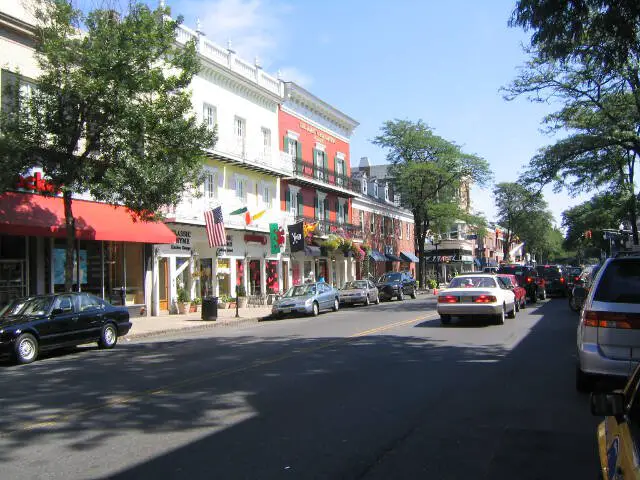
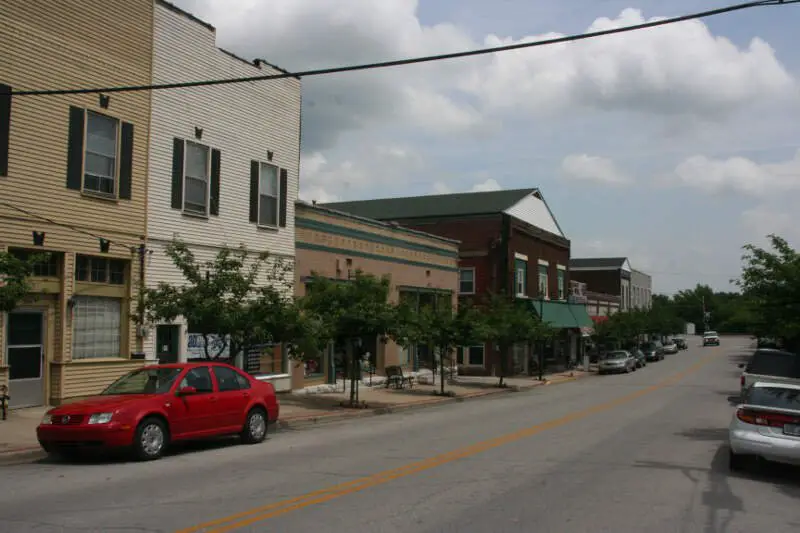
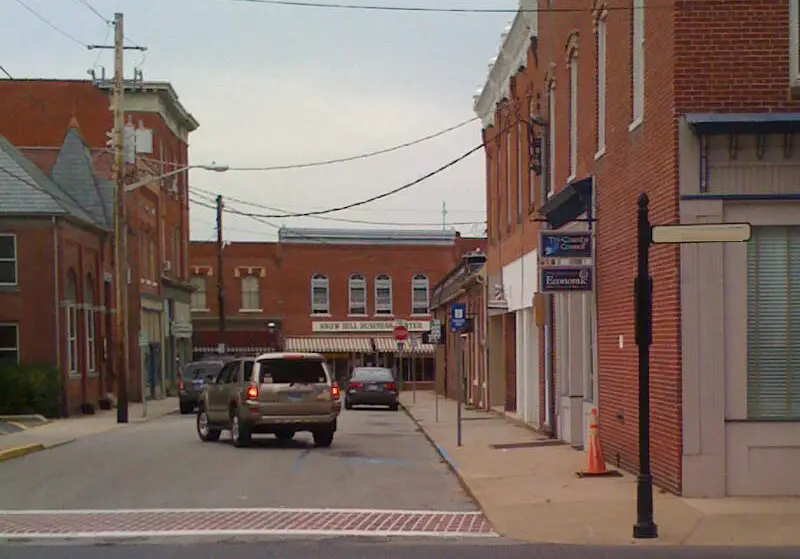
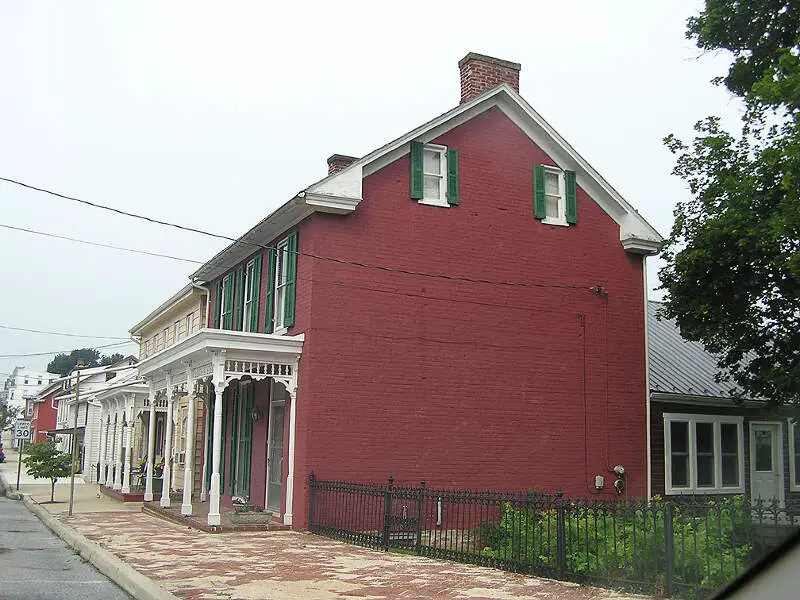
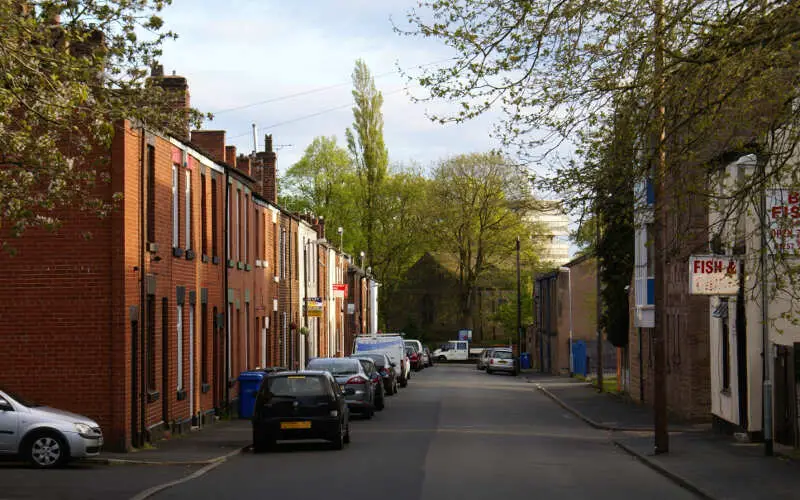
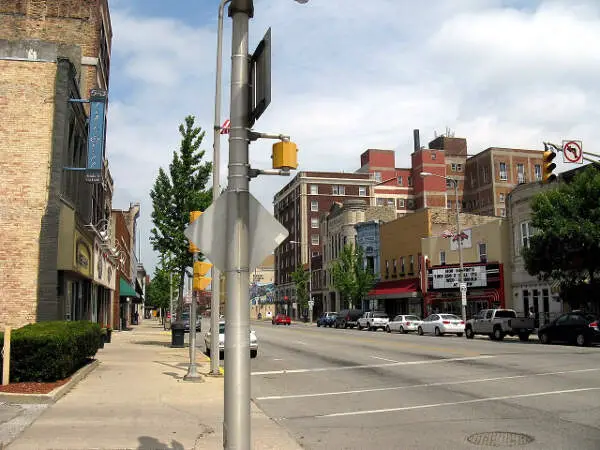
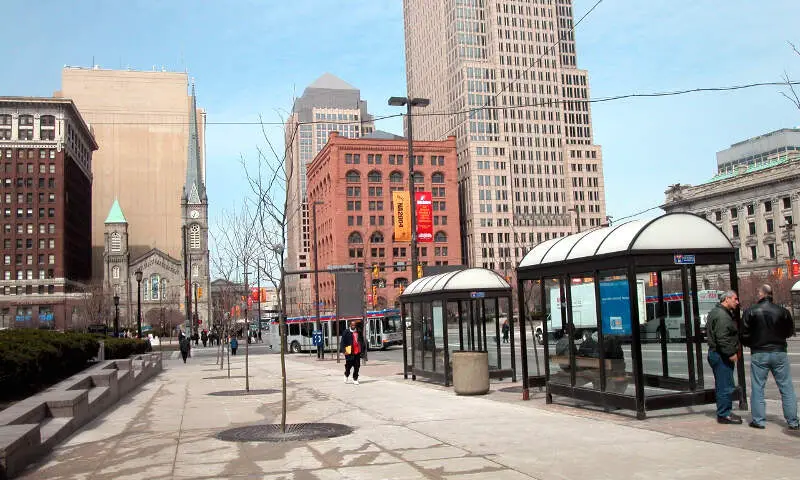
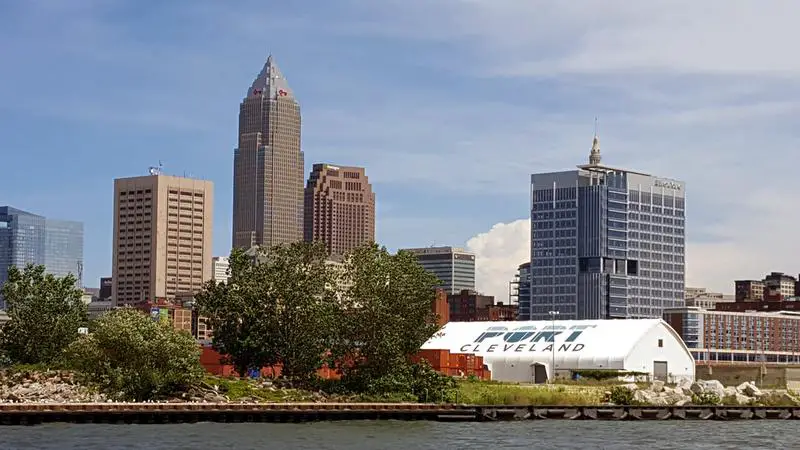
Indianapolis vs. Cleveland in photos
A side-by-side look at each city.




Cost of living
Cleveland is the cheaper city overall — 18% higher in Indianapolis than its rival. Index baseline: 100 = national average.
| Living expense | Indianapolis | Cleveland | US average |
|---|---|---|---|
| Overall | 94 | 80 | 100 |
| Services | 97 | 96 | 100 |
| Groceries | 97 | 91 | 100 |
| Health | 84 | 48 | 100 |
| Housing | 100 | 91 | 100 |
| Transportation | 99 | 98 | 100 |
| Utilities | 95 | 97 | 100 |
Lower index = cheaper. 100 = U.S. national average. Bar inside each cell scales relative to the highest value in the table.
Sources: HomeSnacks Cost of Living indices, normalized so 100 = U.S. national average. Drill in: Indianapolis cost of living, Cleveland cost of living, or the cheapest cities in America.
Housing breakdown
Home prices are higher in Indianapolis. Compare absolute price and price-to-income — a $500k home in a $100k-income city is very different from one in a $50k-income city.
| Metric | Indianapolis | Cleveland | United States |
|---|---|---|---|
| Median Home Value | $229,209 | $115,536 | $332,700 |
| Median Rent | $1,156 | $945 | $1,413 |
| Median Income | $66,219 | $40,801 | $80,734 |
| Home Value To Income | 3.5x | 2.8x | 4.1x |
| Rent To Monthly Income | 0.21x | 0.28x | 0.21x |
Source: U.S. Census Bureau ACS 2020-2024. See also states with the highest rent in America.
Crime
Indianapolis is the safer city — total crime rate of 4,214 per 100k people vs 5,987 for Cleveland. US average: 2,119.
| Crime (per 100k) | Indianapolis | Cleveland | US average |
|---|---|---|---|
| Total crime | 4,214 | 5,987 | 2,119 |
| Murder | 20 | 30 | 5 |
| Robbery | 143 | 389 | 61 |
| Aggravated Assault | 656 | 1,001 | 256 |
| Violent Crime | 878 | 1,561 | 359 |
| Burglary | 518 | 860 | 229 |
| Larceny | 2,072 | 2,419 | 1,272 |
| Car Theft | 746 | 1,146 | 259 |
| Property Crime | 3,336 | 4,426 | 1,760 |
Lower = safer. Bar inside each cell scales relative to the highest crime rate in the table.
Source: FBI Uniform Crime Reporting (2024). All rates are per 100,000 people. City pages: Indianapolis crime, Cleveland crime. See also: safest cities in America.
Diversity
Cleveland is more racially diverse — lower HHI (closer to 0) means a more even mix across groups.
| Group | Indianapolis | Cleveland | United States |
|---|---|---|---|
| White | 48.9% | 33.7% | 57.4% |
| African American | 27.6% | 45.1% | 11.9% |
| American Indian | 0.1% | 0.1% | 0.5% |
| Asian | 4.2% | 2.6% | 5.9% |
| Hawaiian | 0.0% | 0.0% | 0.2% |
| Other | 0.6% | 0.6% | 0.6% |
| Two Or More | 4.9% | 4.6% | 4.3% |
| Hispanic | 13.8% | 13.2% | 19.3% |
Source: U.S. Census ACS 2020-2024. Lower HHI = more even racial mix. See also: most diverse cities in America.
SnackAbility — overall quality of life
Indianapolis scores higher overall — 5/10 vs 3/10. SnackAbility is our 1–10 quality-of-life score; the median U.S. city scores a 7.
Scores are 0–10; both bars share the same scale.
SnackAbility is a HomeSnacks proprietary 1–10 score blending jobs, housing, education, commute, amenities, affordability, crime, and diversity. Median U.S. city ≈ 7. Data: Census, BLS, FBI. See also: best places to live in America.
Getting around: Indianapolis vs. Cleveland
How each city handles commuting, transit, walkability, and car culture — the day-to-day reality that shapes where you'd actually want to live.
Indianapolis is built for drivers. The street grid is flat and logical, so car commuters rarely hit the gridlock common in larger metros. IndyGo runs the bus network (including the rapid Red Line on College Avenue), but coverage thins out fast beyond downtown and Broad Ripple, and a car is nearly essential for most residents.
Cleveland gives you more transit options. The RTA operates the Red Line rail connecting downtown to Hopkins International Airport, plus the Blue and Green lines heading east, and the Euclid Avenue HealthLine BRT linking downtown to University Circle. If you live or work in those corridors, you can genuinely go car-light.
Both cities sprawl in the Midwestern way, but Cleveland's legacy rail network gives transit-dependent commuters a real advantage.
Jobs and careers in Indianapolis vs. Cleveland
The local job market, dominant industries, and which city to choose based on your career.
Indianapolis is anchored by Eli Lilly, Elevance Health (formerly Anthem), Salesforce, and Rolls-Royce. Logistics and warehousing are big sectors given the city's position at the crossroads of I-65, I-70, and I-74. Median household income sits at $66,219, and a growing tech presence has taken root around the 16 Tech innovation district.
Cleveland's economy runs heavily on healthcare and education. The Cleveland Clinic is one of the largest employers in the state, with University Hospitals close behind, while Sherwin-Williams, Progressive Insurance, and KeyBank keep a white-collar finance and professional-services base downtown. Cleveland's median household income of $40,801 trails Indianapolis significantly, though a cost-of-living index of 80 versus Indianapolis's 94 closes some of that gap in purchasing power.
Weather and climate
What to expect day-to-day — sun, fog, heat, rain, and the seasonal extremes that shape the lifestyle.
Indianapolis has four distinct seasons with no geographic features to moderate them. Summers run hot and humid, with July highs regularly in the upper 80s and noticeable humidity through August. Winters bring cold spells and periodic snowfall, though nothing close to the lake-effect totals that pound northern Ohio.
Spring and fall are the sweet spots, with mild temperatures and lower humidity that make it easy to spend time outside.
Cleveland earns its reputation as one of the cloudiest cities in the country. Lake Erie feeds relentless gray overcast from November through March, and lake-effect snow can pile up fast east of the city. The lake moderates summer heat, though, so Cleveland's July afternoons tend to run a few degrees cooler than Indianapolis's and feel less oppressively humid.
If gray skies and limited winter sunlight affect your quality of life, that's a real factor to weigh before choosing Cleveland.
Culture, nightlife, and entertainment
Food, music, neighborhoods, and the city vibe that gives each place its personality.
Indianapolis punches above its weight culturally. Mass Ave is the go-to arts and dining corridor, while Fountain Square draws a younger crowd with indie bars, comedy venues, and weekend markets. Gainbridge Fieldhouse hosts the Pacers, Lucas Oil Stadium is home to the Colts, and the Indianapolis Motor Speedway turns the city into a global destination every May.
The Newfields campus pairs the Indianapolis Museum of Art with 152 acres of grounds.
Cleveland's cultural footprint is dense and walkable. Playhouse Square is the second-largest performing arts center in the United States outside of Lincoln Center, and the Rock and Roll Hall of Fame sits on the lakefront. Ohio City and Tremont are packed with independent restaurants and craft breweries, and East 4th Street is one of the better concentrated dining blocks in the Midwest.
For the size difference between the two cities, Cleveland holds its own in arts and nightlife.
Outdoor activities and day trips
Parks, beaches, hikes, and the weekend escapes that define life outside the city limits.
Eagle Creek Park sits on Indianapolis's northwest side: at roughly 5,300 acres it's one of the largest municipal parks in the country, with a reservoir for sailing, kayaking, and open-water swimming. The Monon Trail connects several neighborhoods for cyclists and runners, and the Cultural Trail links downtown in a paved loop. For bigger landscapes, Brown County State Park is about an hour south and delivers rolling hills and fall foliage that the flat city can't match.
Cleveland's best outdoor asset is Cuyahoga Valley National Park, just 20 minutes from downtown: 33,000 acres of gorge trails, waterfalls, and the Towpath Trail along the old Ohio and Erie Canal. The Cleveland Metroparks "Emerald Necklace" wraps around the city with 24,000 acres of reservations and over 300 miles of trails. Edgewater Park and Wendy Park put Lake Erie swimming and fishing minutes from downtown.
For outdoor variety within a short drive, Cleveland has a clear advantage.
Bottom line: which city is right for you?
Based on the head-to-head data above, here's the short version — pick the city that lines up with what you actually care about.
Choose Indianapolis if you prioritize…
- lower crime — a safer place to live, work, and raise a family.
- more affordable housing relative to Cleveland.
- a higher overall SnackAbility quality-of-life score.
Choose Cleveland if you prioritize…
- a lower cost of living (cheaper groceries, services, and day-to-day expenses).
- a more racially diverse community (lower HHI on Census data).
Methodology: winners are picked from public data — U.S. Census Bureau ACS (income, home value, rent, race/HHI), FBI Uniform Crime Reporting (crime rates per 100k), and HomeSnacks' proprietary SnackAbility quality-of-life score, which blends Bureau of Labor Statistics data with the above.
Other comparisons
Still weighing your options? See how these two cities stack up against other places we've compared head-to-head.