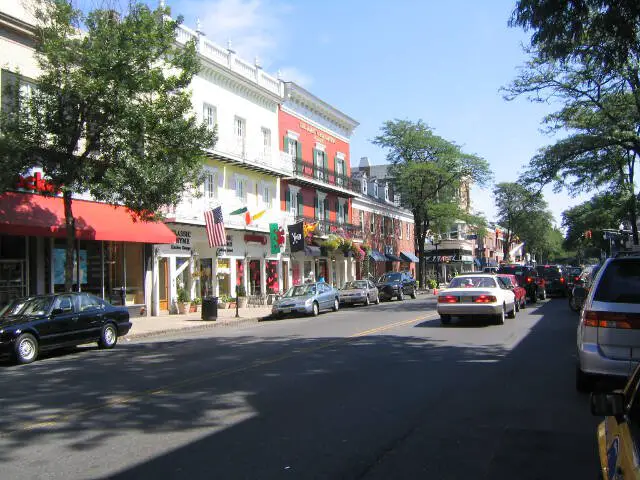
New Orleans vs. Atlanta in photos
A side-by-side look at each city.






Cost of living
New Orleans is the cheaper city overall — 9% higher in Atlanta than its rival. Index baseline: 100 = national average.
| Living expense | New Orleans | Atlanta | US average |
|---|---|---|---|
| Overall | 108 | 119 | 100 |
| Services | 100 | 99 | 100 |
| Groceries | 99 | 102 | 100 |
| Health | 128 | 163 | 100 |
| Housing | 94 | 100 | 100 |
| Transportation | 97 | 106 | 100 |
| Utilities | 96 | 104 | 100 |
Lower index = cheaper. 100 = U.S. national average. Bar inside each cell scales relative to the highest value in the table.
Sources: HomeSnacks Cost of Living indices, normalized so 100 = U.S. national average. Drill in: New Orleans cost of living, Atlanta cost of living, or the cheapest cities in America.
Housing breakdown
Home prices are higher in Atlanta. Compare absolute price and price-to-income — a $500k home in a $100k-income city is very different from one in a $50k-income city.
| Metric | New Orleans | Atlanta | United States |
|---|---|---|---|
| Median Home Value | $242,492 | $385,599 | $332,700 |
| Median Rent | $1,251 | $1,711 | $1,413 |
| Median Income | $56,631 | $85,652 | $80,734 |
| Home Value To Income | 4.3x | 4.5x | 4.1x |
| Rent To Monthly Income | 0.27x | 0.24x | 0.21x |
Source: U.S. Census Bureau ACS 2020-2024. See also states with the highest rent in America.
Crime
Atlanta is the safer city — total crime rate of 4,600 per 100k people vs 6,451 for New Orleans. US average: 2,119.
| Crime (per 100k) | New Orleans | Atlanta | US average |
|---|---|---|---|
| Total crime | 6,451 | 4,600 | 2,119 |
| Murder | 53 | 26 | 5 |
| Robbery | 180 | 120 | 61 |
| Aggravated Assault | 941 | 537 | 256 |
| Violent Crime | 1,361 | 707 | 359 |
| Burglary | 478 | 347 | 229 |
| Larceny | 2,771 | 2,500 | 1,272 |
| Car Theft | 1,840 | 1,046 | 259 |
| Property Crime | 5,090 | 3,893 | 1,760 |
Lower = safer. Bar inside each cell scales relative to the highest crime rate in the table.
Source: FBI Uniform Crime Reporting (2024). All rates are per 100,000 people. City pages: New Orleans crime, Atlanta crime. See also: safest cities in America.
Diversity
Atlanta is more racially diverse — lower HHI (closer to 0) means a more even mix across groups.
| Group | New Orleans | Atlanta | United States |
|---|---|---|---|
| White | 30.1% | 38.1% | 57.4% |
| African American | 53.9% | 45.4% | 11.9% |
| American Indian | 0.1% | 0.1% | 0.5% |
| Asian | 2.8% | 5.2% | 5.9% |
| Hawaiian | 0.0% | 0.0% | 0.2% |
| Other | 1.0% | 0.5% | 0.6% |
| Two Or More | 4.0% | 4.4% | 4.3% |
| Hispanic | 8.2% | 6.3% | 19.3% |
Source: U.S. Census ACS 2020-2024. Lower HHI = more even racial mix. See also: most diverse cities in America.
SnackAbility — overall quality of life
Atlanta scores higher overall — 7/10 vs 4/10. SnackAbility is our 1–10 quality-of-life score; the median U.S. city scores a 7.
Scores are 0–10; both bars share the same scale.
SnackAbility is a HomeSnacks proprietary 1–10 score blending jobs, housing, education, commute, amenities, affordability, crime, and diversity. Median U.S. city ≈ 7. Data: Census, BLS, FBI. See also: best places to live in America.
Getting around: New Orleans vs. Atlanta
How each city handles commuting, transit, walkability, and car culture — the day-to-day reality that shapes where you'd actually want to live.
Getting around New Orleans without a car is genuinely feasible in a way Atlanta simply isn't. The RTA's St. Charles streetcar and Canal Street line connect major neighborhoods, and the French Quarter, Marigny, and Uptown are walkable and bikeable by Sunbelt standards. If you commute by car, congestion exists but rarely reaches the levels you'll face on Atlanta's roads.
Atlanta is brutally car-dependent. MARTA's rail lines serve the core corridors (Buckhead, Midtown, the airport), but most of metro Atlanta requires a car, and the I-285/I-75/I-85 interchange known as Spaghetti Junction earns its reputation daily. The BeltLine trail loop is excellent for weekend cycling but won't replace your commute.
If you're relocating from a transit-friendly city, New Orleans offers more daily life without a car; Atlanta will almost certainly mean you're buying one.
Jobs and careers in New Orleans vs. Atlanta
The local job market, dominant industries, and which city to choose based on your career.
Atlanta is the clearer career hub by the numbers: median household income runs $85,652 versus $56,631 in New Orleans. Delta Air Lines, UPS, and NCR are headquartered there, and Google, Microsoft, and Salesforce all have significant Atlanta offices. The CDC, Emory University, Truist, and Intercontinental Exchange round out a range covering healthcare, research, and finance.
New Orleans leans heavily on hospitality, maritime trade, and healthcare. Ochsner Health and the LSU Health Sciences Center are the dominant employers outside tourism, and energy and port logistics supply blue-collar stability. Startups exist but the ecosystem is thin compared to Atlanta's.
If you're in tech, finance, or logistics, Atlanta offers substantially more opportunity; if you're in culinary arts, music, or maritime industries, New Orleans has niches Atlanta can't match.
Weather and climate
What to expect day-to-day — sun, fog, heat, rain, and the seasonal extremes that shape the lifestyle.
Both cities sit in the humid subtropical belt, but they diverge in meaningful ways. New Orleans is hotter and wetter: summers routinely push into the mid-90s with humidity that makes it feel over 100°F, and the city averages roughly 64 inches of rain a year. Winters are mild and frost is rare, but hurricane season (June–November) is a real planning consideration, and flooding after heavy rain is a recurring fact of life at or below sea level.
Atlanta sits about 1,050 feet above sea level, which shaves a few degrees off summer highs and brings occasional winter ice storms. The city essentially shuts down when a quarter-inch of ice hits, and summers are hot and humid though more manageable than New Orleans. Neither city gets meaningful snowfall, but if avoiding hurricane risk matters to you, Atlanta's inland position is a genuine advantage.
Culture, nightlife, and entertainment
Food, music, neighborhoods, and the city vibe that gives each place its personality.
New Orleans has a cultural density that few American cities can touch. Frenchmen Street in the Marigny offers live jazz and blues seven nights a week without the tourist crush of Bourbon Street. Mardi Gras, Jazz Fest, and the French Quarter Festival are nationally significant events.
The food scene, from Commander's Palace to the po'boy counters in Mid-City, is genuinely world-class. The city's Franco-Caribbean architecture gives every neighborhood a visual character you won't find in Atlanta.
Atlanta punches hard in a different register. The Sweet Auburn corridor and Martin Luther King Jr. National Historic Site anchor a deep civil rights history, and Atlanta's influence on hip-hop and R&B is undeniable. Ponce City Market, Little Five Points, and the Old Fourth Ward have built a strong food and arts scene.
Nightlife options in Atlanta are broader and the dining scene has grown dramatically, but it's harder to claim Atlanta has New Orleans' singular cultural identity.
Outdoor activities and day trips
Parks, beaches, hikes, and the weekend escapes that define life outside the city limits.
New Orleans is flat, surrounded by water, and built mostly below sea level, which shapes your outdoor options. City Park's 1,300 acres offer lagoon kayaking, disc golf, and the Botanical Garden. Audubon Park along the Mississippi is a lovely urban green space.
Lake Pontchartrain is right there for fishing and watersports, and day trips reach the Gulf Coast beaches around Gulfport or the Atchafalaya Basin for serious paddling and birding. What you won't find is elevation or trail hiking.
Atlanta more than compensates on that front. The Chattahoochee River National Recreation Area puts whitewater paddling and riverside trails inside city limits. Stone Mountain Park is a quick drive east.
The Blue Ridge Mountains and the Appalachian Trail are under two hours north, and a day trip from Atlanta gets you genuine mountain hiking that New Orleans residents have to fly to find. If outdoor variety matters, Atlanta has the stronger hand.
Bottom line: which city is right for you?
Based on the head-to-head data above, here's the short version — pick the city that lines up with what you actually care about.
Choose New Orleans if you prioritize…
- a lower cost of living (cheaper groceries, services, and day-to-day expenses).
Choose Atlanta if you prioritize…
- lower crime — a safer place to live, work, and raise a family.
- more affordable housing relative to New Orleans.
- a more racially diverse community (lower HHI on Census data).
- a higher overall SnackAbility quality-of-life score.
Methodology: winners are picked from public data — U.S. Census Bureau ACS (income, home value, rent, race/HHI), FBI Uniform Crime Reporting (crime rates per 100k), and HomeSnacks' proprietary SnackAbility quality-of-life score, which blends Bureau of Labor Statistics data with the above.
Other comparisons
Still weighing your options? See how these two cities stack up against other places we've compared head-to-head.