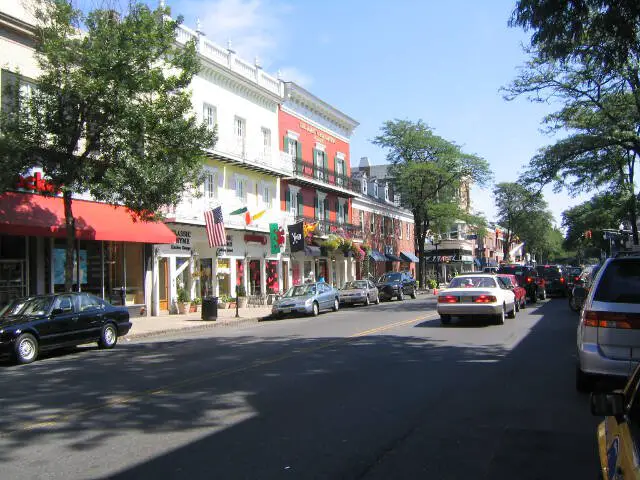
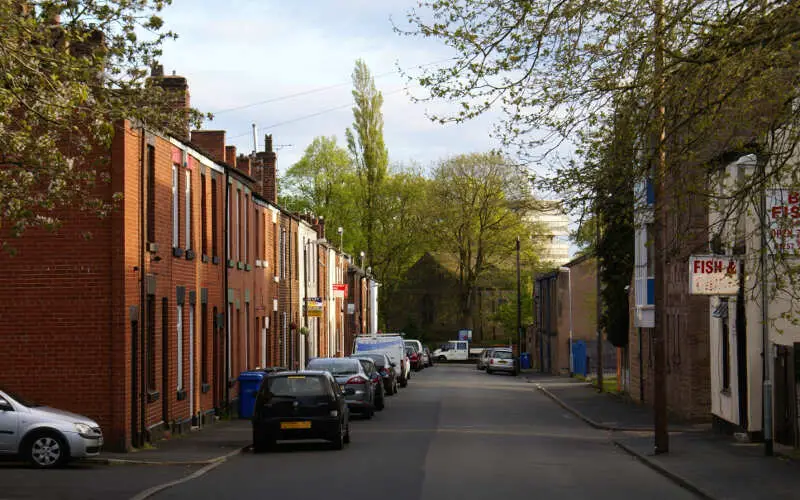
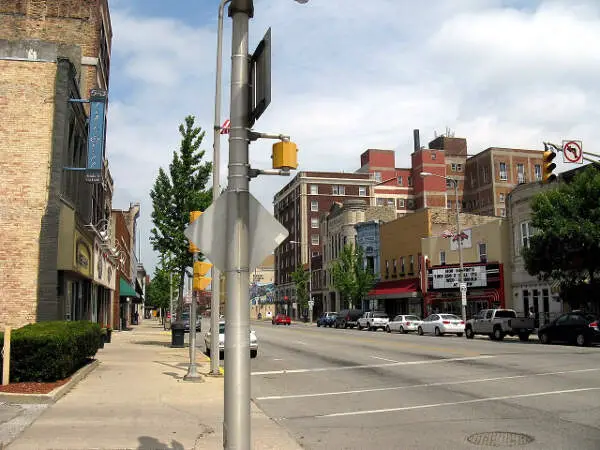
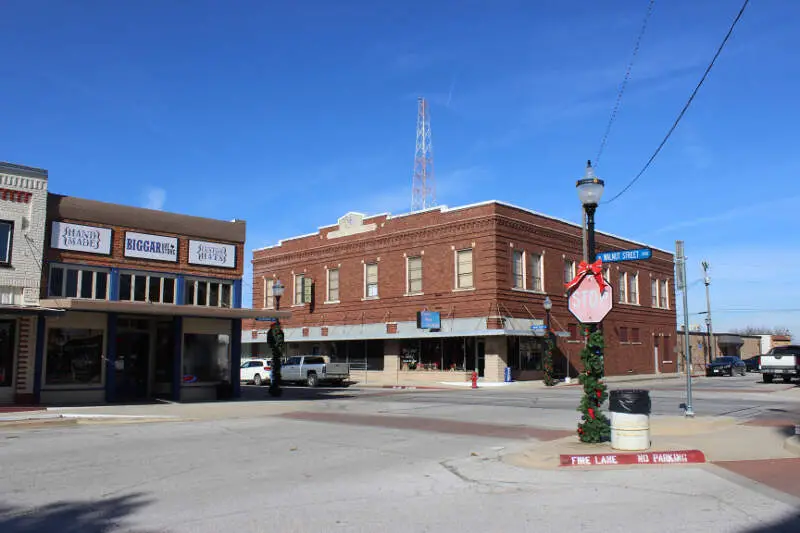
Atlanta vs. Dallas in photos
A side-by-side look at each city.






Cost of living
Dallas is the cheaper city overall — 12% higher in Atlanta than its rival. Index baseline: 100 = national average.
| Living expense | Atlanta | Dallas | US average |
|---|---|---|---|
| Overall | 119 | 106 | 100 |
| Services | 99 | 102 | 100 |
| Groceries | 102 | 103 | 100 |
| Health | 163 | 115 | 100 |
| Housing | 100 | 106 | 100 |
| Transportation | 106 | 108 | 100 |
| Utilities | 104 | 104 | 100 |
Lower index = cheaper. 100 = U.S. national average. Bar inside each cell scales relative to the highest value in the table.
Sources: HomeSnacks Cost of Living indices, normalized so 100 = U.S. national average. Drill in: Atlanta cost of living, Dallas cost of living, or the cheapest cities in America.
Housing breakdown
Home prices are higher in Atlanta. Compare absolute price and price-to-income — a $500k home in a $100k-income city is very different from one in a $50k-income city.
| Metric | Atlanta | Dallas | United States |
|---|---|---|---|
| Median Home Value | $385,599 | $309,420 | $332,700 |
| Median Rent | $1,711 | $1,472 | $1,413 |
| Median Income | $85,652 | $70,518 | $80,734 |
| Home Value To Income | 4.5x | 4.4x | 4.1x |
| Rent To Monthly Income | 0.24x | 0.25x | 0.21x |
Source: U.S. Census Bureau ACS 2020-2024. See also states with the highest rent in America.
Crime
Dallas is the safer city — total crime rate of 4,010 per 100k people vs 4,600 for Atlanta. US average: 2,119.
| Crime (per 100k) | Atlanta | Dallas | US average |
|---|---|---|---|
| Total crime | 4,600 | 4,010 | 2,119 |
| Murder | 26 | 14 | 5 |
| Robbery | 120 | 169 | 61 |
| Aggravated Assault | 537 | 440 | 256 |
| Violent Crime | 707 | 658 | 359 |
| Burglary | 347 | 464 | 229 |
| Larceny | 2,500 | 1,787 | 1,272 |
| Car Theft | 1,046 | 1,100 | 259 |
| Property Crime | 3,893 | 3,352 | 1,760 |
Lower = safer. Bar inside each cell scales relative to the highest crime rate in the table.
Source: FBI Uniform Crime Reporting (2024). All rates are per 100,000 people. City pages: Atlanta crime, Dallas crime. See also: safest cities in America.
Diversity
Dallas is more racially diverse — lower HHI (closer to 0) means a more even mix across groups.
| Group | Atlanta | Dallas | United States |
|---|---|---|---|
| White | 38.1% | 27.6% | 57.4% |
| African American | 45.4% | 22.9% | 11.9% |
| American Indian | 0.1% | 0.2% | 0.5% |
| Asian | 5.2% | 3.8% | 5.9% |
| Hawaiian | 0.0% | 0.1% | 0.2% |
| Other | 0.5% | 0.3% | 0.6% |
| Two Or More | 4.4% | 2.6% | 4.3% |
| Hispanic | 6.3% | 42.6% | 19.3% |
Source: U.S. Census ACS 2020-2024. Lower HHI = more even racial mix. See also: most diverse cities in America.
SnackAbility — overall quality of life
Atlanta scores higher overall — 7/10 vs 5/10. SnackAbility is our 1–10 quality-of-life score; the median U.S. city scores a 7.
Scores are 0–10; both bars share the same scale.
SnackAbility is a HomeSnacks proprietary 1–10 score blending jobs, housing, education, commute, amenities, affordability, crime, and diversity. Median U.S. city ≈ 7. Data: Census, BLS, FBI. See also: best places to live in America.
Getting around: Atlanta vs. Dallas
How each city handles commuting, transit, walkability, and car culture — the day-to-day reality that shapes where you'd actually want to live.
Atlanta runs on MARTA, a rail-and-bus network connecting the airport directly to Midtown, Downtown, and Buckhead, which puts it among the more transit-capable Sun Belt cities. Outside the core neighborhoods along the Red, Gold, Blue, or Green lines, though, you're almost certainly commuting by car. The I-285/I-75/I-85 interchange known as Spaghetti Junction earns its nickname daily, and rush-hour crawls on GA-400 are a rite of passage for North Atlanta suburbanites.
Dallas has DART light rail covering over 90 miles of track, but the city's sprawl means most residents drive everywhere regardless. Distances between neighborhoods like Uptown, Plano, and Oak Cliff make a car non-negotiable for daily life. Both cities are car-dependent metros; Atlanta's denser urban core gives it a slight edge if you can land near a MARTA station.
Jobs and careers in Atlanta vs. Dallas
The local job market, dominant industries, and which city to choose based on your career.
Atlanta punches above its population weight as a corporate headquarters city. Delta Air Lines, Coca-Cola, Home Depot, CNN, NCR, and the CDC all anchor major employment clusters here, and the "Hollywood of the South" film and TV production industry adds a creative economy layer you won't find in many peer cities. The median household income of $85,652 reflects a labor market skewed toward professional, media, and logistics roles, though the cost of living index of 119 means those dollars don't stretch as far as they look.
Dallas trades on finance, telecom, and aerospace: AT&T is headquartered there, Texas Instruments dominates the semiconductor sector, and Goldman Sachs and JPMorgan Chase both run large regional operations. The median household income of $70,518 is lower than Atlanta's, but with a cost of living index of 106, the purchasing power gap closes considerably. Texas also has no state income tax, which matters for higher earners.
Weather and climate
What to expect day-to-day — sun, fog, heat, rain, and the seasonal extremes that shape the lifestyle.
Atlanta sits in the humid subtropical zone, which means hot, muggy summers where July temperatures regularly reach the low 90s. Winters are mild and sustained freezing temperatures are rare, but the city is famously underprepared for ice storms: a quarter-inch of freezing rain can shut down I-285 for a full day. Annual rainfall runs around 50 inches, spread fairly evenly across the year, so you'll want an umbrella year-round.
Dallas runs hotter and drier than Atlanta, with summers that frequently top 100°F and heat that runs relentlessly from June through September. Winters are unpredictable, as the 2021 storm made catastrophically clear, and spring brings real risk since Dallas sits in Tornado Alley and gets less annual rainfall than Atlanta. If you handle heat better than humidity, Dallas may suit you; if you prefer milder winters and more greenery, Atlanta wins.
Culture, nightlife, and entertainment
Food, music, neighborhoods, and the city vibe that gives each place its personality.
Sweet Auburn Avenue is the birthplace of Martin Luther King Jr., and the civil rights heritage it anchors is woven into the city's daily life, not just its museums. The music scene, rooted in hip-hop and R&B, is nationally influential, and neighborhoods like Old Fourth Ward and Ponce City Market blend history with a dense restaurant and bar scene. Midtown hosts the Fox Theatre, the High Museum of Art, and a walkable stretch of venues that give the city genuine urban energy after dark.
Dallas's arts district is the largest contiguous urban arts district in the country and includes the Nasher Sculpture Center, the Perot Museum, and the AT&T Performing Arts Center. Deep Ellum is the live music and dive-bar hub, while Uptown and Bishop Arts District drive the restaurant and cocktail scene. Both cities have serious food cultures: Atlanta through its diverse immigrant communities and elevated Southern cooking, Dallas through Tex-Mex, barbecue, and a growing chef-driven dining scene.
Outdoor activities and day trips
Parks, beaches, hikes, and the weekend escapes that define life outside the city limits.
Atlanta's outdoor appeal is built around water and trees. Piedmont Park anchors the Midtown green space scene, the Beltline trail loops through dozens of neighborhoods and is one of the most-used urban trails in the Southeast, and the Chattahoochee River National Recreation Area puts kayaking and tubing within 30 minutes of Downtown. The Blue Ridge Mountains are roughly 90 minutes north, with Blood Mountain and Amicalola Falls as popular weekend destinations, and Tallulah Gorge makes for an easy day trip.
Dallas works harder for its outdoor experiences: North Texas's flat, semi-arid terrain doesn't offer dramatic scenery nearby, and real elevation or wilderness means a 4-5 hour drive to Palo Duro Canyon or the Hill Country near Austin. White Rock Lake has a 9-mile loop trail, the Trinity Forest trail system is growing, and Lake Ray Hubbard and Lake Lewisville handle fishing and boating well. If proximity to varied natural landscapes matters, Atlanta has a clear advantage.
Bottom line: which city is right for you?
Based on the head-to-head data above, here's the short version — pick the city that lines up with what you actually care about.
Choose Atlanta if you prioritize…
- more affordable housing relative to Dallas.
- a higher overall SnackAbility quality-of-life score.
Choose Dallas if you prioritize…
- a lower cost of living (cheaper groceries, services, and day-to-day expenses).
- lower crime — a safer place to live, work, and raise a family.
- a more racially diverse community (lower HHI on Census data).
Methodology: winners are picked from public data — U.S. Census Bureau ACS (income, home value, rent, race/HHI), FBI Uniform Crime Reporting (crime rates per 100k), and HomeSnacks' proprietary SnackAbility quality-of-life score, which blends Bureau of Labor Statistics data with the above.
Other comparisons
Still weighing your options? See how these two cities stack up against other places we've compared head-to-head.