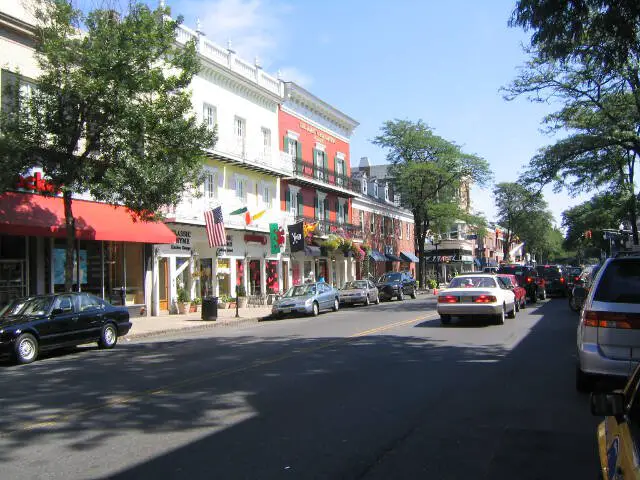
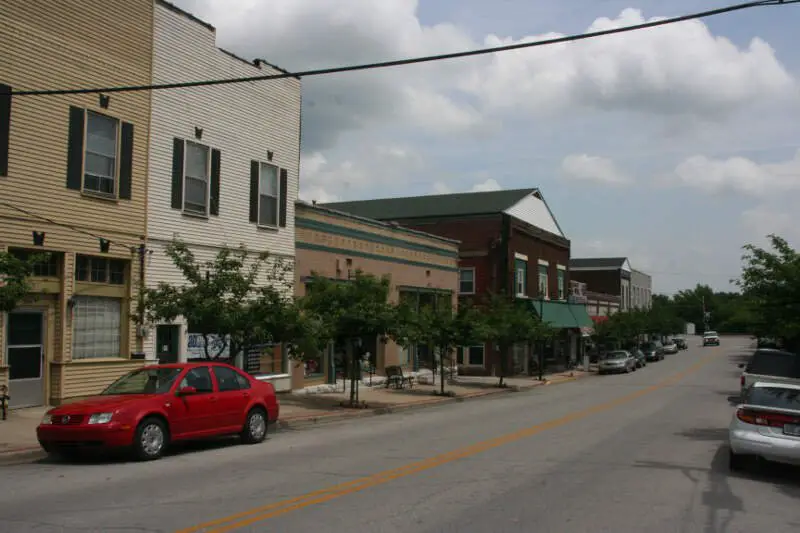
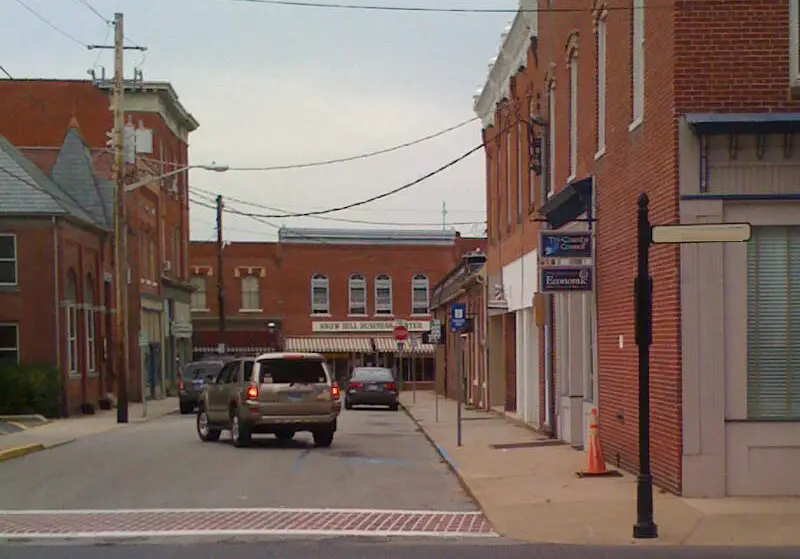
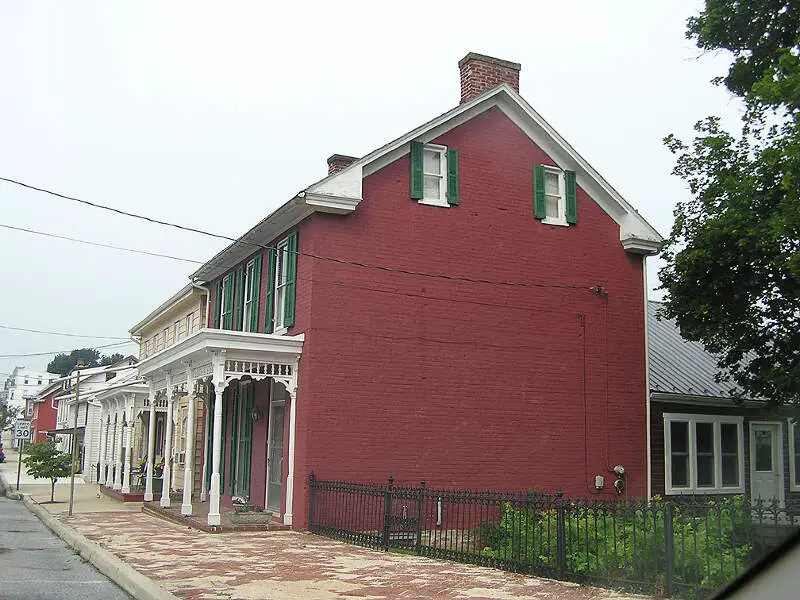
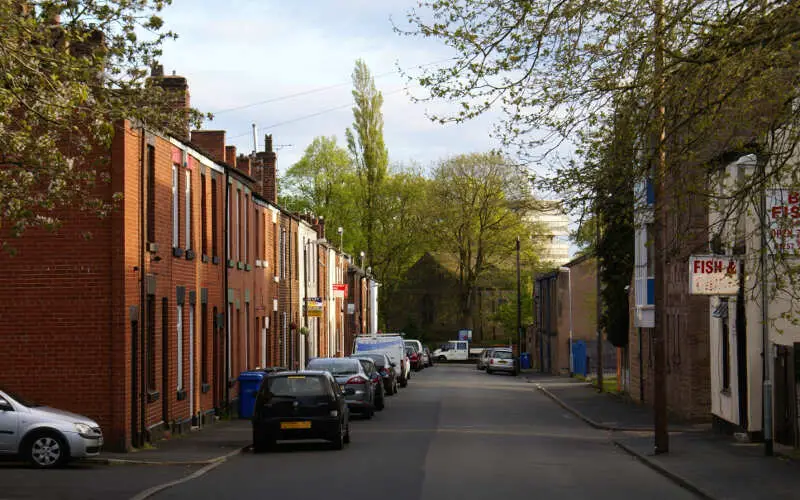
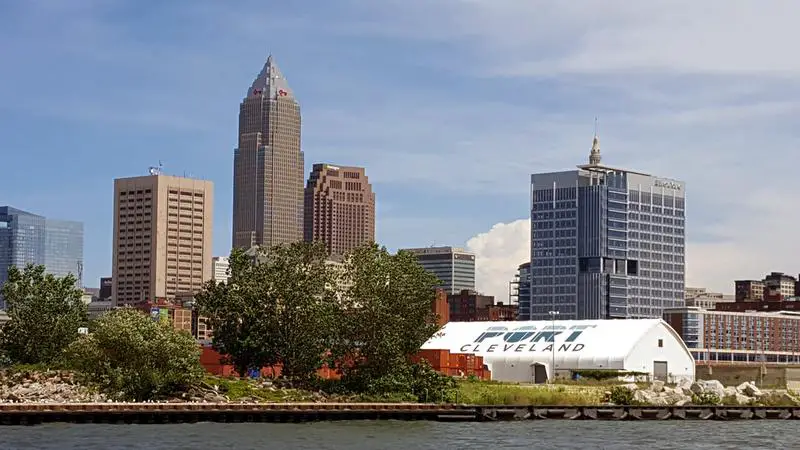
Toledo vs. Cleveland in photos
A side-by-side look at each city.





Cost of living
Cleveland is the cheaper city overall — 6% higher in Toledo than its rival. Index baseline: 100 = national average.
| Living expense | Toledo | Cleveland | US average |
|---|---|---|---|
| Overall | 85 | 80 | 100 |
| Services | 99 | 96 | 100 |
| Groceries | 95 | 91 | 100 |
| Health | 54 | 48 | 100 |
| Housing | 91 | 91 | 100 |
| Transportation | 94 | 98 | 100 |
| Utilities | 89 | 97 | 100 |
Lower index = cheaper. 100 = U.S. national average. Bar inside each cell scales relative to the highest value in the table.
Sources: HomeSnacks Cost of Living indices, normalized so 100 = U.S. national average. Drill in: Toledo cost of living, Cleveland cost of living, or the cheapest cities in America.
Housing breakdown
Home prices are higher in Toledo. Compare absolute price and price-to-income — a $500k home in a $100k-income city is very different from one in a $50k-income city.
| Metric | Toledo | Cleveland | United States |
|---|---|---|---|
| Median Home Value | $129,626 | $115,536 | $332,700 |
| Median Rent | $901 | $945 | $1,413 |
| Median Income | $49,724 | $40,801 | $80,734 |
| Home Value To Income | 2.6x | 2.8x | 4.1x |
| Rent To Monthly Income | 0.22x | 0.28x | 0.21x |
Source: U.S. Census Bureau ACS 2020-2024. See also states with the highest rent in America.
Crime
Toledo is the safer city — total crime rate of 3,773 per 100k people vs 5,987 for Cleveland. US average: 2,119.
| Crime (per 100k) | Toledo | Cleveland | US average |
|---|---|---|---|
| Total crime | 3,773 | 5,987 | 2,119 |
| Murder | 12 | 30 | 5 |
| Robbery | 107 | 389 | 61 |
| Aggravated Assault | 823 | 1,001 | 256 |
| Violent Crime | 1,041 | 1,561 | 359 |
| Burglary | 483 | 860 | 229 |
| Larceny | 1,844 | 2,419 | 1,272 |
| Car Theft | 405 | 1,146 | 259 |
| Property Crime | 2,732 | 4,426 | 1,760 |
Lower = safer. Bar inside each cell scales relative to the highest crime rate in the table.
Source: FBI Uniform Crime Reporting (2024). All rates are per 100,000 people. City pages: Toledo crime, Cleveland crime. See also: safest cities in America.
Diversity
Cleveland is more racially diverse — lower HHI (closer to 0) means a more even mix across groups.
| Group | Toledo | Cleveland | United States |
|---|---|---|---|
| White | 55.8% | 33.7% | 57.4% |
| African American | 27.7% | 45.1% | 11.9% |
| American Indian | 0.0% | 0.1% | 0.5% |
| Asian | 1.3% | 2.6% | 5.9% |
| Hawaiian | 0.0% | 0.0% | 0.2% |
| Other | 0.5% | 0.6% | 0.6% |
| Two Or More | 5.7% | 4.6% | 4.3% |
| Hispanic | 9.1% | 13.2% | 19.3% |
Source: U.S. Census ACS 2020-2024. Lower HHI = more even racial mix. See also: most diverse cities in America.
SnackAbility — overall quality of life
Toledo scores higher overall — 4/10 vs 3/10. SnackAbility is our 1–10 quality-of-life score; the median U.S. city scores a 7.
Scores are 0–10; both bars share the same scale.
SnackAbility is a HomeSnacks proprietary 1–10 score blending jobs, housing, education, commute, amenities, affordability, crime, and diversity. Median U.S. city ≈ 7. Data: Census, BLS, FBI. See also: best places to live in America.
Getting around: Toledo vs. Cleveland
How each city handles commuting, transit, walkability, and car culture — the day-to-day reality that shapes where you'd actually want to live.
Toledo is a driving city. TARTA buses cover the metro, but nearly everyone commutes along I-75, I-475, and the Ohio Turnpike, and traffic rarely gridlocks. Toledo Express Airport handles regional routes; Detroit Metro, about an hour north, is the realistic hub for longer trips.
Cleveland has more transit options: GCRTA runs the Red, Blue, and Green light-rail lines plus the HealthLine bus rapid transit along Euclid Avenue between downtown and University Circle. Most Clevelanders still drive, and the rail network covers downtown and the east side better than the suburbs. Hopkins International sits inside city limits, which saves time, but expect I-90 and I-77 to slow noticeably during rush hour in ways Toledo's interstates don't.
Jobs and careers in Toledo vs. Cleveland
The local job market, dominant industries, and which city to choose based on your career.
Toledo's economy leans on healthcare, manufacturing, and corporate headquarters that carry surprising weight for a city this size. ProMedica and Mercy Health dominate local employment, while Owens Corning and Welltower (both Fortune 500 companies) are headquartered here, alongside the University of Toledo. That corporate density helps explain why median household income in Toledo ($49,724) runs notably higher than Cleveland's ($40,801) despite a smaller population.
Cleveland's job market is larger in raw scale, anchored by the Cleveland Clinic and University Hospitals, which together employ tens of thousands. Key Corp, Progressive Insurance, and Sherwin-Williams keep finance and professional services strong downtown. If you work in healthcare, corporate law, or financial services, Cleveland offers more rungs on the ladder, but competition is stiffer, and the income gap suggests Toledo residents currently capture more of that value.
Weather and climate
What to expect day-to-day — sun, fog, heat, rain, and the seasonal extremes that shape the lifestyle.
Both cities sit along Lake Erie and share the same rough deal: cold winters, humid summers, and a persistent gray ceiling from October through March. Cleveland sits squarely in Ohio's snowbelt; lake-effect storms can drop heavy accumulation in ways Toledo mostly escapes. Expect Cleveland winters to be snowier and gloomier, while Toledo is cold but more often gray than buried.
Summer temperatures across both cities typically reach the mid-to-upper 80s°F with real humidity, and thunderstorm season runs from spring through early fall. If snow accumulation matters to your decision, Toledo has a clear advantage through January and February. Neither city scores well on sunshine hours, so a solid winter coat and salt-resistant boots are non-negotiable wherever you land.
Culture, nightlife, and entertainment
Food, music, neighborhoods, and the city vibe that gives each place its personality.
Toledo's cultural anchor is the Toledo Museum of Art, which offers free general admission year-round and holds a world-class glass collection, a nod to the city's history as the so-called Glass City. Fifth Third Field draws strong crowds for Toledo Mud Hens games downtown, and the Warehouse District has a solid bar and restaurant scene for a mid-sized metro. It's a low-key social calendar, but an affordable one.
Cleveland operates at a different scale. Playhouse Square is the second-largest performing arts complex in the country outside New York City, the Rock and Roll Hall of Fame pulls visitors year-round, and the Cleveland Orchestra has an international reputation. Ohio City, Tremont, and the Gordon Square Arts District each have their own dining and nightlife character, and the Guardians, Cavaliers, and Browns fill the sports calendar across all four seasons.
Outdoor activities and day trips
Parks, beaches, hikes, and the weekend escapes that define life outside the city limits.
Toledo's strongest outdoor draw is the Metroparks Toledo system, which includes Oak Openings Preserve, a globally rare oak savanna that attracts naturalists from across the Midwest. Maumee Bay State Park gives easy access to Lake Erie's western shore, and the Ottawa National Wildlife Refuge, a short drive west, ranks among the top birding sites in North America during spring and fall migration.
Cleveland's Metroparks form the Emerald Necklace, a ring of reservations wrapping the city with trail systems, river valleys, and wooded ravines. Cuyahoga Valley National Park starts roughly 15 miles south: 125 miles of trails, waterfalls at Brandywine Falls, and the Towpath Trail along the old Ohio and Erie Canal. For hikers, cyclists, and paddlers, Cleveland's access to the only national park in Ohio gives it a clear outdoor edge over Toledo.
Bottom line: which city is right for you?
Based on the head-to-head data above, here's the short version — pick the city that lines up with what you actually care about.
Choose Toledo if you prioritize…
- lower crime — a safer place to live, work, and raise a family.
- more affordable housing relative to Cleveland.
- a higher overall SnackAbility quality-of-life score.
Choose Cleveland if you prioritize…
- a lower cost of living (cheaper groceries, services, and day-to-day expenses).
- a more racially diverse community (lower HHI on Census data).
Methodology: winners are picked from public data — U.S. Census Bureau ACS (income, home value, rent, race/HHI), FBI Uniform Crime Reporting (crime rates per 100k), and HomeSnacks' proprietary SnackAbility quality-of-life score, which blends Bureau of Labor Statistics data with the above.
Other comparisons
Still weighing your options? See how these two cities stack up against other places we've compared head-to-head.