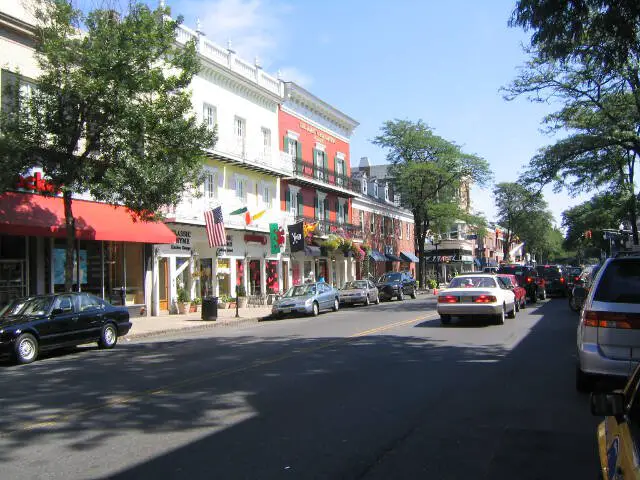
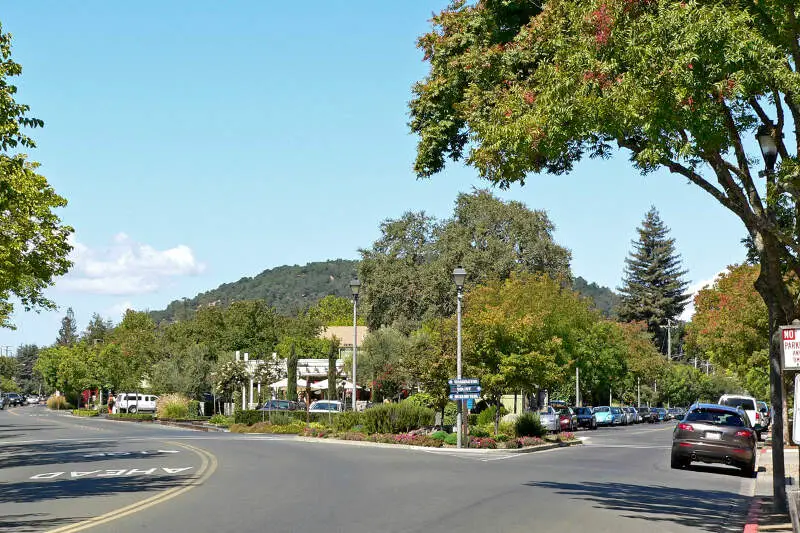
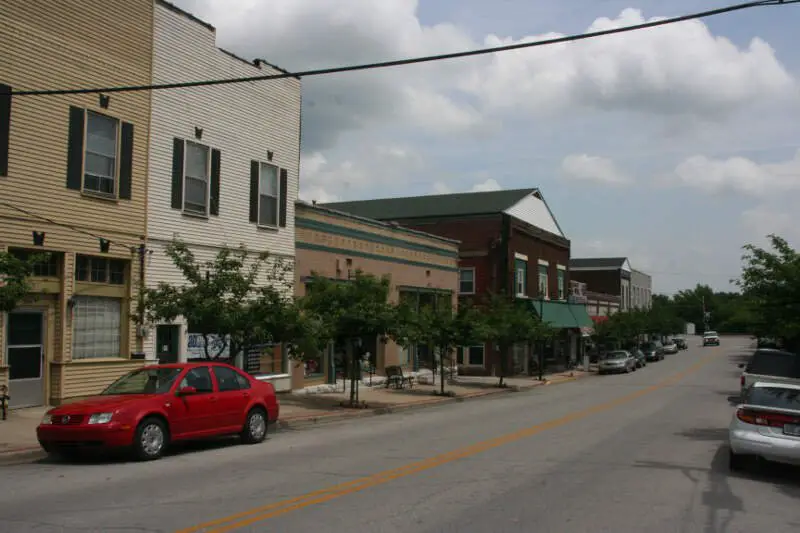
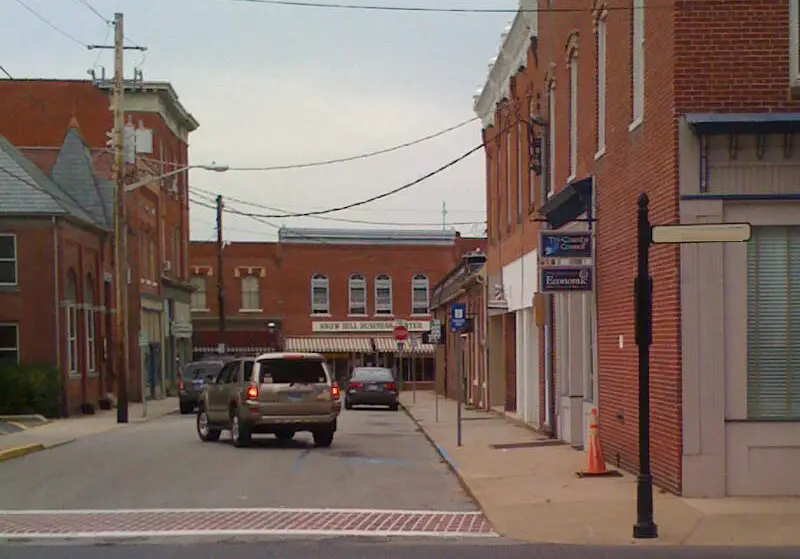
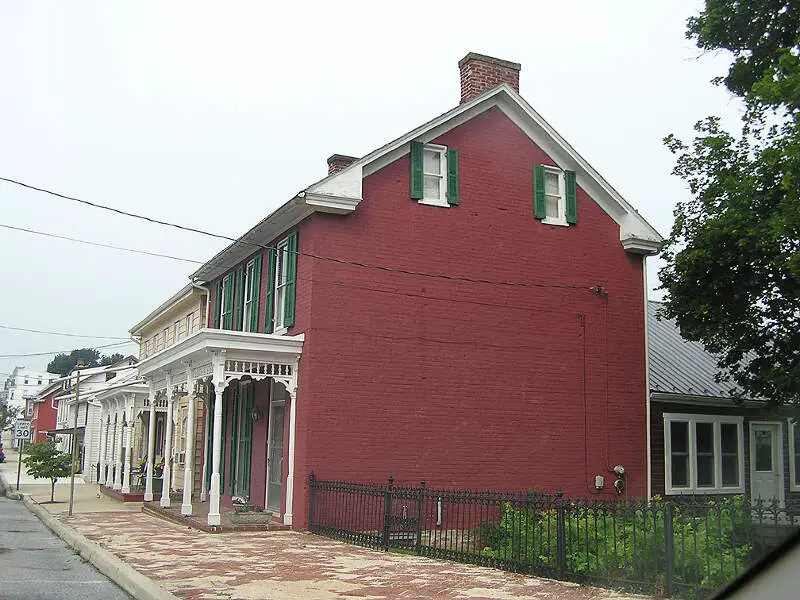
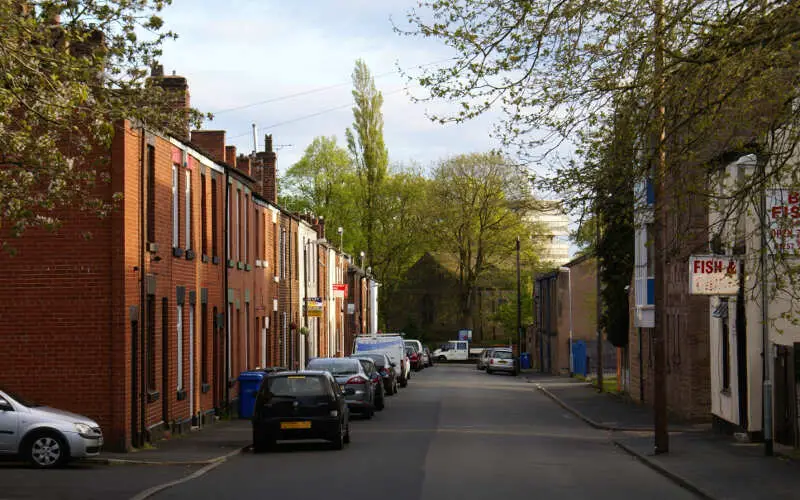
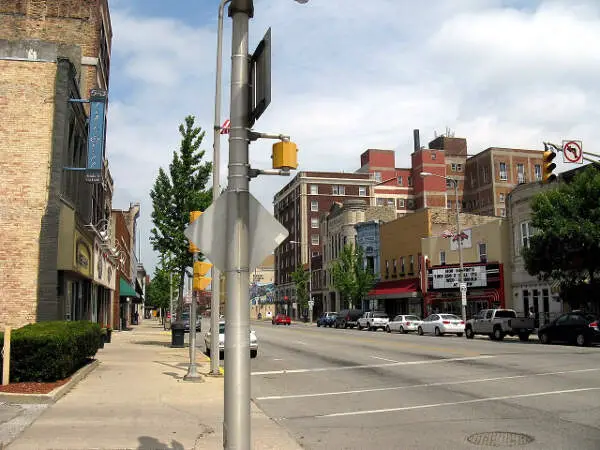
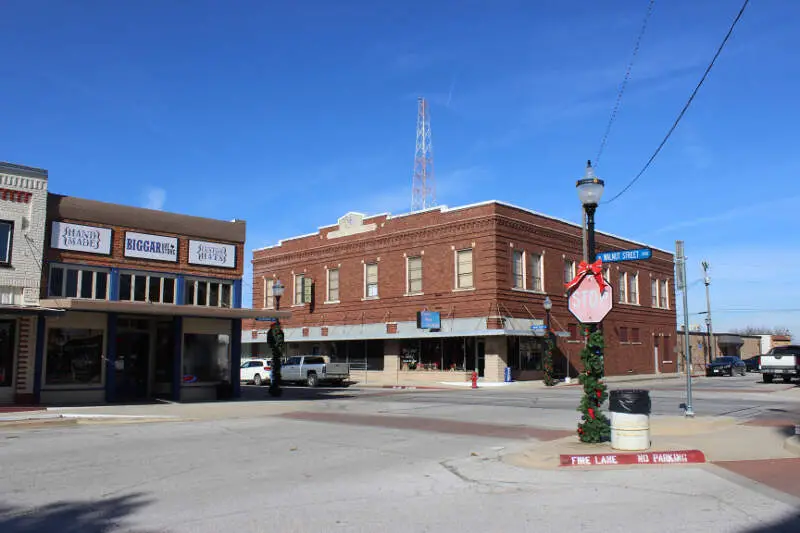
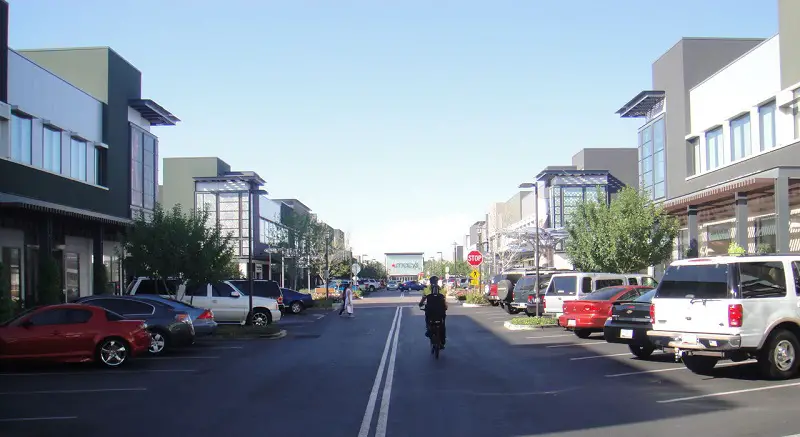
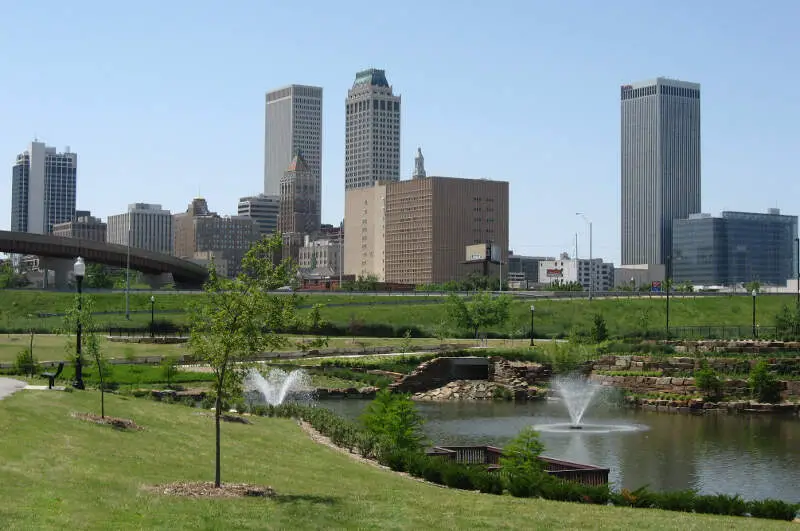
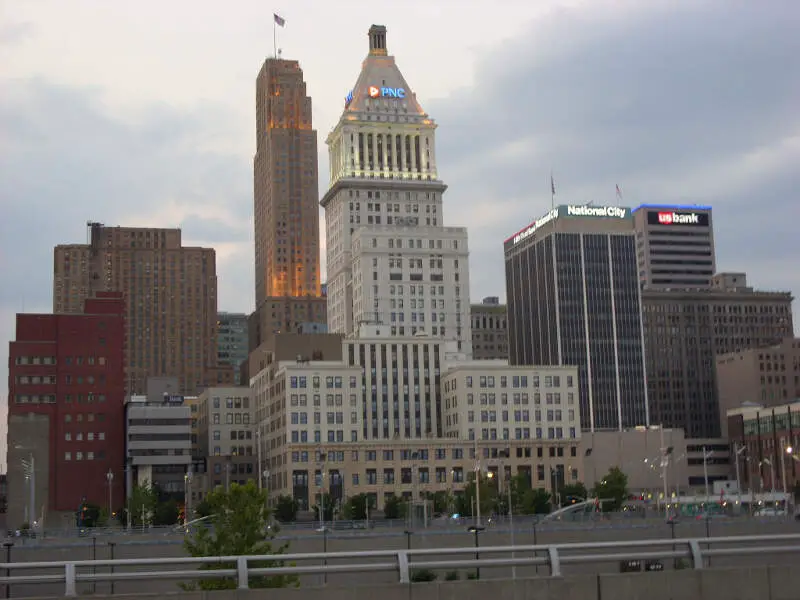
Tulsa vs. Cincinnati in photos
A side-by-side look at each city.


Cost of living
Tulsa is the cheaper city overall — 1% higher in Cincinnati than its rival. Index baseline: 100 = national average.
| Living expense | Tulsa | Cincinnati | US average |
|---|---|---|---|
| Overall | 93 | 94 | 100 |
| Services | 96 | 98 | 100 |
| Groceries | 94 | 99 | 100 |
| Health | 84 | 82 | 100 |
| Housing | 95 | 98 | 100 |
| Transportation | 91 | 96 | 100 |
| Utilities | 94 | 97 | 100 |
Lower index = cheaper. 100 = U.S. national average. Bar inside each cell scales relative to the highest value in the table.
Sources: HomeSnacks Cost of Living indices, normalized so 100 = U.S. national average. Drill in: Tulsa cost of living, Cincinnati cost of living, or the cheapest cities in America.
Housing breakdown
Home prices are higher in Cincinnati. Compare absolute price and price-to-income — a $500k home in a $100k-income city is very different from one in a $50k-income city.
| Metric | Tulsa | Cincinnati | United States |
|---|---|---|---|
| Median Home Value | $217,450 | $249,567 | $332,700 |
| Median Rent | $1,052 | $1,001 | $1,413 |
| Median Income | $59,838 | $52,909 | $80,734 |
| Home Value To Income | 3.6x | 4.7x | 4.1x |
| Rent To Monthly Income | 0.21x | 0.23x | 0.21x |
Source: U.S. Census Bureau ACS 2020-2024. See also states with the highest rent in America.
Crime
Tulsa is the safer city — total crime rate of 4,569 per 100k people vs 4,675 for Cincinnati. US average: 2,119.
| Crime (per 100k) | Tulsa | Cincinnati | US average |
|---|---|---|---|
| Total crime | 4,569 | 4,675 | 2,119 |
| Murder | 9 | 22 | 5 |
| Robbery | 99 | 232 | 61 |
| Aggravated Assault | 728 | 535 | 256 |
| Violent Crime | 942 | 846 | 359 |
| Burglary | 747 | 548 | 229 |
| Larceny | 2,398 | 2,395 | 1,272 |
| Car Theft | 483 | 886 | 259 |
| Property Crime | 3,627 | 3,829 | 1,760 |
Lower = safer. Bar inside each cell scales relative to the highest crime rate in the table.
Source: FBI Uniform Crime Reporting (2024). All rates are per 100,000 people. City pages: Tulsa crime, Cincinnati crime. See also: safest cities in America.
Diversity
Tulsa is more racially diverse — lower HHI (closer to 0) means a more even mix across groups.
| Group | Tulsa | Cincinnati | United States |
|---|---|---|---|
| White | 50.5% | 48.2% | 57.4% |
| African American | 13.7% | 36.3% | 11.9% |
| American Indian | 3.6% | 0.1% | 0.5% |
| Asian | 3.4% | 2.6% | 5.9% |
| Hawaiian | 0.3% | 0.0% | 0.2% |
| Other | 0.4% | 0.8% | 0.6% |
| Two Or More | 8.4% | 5.9% | 4.3% |
| Hispanic | 19.8% | 6.1% | 19.3% |
Source: U.S. Census ACS 2020-2024. Lower HHI = more even racial mix. See also: most diverse cities in America.
SnackAbility — overall quality of life
Cincinnati scores higher overall — 5/10 vs 4/10. SnackAbility is our 1–10 quality-of-life score; the median U.S. city scores a 7.
Scores are 0–10; both bars share the same scale.
SnackAbility is a HomeSnacks proprietary 1–10 score blending jobs, housing, education, commute, amenities, affordability, crime, and diversity. Median U.S. city ≈ 7. Data: Census, BLS, FBI. See also: best places to live in America.
Getting around: Tulsa vs. Cincinnati
How each city handles commuting, transit, walkability, and car culture — the day-to-day reality that shapes where you'd actually want to live.
Both Tulsa and Cincinnati are car-dependent cities, so if you drive to work, you'll feel at home in either. Tulsa's grid is straightforward; most residents zip around on the Creek Turnpike or Highway 169 with little congestion for a metro its size. The Metropolitan Tulsa Transit Authority (MTTA) runs buses, but routes are infrequent and coverage thin, so a car is a near-necessity for most households.
Cincinnati has a bit more variety. The Cincinnati Bell Connector streetcar links the Banks riverfront to Over-the-Rhine and Uptown, and SORTA's Metro buses cover denser neighborhoods like Clifton and Hyde Park reasonably well.
Transit still won't replace a car for most commutes in either city. Walkers and cyclists get slightly more traction in Cincinnati's hillside neighborhoods, while Tulsa's flat terrain makes cycling practical even if the infrastructure is still catching up.
Jobs and careers in Tulsa vs. Cincinnati
The local job market, dominant industries, and which city to choose based on your career.
Tulsa's economy leans heavily on energy: ONEOK, Williams Companies, and a large American Airlines maintenance hub are among the biggest employers. BOK Financial anchors the banking sector, and the city's Tulsa Remote program, which paid knowledge workers to relocate, has pulled in remote professionals in tech and creative fields. The median household income is $59,838, which edges Cincinnati.
Cincinnati has a deep bench of corporate headquarters: Procter & Gamble, Kroger, and Fifth Third Bank all call it home, giving the job market a strong consumer-goods and finance base. Cincinnati Children's Hospital and the UC Health system add a significant healthcare layer. The median household income is $52,909, a noticeable gap below Tulsa, though cost of living is nearly identical between the two cities (both index around 93–94 against the U.S. average), so real purchasing power differences are modest.
Weather and climate
What to expect day-to-day — sun, fog, heat, rain, and the seasonal extremes that shape the lifestyle.
Tulsa sits in Tornado Alley, which means dramatic spring storm seasons alongside hot, humid summers where temperatures regularly push past 95°F. Winters are mild by Midwest standards: ice storms are more common than heavy snow, and January lows hover around the mid-20s°F. You get nearly 230 sunny days a year and a long outdoor season from April through October.
Cincinnati offers true four-season living, though "four seasons" includes some gloomy stretches. Summers are hot and humid, similar to Tulsa, but winters bring more sustained cold, meaningful snowfall, and a lot of gray overcast days from Great Lakes weather patterns. Expect January highs only in the mid-30s°F and measurable snow most years.
If you prefer a longer mild stretch and don't mind spring storm alerts, Tulsa has the better climate. If you want genuine winter without tornado risk, Cincinnati is your pick.
Culture, nightlife, and entertainment
Food, music, neighborhoods, and the city vibe that gives each place its personality.
Tulsa's cultural identity is shaped by its Native American history, oil-boom architecture, and the Greenwood District, historically known as Black Wall Street. The Brady Arts District and Blue Dome neighborhood anchor the local bar and music scene, with Cain's Ballroom as a legendary live-music venue. The Philbrook Museum of Art and Gilcrease Museum (one of the country's finest collections of American West art) give Tulsa real cultural depth beyond its size.
Cincinnati's Over-the-Rhine is one of the best-preserved 19th-century urban districts in the country, and it serves as the city's nightlife and dining hub, with craft cocktail bars, independent restaurants, and a walkable streetscape. Fountain Square is the city's main public gathering spot, and the Cincinnati Symphony Orchestra performs at Music Hall, a National Historic Landmark. Tulsa leans toward an earthy, arts-and-West feel; Cincinnati runs more toward European-influenced architecture and a polished food scene.
Outdoor activities and day trips
Parks, beaches, hikes, and the weekend escapes that define life outside the city limits.
Tulsa's signature outdoor space is the Gathering Place, a 66-acre park along the Arkansas River that regularly ranks among the best urban parks in the country. Turkey Mountain Urban Wilderness has over 300 acres of trails just minutes from downtown, and Keystone Lake to the west is the go-to for boating and fishing. The flat terrain and mild shoulder seasons mean you can stay active outdoors for a good chunk of the year, and day trips reach Osage Hills State Park and the green hills of eastern Oklahoma within an hour.
Cincinnati's outdoor scene is shaped by its river topography and a dense park system, with Eden Park and the Cincinnati Nature Center among the local favorites. The Ohio River Trail gives cyclists and walkers a scenic corridor through the metro, and Mt. Airy Forest, one of the largest municipal forests in the country, is right in the city.
The bigger draw for serious outdoor enthusiasts is Red River Gorge in Kentucky, roughly 90 minutes away and one of the best rock-climbing and hiking destinations in the eastern U.S. Both cities have solid green space; Tulsa is flatter and sunnier, Cincinnati hillier and wetter but closer to serious backcountry.
Bottom line: which city is right for you?
Based on the head-to-head data above, here's the short version — pick the city that lines up with what you actually care about.
Choose Tulsa if you prioritize…
- a lower cost of living (cheaper groceries, services, and day-to-day expenses).
- lower crime — a safer place to live, work, and raise a family.
- a more racially diverse community (lower HHI on Census data).
Choose Cincinnati if you prioritize…
- more affordable housing relative to Tulsa.
- a higher overall SnackAbility quality-of-life score.
Methodology: winners are picked from public data — U.S. Census Bureau ACS (income, home value, rent, race/HHI), FBI Uniform Crime Reporting (crime rates per 100k), and HomeSnacks' proprietary SnackAbility quality-of-life score, which blends Bureau of Labor Statistics data with the above.
Other comparisons
Still weighing your options? See how these two cities stack up against other places we've compared head-to-head.