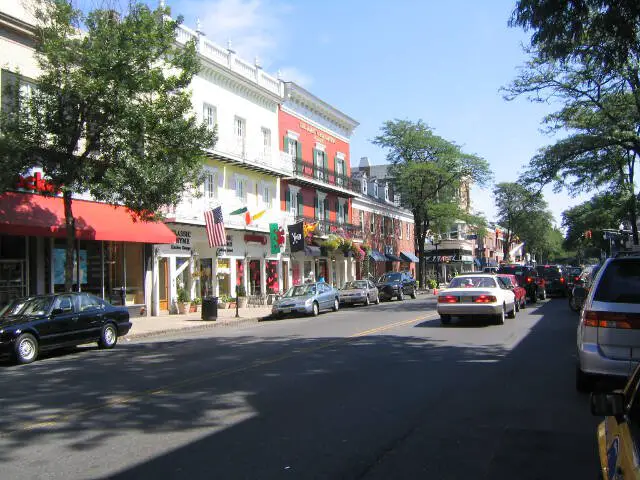
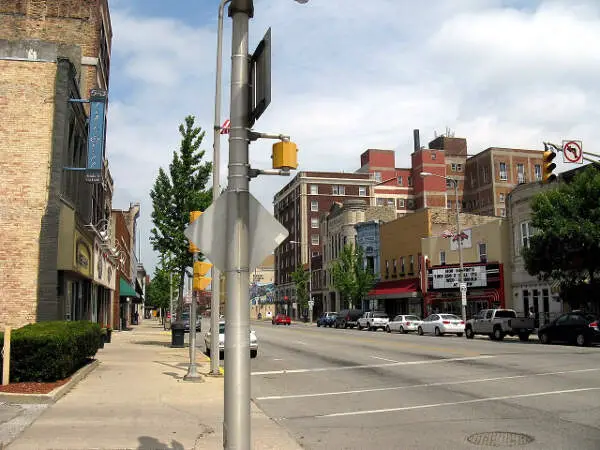
Virginia Beach vs. Richmond in photos
A side-by-side look at each city.





Cost of living
Richmond is the cheaper city overall — 5% higher in Virginia Beach than its rival. Index baseline: 100 = national average.
| Living expense | Virginia Beach | Richmond | US average |
|---|---|---|---|
| Overall | 118 | 112 | 100 |
| Services | 104 | 106 | 100 |
| Groceries | 109 | 103 | 100 |
| Health | 150 | 131 | 100 |
| Housing | 109 | 105 | 100 |
| Transportation | 103 | 102 | 100 |
| Utilities | 104 | 111 | 100 |
Lower index = cheaper. 100 = U.S. national average. Bar inside each cell scales relative to the highest value in the table.
Sources: HomeSnacks Cost of Living indices, normalized so 100 = U.S. national average. Drill in: Virginia Beach cost of living, Richmond cost of living, or the cheapest cities in America.
Housing breakdown
Home prices are higher in Virginia Beach. Compare absolute price and price-to-income — a $500k home in a $100k-income city is very different from one in a $50k-income city.
| Metric | Virginia Beach | Richmond | United States |
|---|---|---|---|
| Median Home Value | $427,031 | $369,645 | $332,700 |
| Median Rent | $1,714 | $1,372 | $1,413 |
| Median Income | $92,968 | $64,587 | $80,734 |
| Home Value To Income | 4.6x | 5.7x | 4.1x |
| Rent To Monthly Income | 0.22x | 0.25x | 0.21x |
Source: U.S. Census Bureau ACS 2020-2024. See also states with the highest rent in America.
Crime
Virginia Beach is the safer city — total crime rate of 1,732 per 100k people vs 3,516 for Richmond. US average: 2,119.
| Crime (per 100k) | Virginia Beach | Richmond | US average |
|---|---|---|---|
| Total crime | 1,732 | 3,516 | 2,119 |
| Murder | 3 | 24 | 5 |
| Robbery | 32 | 94 | 61 |
| Aggravated Assault | 39 | 200 | 256 |
| Violent Crime | 92 | 337 | 359 |
| Burglary | 84 | 265 | 229 |
| Larceny | 1,447 | 2,387 | 1,272 |
| Car Theft | 109 | 527 | 259 |
| Property Crime | 1,640 | 3,179 | 1,760 |
Lower = safer. Bar inside each cell scales relative to the highest crime rate in the table.
Source: FBI Uniform Crime Reporting (2024). All rates are per 100,000 people. City pages: Virginia Beach crime, Richmond crime. See also: safest cities in America.
Diversity
Richmond is more racially diverse — lower HHI (closer to 0) means a more even mix across groups.
| Group | Virginia Beach | Richmond | United States |
|---|---|---|---|
| White | 58.8% | 41.4% | 57.4% |
| African American | 18.2% | 40.6% | 11.9% |
| American Indian | 0.1% | 0.1% | 0.5% |
| Asian | 7.1% | 2.1% | 5.9% |
| Hawaiian | 0.1% | 0.0% | 0.2% |
| Other | 0.6% | 0.5% | 0.6% |
| Two Or More | 6.0% | 4.6% | 4.3% |
| Hispanic | 9.1% | 10.7% | 19.3% |
Source: U.S. Census ACS 2020-2024. Lower HHI = more even racial mix. See also: most diverse cities in America.
SnackAbility — overall quality of life
Virginia Beach scores higher overall — 8.5/10 vs 6/10. SnackAbility is our 1–10 quality-of-life score; the median U.S. city scores a 7.
Scores are 0–10; both bars share the same scale.
SnackAbility is a HomeSnacks proprietary 1–10 score blending jobs, housing, education, commute, amenities, affordability, crime, and diversity. Median U.S. city ≈ 7. Data: Census, BLS, FBI. See also: best places to live in America.
Getting around: Virginia Beach vs. Richmond
How each city handles commuting, transit, walkability, and car culture — the day-to-day reality that shapes where you'd actually want to live.
Both cities lean heavily on cars, but Richmond gives non-drivers more to work with. The GRTC Pulse bus rapid transit line runs along Broad Street, and neighborhoods like The Fan and Scott's Addition are genuinely walkable. Richmond also sits on an Amtrak corridor, so Washington, D.C. is reachable without touching I-95.
Virginia Beach is one of the more car-dependent large cities in the country. Hampton Roads Transit runs buses, and The Tide light rail connects Norfolk to the beach area, but most residents rely on I-264 and the Virginia Beach Expressway for daily commutes. Summer beach traffic compounds the frustration.
If you commute by car either way, the highway rhythms are similar. Richmond just gives you more options if you'd rather leave the car at home.
Jobs and careers in Virginia Beach vs. Richmond
The local job market, dominant industries, and which city to choose based on your career.
Virginia Beach's median household income of $92,968 versus Richmond's $64,587 partly reflects the military and defense presence anchoring the local economy. Naval Station Norfolk, Joint Expeditionary Base Little Creek, and defense contractors like Huntington Ingalls and SAIC generate well-paying technical and administrative jobs. Healthcare through Sentara and a growing tourism sector fill out the rest.
Richmond's economy is more diversified. It's Virginia's capital, so state government employment is steady, and corporate headquarters — Capital One, Markel, Altria, and CarMax — give the city a real white-collar private sector. VCU Health and HCA Healthcare anchor healthcare hiring there.
The tech and creative sectors are growing, particularly around Scott's Addition. If upward income mobility in finance or tech is your goal, Richmond may offer more rungs on the ladder.
Weather and climate
What to expect day-to-day — sun, fog, heat, rain, and the seasonal extremes that shape the lifestyle.
Virginia Beach's coastal location is a genuine climate asset. The Atlantic Ocean moderates temperatures year-round: winters are milder than most of Virginia, snow is occasional rather than routine, and summer heat is tempered by sea breezes. The tradeoff is hurricane and nor'easter exposure; storm prep is part of life along the Oceanfront.
Richmond runs hotter in summer and colder in winter without that oceanic buffer. July and August regularly push past 95°F, and the humidity inland feels more oppressive than at the coast. Winters bring more reliable snow, typically two to four meaningful storms a season.
Spring and fall are pleasant in both cities. If you want the mildest year-round conditions, Virginia Beach has the edge, provided you're comfortable watching the Atlantic during storm season.
Culture, nightlife, and entertainment
Food, music, neighborhoods, and the city vibe that gives each place its personality.
Richmond punches well above its population in culture and nightlife. Scott's Addition has become one of the most concentrated brewery districts on the East Coast, with Hardywood, Ardent, and The Veil drawing serious craft beer crowds. Carytown delivers independent shops and restaurants in a walkable stretch.
First Fridays brings a monthly art walk to Broad Street galleries, and Jackson Ward has deep historical significance as the "Harlem of the South." The food scene is legitimate: Brenner Pass, Brennan's, and a cluster of chef-driven spots make dining out a genuine draw.
Virginia Beach has invested heavily in its Town Center district for year-round dining and entertainment, and the ViBe Creative District brings murals and independent venues to the mix. The Oceanfront is lively in summer with the Neptune Festival and live music. Outside the warm months, the nightlife scene feels comparatively thin.
Outdoor activities and day trips
Parks, beaches, hikes, and the weekend escapes that define life outside the city limits.
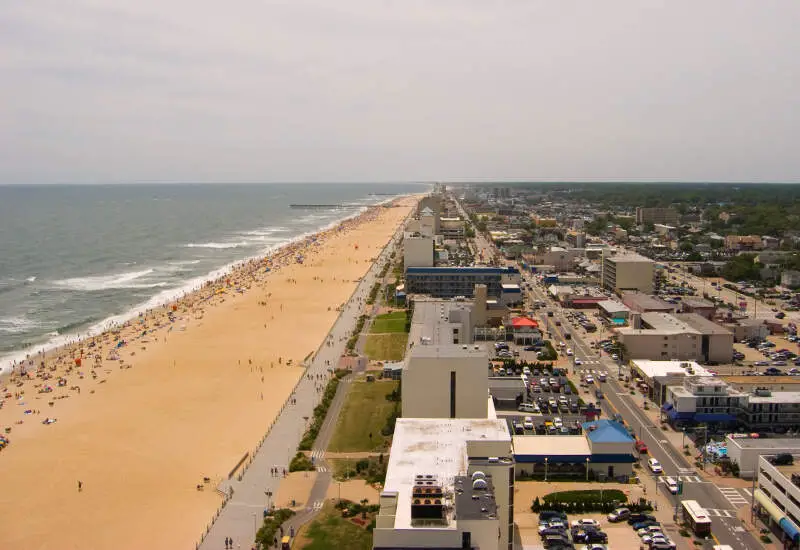
Virginia Beach's outdoor identity is obvious: 37 miles of Atlantic coastline, First Landing State Park with its ancient cypress swamps, and Back Bay National Wildlife Refuge offering kayaking, birding, and undeveloped barrier island access. Fishing, surfing, paddleboarding, and sailing are year-round pursuits for residents, not just tourists. The Chesapeake Bay side adds sheltered water for flat-water kayaking and crabbing.
Richmond's draw is the James River, which is remarkable for a city its size. Class III and IV rapids run directly through downtown, and Belle Isle, Pony Pasture, and Brown's Island provide swimming holes, trail running, and mountain biking within city limits. The Blue Ridge Mountains and Shenandoah National Park are about 90 minutes west, making weekend hiking and camping realistic.
If you want ocean, Virginia Beach wins by default. If you want variety — whitewater, mountains, trails — Richmond is the stronger base.
Bottom line: which city is right for you?
Based on the head-to-head data above, here's the short version — pick the city that lines up with what you actually care about.
Choose Virginia Beach if you prioritize…
- lower crime — a safer place to live, work, and raise a family.
- more affordable housing relative to Richmond.
- a higher overall SnackAbility quality-of-life score.
Choose Richmond if you prioritize…
- a lower cost of living (cheaper groceries, services, and day-to-day expenses).
- a more racially diverse community (lower HHI on Census data).
Methodology: winners are picked from public data — U.S. Census Bureau ACS (income, home value, rent, race/HHI), FBI Uniform Crime Reporting (crime rates per 100k), and HomeSnacks' proprietary SnackAbility quality-of-life score, which blends Bureau of Labor Statistics data with the above.
Other comparisons
Still weighing your options? See how these two cities stack up against other places we've compared head-to-head.