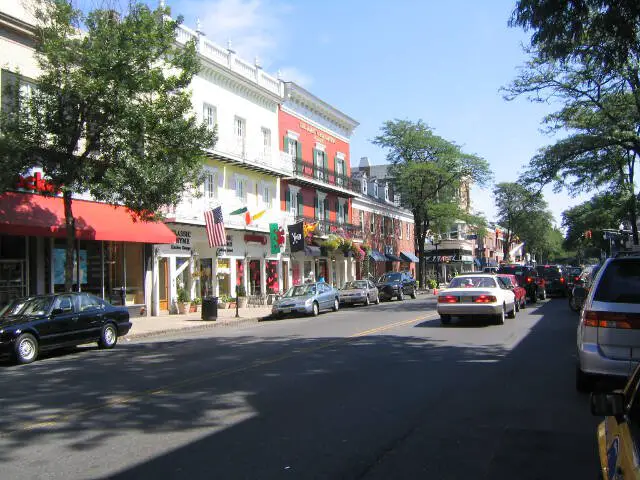
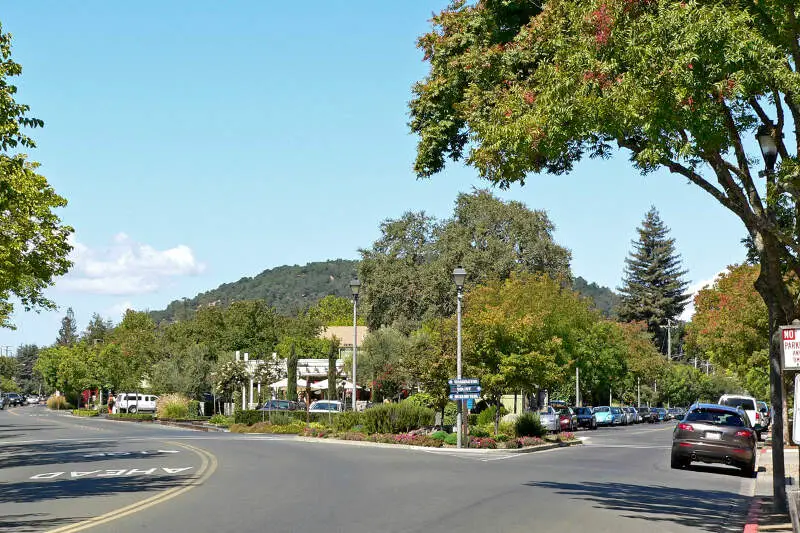
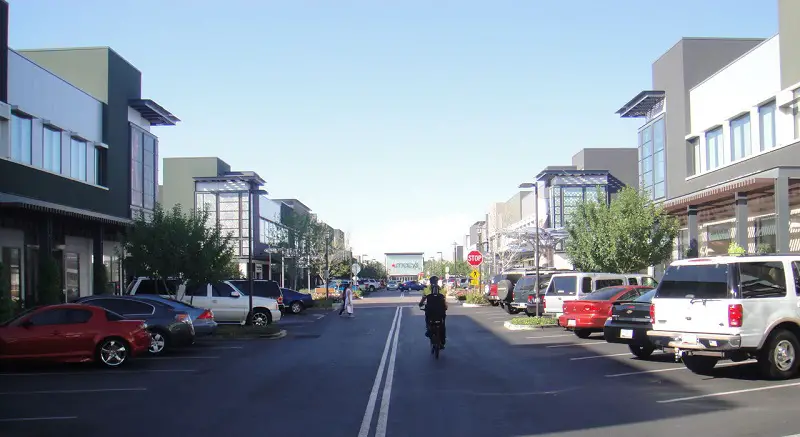
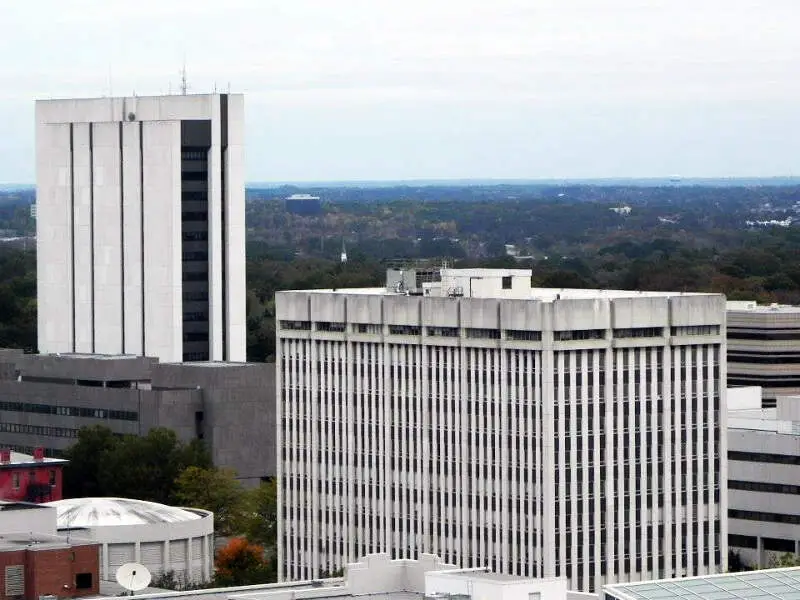
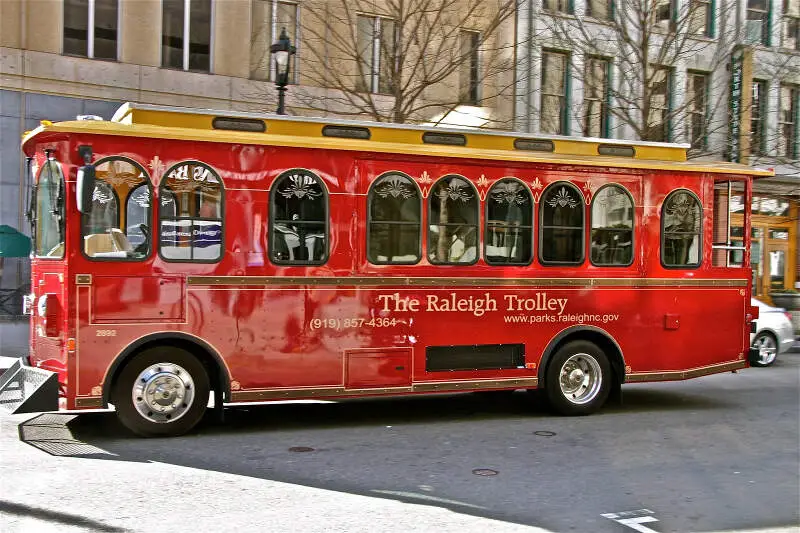
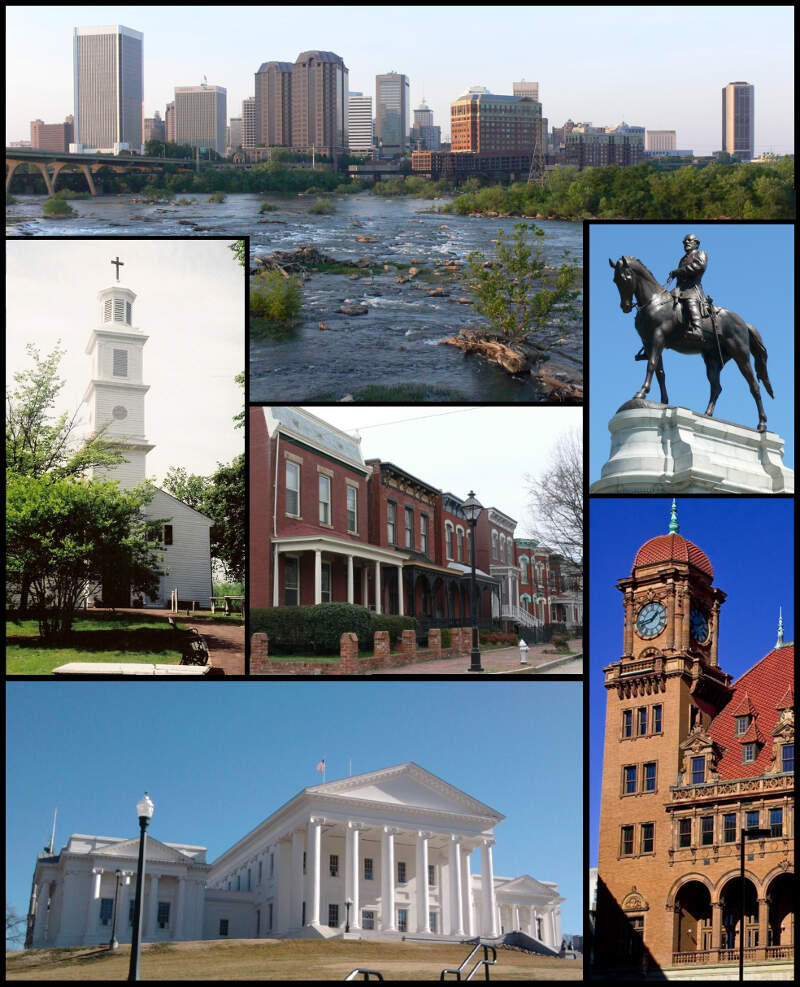
Raleigh vs. Richmond in photos
A side-by-side look at each city.


Cost of living
Richmond is the cheaper city overall — 4% higher in Raleigh than its rival. Index baseline: 100 = national average.
| Living expense | Raleigh | Richmond | US average |
|---|---|---|---|
| Overall | 116 | 112 | 100 |
| Services | 101 | 106 | 100 |
| Groceries | 101 | 103 | 100 |
| Health | 144 | 131 | 100 |
| Housing | 106 | 105 | 100 |
| Transportation | 100 | 102 | 100 |
| Utilities | 106 | 111 | 100 |
Lower index = cheaper. 100 = U.S. national average. Bar inside each cell scales relative to the highest value in the table.
Sources: HomeSnacks Cost of Living indices, normalized so 100 = U.S. national average. Drill in: Raleigh cost of living, Richmond cost of living, or the cheapest cities in America.
Housing breakdown
Home prices are higher in Raleigh. Compare absolute price and price-to-income — a $500k home in a $100k-income city is very different from one in a $50k-income city.
| Metric | Raleigh | Richmond | United States |
|---|---|---|---|
| Median Home Value | $433,996 | $369,645 | $332,700 |
| Median Rent | $1,572 | $1,372 | $1,413 |
| Median Income | $85,395 | $64,587 | $80,734 |
| Home Value To Income | 5.1x | 5.7x | 4.1x |
| Rent To Monthly Income | 0.22x | 0.25x | 0.21x |
Source: U.S. Census Bureau ACS 2020-2024. See also states with the highest rent in America.
Crime
Raleigh is the safer city — total crime rate of 3,308 per 100k people vs 3,516 for Richmond. US average: 2,119.
| Crime (per 100k) | Raleigh | Richmond | US average |
|---|---|---|---|
| Total crime | 3,308 | 3,516 | 2,119 |
| Murder | 5 | 24 | 5 |
| Robbery | 87 | 94 | 61 |
| Aggravated Assault | 361 | 200 | 256 |
| Violent Crime | 489 | 337 | 359 |
| Burglary | 279 | 265 | 229 |
| Larceny | 2,059 | 2,387 | 1,272 |
| Car Theft | 481 | 527 | 259 |
| Property Crime | 2,819 | 3,179 | 1,760 |
Lower = safer. Bar inside each cell scales relative to the highest crime rate in the table.
Source: FBI Uniform Crime Reporting (2024). All rates are per 100,000 people. City pages: Raleigh crime, Richmond crime. See also: safest cities in America.
Diversity
Raleigh is more racially diverse — lower HHI (closer to 0) means a more even mix across groups.
| Group | Raleigh | Richmond | United States |
|---|---|---|---|
| White | 51.1% | 41.4% | 57.4% |
| African American | 26.0% | 40.6% | 11.9% |
| American Indian | 0.2% | 0.1% | 0.5% |
| Asian | 5.2% | 2.1% | 5.9% |
| Hawaiian | 0.0% | 0.0% | 0.2% |
| Other | 0.5% | 0.5% | 0.6% |
| Two Or More | 4.4% | 4.6% | 4.3% |
| Hispanic | 12.6% | 10.7% | 19.3% |
Source: U.S. Census ACS 2020-2024. Lower HHI = more even racial mix. See also: most diverse cities in America.
SnackAbility — overall quality of life
Raleigh scores higher overall — 8/10 vs 6/10. SnackAbility is our 1–10 quality-of-life score; the median U.S. city scores a 7.
Scores are 0–10; both bars share the same scale.
SnackAbility is a HomeSnacks proprietary 1–10 score blending jobs, housing, education, commute, amenities, affordability, crime, and diversity. Median U.S. city ≈ 7. Data: Census, BLS, FBI. See also: best places to live in America.
Getting around: Raleigh vs. Richmond
How each city handles commuting, transit, walkability, and car culture — the day-to-day reality that shapes where you'd actually want to live.
Both Raleigh and Richmond lean car-dependent, but Richmond edges ahead in walkability thanks to its more compact geography. The GRTC Pulse BRT runs the length of Broad Street and connects most major neighborhoods, and areas like the Fan and Church Hill are genuinely bikeable day-to-day. If you commute by car in Richmond, you're driving I-95 and I-64, which is manageable compared to major metros, but construction near the downtown expressway is a recurring headache.
Raleigh is sprawling and still catching up on transit. GoRaleigh buses cover the core, and a proposed commuter rail line to Durham has been in planning for years, but for now you'll almost certainly need a car. If a short commute matters, ask specifically which part of Raleigh you'd be living and working in, because the I-440 beltline and I-40 carry heavy traffic during peak hours and the distances across the metro are significant.
Jobs and careers in Raleigh vs. Richmond
The local job market, dominant industries, and which city to choose based on your career.
Raleigh's economy runs on tech, life sciences, and education, anchored by Research Triangle Park about 20 minutes southwest of downtown. SAS Institute, Cisco, Red Hat, and a growing cluster of biotech and pharmaceutical firms call the Triangle home, which helps explain the city's median household income of $85,395, well above Richmond's $64,587. If you work in software, data, or research, the pipeline of talent from NC State, Duke, and UNC keeps the local market deep.
Richmond's job base is steadier but more traditional. Capital One is the marquee private employer, and VCU Health and Dominion Energy round out the major anchors. State government jobs provide stability, and a small but growing startup scene has taken root in Scott's Addition.
The income gap between the two cities is real, but Richmond's lower cost of living index (112 vs. Raleigh's 116) and lower median rent ($1,372 vs. $1,572) take some of the edge off for day-to-day spending.
Weather and climate
What to expect day-to-day — sun, fog, heat, rain, and the seasonal extremes that shape the lifestyle.
Both cities sit in the humid subtropical zone, so expect hot, muggy summers and mild but unpredictable winters, plus a solid allergy season in spring. Raleigh's summers regularly push into the low 90s with high humidity from June through September. Winters are generally mild with occasional ice storms that shut the city down more dramatically than the actual accumulation warrants; measurable snowfall is rare but not unheard of.
Richmond is about 170 miles north, and that distance shows. Winters are slightly colder and snowier: the city averages a few more inches of snow per year and sees more nights below freezing. Summers are comparably brutal, with Richmond's urban heat island making downtown feel especially stifling in July and August.
Neither city is a haven for people who dread heat and humidity, but if you need a mild winter, Raleigh holds a modest edge.
Culture, nightlife, and entertainment
Food, music, neighborhoods, and the city vibe that gives each place its personality.
Raleigh's cultural scene has grown fast alongside its population. The NC Museum of Art, NC Museum of Natural Sciences, and the expanding Warehouse District arts corridor give the city genuine depth beyond a typical Sun Belt boom town. Glenwood South is the main nightlife strip, dense with restaurants and bars, and the food scene now draws regional attention, with James Beard-nominated chefs working out of spots in North Hills and downtown.
Richmond punches above its weight for a city of 229,000. Carytown is a walkable strip of independent shops and restaurants that feels more like a neighborhood in a larger city. Jackson Ward is a historic center of Black entrepreneurship and arts, and VCU's presence keeps the visual arts scene lively year-round.
Scott's Addition has become one of the Mid-Atlantic's best craft beer destinations, with a dozen breweries within walking distance of each other. If independently owned, neighborhood-scaled culture appeals to you, Richmond delivers it more organically than Raleigh's still-developing scene.
Outdoor activities and day trips
Parks, beaches, hikes, and the weekend escapes that define life outside the city limits.
Raleigh's outdoor options are solid but require a short drive. William B. Umstead State Park sits right at the city's edge and offers 5,500 acres of trails, lake fishing, and mountain biking. Falls Lake and Jordan Lake are popular for kayaking and weekend camping.
For bigger adventures, the Appalachian Mountains are about three hours west and the Outer Banks beaches are four hours east. Raleigh is a reasonable base for both if you're willing to plan a full-day or overnight trip.
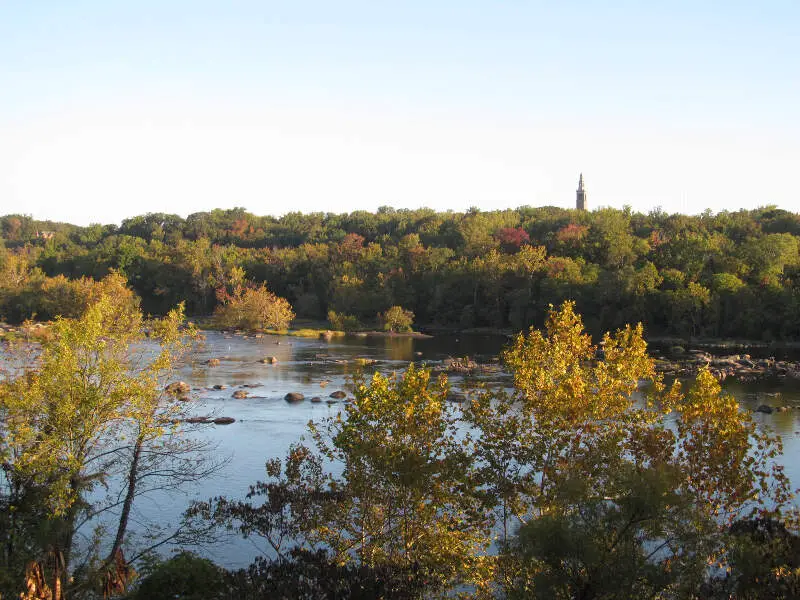
Richmond's standout feature is the James River Park System, a 550-acre stretch of Class III and IV whitewater rapids running right through the middle of the city. You can kayak, paddleboard, fish, rock-hop at Belle Isle, or hike the North Bank Trail without leaving city limits. That's genuinely rare for a city this size.
Pocahontas State Park is a 25-minute drive south for mountain biking and flatwater paddling, and Shenandoah National Park is about 90 minutes west for serious hiking. Outdoor access per capita clearly favors Richmond.
Bottom line: which city is right for you?
Based on the head-to-head data above, here's the short version — pick the city that lines up with what you actually care about.
Choose Raleigh if you prioritize…
- lower crime — a safer place to live, work, and raise a family.
- more affordable housing relative to Richmond.
- a more racially diverse community (lower HHI on Census data).
- a higher overall SnackAbility quality-of-life score.
Choose Richmond if you prioritize…
- a lower cost of living (cheaper groceries, services, and day-to-day expenses).
Methodology: winners are picked from public data — U.S. Census Bureau ACS (income, home value, rent, race/HHI), FBI Uniform Crime Reporting (crime rates per 100k), and HomeSnacks' proprietary SnackAbility quality-of-life score, which blends Bureau of Labor Statistics data with the above.
Other comparisons
Still weighing your options? See how these two cities stack up against other places we've compared head-to-head.