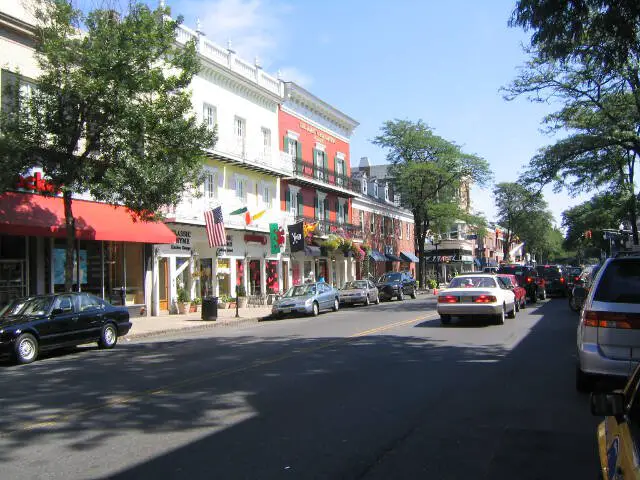
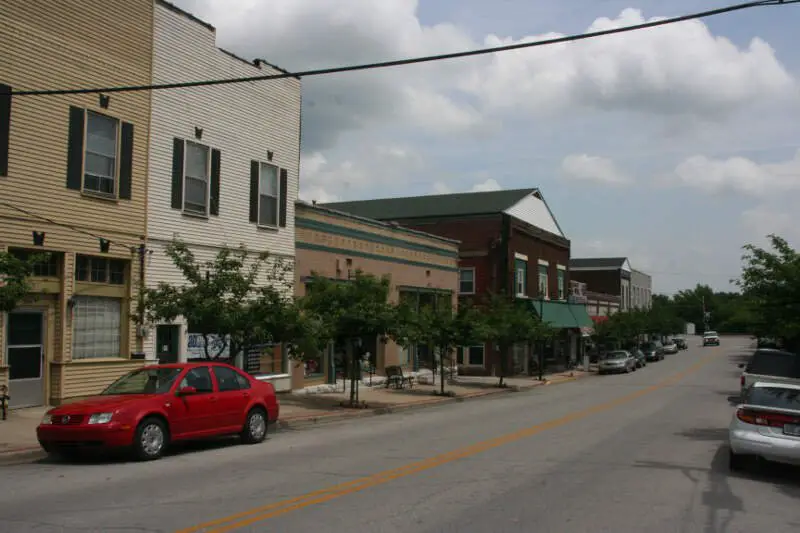
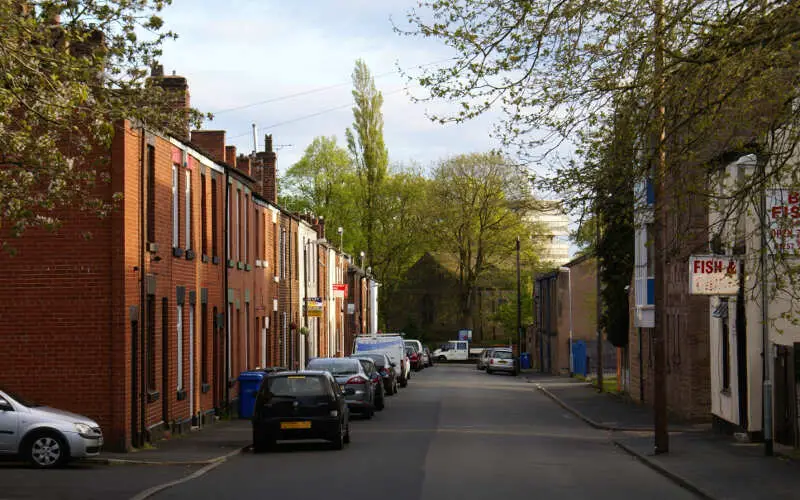
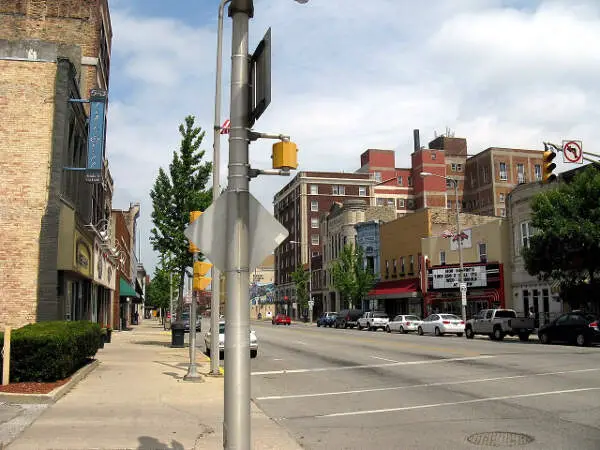
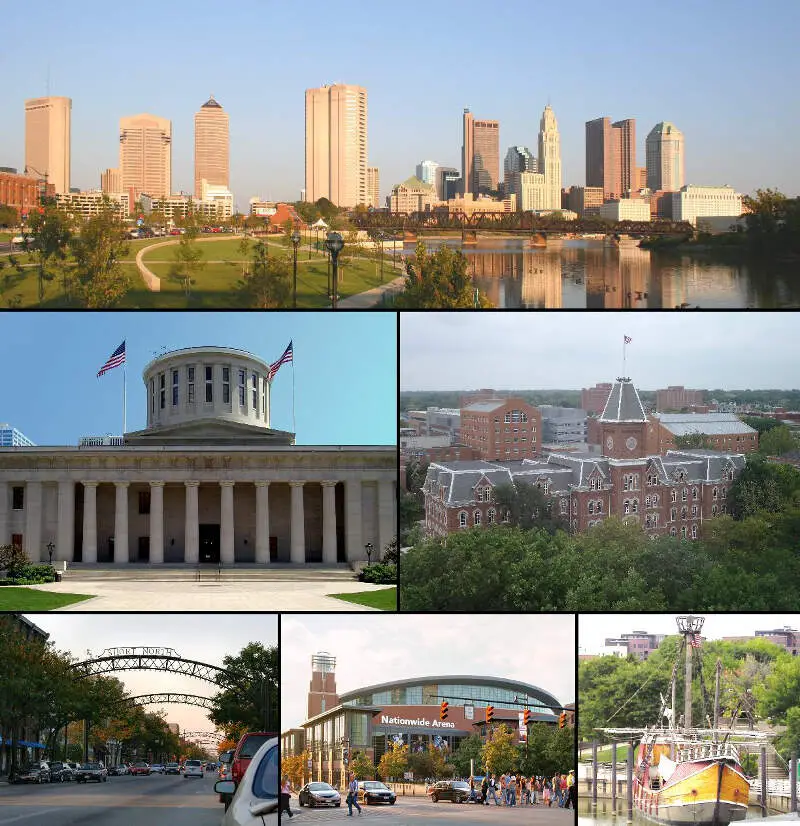
Indianapolis vs. Columbus in photos
A side-by-side look at each city.





Cost of living
Indianapolis is the cheaper city overall — 2% higher in Columbus than its rival. Index baseline: 100 = national average.
| Living expense | Indianapolis | Columbus | US average |
|---|---|---|---|
| Overall | 94 | 96 | 100 |
| Services | 97 | 101 | 100 |
| Groceries | 97 | 99 | 100 |
| Health | 84 | 93 | 100 |
| Housing | 100 | 100 | 100 |
| Transportation | 99 | 97 | 100 |
| Utilities | 95 | 94 | 100 |
Lower index = cheaper. 100 = U.S. national average. Bar inside each cell scales relative to the highest value in the table.
Sources: HomeSnacks Cost of Living indices, normalized so 100 = U.S. national average. Drill in: Indianapolis cost of living, Columbus cost of living, or the cheapest cities in America.
Housing breakdown
Home prices are higher in Columbus. Compare absolute price and price-to-income — a $500k home in a $100k-income city is very different from one in a $50k-income city.
| Metric | Indianapolis | Columbus | United States |
|---|---|---|---|
| Median Home Value | $229,209 | $245,979 | $332,700 |
| Median Rent | $1,156 | $1,295 | $1,413 |
| Median Income | $66,219 | $66,082 | $80,734 |
| Home Value To Income | 3.5x | 3.7x | 4.1x |
| Rent To Monthly Income | 0.21x | 0.24x | 0.21x |
Source: U.S. Census Bureau ACS 2020-2024. See also states with the highest rent in America.
Crime
Columbus is the safer city — total crime rate of 3,088 per 100k people vs 4,214 for Indianapolis. US average: 2,119.
| Crime (per 100k) | Indianapolis | Columbus | US average |
|---|---|---|---|
| Total crime | 4,214 | 3,088 | 2,119 |
| Murder | 20 | 12 | 5 |
| Robbery | 143 | 88 | 61 |
| Aggravated Assault | 656 | 211 | 256 |
| Violent Crime | 878 | 435 | 359 |
| Burglary | 518 | 405 | 229 |
| Larceny | 2,072 | 1,706 | 1,272 |
| Car Theft | 746 | 543 | 259 |
| Property Crime | 3,336 | 2,653 | 1,760 |
Lower = safer. Bar inside each cell scales relative to the highest crime rate in the table.
Source: FBI Uniform Crime Reporting (2024). All rates are per 100,000 people. City pages: Indianapolis crime, Columbus crime. See also: safest cities in America.
Diversity
Indianapolis is more racially diverse — lower HHI (closer to 0) means a more even mix across groups.
| Group | Indianapolis | Columbus | United States |
|---|---|---|---|
| White | 48.9% | 50.7% | 57.4% |
| African American | 27.6% | 29.1% | 11.9% |
| American Indian | 0.1% | 0.1% | 0.5% |
| Asian | 4.2% | 5.9% | 5.9% |
| Hawaiian | 0.0% | 0.0% | 0.2% |
| Other | 0.6% | 0.6% | 0.6% |
| Two Or More | 4.9% | 5.4% | 4.3% |
| Hispanic | 13.8% | 8.3% | 19.3% |
Source: U.S. Census ACS 2020-2024. Lower HHI = more even racial mix. See also: most diverse cities in America.
SnackAbility — overall quality of life
Columbus scores higher overall — 6/10 vs 5/10. SnackAbility is our 1–10 quality-of-life score; the median U.S. city scores a 7.
Scores are 0–10; both bars share the same scale.
SnackAbility is a HomeSnacks proprietary 1–10 score blending jobs, housing, education, commute, amenities, affordability, crime, and diversity. Median U.S. city ≈ 7. Data: Census, BLS, FBI. See also: best places to live in America.
Getting around: Indianapolis vs. Columbus
How each city handles commuting, transit, walkability, and car culture — the day-to-day reality that shapes where you'd actually want to live.
Both cities are car-first, so plan on owning a vehicle in either. Indianapolis is built around the I-465 beltway, with I-65, I-70, and I-69 funneling traffic downtown; congestion stays manageable outside rush hour. IndyGo's Purple Line BRT added a useful east-west rapid-transit corridor, but the broader bus network is thin and most errands require a car.
Columbus runs COTA across an equally sprawling footprint. Walkable pockets like Short North and German Village exist, and the High Street corridor near Ohio State gives Columbus a slight edge in transit-friendly density for those who want to live car-lite.
Indy's Cultural Trail is a well-designed urban bike loop connecting downtown neighborhoods, while Columbus offers the Olentangy Trail running north through the city. Neither city rewards you for selling your car, but both offer painless driving and affordable parking compared to larger metros. Median rent of $1,156 in Indianapolis versus $1,295 in Columbus also means living closer to work is a bit easier on your wallet if you're commuting in Indy.
Jobs and careers in Indianapolis vs. Columbus
The local job market, dominant industries, and which city to choose based on your career.
Indianapolis and Columbus are remarkably close on household income: $66,219 versus $66,082. The industry mix differs in ways that matter for your career, though. Indianapolis leans on healthcare (IU Health, Community Health Network), pharmaceuticals (Eli Lilly's global headquarters anchors the city's biotech identity), logistics (FedEx and Amazon hubs), and financial services (Elevance Health, formerly Anthem).
The racing and live-events economy around Indianapolis Motor Speedway also creates a hospitality and marketing layer unique to this city.
Columbus draws a broader white-collar workforce. JPMorgan Chase and Nationwide Insurance anchor a deep finance and insurance sector, and Ohio State University is one of the largest single employers in the state. Fashion retail is headquartered here too, through L Brands and Abercrombie & Fitch.
Columbus is also riding a semiconductor wave: Intel's chip-fab investment in nearby New Albany is reshaping the region's tech job market in a way Indianapolis hasn't yet matched. Both cities sit below the US cost-of-living average (Indianapolis at 94, Columbus at 96), so your paycheck stretches well in either.
Weather and climate
What to expect day-to-day — sun, fog, heat, rain, and the seasonal extremes that shape the lifestyle.
Indianapolis and Columbus share a humid continental climate: cold snowy winters, warm humid summers, and transitional springs and falls that remind you why Midwesterners love April and October. Indianapolis averages around 23 inches of snow annually, and temperatures regularly dip below freezing from December through February.
Columbus is noticeably cloudier in winter, sitting close enough to Lake Erie to catch lingering gray skies for weeks at a stretch. Snowfall totals are comparable, but the overcast factor is real.
Summers in both cities are warm and humid, with July highs regularly in the mid-to-upper 80s. Both sit in tornado-watch territory each spring. If you're relocating from a sunnier climate, Columbus's extended gray-sky winters may feel heavier than Indianapolis, which catches a bit more sunshine.
A serious coat, boots, and an ice scraper are non-negotiable in both places from November through March.
Culture, nightlife, and entertainment
Food, music, neighborhoods, and the city vibe that gives each place its personality.
Columbus has built a strong urban culture around the Short North Arts District, a dense stretch of galleries, restaurants, and independent bars along High Street that draws crowds on any given Friday. German Village adds a counterpoint with its brick streets, bookshops, and independent restaurants. Ohio State keeps a steady young-energy pipeline flowing year-round.
Columbus also punches above its weight on craft breweries, and its food scene regularly earns national attention.
Indianapolis has made real strides. Mass Avenue is a walkable arts-and-dining corridor with solid restaurant variety, and Fountain Square carries an indie bar and live-music energy. The city is a relentless host of marquee events: the Indy 500, Big Ten basketball tournaments, and major NCAA championships cycle through regularly.
If a reliable roster of high-profile sports weekends and concerts is your thing, Indianapolis delivers. If you want a denser, more walkable every-night-out scene, Columbus's Short North is the stronger draw.
Outdoor activities and day trips
Parks, beaches, hikes, and the weekend escapes that define life outside the city limits.
Eagle Creek Park is Indianapolis's headline outdoor asset, one of the largest municipal parks in the United States, with a reservoir that supports sailing, kayaking, and open-water swimming inside the city limits. The White River Greenway and the Cultural Trail give runners and cyclists connected routes through the urban core.
For bigger weekend escapes, Brown County State Park sits about an hour south, offering the rolling hills and fall foliage that flat central Indiana otherwise lacks. It's a genuine day-trip gem.
Columbus has a well-maintained Metro Parks network, with Scioto Audubon Metro Park and Hayden Falls offering easy green escapes close to downtown. The standout is Hocking Hills State Park about an hour southeast: waterfalls, sandstone gorges, and rock shelters that feel genuinely dramatic for the Midwest and draw hikers from across Ohio.
If weekend outdoor adventure matters to you, Columbus's proximity to Hocking Hills gives it a clear edge over Indianapolis. Both cities are flat and bike-friendly day-to-day, and neither puts you near mountains or coastline.
Bottom line: which city is right for you?
Based on the head-to-head data above, here's the short version — pick the city that lines up with what you actually care about.
Choose Indianapolis if you prioritize…
- a lower cost of living (cheaper groceries, services, and day-to-day expenses).
- a more racially diverse community (lower HHI on Census data).
Choose Columbus if you prioritize…
- lower crime — a safer place to live, work, and raise a family.
- more affordable housing relative to Indianapolis.
- a higher overall SnackAbility quality-of-life score.
Methodology: winners are picked from public data — U.S. Census Bureau ACS (income, home value, rent, race/HHI), FBI Uniform Crime Reporting (crime rates per 100k), and HomeSnacks' proprietary SnackAbility quality-of-life score, which blends Bureau of Labor Statistics data with the above.
Other comparisons
Still weighing your options? See how these two cities stack up against other places we've compared head-to-head.