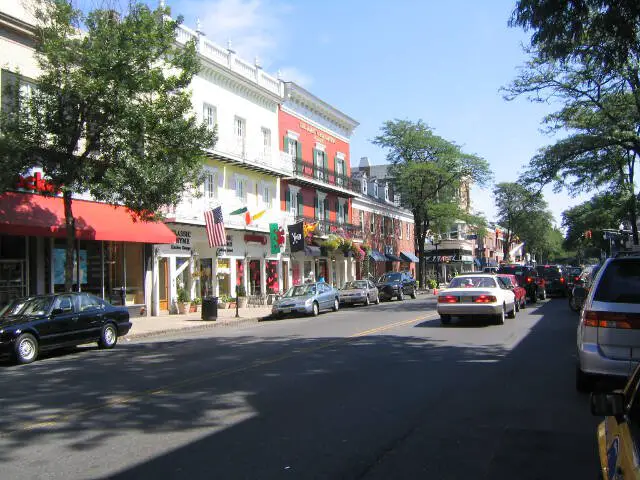
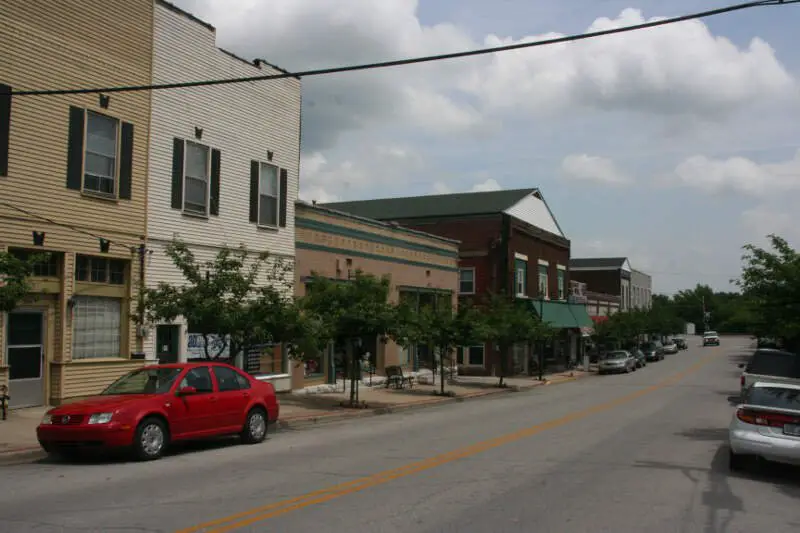
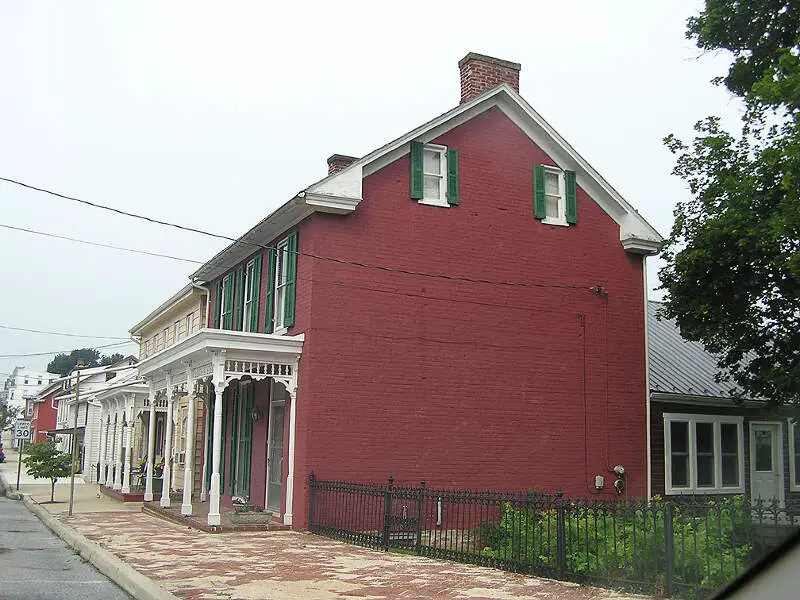
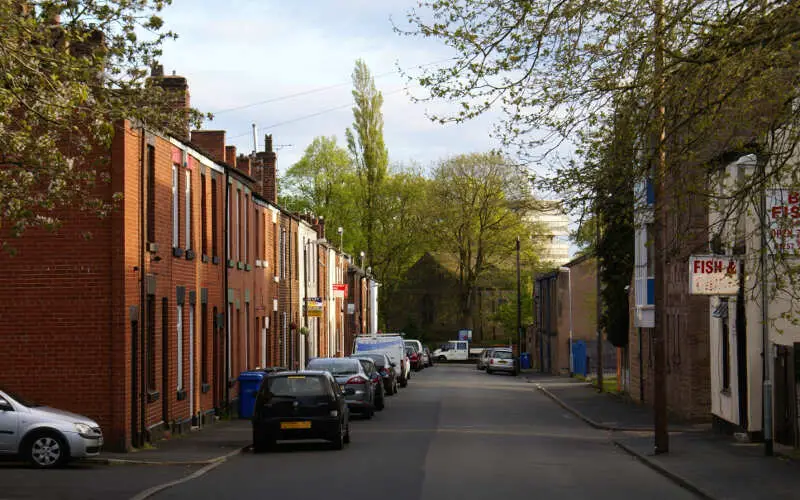
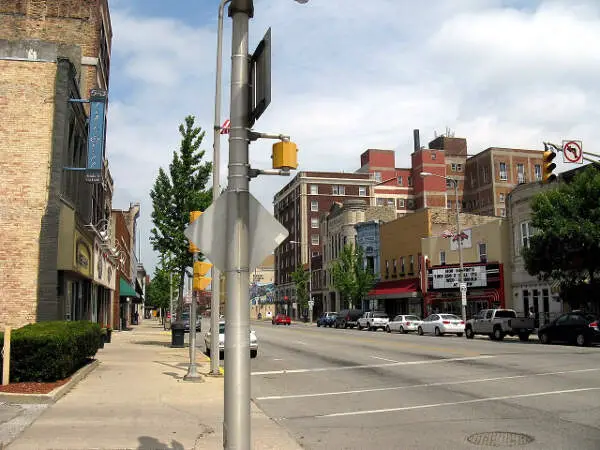
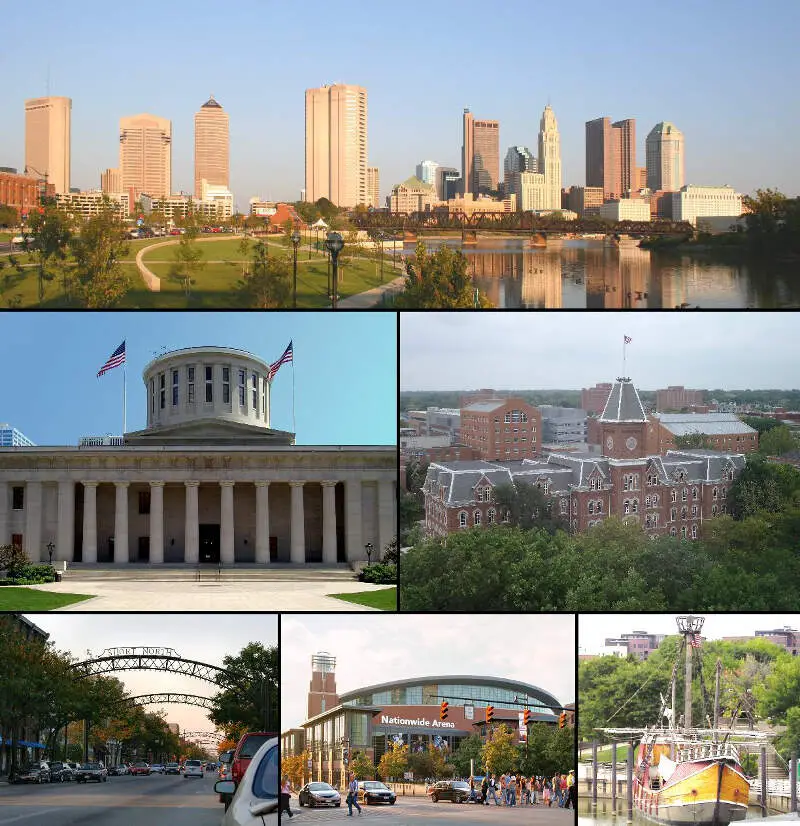
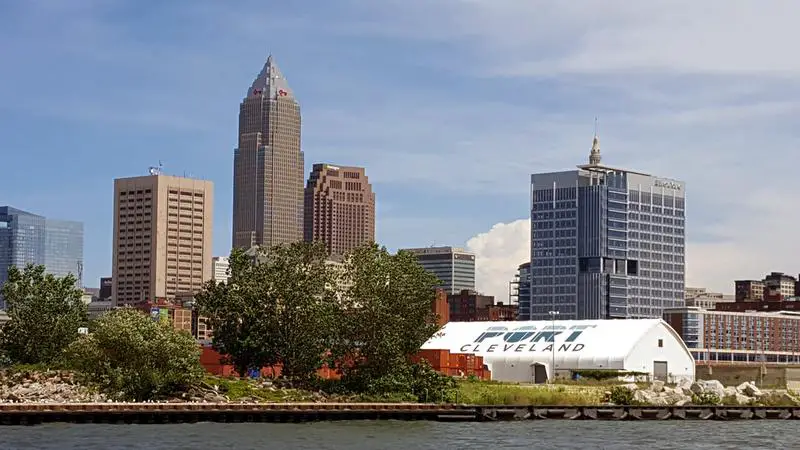
Columbus vs. Cleveland in photos
A side-by-side look at each city.




Cost of living
Cleveland is the cheaper city overall — 20% higher in Columbus than its rival. Index baseline: 100 = national average.
| Living expense | Columbus | Cleveland | US average |
|---|---|---|---|
| Overall | 96 | 80 | 100 |
| Services | 101 | 96 | 100 |
| Groceries | 99 | 91 | 100 |
| Health | 93 | 48 | 100 |
| Housing | 100 | 91 | 100 |
| Transportation | 97 | 98 | 100 |
| Utilities | 94 | 97 | 100 |
Lower index = cheaper. 100 = U.S. national average. Bar inside each cell scales relative to the highest value in the table.
Sources: HomeSnacks Cost of Living indices, normalized so 100 = U.S. national average. Drill in: Columbus cost of living, Cleveland cost of living, or the cheapest cities in America.
Housing breakdown
Home prices are higher in Columbus. Compare absolute price and price-to-income — a $500k home in a $100k-income city is very different from one in a $50k-income city.
| Metric | Columbus | Cleveland | United States |
|---|---|---|---|
| Median Home Value | $245,979 | $115,536 | $332,700 |
| Median Rent | $1,295 | $945 | $1,413 |
| Median Income | $66,082 | $40,801 | $80,734 |
| Home Value To Income | 3.7x | 2.8x | 4.1x |
| Rent To Monthly Income | 0.24x | 0.28x | 0.21x |
Source: U.S. Census Bureau ACS 2020-2024. See also states with the highest rent in America.
Crime
Columbus is the safer city — total crime rate of 3,088 per 100k people vs 5,987 for Cleveland. US average: 2,119.
| Crime (per 100k) | Columbus | Cleveland | US average |
|---|---|---|---|
| Total crime | 3,088 | 5,987 | 2,119 |
| Murder | 12 | 30 | 5 |
| Robbery | 88 | 389 | 61 |
| Aggravated Assault | 211 | 1,001 | 256 |
| Violent Crime | 435 | 1,561 | 359 |
| Burglary | 405 | 860 | 229 |
| Larceny | 1,706 | 2,419 | 1,272 |
| Car Theft | 543 | 1,146 | 259 |
| Property Crime | 2,653 | 4,426 | 1,760 |
Lower = safer. Bar inside each cell scales relative to the highest crime rate in the table.
Source: FBI Uniform Crime Reporting (2024). All rates are per 100,000 people. City pages: Columbus crime, Cleveland crime. See also: safest cities in America.
Diversity
Cleveland is more racially diverse — lower HHI (closer to 0) means a more even mix across groups.
| Group | Columbus | Cleveland | United States |
|---|---|---|---|
| White | 50.7% | 33.7% | 57.4% |
| African American | 29.1% | 45.1% | 11.9% |
| American Indian | 0.1% | 0.1% | 0.5% |
| Asian | 5.9% | 2.6% | 5.9% |
| Hawaiian | 0.0% | 0.0% | 0.2% |
| Other | 0.6% | 0.6% | 0.6% |
| Two Or More | 5.4% | 4.6% | 4.3% |
| Hispanic | 8.3% | 13.2% | 19.3% |
Source: U.S. Census ACS 2020-2024. Lower HHI = more even racial mix. See also: most diverse cities in America.
SnackAbility — overall quality of life
Columbus scores higher overall — 6/10 vs 3/10. SnackAbility is our 1–10 quality-of-life score; the median U.S. city scores a 7.
Scores are 0–10; both bars share the same scale.
SnackAbility is a HomeSnacks proprietary 1–10 score blending jobs, housing, education, commute, amenities, affordability, crime, and diversity. Median U.S. city ≈ 7. Data: Census, BLS, FBI. See also: best places to live in America.
Getting around: Columbus vs. Cleveland
How each city handles commuting, transit, walkability, and car culture — the day-to-day reality that shapes where you'd actually want to live.
Columbus is a car city. COTA (Central Ohio Transit Authority) runs a serviceable bus network, but most residents drive; expect to own a vehicle if you're settling into suburbs like Dublin, Westerville, or Hilliard. Traffic on I-71 and I-670 grinds during rush hour, and a true light-rail or subway system remains a future project.
Cleveland has more transit infrastructure through the Greater Cleveland RTA, which runs the Red Line rail from the airport into downtown and out to University Circle, plus Blue and Green light-rail lines into the east side suburbs. The HealthLine BRT along Euclid Avenue connects Public Square to University Circle efficiently. If you live and work near those corridors, you can genuinely go car-light in Cleveland in a way that's harder to pull off in Columbus.
Jobs and careers in Columbus vs. Cleveland
The local job market, dominant industries, and which city to choose based on your career.
Columbus posts a median household income of $66,082 against Cleveland's $40,801, and that gap reflects real differences in the opportunity mix. Columbus has diversified into finance (JPMorgan Chase has one of its largest U.S. campuses here), insurance (Nationwide is headquartered downtown), retail corporate (L Brands, Abercrombie & Fitch), and a fast-growing tech sector anchored partly by Ohio State University. OhioHealth and Nationwide Children's Hospital add further stability on the healthcare side.
Cleveland's economy centers on the medical corridor around University Circle: Cleveland Clinic and University Hospitals are the city's dominant employers, with manufacturing and logistics also part of the mix. Sherwin-Williams recently opened its new headquarters downtown, and Progressive Insurance operates out of nearby Mayfield Village. Cleveland's cost of living index sits around 80 versus Columbus's 96, so salaries stretch further even when they start lower.
Weather and climate
What to expect day-to-day — sun, fog, heat, rain, and the seasonal extremes that shape the lifestyle.
Both cities share Ohio's continental climate: hot, humid summers and cold winters. Lake Erie gives Cleveland a distinct personality though; lake-effect snow can bury the east side with 12 or more inches overnight while Columbus stays relatively clear. Cleveland also ranks as one of the cloudiest cities in the country, with grey skies from November through March that are hard to shake if sunlight matters to your mood.
Columbus sits far enough from any large body of water to avoid that cloud machine, so winters bring occasional heavy snow but seasonal totals run lower and the sun breaks through more often. Summers feel nearly identical in both cities: expect highs in the mid- to upper-80s from June through August, with humidity that pushes the feels-like higher. Spring and fall are pleasant in both places, with Columbus arriving at them a little sooner.
Culture, nightlife, and entertainment
Food, music, neighborhoods, and the city vibe that gives each place its personality.
Columbus punches above its weight on culture. The Short North Arts District, stretching north of downtown along High Street, has walkable galleries, independent restaurants, and a monthly Gallery Hop that draws thousands; German Village is one of the best-preserved 19th-century brick neighborhoods in the Midwest. The Arena District handles arena concerts and the Blue Jackets, and Ohio State's 60,000-student enrollment keeps the bar and music scene younger than you'd expect from a state capital.
Cleveland's cultural footprint is dense in a different way. Playhouse Square is the largest theater district in the U.S. outside of Broadway, with touring productions, Broadway shows, and resident companies running year-round; the Rock and Roll Hall of Fame and the Cleveland Museum of Art (free general admission) anchor University Circle. Ohio City and Tremont offer walkable dining and bars, West 6th Street draws weekend crowds downtown, and for arts infrastructure per capita, Cleveland arguably beats Columbus.
Outdoor activities and day trips
Parks, beaches, hikes, and the weekend escapes that define life outside the city limits.
Columbus residents rely on the Franklin County Metroparks for everyday green space, with Scioto Audubon Metro Park along the Scioto River offering a birdwatching and trail spot near downtown, and the Olentangy Trail giving cyclists and runners a paved path through the city. The big weekend escape is Hocking Hills State Park, about an hour southeast, where sandstone gorges, waterfalls, and Old Man's Cave make for one of Ohio's most dramatic day trips. Kayaking the Hocking River is a bonus.
Cleveland's outdoor edge is Cuyahoga Valley National Park, 15 miles south of downtown, with waterfalls, towpath trails along the Ohio and Erie Canal, and the Cuyahoga River all within a half-hour drive. The Cleveland Metroparks "Emerald Necklace" wraps a chain of reservations around the city for hiking and mountain biking, and Lake Erie adds swimming at Edgewater Park, sailing out of the East 9th Street pier, and walleye fishing year-round. If outdoor access is a priority, Cleveland's proximity to the lake and the national park is a genuine edge.
Bottom line: which city is right for you?
Based on the head-to-head data above, here's the short version — pick the city that lines up with what you actually care about.
Choose Columbus if you prioritize…
- lower crime — a safer place to live, work, and raise a family.
- more affordable housing relative to Cleveland.
- a higher overall SnackAbility quality-of-life score.
Choose Cleveland if you prioritize…
- a lower cost of living (cheaper groceries, services, and day-to-day expenses).
- a more racially diverse community (lower HHI on Census data).
Methodology: winners are picked from public data — U.S. Census Bureau ACS (income, home value, rent, race/HHI), FBI Uniform Crime Reporting (crime rates per 100k), and HomeSnacks' proprietary SnackAbility quality-of-life score, which blends Bureau of Labor Statistics data with the above.
Other comparisons
Still weighing your options? See how these two cities stack up against other places we've compared head-to-head.