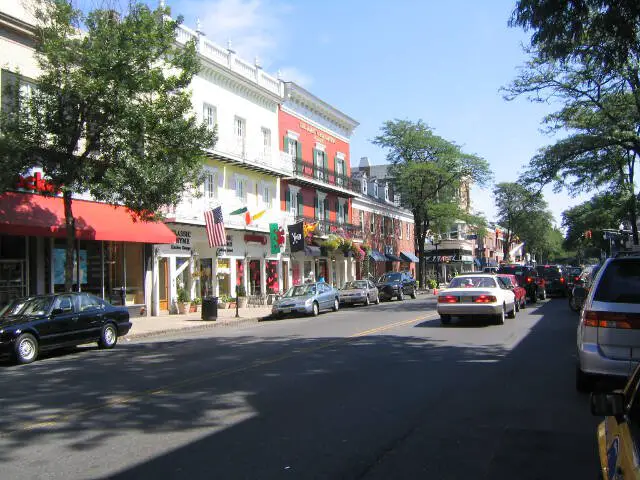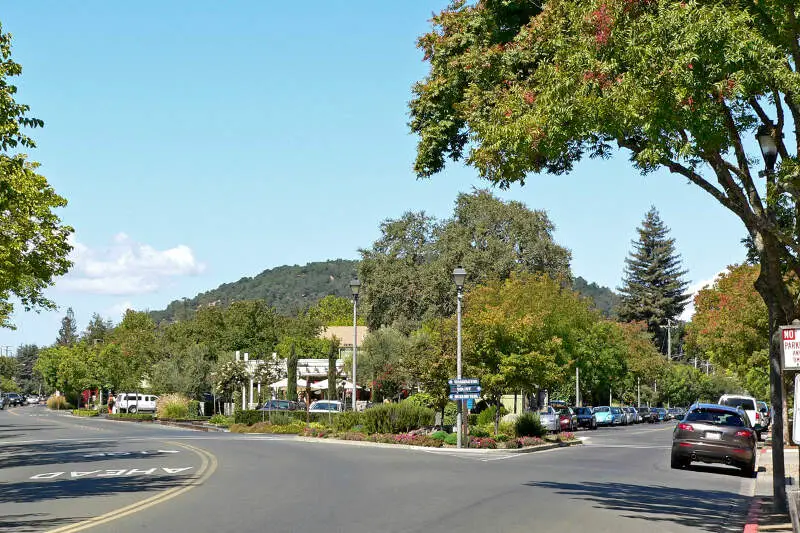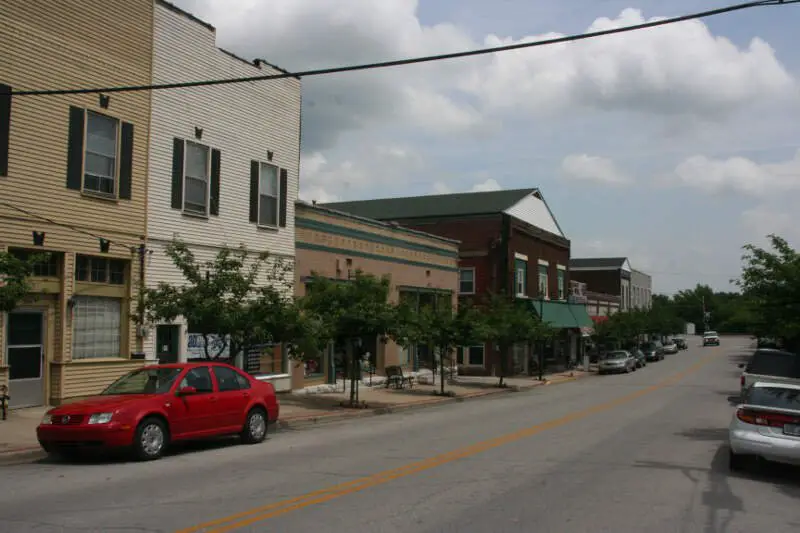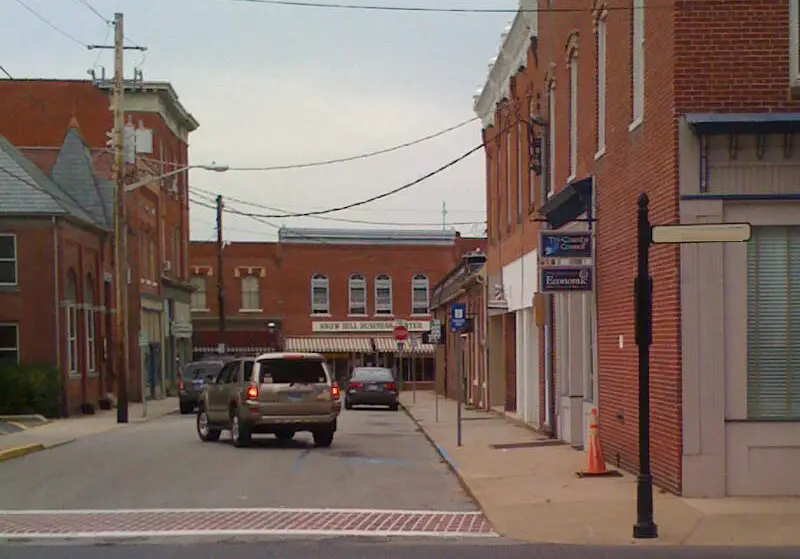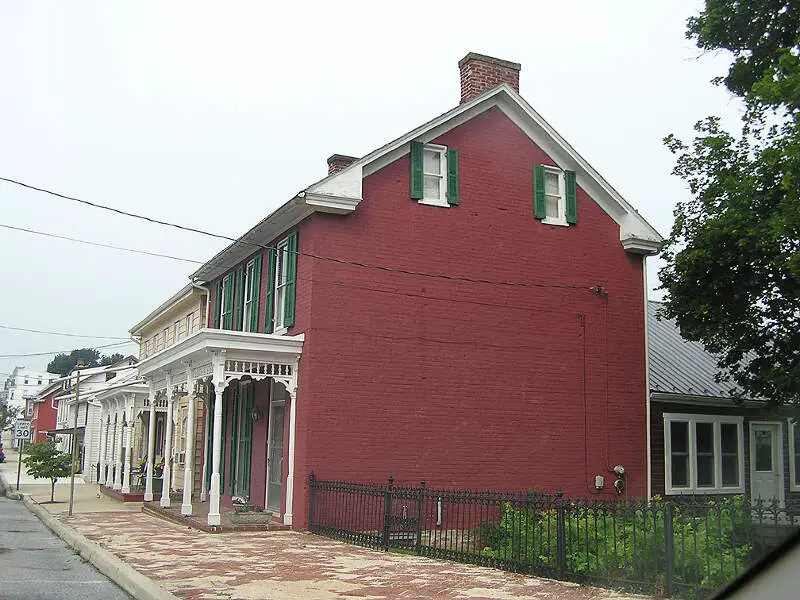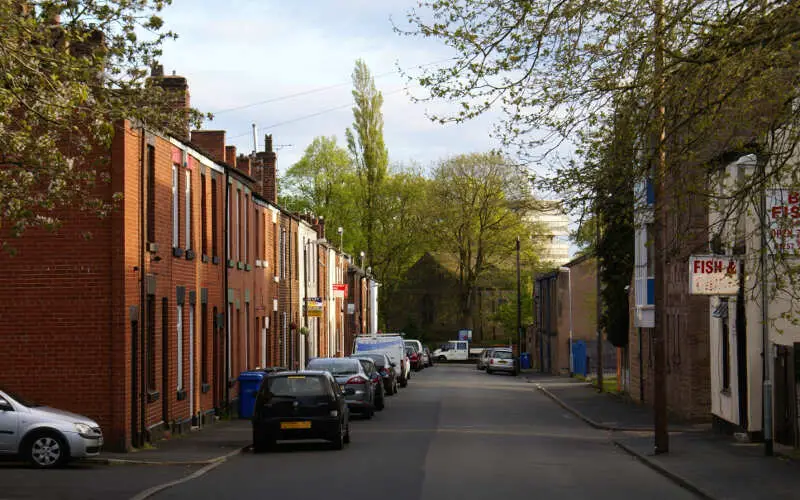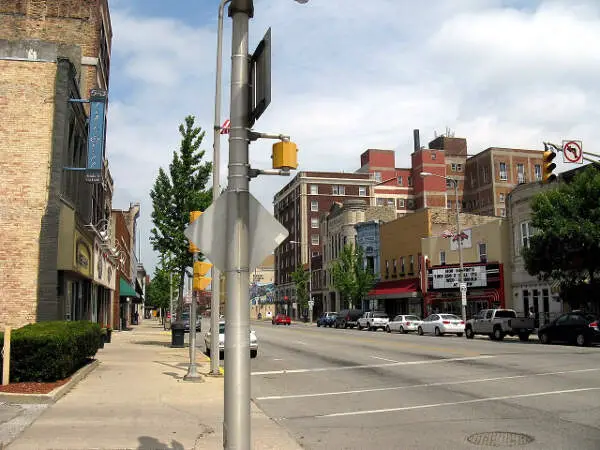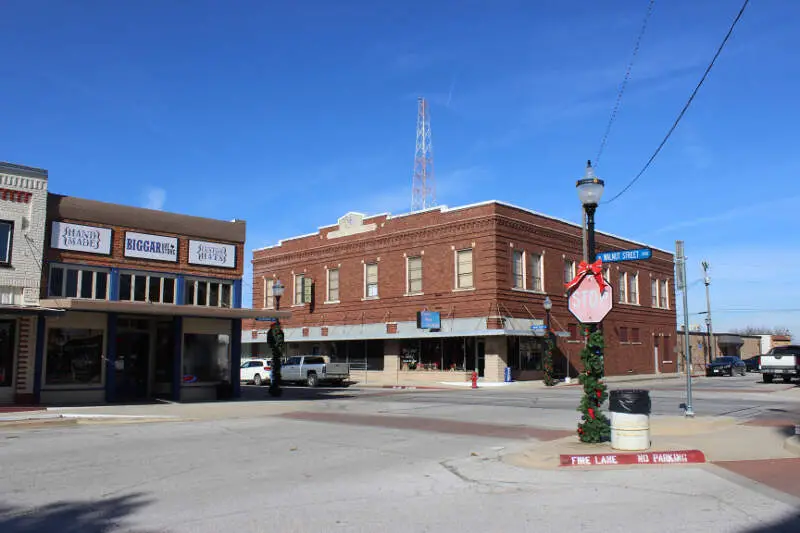
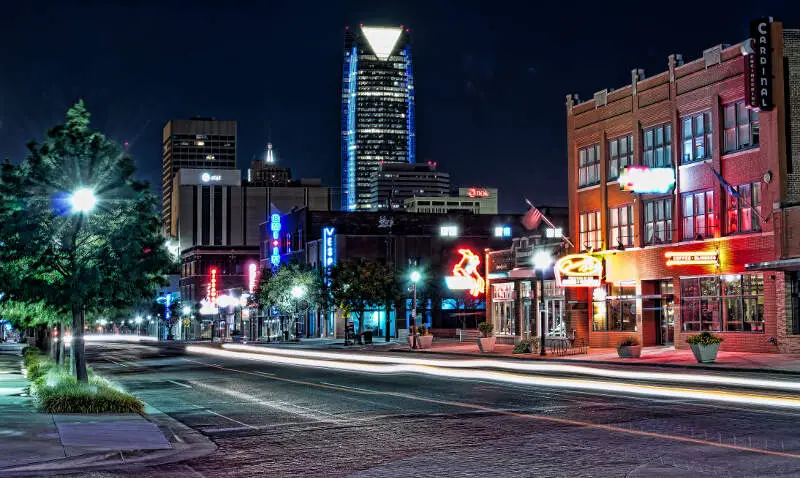
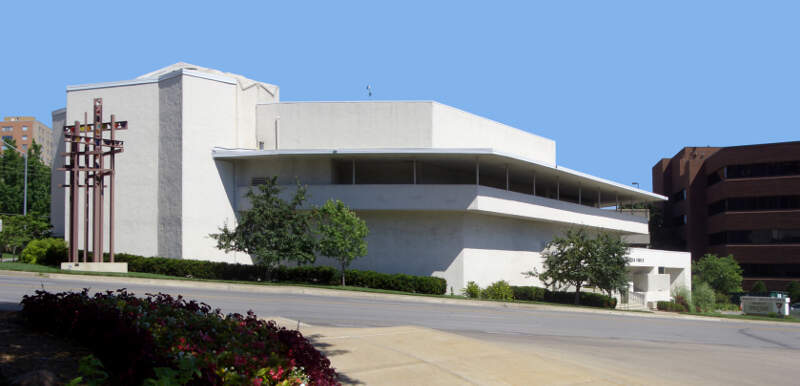
Oklahoma City vs. Kansas City in photos
A side-by-side look at each city.

Cost of living
Oklahoma City is the cheaper city overall — 2% higher in Kansas City than its rival. Index baseline: 100 = national average.
| Living expense | Oklahoma City | Kansas City | US average |
|---|---|---|---|
| Overall | 96 | 98 | 100 |
| Services | 94 | 99 | 100 |
| Groceries | 97 | 100 | 100 |
| Health | 91 | 95 | 100 |
| Housing | 99 | 95 | 100 |
| Transportation | 99 | 92 | 100 |
| Utilities | 96 | 95 | 100 |
Lower index = cheaper. 100 = U.S. national average. Bar inside each cell scales relative to the highest value in the table.
Sources: HomeSnacks Cost of Living indices, normalized so 100 = U.S. national average. Drill in: Oklahoma City cost of living, Kansas City cost of living, or the cheapest cities in America.
Housing breakdown
Home prices are higher in Kansas City. Compare absolute price and price-to-income — a $500k home in a $100k-income city is very different from one in a $50k-income city.
| Metric | Oklahoma City | Kansas City | United States |
|---|---|---|---|
| Median Home Value | $206,712 | $250,207 | $332,700 |
| Median Rent | $1,130 | $1,238 | $1,413 |
| Median Income | $68,656 | $69,166 | $80,734 |
| Home Value To Income | 3.0x | 3.6x | 4.1x |
| Rent To Monthly Income | 0.2x | 0.21x | 0.21x |
Source: U.S. Census Bureau ACS 2020-2024. See also states with the highest rent in America.
Crime
Oklahoma City is the safer city — total crime rate of 3,569 per 100k people vs 6,223 for Kansas City. US average: 2,119.
| Crime (per 100k) | Oklahoma City | Kansas City | US average |
|---|---|---|---|
| Total crime | 3,569 | 6,223 | 2,119 |
| Murder | 10 | 28 | 5 |
| Robbery | 100 | 254 | 61 |
| Aggravated Assault | 493 | 1,191 | 256 |
| Violent Crime | 676 | 1,547 | 359 |
| Burglary | 583 | 490 | 229 |
| Larceny | 1,951 | 2,454 | 1,272 |
| Car Theft | 360 | 1,731 | 259 |
| Property Crime | 2,893 | 4,676 | 1,760 |
Lower = safer. Bar inside each cell scales relative to the highest crime rate in the table.
Source: FBI Uniform Crime Reporting (2024). All rates are per 100,000 people. City pages: Oklahoma City crime, Kansas City crime. See also: safest cities in America.
Diversity
Oklahoma City is more racially diverse — lower HHI (closer to 0) means a more even mix across groups.
| Group | Oklahoma City | Kansas City | United States |
|---|---|---|---|
| White | 50.1% | 54.0% | 57.4% |
| African American | 13.1% | 25.2% | 11.9% |
| American Indian | 2.1% | 0.1% | 0.5% |
| Asian | 4.5% | 2.8% | 5.9% |
| Hawaiian | 0.1% | 0.2% | 0.2% |
| Other | 0.5% | 0.5% | 0.6% |
| Two Or More | 7.6% | 4.7% | 4.3% |
| Hispanic | 22.1% | 12.5% | 19.3% |
Source: U.S. Census ACS 2020-2024. Lower HHI = more even racial mix. See also: most diverse cities in America.
SnackAbility — overall quality of life
Kansas City scores higher overall — 5/10 vs 4/10. SnackAbility is our 1–10 quality-of-life score; the median U.S. city scores a 7.
Scores are 0–10; both bars share the same scale.
SnackAbility is a HomeSnacks proprietary 1–10 score blending jobs, housing, education, commute, amenities, affordability, crime, and diversity. Median U.S. city ≈ 7. Data: Census, BLS, FBI. See also: best places to live in America.
Getting around: Oklahoma City vs. Kansas City
How each city handles commuting, transit, walkability, and car culture — the day-to-day reality that shapes where you'd actually want to live.
Both Oklahoma City and Kansas City are built for cars, and you'll feel right at home commuting by car in either place. Oklahoma City's EMBARK system runs a downtown streetcar loop through Bricktown and Midtown plus a network of bus routes, but coverage is limited and the city's sprawl makes driving non-negotiable for most residents. Expect wide suburban arterials and heavy reliance on I-35, I-40, and I-44.
Kansas City has the KC Streetcar (recently extended south to the University of Missouri-Kansas City campus), RideKC bus routes, and a more walkable cluster of close-in neighborhoods like the Crossroads, Westport, and the Plaza. Neither city comes close to Chicago or Denver for transit, but Kansas City's denser urban core makes car-free living somewhat more realistic than Oklahoma City's broader, flatter footprint.
Jobs and careers in Oklahoma City vs. Kansas City
The local job market, dominant industries, and which city to choose based on your career.
The two cities have nearly identical median household incomes: $68,656 in Oklahoma City versus $69,166 in Kansas City. Oklahoma City's economy runs heavily on energy: Devon Energy and OGE Energy Corp anchor a large oil-and-gas sector, while Tinker Air Force Base is one of the largest single-site employers in the state, supporting an aerospace and defense supply chain. State government and healthcare systems like OU Health and INTEGRIS round out the top employers.
Kansas City leans more toward finance, tech, and logistics. Oracle Health (formerly Cerner) is a major tech anchor, Commerce Bank and Kansas City Life Insurance carry the financial sector, and the city's historic role as a rail hub still draws distribution giants like FedEx and UPS. Kansas City's mix is more diversified than Oklahoma City's energy-heavy concentration.
Weather and climate
What to expect day-to-day — sun, fog, heat, rain, and the seasonal extremes that shape the lifestyle.
Oklahoma City sits squarely in Tornado Alley, and spring storm season brings real risk on the open plains. Summers regularly push into the mid-90s with occasional triple-digit stretches, though the city sees around 230 sunny days a year. Winters are generally mild but ice storms can shut things down faster than heavy snow would.
Kansas City shares the tornado risk but gets more frequent and heavier snowfall in winter, plus noticeably higher summer humidity that makes 90-degree days feel stickier than the same temperature in OKC. Spring and fall are pleasant in both cities: crisp, colorful, and too short. If you'd rather deal with dry heat than humid summers, Oklahoma City has a slight edge; if snow doesn't bother you, Kansas City's four seasons feel more distinct.
Culture, nightlife, and entertainment
Food, music, neighborhoods, and the city vibe that gives each place its personality.
Oklahoma City has invested heavily in its urban core over the past two decades. Bricktown draws crowds to its canal-side restaurants and bars, the Paseo Arts District hosts galleries and monthly art walks, and Deep Deuce has a growing live-music presence.
The NBA's Oklahoma City Thunder fills Paycom Center and gives the city a major-league identity that punches above its size. The National Cowboy and Western Heritage Museum is one of the best of its kind in the country.
Kansas City plays at a bigger cultural scale. The 18th and Vine Jazz District has deep musical roots, the Crossroads Arts District rivals anything in OKC for gallery density, and Westport and the Power and Light District keep nightlife busy on weeknights as well as weekends. Add the Nelson-Atkins Museum of Art, two major professional sports teams in the Chiefs and Royals, and a barbecue tradition serious enough to fill entire travel itineraries, and Kansas City has more cultural variety for those who want it.
Outdoor activities and day trips
Parks, beaches, hikes, and the weekend escapes that define life outside the city limits.
Oklahoma City's outdoor scene centers on its lakes and newer green infrastructure. Lake Hefner and Lake Overholser draw sailors, cyclists, and anglers on weekends, and the 70-acre Scissortail Park (opened in 2019) is now the city's main green space, with the nearby Myriad Botanical Gardens as a manicured complement. The Wichita Mountains Wildlife Refuge, about two hours southwest, has bison sightings, granite bouldering, and backcountry hiking that surprises most visitors.
Kansas City's outdoor assets lean more toward urban parks and day trips. Swope Park (one of the largest municipally owned parks in the country) has Shelter Insurance Gardens and the Kansas City Zoo, while Loose Park and Shawnee Mission Park handle weekend crowds well.
The Ozarks are roughly three hours southeast, giving Kansas City residents a mountain-and-river escape that Oklahoma City's flat surroundings can't match. If trail variety and water recreation matter most, Kansas City's regional options are slightly richer.
Bottom line: which city is right for you?
Based on the head-to-head data above, here's the short version — pick the city that lines up with what you actually care about.
Choose Oklahoma City if you prioritize…
- a lower cost of living (cheaper groceries, services, and day-to-day expenses).
- lower crime — a safer place to live, work, and raise a family.
- a more racially diverse community (lower HHI on Census data).
Choose Kansas City if you prioritize…
- more affordable housing relative to Oklahoma City.
- a higher overall SnackAbility quality-of-life score.
Methodology: winners are picked from public data — U.S. Census Bureau ACS (income, home value, rent, race/HHI), FBI Uniform Crime Reporting (crime rates per 100k), and HomeSnacks' proprietary SnackAbility quality-of-life score, which blends Bureau of Labor Statistics data with the above.
Other comparisons
Still weighing your options? See how these two cities stack up against other places we've compared head-to-head.