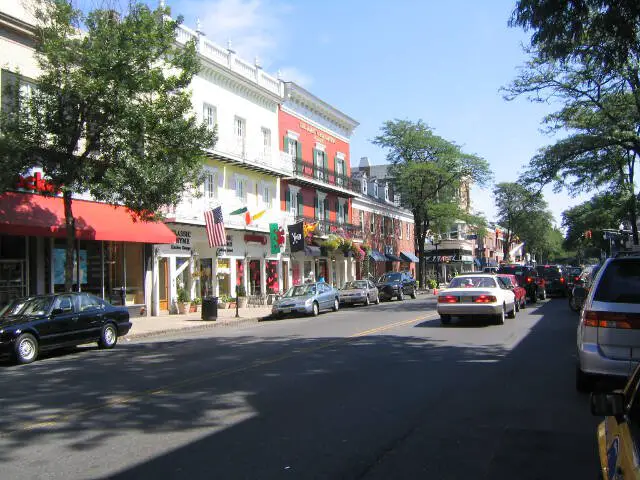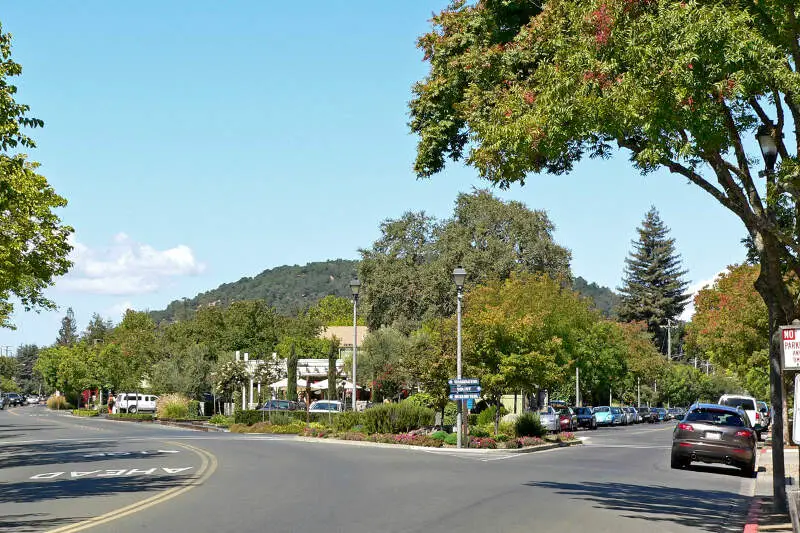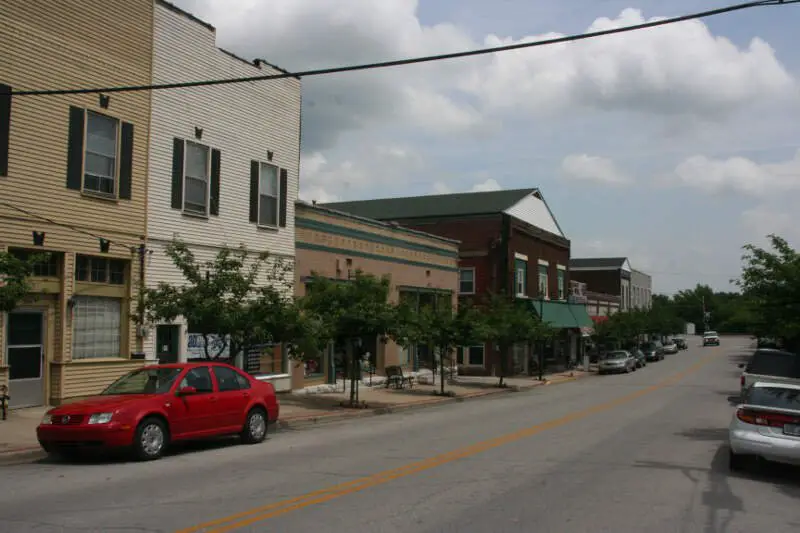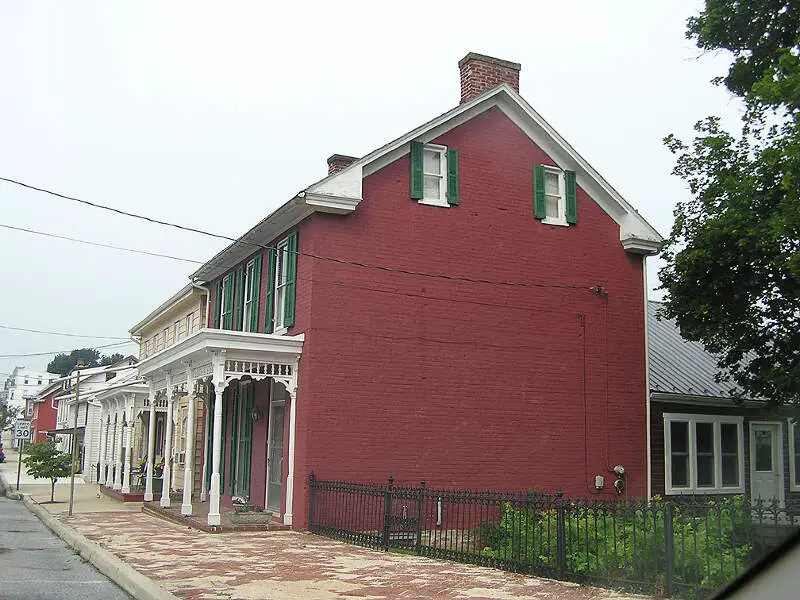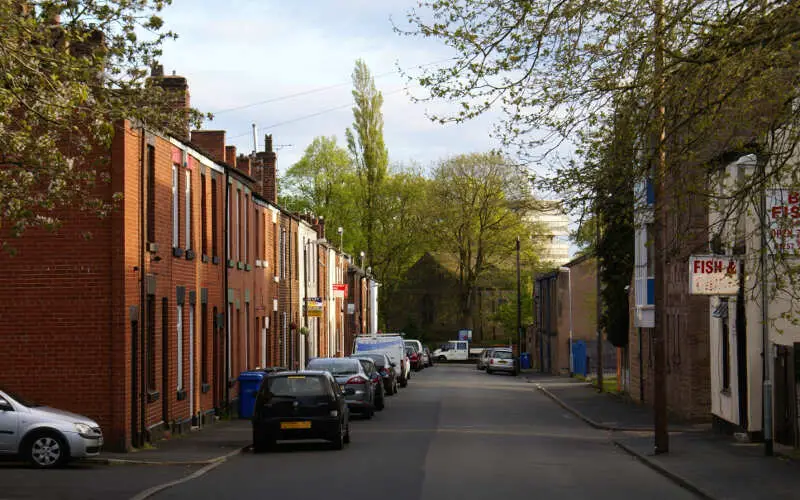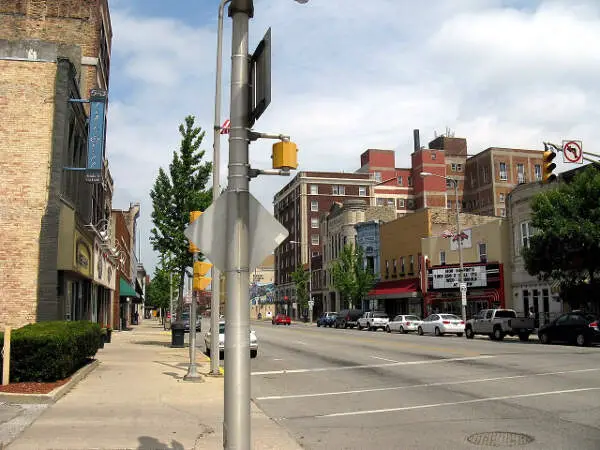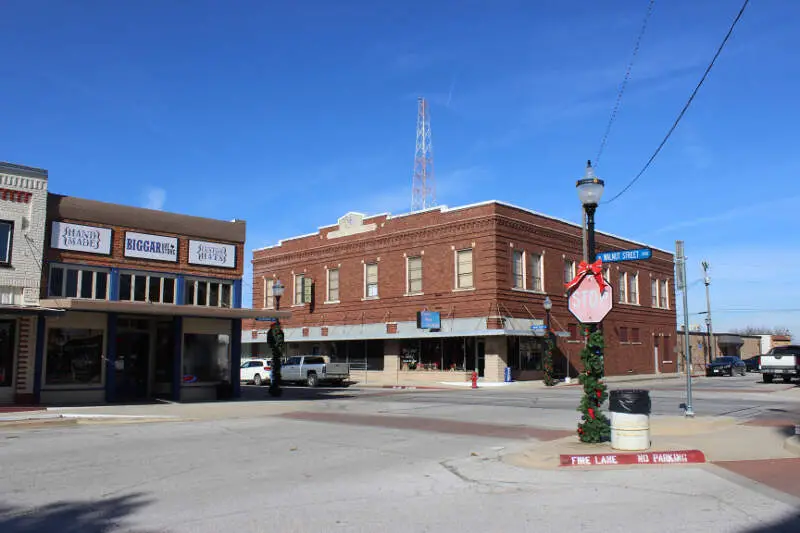
Omaha vs. Kansas City in photos
A side-by-side look at each city.




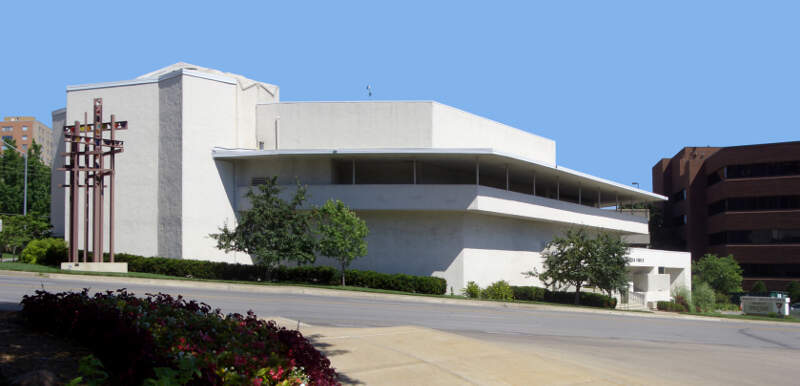
Cost of living
Kansas City is the cheaper city overall — 2% higher in Omaha than its rival. Index baseline: 100 = national average.
| Living expense | Omaha | Kansas City | US average |
|---|---|---|---|
| Overall | 100 | 98 | 100 |
| Services | 98 | 99 | 100 |
| Groceries | 101 | 100 | 100 |
| Health | 93 | 95 | 100 |
| Housing | 103 | 95 | 100 |
| Transportation | 97 | 92 | 100 |
| Utilities | 95 | 95 | 100 |
Lower index = cheaper. 100 = U.S. national average. Bar inside each cell scales relative to the highest value in the table.
Sources: HomeSnacks Cost of Living indices, normalized so 100 = U.S. national average. Drill in: Omaha cost of living, Kansas City cost of living, or the cheapest cities in America.
Housing breakdown
Home prices are higher in Omaha. Compare absolute price and price-to-income — a $500k home in a $100k-income city is very different from one in a $50k-income city.
| Metric | Omaha | Kansas City | United States |
|---|---|---|---|
| Median Home Value | $294,188 | $250,207 | $332,700 |
| Median Rent | $1,187 | $1,238 | $1,413 |
| Median Income | $73,201 | $69,166 | $80,734 |
| Home Value To Income | 4.0x | 3.6x | 4.1x |
| Rent To Monthly Income | 0.19x | 0.21x | 0.21x |
Source: U.S. Census Bureau ACS 2020-2024. See also states with the highest rent in America.
Crime
Omaha is the safer city — total crime rate of 3,531 per 100k people vs 6,223 for Kansas City. US average: 2,119.
| Crime (per 100k) | Omaha | Kansas City | US average |
|---|---|---|---|
| Total crime | 3,531 | 6,223 | 2,119 |
| Murder | 4 | 28 | 5 |
| Robbery | 47 | 254 | 61 |
| Aggravated Assault | 272 | 1,191 | 256 |
| Violent Crime | 369 | 1,547 | 359 |
| Burglary | 236 | 490 | 229 |
| Larceny | 2,264 | 2,454 | 1,272 |
| Car Theft | 662 | 1,731 | 259 |
| Property Crime | 3,162 | 4,676 | 1,760 |
Lower = safer. Bar inside each cell scales relative to the highest crime rate in the table.
Source: FBI Uniform Crime Reporting (2024). All rates are per 100,000 people. City pages: Omaha crime, Kansas City crime. See also: safest cities in America.
Diversity
Kansas City is more racially diverse — lower HHI (closer to 0) means a more even mix across groups.
| Group | Omaha | Kansas City | United States |
|---|---|---|---|
| White | 63.4% | 54.0% | 57.4% |
| African American | 11.4% | 25.2% | 11.9% |
| American Indian | 0.2% | 0.1% | 0.5% |
| Asian | 4.0% | 2.8% | 5.9% |
| Hawaiian | 0.0% | 0.2% | 0.2% |
| Other | 0.3% | 0.5% | 0.6% |
| Two Or More | 4.4% | 4.7% | 4.3% |
| Hispanic | 16.2% | 12.5% | 19.3% |
Source: U.S. Census ACS 2020-2024. Lower HHI = more even racial mix. See also: most diverse cities in America.
SnackAbility — overall quality of life
Omaha scores higher overall — 7/10 vs 5/10. SnackAbility is our 1–10 quality-of-life score; the median U.S. city scores a 7.
Scores are 0–10; both bars share the same scale.
SnackAbility is a HomeSnacks proprietary 1–10 score blending jobs, housing, education, commute, amenities, affordability, crime, and diversity. Median U.S. city ≈ 7. Data: Census, BLS, FBI. See also: best places to live in America.
Getting around: Omaha vs. Kansas City
How each city handles commuting, transit, walkability, and car culture — the day-to-day reality that shapes where you'd actually want to live.
Both Omaha and Kansas City are car-first cities, so if you commute by car you'll feel at home in either. Omaha's Metro Area Transit (MAT) bus network covers the core city but runs infrequently in the suburbs, and there's no light rail. The grid is straightforward and traffic rarely gets bad outside rush hour on I-80 or Dodge Street.
Kansas City has the same car dependency but does offer the KC Streetcar, a free-to-ride line running from the River Market through downtown and into Midtown, with KCATA buses covering the rest. Kansas City's highway tangle (I-70, I-35, I-435) gets genuinely congested during peak hours in a way Omaha's roads typically don't.
If you fly frequently, Kansas City's recently rebuilt KCI terminal is a real upgrade. Omaha's Eppley Airfield is smaller with fewer nonstop options.
Jobs and careers in Omaha vs. Kansas City
The local job market, dominant industries, and which city to choose based on your career.
Omaha punches above its weight as a corporate hub. Berkshire Hathaway, Union Pacific, Mutual of Omaha, and First National Bank of Omaha are all headquartered here, and PayPal and Charles Schwab run large campuses in the metro. That employer mix skews toward finance, insurance, and logistics, and the median household income of $73,201 reflects a stable, white-collar economy.
Kansas City's job market is broader by industry but softer on household income at $69,166. Major employers include T-Mobile's Midwest hub, Hallmark Cards, H&R Block, and a growing Oracle Health (formerly Cerner) tech presence. Kansas City also has a substantial federal government and defense footprint thanks to nearby Fort Leavenworth and the National Nuclear Security Administration.
If you're in tech or healthcare IT, Kansas City's trajectory is strong. If finance and corporate insurance are your lane, Omaha is hard to beat.
Weather and climate
What to expect day-to-day — sun, fog, heat, rain, and the seasonal extremes that shape the lifestyle.
Both cities sit in the Great Plains, so expect four genuine seasons, severe thunderstorm springs, and winters that mean business. Omaha averages around 29 inches of snow annually and can see stretches of below-zero wind chills in January and February. Blizzards along I-80 are a real hazard.
Summers are hot and humid, routinely hitting the low 90s, with tornado watches a regular feature from April through June. Kansas City's climate is similar but tempered slightly by its more southerly position: winters are a touch milder on average, snowfall runs around 18 inches a year, and summers are equally sweltering.
Both cities sit in Tornado Alley, so a basement or interior safe room is less a luxury than a practical necessity. If you're trading one for the other on climate, the differences are modest. Kansas City wins on winter severity, but only by a small margin.
Culture, nightlife, and entertainment
Food, music, neighborhoods, and the city vibe that gives each place its personality.
Kansas City has one of the most distinctive cultural identities in the Midwest. The 18th & Vine Jazz District is a genuine piece of American music history, the Nelson-Atkins Museum of Art ranks among the country's best, and the barbecue scene (Joe's Kansas City, Q39, Gates) is the kind of thing people plan trips around. Nightlife clusters in the Power & Light District downtown and the Crossroads Arts District, where galleries and live music venues sit alongside craft cocktail bars.
Omaha holds its own more than people expect. The Old Market is a walkable grid of brick warehouses turned restaurants and bars, the Benson district has a thriving indie music scene, and the College World Series turns the city into a genuine baseball destination every June. The Joslyn Art Museum anchors the arts scene, and on sheer density of dining, nightlife, and programming, Kansas City has the edge, though Omaha doesn't feel like a consolation prize.
Outdoor activities and day trips
Parks, beaches, hikes, and the weekend escapes that define life outside the city limits.
Omaha's outdoor scene centers on the Missouri River corridor and a strong network of paved trails. Fontenelle Forest on the city's southeast edge has 17 miles of woodland hiking, genuinely wild terrain for a metro of this size, and the Keystone Trail connects neighborhoods along a former rail corridor. Henry Doorly Zoo, consistently ranked among the best in the world, counts as an outdoor destination in its own right, and day trips take you to the Platte River valley and the Sandhills to the northwest.
Kansas City's parks are more expansive: Swope Park's 1,800 acres include two golf courses, walking trails, and the Kansas City Zoo, while Loose Park and Shawnee Mission Park in the suburbs offer easy cycling and trail running. The bigger draw is proximity: the Flint Hills prairie just 90 minutes west is a rare and stunning landscape, and Lake of the Ozarks puts real waterfront recreation about two hours away. For outdoor variety and nearby escapes, Kansas City has the geographic advantage.
Bottom line: which city is right for you?
Based on the head-to-head data above, here's the short version — pick the city that lines up with what you actually care about.
Choose Omaha if you prioritize…
- lower crime — a safer place to live, work, and raise a family.
- more affordable housing relative to Kansas City.
- a higher overall SnackAbility quality-of-life score.
Choose Kansas City if you prioritize…
- a lower cost of living (cheaper groceries, services, and day-to-day expenses).
- a more racially diverse community (lower HHI on Census data).
Methodology: winners are picked from public data — U.S. Census Bureau ACS (income, home value, rent, race/HHI), FBI Uniform Crime Reporting (crime rates per 100k), and HomeSnacks' proprietary SnackAbility quality-of-life score, which blends Bureau of Labor Statistics data with the above.
Other comparisons
Still weighing your options? See how these two cities stack up against other places we've compared head-to-head.