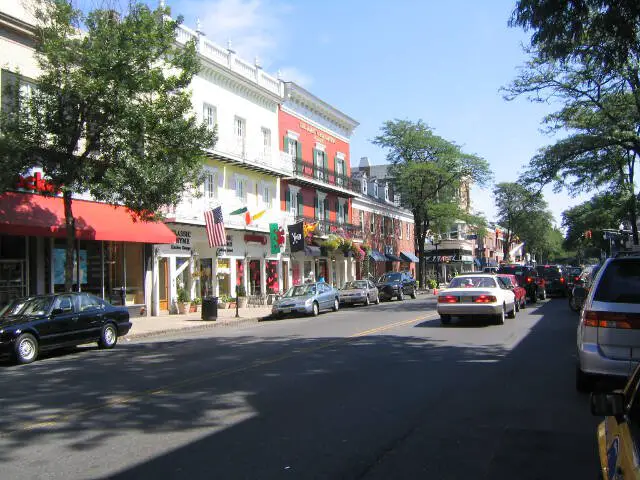
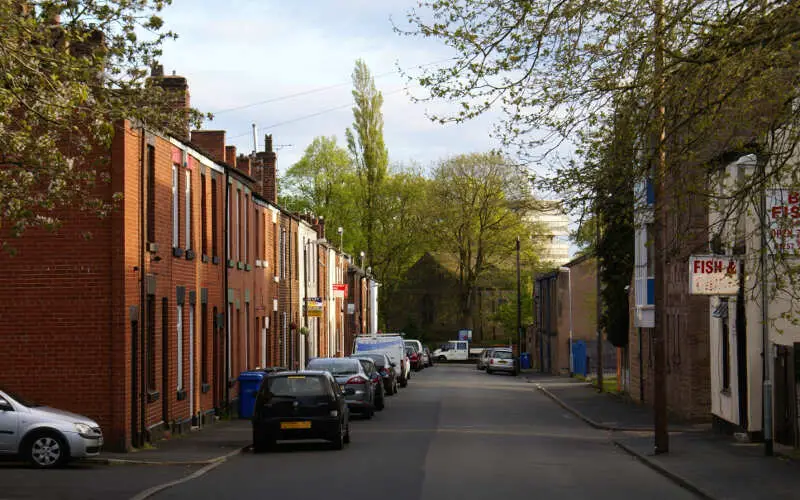
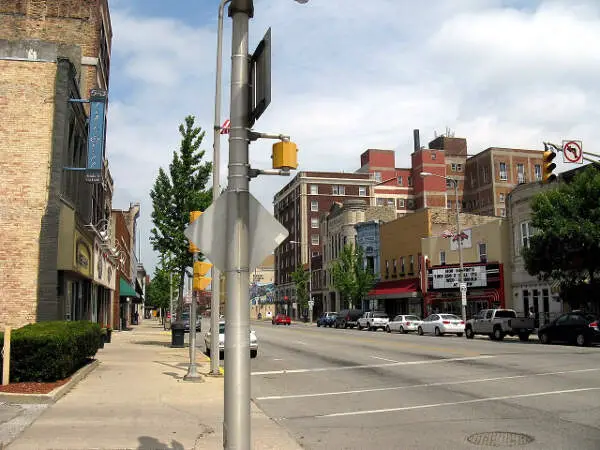
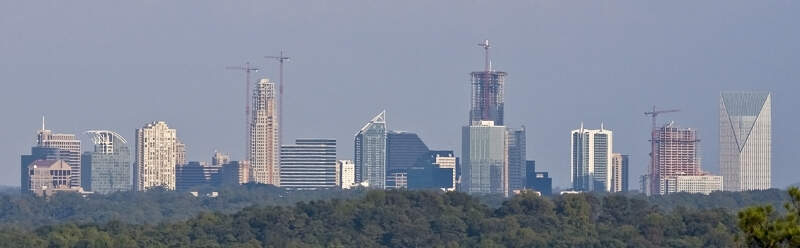
Seattle vs. Atlanta in photos
A side-by-side look at each city.





Cost of living
Atlanta is the cheaper city overall — 52% higher in Seattle than its rival. Index baseline: 100 = national average.
| Living expense | Seattle | Atlanta | US average |
|---|---|---|---|
| Overall | 181 | 119 | 100 |
| Services | 107 | 99 | 100 |
| Groceries | 111 | 102 | 100 |
| Health | 326 | 163 | 100 |
| Housing | 125 | 100 | 100 |
| Transportation | 112 | 106 | 100 |
| Utilities | 123 | 104 | 100 |
Lower index = cheaper. 100 = U.S. national average. Bar inside each cell scales relative to the highest value in the table.
Sources: HomeSnacks Cost of Living indices, normalized so 100 = U.S. national average. Drill in: Seattle cost of living, Atlanta cost of living, or the cheapest cities in America.
Housing breakdown
Home prices are higher in Seattle. Compare absolute price and price-to-income — a $500k home in a $100k-income city is very different from one in a $50k-income city.
| Metric | Seattle | Atlanta | United States |
|---|---|---|---|
| Median Home Value | $868,680 | $385,599 | $332,700 |
| Median Rent | $2,030 | $1,711 | $1,413 |
| Median Income | $123,860 | $85,652 | $80,734 |
| Home Value To Income | 7.0x | 4.5x | 4.1x |
| Rent To Monthly Income | 0.2x | 0.24x | 0.21x |
Source: U.S. Census Bureau ACS 2020-2024. See also states with the highest rent in America.
Crime
Atlanta is the safer city — total crime rate of 4,600 per 100k people vs 5,783 for Seattle. US average: 2,119.
| Crime (per 100k) | Seattle | Atlanta | US average |
|---|---|---|---|
| Total crime | 5,783 | 4,600 | 2,119 |
| Murder | 7 | 26 | 5 |
| Robbery | 221 | 120 | 61 |
| Aggravated Assault | 501 | 537 | 256 |
| Violent Crime | 775 | 707 | 359 |
| Burglary | 1,152 | 347 | 229 |
| Larceny | 2,882 | 2,500 | 1,272 |
| Car Theft | 974 | 1,046 | 259 |
| Property Crime | 5,008 | 3,893 | 1,760 |
Lower = safer. Bar inside each cell scales relative to the highest crime rate in the table.
Source: FBI Uniform Crime Reporting (2024). All rates are per 100,000 people. City pages: Seattle crime, Atlanta crime. See also: safest cities in America.
Diversity
Atlanta is more racially diverse — lower HHI (closer to 0) means a more even mix across groups.
| Group | Seattle | Atlanta | United States |
|---|---|---|---|
| White | 58.8% | 38.1% | 57.4% |
| African American | 6.4% | 45.4% | 11.9% |
| American Indian | 0.3% | 0.1% | 0.5% |
| Asian | 17.5% | 5.2% | 5.9% |
| Hawaiian | 0.2% | 0.0% | 0.2% |
| Other | 0.6% | 0.5% | 0.6% |
| Two Or More | 7.7% | 4.4% | 4.3% |
| Hispanic | 8.5% | 6.3% | 19.3% |
Source: U.S. Census ACS 2020-2024. Lower HHI = more even racial mix. See also: most diverse cities in America.
SnackAbility — overall quality of life
Seattle scores higher overall — 8.5/10 vs 7/10. SnackAbility is our 1–10 quality-of-life score; the median U.S. city scores a 7.
Scores are 0–10; both bars share the same scale.
SnackAbility is a HomeSnacks proprietary 1–10 score blending jobs, housing, education, commute, amenities, affordability, crime, and diversity. Median U.S. city ≈ 7. Data: Census, BLS, FBI. See also: best places to live in America.
Getting around: Seattle vs. Atlanta
How each city handles commuting, transit, walkability, and car culture — the day-to-day reality that shapes where you'd actually want to live.
Seattle gives you more options if you want to ditch the car. King County Metro and Sound Transit's Link Light Rail connect Capitol Hill, the University District, Sea-Tac Airport, and Bellevue, and the Washington State Ferry system adds a commuter route that's hard to beat for scenery. Traffic on I-5 and SR-99 is brutal during peak hours, and Seattle's hills and frequent drizzle make cycling feel like a commitment for most commuters.
Atlanta is a driving city, full stop. MARTA's two rail lines connect downtown, Midtown, Buckhead, Hartsfield-Jackson Airport, and a handful of suburban stations, but most of the metro sits well beyond rail reach. The I-285 perimeter and the downtown connector where I-75 and I-85 merge rank among the most congested stretches in the South, so if your job isn't near a MARTA station, budget for long commutes behind the wheel.
Jobs and careers in Seattle vs. Atlanta
The local job market, dominant industries, and which city to choose based on your career.
Seattle's median household income of $123,860 sits on a tech-heavy base. Amazon's South Lake Union campus, Microsoft's Redmond headquarters, and Boeing's Puget Sound manufacturing operations keep software engineers, aerospace workers, and cloud-infrastructure professionals well paid. Healthcare, logistics, and maritime industries add to a job market that has pulled talent from across the country.
Atlanta's median household income of $85,652 is lower, but the cost of living index of 119 versus Seattle's 181 means paychecks stretch considerably further. Delta Air Lines, Coca-Cola, and Georgia-Pacific are headquartered here, and the city has built a real technology and media presence through companies like NCR Voyix, Cardlytics, and Turner/Warner. The CDC campus in nearby Druid Hills adds a public-health and life-sciences employment base that most metros can't replicate.
Weather and climate
What to expect day-to-day — sun, fog, heat, rain, and the seasonal extremes that shape the lifestyle.
Seattle's climate is mild and overcast most of the year. You'll deal with persistent gray skies and light rain from October through April, though temperatures rarely dip below freezing or climb past the mid-80s. Snow in the city is uncommon, and if you need sunlight to stay functional through winter, Seattle will test you.
Atlanta delivers four proper seasons without the Midwest's extremes. Summers are hot and humid, with stretches in the low 90s and high dew points from June through September. Winters are mild by most standards, though the occasional ice storm can paralyze a city not built for it (see: 2014's "Snowpocalypse").
Spring and fall bring warm days and cool nights. Annual rainfall in Atlanta actually exceeds Seattle's, but it comes in intense afternoon storms rather than months of drizzle.
Culture, nightlife, and entertainment
Food, music, neighborhoods, and the city vibe that gives each place its personality.
Pike Place Market and Pioneer Square give you a historic urban core. Capitol Hill is the center of LGBTQ nightlife and independent music venues, and the city's grunge legacy still shows up in a live-music scene that stays active. The Seattle Art Museum, Chihuly Garden and Glass, and Seattle Symphony are legitimate draws, and the craft-brewery scene is among the strongest on the West Coast.
Atlanta has shaped American hip-hop and R&B in ways you'll hear in the clubs along Peachtree Street and in the record stores of Little Five Points. Midtown's arts corridor has the High Museum of Art and the Fox Theatre. The Old Fourth Ward and Ponce City Market have built a dense, walkable dining-and-nightlife district, and the food scene, driven by chefs drawing on Southern, West African, and Latin traditions, is hard to beat.
Outdoor activities and day trips
Parks, beaches, hikes, and the weekend escapes that define life outside the city limits.
Few major cities match Seattle's access to wilderness. Mount Rainier National Park is about 90 minutes south, the Olympic Peninsula and its temperate rain forests are a ferry ride and short drive away, and the Cascade Range has year-round hiking, skiing at resorts like Crystal Mountain, and backcountry routes that will keep you busy for years. Closer to home, the Burke-Gilman Trail, Lake Washington, and Puget Sound kayaking are all within a short commute of downtown.
Atlanta's outdoor scene is quieter but underrated. Piedmont Park sits in the heart of Midtown, and the Atlanta BeltLine's expanding trail network lets you walk or bike between neighborhoods without touching a car. Stone Mountain Park is a quick trip east, and the Chattahoochee River National Recreation Area has whitewater paddling and trail running surprisingly close to the urban core.
The bigger draw is proximity: the Blue Ridge Mountains and Appalachian Trail are less than two hours north, making weekend hiking trips easy to pull off.
Bottom line: which city is right for you?
Based on the head-to-head data above, here's the short version — pick the city that lines up with what you actually care about.
Choose Seattle if you prioritize…
- more affordable housing relative to Atlanta.
- a higher overall SnackAbility quality-of-life score.
Choose Atlanta if you prioritize…
- a lower cost of living (cheaper groceries, services, and day-to-day expenses).
- lower crime — a safer place to live, work, and raise a family.
- a more racially diverse community (lower HHI on Census data).
Methodology: winners are picked from public data — U.S. Census Bureau ACS (income, home value, rent, race/HHI), FBI Uniform Crime Reporting (crime rates per 100k), and HomeSnacks' proprietary SnackAbility quality-of-life score, which blends Bureau of Labor Statistics data with the above.
Other comparisons
Still weighing your options? See how these two cities stack up against other places we've compared head-to-head.