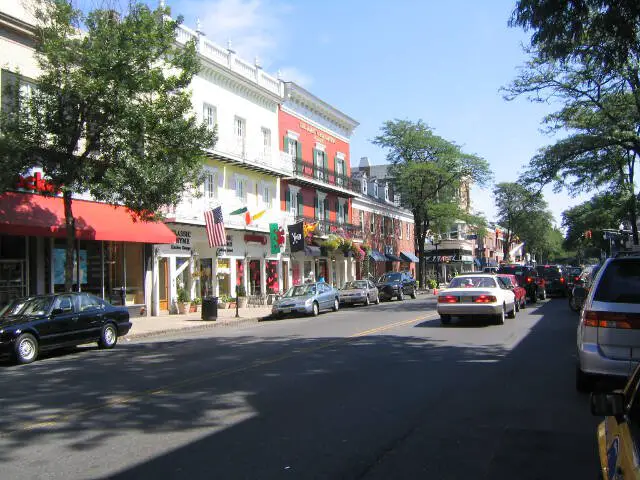
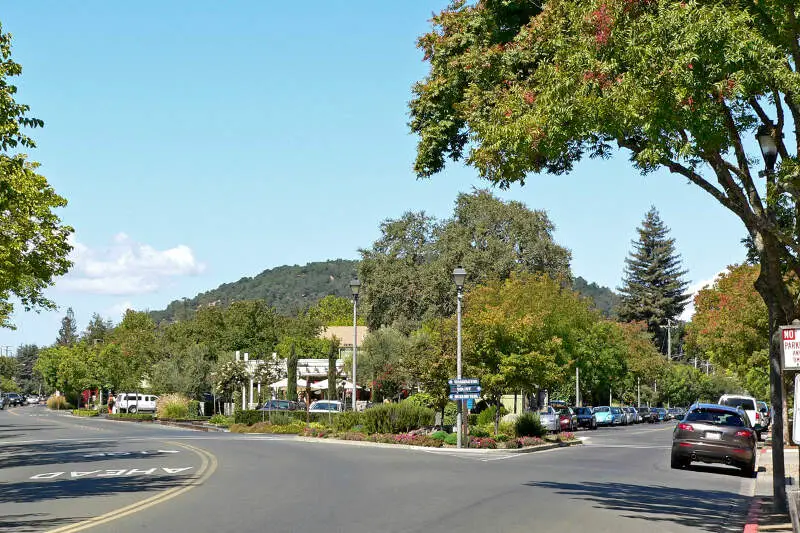
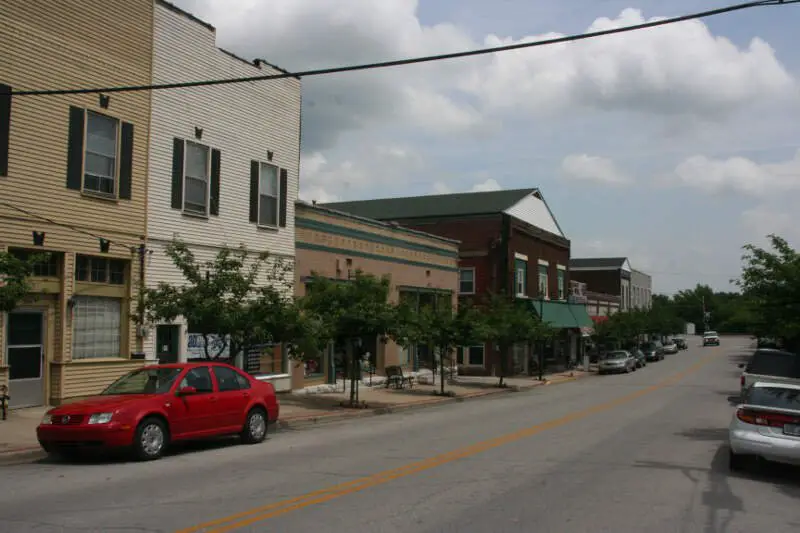
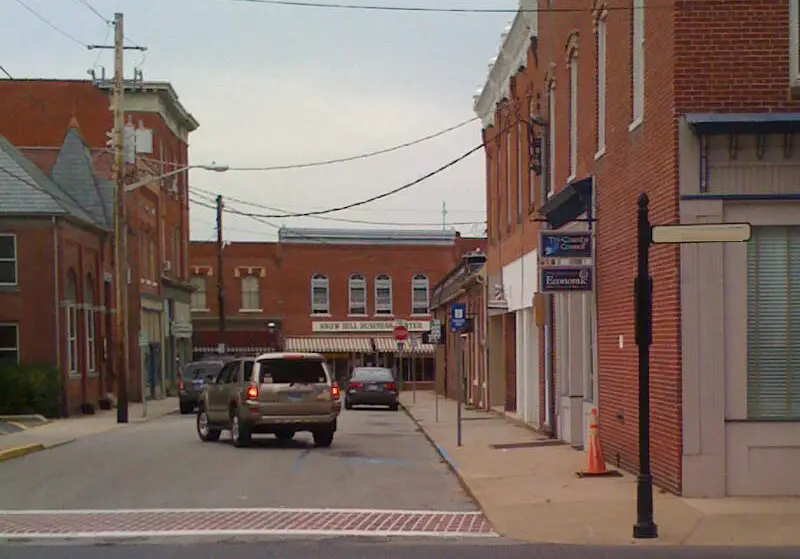
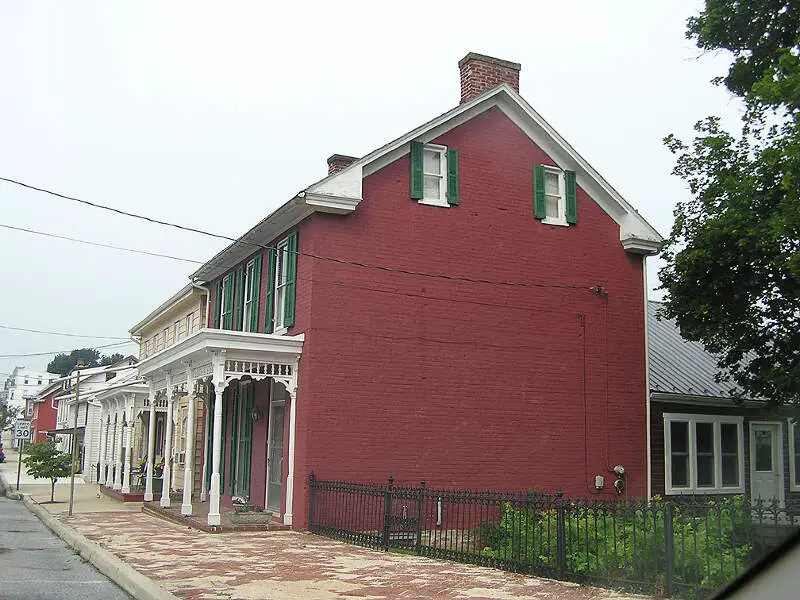
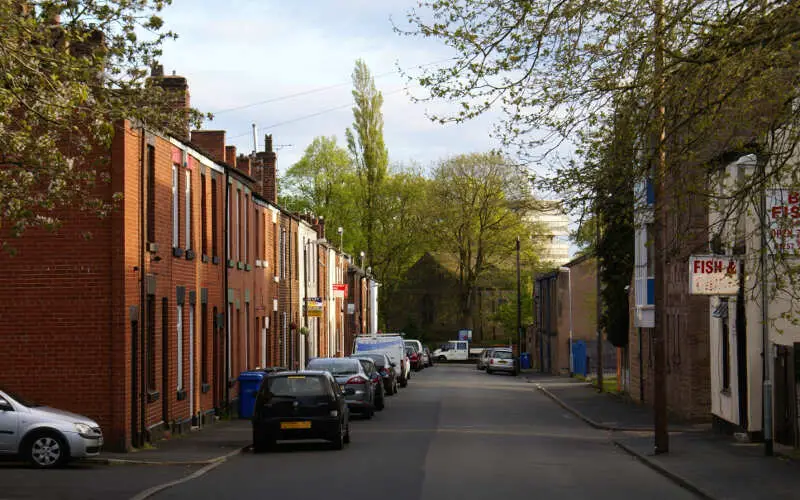
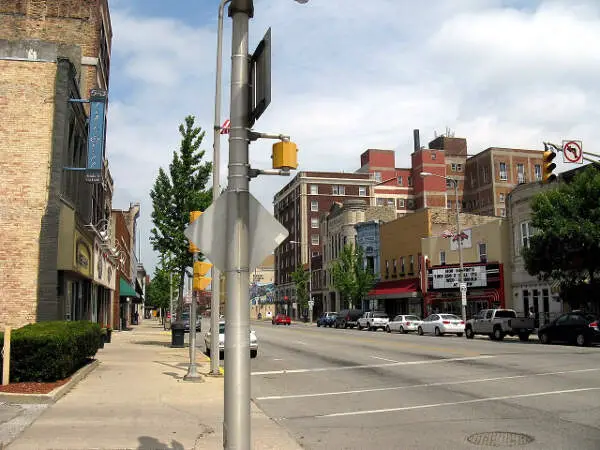
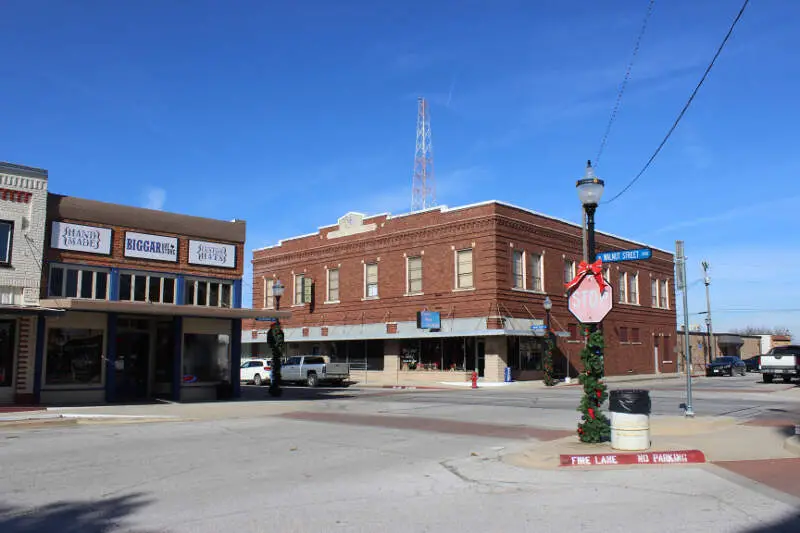
Jacksonville vs. Tampa in photos
A side-by-side look at each city.



Cost of living
Jacksonville is the cheaper city overall — 6% higher in Tampa than its rival. Index baseline: 100 = national average.
| Living expense | Jacksonville | Tampa | US average |
|---|---|---|---|
| Overall | 109 | 116 | 100 |
| Services | 102 | 107 | 100 |
| Groceries | 109 | 105 | 100 |
| Health | 109 | 134 | 100 |
| Housing | 108 | 105 | 100 |
| Transportation | 118 | 113 | 100 |
| Utilities | 112 | 104 | 100 |
Lower index = cheaper. 100 = U.S. national average. Bar inside each cell scales relative to the highest value in the table.
Sources: HomeSnacks Cost of Living indices, normalized so 100 = U.S. national average. Drill in: Jacksonville cost of living, Tampa cost of living, or the cheapest cities in America.
Housing breakdown
Home prices are higher in Tampa. Compare absolute price and price-to-income — a $500k home in a $100k-income city is very different from one in a $50k-income city.
| Metric | Jacksonville | Tampa | United States |
|---|---|---|---|
| Median Home Value | $282,894 | $374,888 | $332,700 |
| Median Rent | $1,465 | $1,701 | $1,413 |
| Median Income | $69,872 | $75,475 | $80,734 |
| Home Value To Income | 4.0x | 5.0x | 4.1x |
| Rent To Monthly Income | 0.25x | 0.27x | 0.21x |
Source: U.S. Census Bureau ACS 2020-2024. See also states with the highest rent in America.
Crime
Tampa is the safer city — total crime rate of 1,910 per 100k people vs 3,569 for Jacksonville. US average: 2,119.
| Crime (per 100k) | Jacksonville | Tampa | US average |
|---|---|---|---|
| Total crime | 3,569 | 1,910 | 2,119 |
| Murder | 15 | 9 | 5 |
| Robbery | 101 | 59 | 61 |
| Aggravated Assault | 532 | 335 | 256 |
| Violent Crime | 698 | 445 | 359 |
| Burglary | 419 | 167 | 229 |
| Larceny | 2,129 | 1,155 | 1,272 |
| Car Theft | 323 | 143 | 259 |
| Property Crime | 2,871 | 1,465 | 1,760 |
Lower = safer. Bar inside each cell scales relative to the highest crime rate in the table.
Source: FBI Uniform Crime Reporting (2024). All rates are per 100,000 people. City pages: Jacksonville crime, Tampa crime. See also: safest cities in America.
Diversity
Tampa is more racially diverse — lower HHI (closer to 0) means a more even mix across groups.
| Group | Jacksonville | Tampa | United States |
|---|---|---|---|
| White | 46.8% | 44.3% | 57.4% |
| African American | 29.3% | 19.5% | 11.9% |
| American Indian | 0.1% | 0.1% | 0.5% |
| Asian | 5.0% | 4.7% | 5.9% |
| Hawaiian | 0.1% | 0.1% | 0.2% |
| Other | 0.8% | 0.7% | 0.6% |
| Two Or More | 5.3% | 4.4% | 4.3% |
| Hispanic | 12.6% | 26.2% | 19.3% |
Source: U.S. Census ACS 2020-2024. Lower HHI = more even racial mix. See also: most diverse cities in America.
SnackAbility — overall quality of life
Tampa scores higher overall — 6/10 vs 5/10. SnackAbility is our 1–10 quality-of-life score; the median U.S. city scores a 7.
Scores are 0–10; both bars share the same scale.
SnackAbility is a HomeSnacks proprietary 1–10 score blending jobs, housing, education, commute, amenities, affordability, crime, and diversity. Median U.S. city ≈ 7. Data: Census, BLS, FBI. See also: best places to live in America.
Getting around: Jacksonville vs. Tampa
How each city handles commuting, transit, walkability, and car culture — the day-to-day reality that shapes where you'd actually want to live.
Jacksonville is one of the largest U.S. cities by land area, which means you're almost certainly driving. The Jacksonville Transportation Authority runs buses and a downtown Skyway monorail, but neither reaches the suburban corridors where most people live. Plan on I-95 and I-10 as your daily routes, and expect backups near the Fuller Warren and Dames Point Bridge interchanges at rush hour.
Tampa is just as car-dependent, but its smaller footprint makes errands feel less like an expedition. The HART bus network and TECO Line Streetcar connect downtown, Ybor City, and the Channel District, giving walkable-neighborhood residents a real option for short trips. Tampa International Airport ranks among the most passenger-friendly in the country, which matters if your job involves regular travel.
Neither city has light rail, but Tampa's denser urban core gives it a slight edge on practical transit.
Jobs and careers in Jacksonville vs. Tampa
The local job market, dominant industries, and which city to choose based on your career.
Jacksonville's economy centers on financial services, logistics, and healthcare. TIAA, Fidelity Investments, and Bank of America all run large back-office and operations centers here, and the city's deepwater port draws Amazon and other distribution players. Mayo Clinic's Jacksonville campus is a major healthcare anchor.
Median household income in Jacksonville sits at $69,872, which trails Tampa. That gap partly reflects Jacksonville's lower cost of living index of 109 versus Tampa's 116.
Tampa's job market is broader, with major employers in finance, tech, and defense. Raymond James Financial, Citigroup, and Centene are all heavily staffed here, and MacDill Air Force Base anchors a substantial defense and contracting sector. Median household income is $75,475, reflecting stronger demand for professional roles.
The Westshore business district and the new Water Street development keep attracting relocating companies, and salaries have trended up as a result.
Weather and climate
What to expect day-to-day — sun, fog, heat, rain, and the seasonal extremes that shape the lifestyle.
Both cities sit in Florida's humid subtropical zone, so hot summers are guaranteed either way. Jacksonville's further-north position brings slightly cooler winters: expect occasional nights in the low 30s and a rare frost, which Tampa almost never sees. Summer highs in both cities push into the low 90s, and afternoon thunderstorms from June through September drop most of the year's rainfall in fast-moving bursts.
Tampa's position along Tampa Bay and closer to the Gulf keeps its winters a few degrees milder. That same geography puts it squarely in Florida's historic hurricane corridor; the city had a long streak of near-misses before Hurricane Milton made landfall nearby in 2024. Jacksonville carries Atlantic hurricane risk too, but its northeast Florida position offers somewhat more warning time and a different storm-track exposure.
Neither city is hurricane-free. Plan accordingly.
Culture, nightlife, and entertainment
Food, music, neighborhoods, and the city vibe that gives each place its personality.
Jacksonville's cultural life is spread across a large metro, but Riverside and Avondale are the real hub. Five Points has independent bars, local restaurants, and live music in a walkable strip that feels neighborhood-rooted rather than developer-manufactured. Jacksonville Beach and Neptune Beach add a separate coastal-bar and casual-dining scene, and MOCA Jacksonville and the Cummer Museum of Art and Gardens cover the fine arts.
Tampa is more concentrated and, by most measures, more active after dark. Ybor City, the historic Cuban cigar district, anchors the nightlife with live music venues, late-night Latin restaurants, and clubs along Seventh Avenue that stay busy well past midnight. Hyde Park Village offers a quieter, upscale dining-and-cocktail alternative.
The Channel District and Water Street development add a newer, sleeker entertainment zone on top of all that. If walkable nightlife density matters to you, Tampa has a real advantage over Jacksonville.
Outdoor activities and day trips
Parks, beaches, hikes, and the weekend escapes that define life outside the city limits.
Jacksonville has more protected public land than most large cities. The Timucuan Ecological and Historic Preserve covers more than 46,000 acres of coastal wetlands along the St. Johns River, and Little Talbot Island State Park offers uncrowded Atlantic beaches a short drive from downtown. Kayakers and paddleboarders work the St. Johns constantly, and Amelia Island to the north is an easy day trip for a quieter barrier-island escape.
Tampa's outdoor scene is built around Gulf access. Fort De Soto Park, at the southern tip of Pinellas County, consistently ranks among the best beaches in the United States, and Caladesi Island State Park is a near-undeveloped Gulf beach reachable by ferry. Hillsborough River State Park has kayaking and hiking right in the metro.
Clearwater Beach and St. Pete are about 45 minutes away, close enough for a spontaneous afternoon but far enough to feel like a genuine trip out of town.
Bottom line: which city is right for you?
Based on the head-to-head data above, here's the short version — pick the city that lines up with what you actually care about.
Choose Jacksonville if you prioritize…
- a lower cost of living (cheaper groceries, services, and day-to-day expenses).
Choose Tampa if you prioritize…
- lower crime — a safer place to live, work, and raise a family.
- more affordable housing relative to Jacksonville.
- a more racially diverse community (lower HHI on Census data).
- a higher overall SnackAbility quality-of-life score.
Methodology: winners are picked from public data — U.S. Census Bureau ACS (income, home value, rent, race/HHI), FBI Uniform Crime Reporting (crime rates per 100k), and HomeSnacks' proprietary SnackAbility quality-of-life score, which blends Bureau of Labor Statistics data with the above.
Other comparisons
Still weighing your options? See how these two cities stack up against other places we've compared head-to-head.