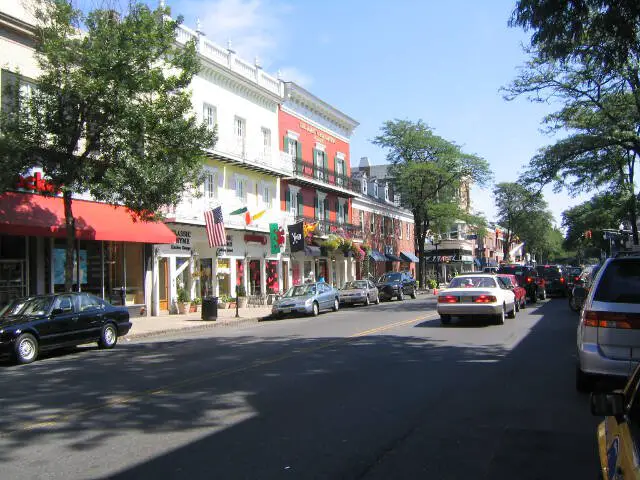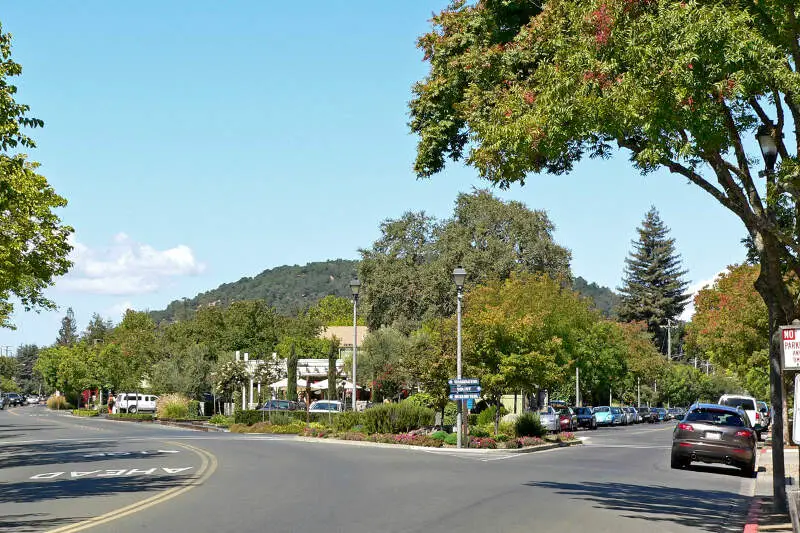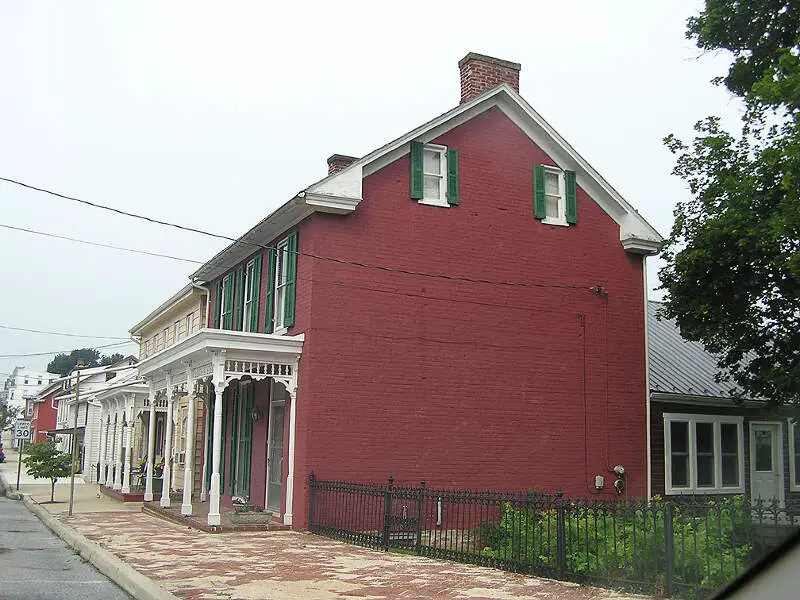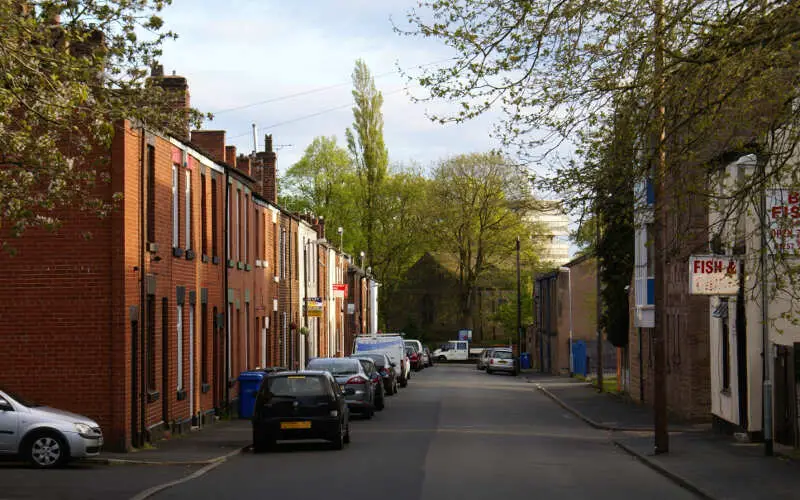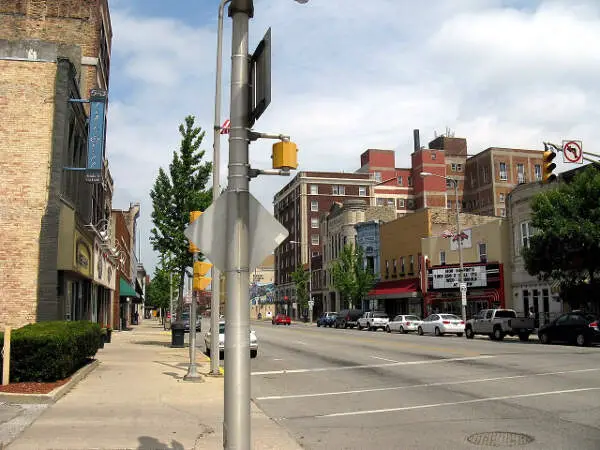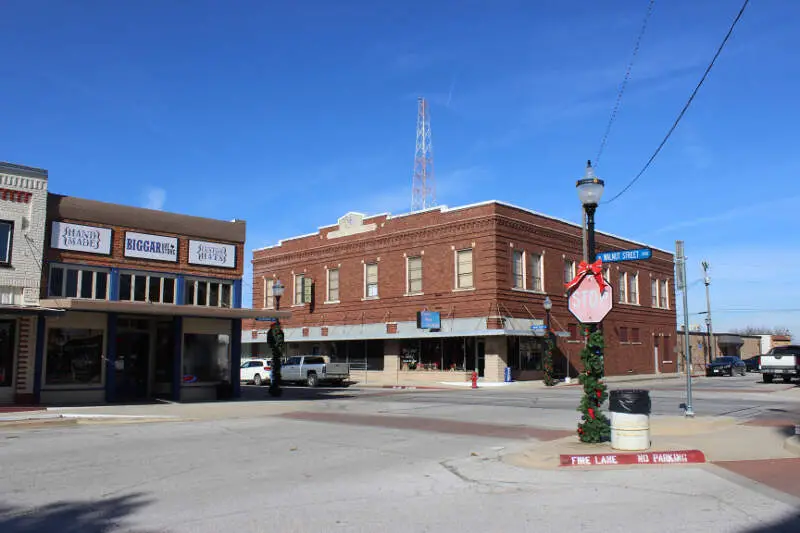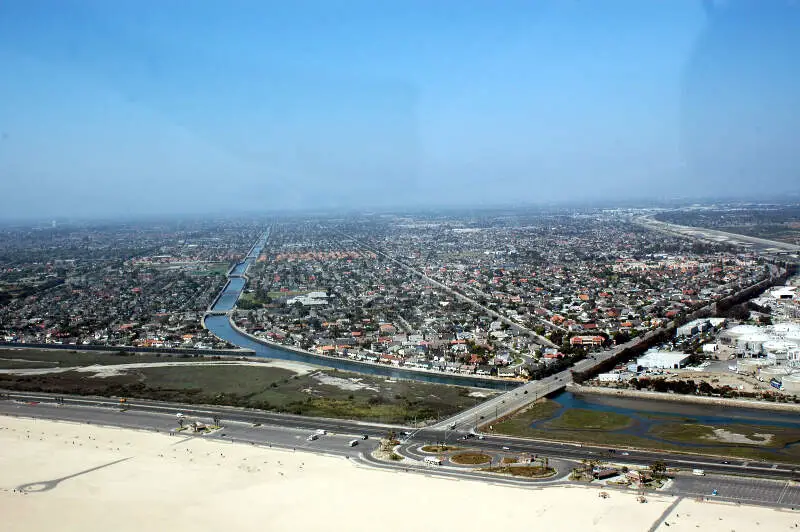
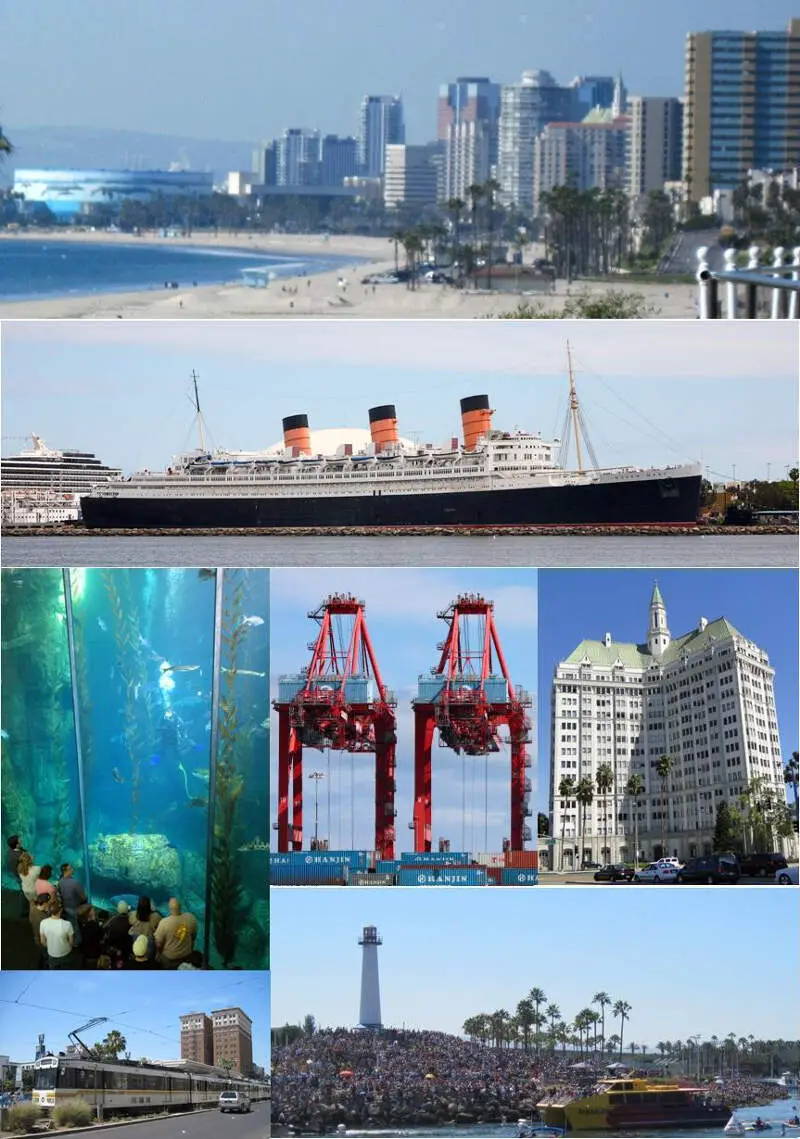
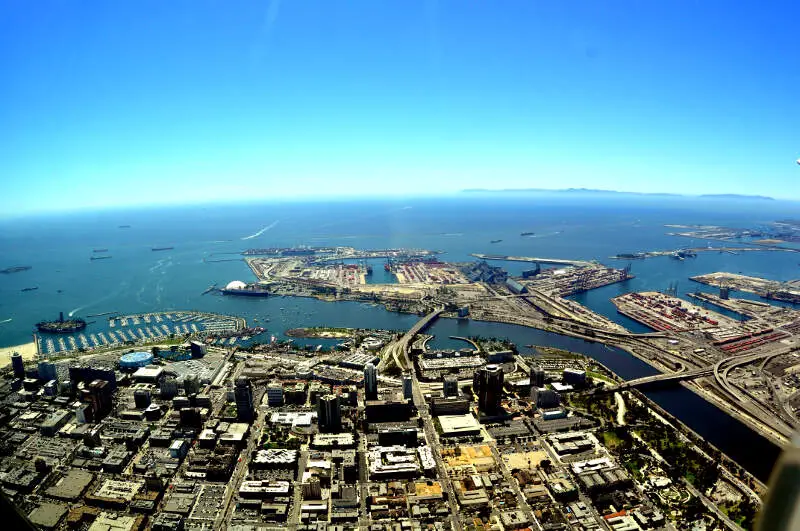
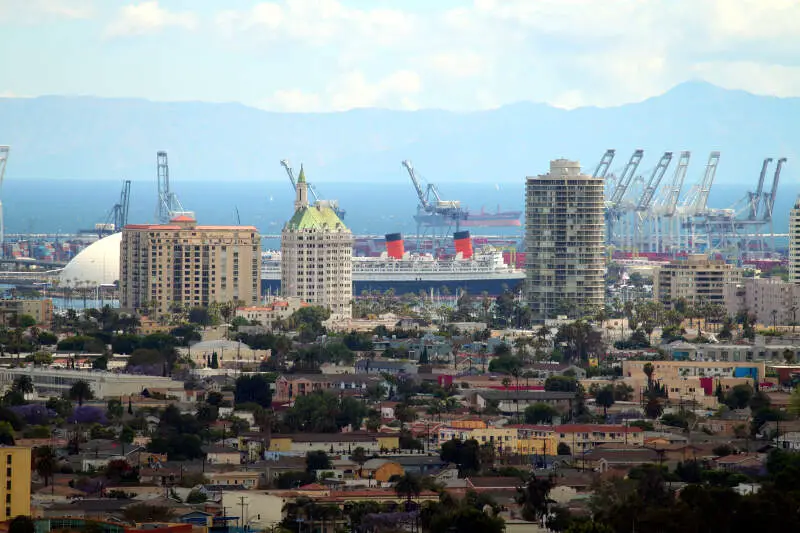
Long Beach vs. Huntington Beach in photos
A side-by-side look at each city.

Cost of living
Long Beach is the cheaper city overall — 16% higher in Huntington Beach than its rival. Index baseline: 100 = national average.
| Living expense | Long Beach | Huntington Beach | US average |
|---|---|---|---|
| Overall | 163 | 194 | 100 |
| Services | 110 | 112 | 100 |
| Groceries | 119 | 118 | 100 |
| Health | 267 | 373 | 100 |
| Housing | 118 | 120 | 100 |
| Transportation | 121 | 122 | 100 |
| Utilities | 124 | 124 | 100 |
Lower index = cheaper. 100 = U.S. national average. Bar inside each cell scales relative to the highest value in the table.
Sources: HomeSnacks Cost of Living indices, normalized so 100 = U.S. national average. Drill in: Long Beach cost of living, Huntington Beach cost of living, or the cheapest cities in America.
Housing breakdown
Home prices are higher in Long Beach. Compare absolute price and price-to-income — a $500k home in a $100k-income city is very different from one in a $50k-income city.
| Metric | Long Beach | Huntington Beach | United States |
|---|---|---|---|
| Median Home Value | $857,860 | $1,366,657 | $332,700 |
| Median Rent | $1,871 | $2,510 | $1,413 |
| Median Income | $87,430 | $120,919 | $80,734 |
| Home Value To Income | 9.8x | 11.3x | 4.1x |
| Rent To Monthly Income | 0.26x | 0.25x | 0.21x |
Source: U.S. Census Bureau ACS 2020-2024. See also states with the highest rent in America.
Crime
Huntington Beach is the safer city — total crime rate of 2,196 per 100k people vs 4,155 for Long Beach. US average: 2,119.
| Crime (per 100k) | Long Beach | Huntington Beach | US average |
|---|---|---|---|
| Total crime | 4,155 | 2,196 | 2,119 |
| Murder | 8 | 3 | 5 |
| Robbery | 223 | 51 | 61 |
| Aggravated Assault | 400 | 119 | 256 |
| Violent Crime | 676 | 207 | 359 |
| Burglary | 705 | 201 | 229 |
| Larceny | 1,796 | 1,644 | 1,272 |
| Car Theft | 978 | 144 | 259 |
| Property Crime | 3,479 | 1,989 | 1,760 |
Lower = safer. Bar inside each cell scales relative to the highest crime rate in the table.
Source: FBI Uniform Crime Reporting (2024). All rates are per 100,000 people. City pages: Long Beach crime, Huntington Beach crime. See also: safest cities in America.
Diversity
Long Beach is more racially diverse — lower HHI (closer to 0) means a more even mix across groups.
| Group | Long Beach | Huntington Beach | United States |
|---|---|---|---|
| White | 26.2% | 59.0% | 57.4% |
| African American | 11.4% | 1.3% | 11.9% |
| American Indian | 0.3% | 0.3% | 0.5% |
| Asian | 12.7% | 13.0% | 5.9% |
| Hawaiian | 0.6% | 0.4% | 0.2% |
| Other | 0.5% | 0.6% | 0.6% |
| Two Or More | 4.5% | 6.6% | 4.3% |
| Hispanic | 43.8% | 18.8% | 19.3% |
Source: U.S. Census ACS 2020-2024. Lower HHI = more even racial mix. See also: most diverse cities in America.
SnackAbility — overall quality of life
Huntington Beach scores higher overall — 8.5/10 vs 7/10. SnackAbility is our 1–10 quality-of-life score; the median U.S. city scores a 7.
Scores are 0–10; both bars share the same scale.
SnackAbility is a HomeSnacks proprietary 1–10 score blending jobs, housing, education, commute, amenities, affordability, crime, and diversity. Median U.S. city ≈ 7. Data: Census, BLS, FBI. See also: best places to live in America.
Getting around: Long Beach vs. Huntington Beach
How each city handles commuting, transit, walkability, and car culture — the day-to-day reality that shapes where you'd actually want to live.
Long Beach has a clear transit advantage over Huntington Beach. The Metro A Line (Blue Line) connects downtown Long Beach directly into the LA Metro rail network, making car-free commutes to central Los Angeles genuinely viable. Long Beach Transit buses cover the city fairly well, and Long Beach Airport (LGB) is a lower-stress alternative to LAX.
If you commute by car, expect congestion on the 405 and 710 freeways during peak hours.
Huntington Beach is considerably more car-dependent. There's no rail service, and OCTA bus coverage is limited outside the main corridors along Beach Boulevard and Pacific Coast Highway. Most errands require a car, and John Wayne Airport (SNA) in Santa Ana is your most practical flight option.
If you work remotely or drive everywhere, that may not be a dealbreaker. Transit riders will find Long Beach far more functional.
Jobs and careers in Long Beach vs. Huntington Beach
The local job market, dominant industries, and which city to choose based on your career.
Long Beach has a large and varied job market, with a median household income of $87,430. The Port of Long Beach is one of the busiest container ports in the world, anchoring a major logistics and trade industry. Boeing has a facility in the city, Long Beach Memorial Medical Center is a significant healthcare employer, and California State University Long Beach contributes a steady stream of educated workers and university-related jobs.
Huntington Beach households earn more: the median income is $120,919. But the local job base is narrower, tilting toward hospitality, retail, real estate, and some aerospace and engineering roles. Many residents commute to Irvine, Costa Mesa, or Los Angeles for professional work.
If you're in tech, finance, or aerospace, the Orange County job corridor is accessible from either city. Long Beach gives you a larger local market to draw from without crossing county lines.
Weather and climate
What to expect day-to-day — sun, fog, heat, rain, and the seasonal extremes that shape the lifestyle.
Both cities get classic Southern California coastal weather. Summers run warm and sunny, with daytime highs in the mid-70s to low 80s Fahrenheit, though the marine layer (locally called June Gloom) can keep mornings overcast well into July, especially near the shore. Winters are mild, with lows rarely below the mid-40s and little rain outside December through February.
Huntington Beach sits directly on the open coast, so it tends to run slightly cooler and foggier than Long Beach, especially in the western neighborhoods near the water. Long Beach's eastern inland areas warm up more during summer heat events. The gap between them is small: a bit more sea fog in Huntington Beach, a bit more warmth on summer evenings in Long Beach.
Either way, you'll spend a lot of time outdoors year-round.
Culture, nightlife, and entertainment
Food, music, neighborhoods, and the city vibe that gives each place its personality.
Long Beach has a real urban cultural identity. The East Village Arts District anchors a lively gallery and live-music scene, Belmont Shore offers a walkable stretch of boutiques and restaurants, and Pine Avenue has long been the city's nightlife spine.
The Museum of Latin American Art (MOLAA) and the Aquarium of the Pacific are two of the city's biggest cultural draws. Long Beach's LGBTQ+ community has made the city one of the most inclusive in Southern California, and the population diversity (over 455,000 residents across dozens of nationalities) shows up directly in the restaurant scene.
Huntington Beach centers its identity on surf culture, and that shapes the nightlife too. Main Street runs from the pier inland with bars, fish tacos, and live music venues that keep things casual. Pacific City adds a polished outdoor shopping and dining complex overlooking the water.
It's a slower, more relaxed social scene than Long Beach: more sunset beers on the patio than late-night clubs.
Outdoor activities and day trips
Parks, beaches, hikes, and the weekend escapes that define life outside the city limits.
Huntington Beach is the stronger draw if surfing or beach access is your priority. Its wide, sandy coastline stretches for miles and hosts the US Open of Surfing each year; the break is consistent and beginner-friendly. The bike path along PCH is flat and heavily used.
Bolsa Chica Ecological Reserve, just north of downtown, is one of the best urban wetland birding spots in Southern California, with over 300 species recorded.
Long Beach has more to offer beyond the beach. El Dorado Regional Park and Nature Center gives you 450 acres of walking trails, a duck pond, and archery ranges well inland from the coast. The LA River bike path runs through the city and connects north toward Griffith Park.
Belmont Shore and Alamitos Beach are popular but narrower than Huntington's expanses. Both cities are within easy reach of Catalina Island ferry service: Long Beach's terminal at the Queen Mary pier is one of the main departure points.
Bottom line: which city is right for you?
Based on the head-to-head data above, here's the short version — pick the city that lines up with what you actually care about.
Choose Long Beach if you prioritize…
- a lower cost of living (cheaper groceries, services, and day-to-day expenses).
- more affordable housing relative to Huntington Beach.
- a more racially diverse community (lower HHI on Census data).
Choose Huntington Beach if you prioritize…
- lower crime — a safer place to live, work, and raise a family.
- a higher overall SnackAbility quality-of-life score.
Methodology: winners are picked from public data — U.S. Census Bureau ACS (income, home value, rent, race/HHI), FBI Uniform Crime Reporting (crime rates per 100k), and HomeSnacks' proprietary SnackAbility quality-of-life score, which blends Bureau of Labor Statistics data with the above.
Other comparisons
Still weighing your options? See how these two cities stack up against other places we've compared head-to-head.