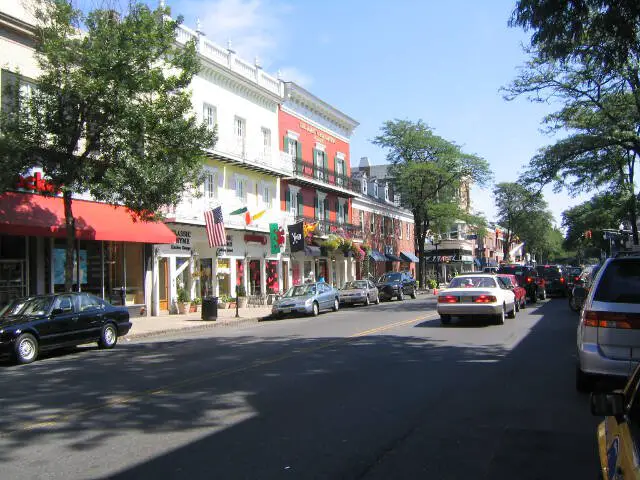
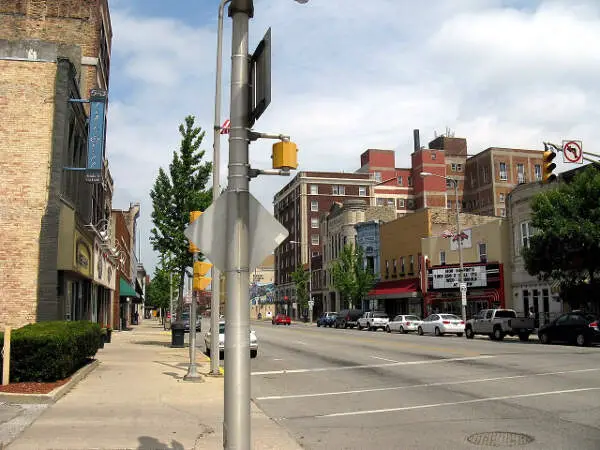
Long Beach vs. San Diego in photos
A side-by-side look at each city.






Cost of living
Long Beach is the cheaper city overall — 7% higher in San Diego than its rival. Index baseline: 100 = national average.
| Living expense | Long Beach | San Diego | US average |
|---|---|---|---|
| Overall | 163 | 175 | 100 |
| Services | 110 | 121 | 100 |
| Groceries | 119 | 121 | 100 |
| Health | 267 | 296 | 100 |
| Housing | 118 | 127 | 100 |
| Transportation | 121 | 131 | 100 |
| Utilities | 124 | 135 | 100 |
Lower index = cheaper. 100 = U.S. national average. Bar inside each cell scales relative to the highest value in the table.
Sources: HomeSnacks Cost of Living indices, normalized so 100 = U.S. national average. Drill in: Long Beach cost of living, San Diego cost of living, or the cheapest cities in America.
Housing breakdown
Home prices are higher in Long Beach. Compare absolute price and price-to-income — a $500k home in a $100k-income city is very different from one in a $50k-income city.
| Metric | Long Beach | San Diego | United States |
|---|---|---|---|
| Median Home Value | $857,860 | $1,001,264 | $332,700 |
| Median Rent | $1,871 | $2,313 | $1,413 |
| Median Income | $87,430 | $108,077 | $80,734 |
| Home Value To Income | 9.8x | 9.3x | 4.1x |
| Rent To Monthly Income | 0.26x | 0.26x | 0.21x |
Source: U.S. Census Bureau ACS 2020-2024. See also states with the highest rent in America.
Crime
San Diego is the safer city — total crime rate of 2,082 per 100k people vs 4,155 for Long Beach. US average: 2,119.
| Crime (per 100k) | Long Beach | San Diego | US average |
|---|---|---|---|
| Total crime | 4,155 | 2,082 | 2,119 |
| Murder | 8 | 3 | 5 |
| Robbery | 223 | 77 | 61 |
| Aggravated Assault | 400 | 311 | 256 |
| Violent Crime | 676 | 412 | 359 |
| Burglary | 705 | 187 | 229 |
| Larceny | 1,796 | 1,087 | 1,272 |
| Car Theft | 978 | 396 | 259 |
| Property Crime | 3,479 | 1,670 | 1,760 |
Lower = safer. Bar inside each cell scales relative to the highest crime rate in the table.
Source: FBI Uniform Crime Reporting (2024). All rates are per 100,000 people. City pages: Long Beach crime, San Diego crime. See also: safest cities in America.
Diversity
San Diego is more racially diverse — lower HHI (closer to 0) means a more even mix across groups.
| Group | Long Beach | San Diego | United States |
|---|---|---|---|
| White | 26.2% | 40.9% | 57.4% |
| African American | 11.4% | 5.3% | 11.9% |
| American Indian | 0.3% | 0.2% | 0.5% |
| Asian | 12.7% | 17.3% | 5.9% |
| Hawaiian | 0.6% | 0.4% | 0.2% |
| Other | 0.5% | 0.7% | 0.6% |
| Two Or More | 4.5% | 5.5% | 4.3% |
| Hispanic | 43.8% | 29.8% | 19.3% |
Source: U.S. Census ACS 2020-2024. Lower HHI = more even racial mix. See also: most diverse cities in America.
SnackAbility — overall quality of life
San Diego scores higher overall — 8/10 vs 7/10. SnackAbility is our 1–10 quality-of-life score; the median U.S. city scores a 7.
Scores are 0–10; both bars share the same scale.
SnackAbility is a HomeSnacks proprietary 1–10 score blending jobs, housing, education, commute, amenities, affordability, crime, and diversity. Median U.S. city ≈ 7. Data: Census, BLS, FBI. See also: best places to live in America.
Getting around: Long Beach vs. San Diego
How each city handles commuting, transit, walkability, and car culture — the day-to-day reality that shapes where you'd actually want to live.
Both cities lean heavily on cars, but the gap matters. Long Beach has the Metro A Line (the old Blue Line) linking downtown to Los Angeles, which makes it a real commute option if your job falls along that corridor. That's a rarity in Southern California.
The Long Beach Transit bus network fills in reasonably well, and the compact downtown is walkable enough that car-free errands are plausible.
San Diego's MTS Trolley runs three lines, and the Coaster heads north toward Oceanside, but the city's sprawl means most residents default to I-5, I-8, or SR-163 anyway. If you're commuting by car in San Diego, budget for serious congestion on those freeways during peak hours. The city's layout just doesn't lend itself to alternatives the way a denser grid would.
Jobs and careers in Long Beach vs. San Diego
The local job market, dominant industries, and which city to choose based on your career.
San Diego comes out ahead on both diversity and earning power. The median household income is $108,077, compared to $87,430 in Long Beach. The biotech and life-sciences cluster in Sorrento Valley and Torrey Mesa, anchored by Illumina, Pfizer's local operations, and dozens of smaller firms, is one of the strongest in the country.
Naval Base San Diego, MCAS Miramar, and a growing tech sector round out a job market with real upward mobility.
Long Beach leans on the Port of Long Beach, Boeing's production facility, Cal State Long Beach, and a healthcare sector centered on Long Beach Memorial. The port-adjacent logistics and trade industries create solid blue-collar and mid-level professional opportunities that San Diego doesn't replicate at the same scale.
Weather and climate
What to expect day-to-day — sun, fog, heat, rain, and the seasonal extremes that shape the lifestyle.
San Diego's weather reputation mostly holds up. Temperatures run from the mid-50s in winter to the low 80s in summer, humidity is low, and the city gets roughly 266 sunny days a year. Coastal neighborhoods like La Jolla and Ocean Beach deal with a marine layer most mornings in May and June (locals call it "June Gloom"), but it burns off by midday.
Long Beach sits at the northern edge of the same Mediterranean climate and gets much the same deal, though the marine layer tends to stick around longer. Proximity to the Los Angeles Basin also means more smoggy days when winds push inland air toward the coast.
Neither city sees meaningful rain or cold. On the finest margins, San Diego edges Long Beach in sunshine hours and air quality consistency.
Culture, nightlife, and entertainment
Food, music, neighborhoods, and the city vibe that gives each place its personality.
San Diego's larger population (1.39 million versus Long Beach's 456,000) means more nightlife options overall. The Gaslamp Quarter is the obvious anchor, dense with bars, clubs, and restaurants. North Park and South Park have matured into genuine craft-beer and independent-restaurant destinations, and Hillcrest has one of the strongest LGBTQ+ scenes on the West Coast.
Little Italy draws a foodie crowd on weekends.
Long Beach has plenty going on. Belmont Shore along 2nd Street has a lively local bar-and-brunch strip, the East Village Arts District sustains a real creative community, and the annual Grand Prix of Long Beach turns the downtown streets into a genuine event. Cambodia Town on Anaheim Street, the largest Cambodian community concentration in the U.S., gives Long Beach a cultural character that San Diego's more homogenized neighborhoods often lack.
Outdoor activities and day trips
Parks, beaches, hikes, and the weekend escapes that define life outside the city limits.
San Diego builds serious outdoor recreation into its geography. Torrey Pines State Natural Reserve puts wild coastal bluffs and trails minutes from the city. Balboa Park's 1,200 acres hold gardens, museums, and running paths, and Mission Bay is set up for kayaking, paddleboarding, and cycling.
Point Loma, La Jolla Cove, and the surf breaks at Sunset Cliffs round out the local inventory.
Long Beach has its own appeal. Alamitos Bay is calm enough for sailing and rowing, El Dorado Regional Park is a genuine nature sanctuary in the middle of suburbia, and the beach strip from Belmont Shore toward Seal Beach is good for cycling. San Diego can't match Long Beach's freeway access to the San Gabriel Mountains for hiking and skiing, or the broader LA trail network, so the range of day trips tilts Long Beach's way even if the local options are thinner.
Bottom line: which city is right for you?
Based on the head-to-head data above, here's the short version — pick the city that lines up with what you actually care about.
Choose Long Beach if you prioritize…
- a lower cost of living (cheaper groceries, services, and day-to-day expenses).
- more affordable housing relative to San Diego.
Choose San Diego if you prioritize…
- lower crime — a safer place to live, work, and raise a family.
- a more racially diverse community (lower HHI on Census data).
- a higher overall SnackAbility quality-of-life score.
Methodology: winners are picked from public data — U.S. Census Bureau ACS (income, home value, rent, race/HHI), FBI Uniform Crime Reporting (crime rates per 100k), and HomeSnacks' proprietary SnackAbility quality-of-life score, which blends Bureau of Labor Statistics data with the above.
Other comparisons
Still weighing your options? See how these two cities stack up against other places we've compared head-to-head.