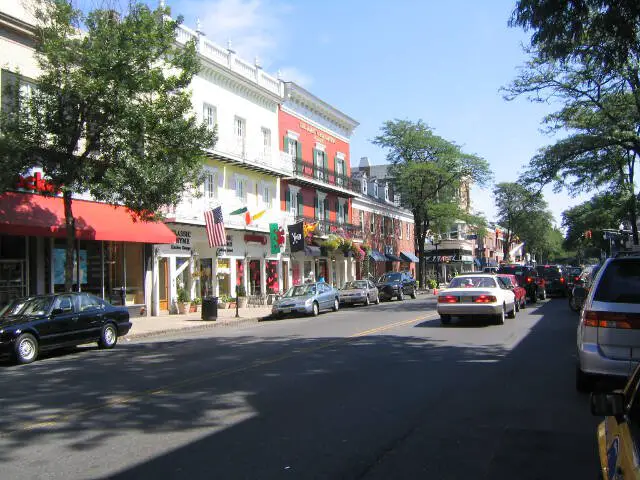
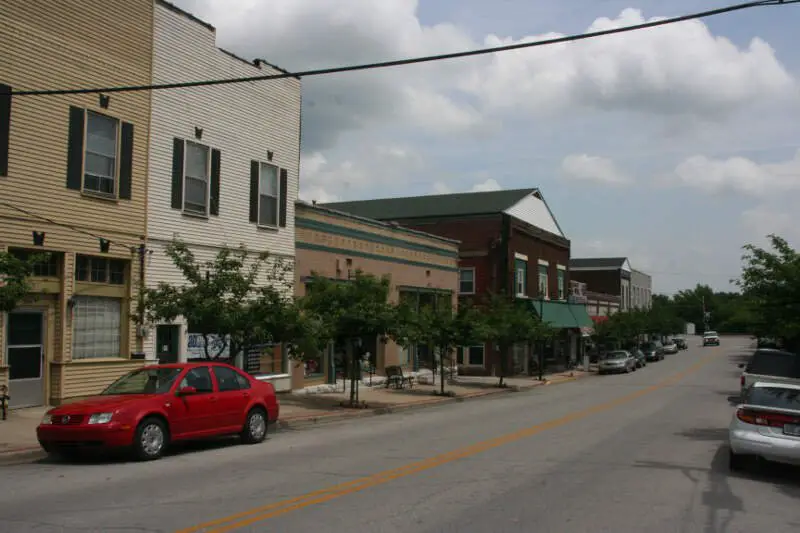
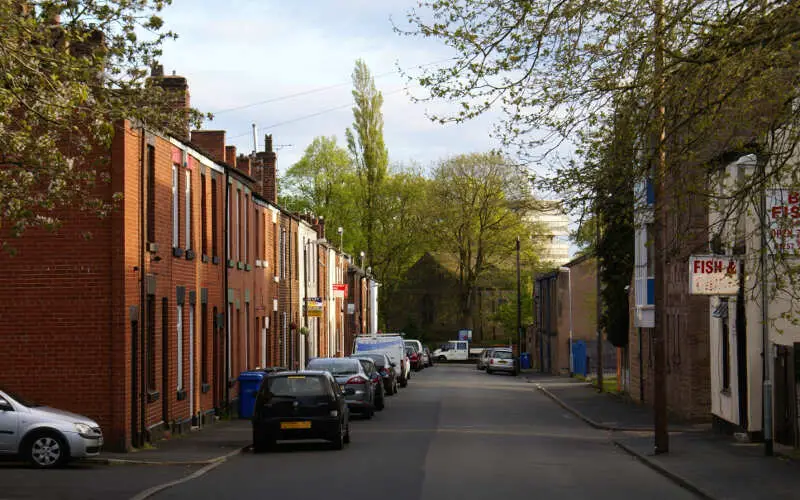
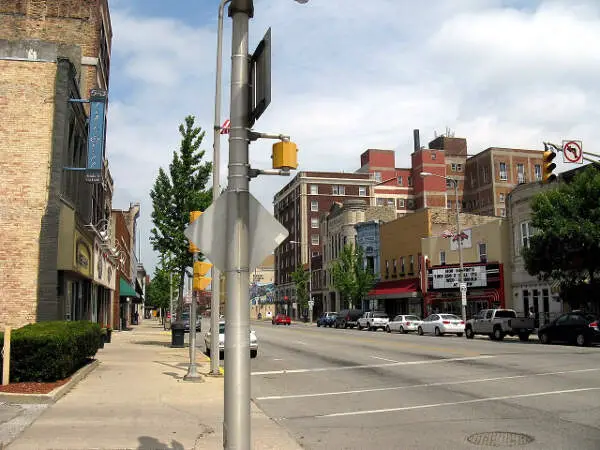
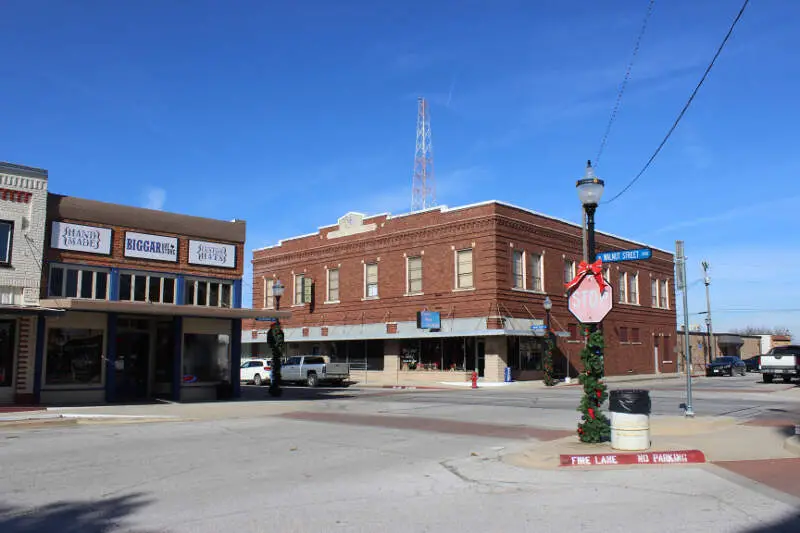
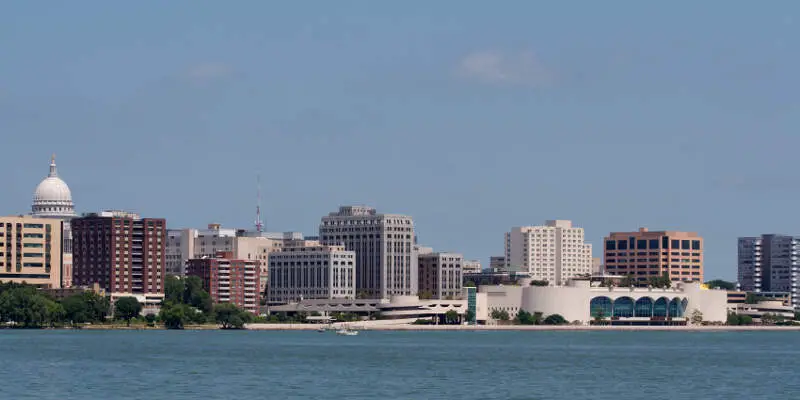
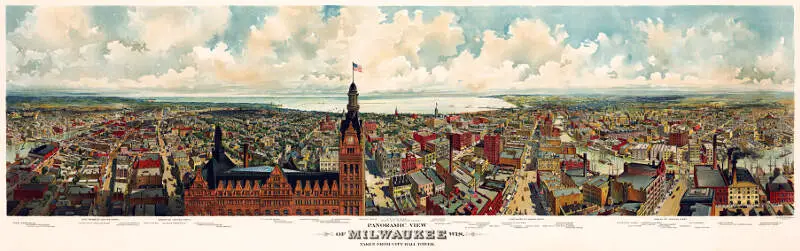
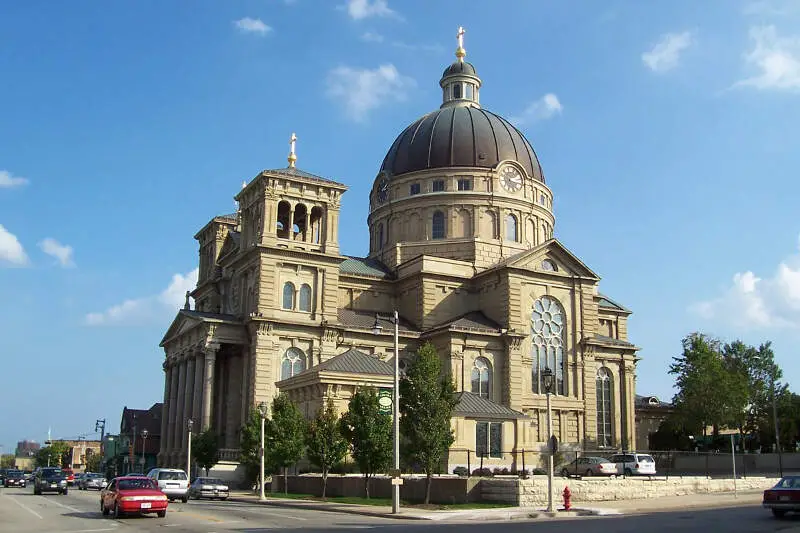
Madison vs. Milwaukee in photos
A side-by-side look at each city.



Cost of living
Milwaukee is the cheaper city overall — 16% higher in Madison than its rival. Index baseline: 100 = national average.
| Living expense | Madison | Milwaukee | US average |
|---|---|---|---|
| Overall | 110 | 95 | 100 |
| Services | 97 | 101 | 100 |
| Groceries | 95 | 98 | 100 |
| Health | 138 | 77 | 100 |
| Housing | 97 | 102 | 100 |
| Transportation | 106 | 104 | 100 |
| Utilities | 100 | 103 | 100 |
Lower index = cheaper. 100 = U.S. national average. Bar inside each cell scales relative to the highest value in the table.
Sources: HomeSnacks Cost of Living indices, normalized so 100 = U.S. national average. Drill in: Madison cost of living, Milwaukee cost of living, or the cheapest cities in America.
Housing breakdown
Home prices are higher in Madison. Compare absolute price and price-to-income — a $500k home in a $100k-income city is very different from one in a $50k-income city.
| Metric | Madison | Milwaukee | United States |
|---|---|---|---|
| Median Home Value | $423,766 | $220,136 | $332,700 |
| Median Rent | $1,413 | $1,059 | $1,413 |
| Median Income | $78,050 | $54,234 | $80,734 |
| Home Value To Income | 5.4x | 4.1x | 4.1x |
| Rent To Monthly Income | 0.22x | 0.23x | 0.21x |
Source: U.S. Census Bureau ACS 2020-2024. See also states with the highest rent in America.
Crime
Madison is the safer city — total crime rate of 2,121 per 100k people vs 4,132 for Milwaukee. US average: 2,119.
| Crime (per 100k) | Madison | Milwaukee | US average |
|---|---|---|---|
| Total crime | 2,121 | 4,132 | 2,119 |
| Murder | 2 | 24 | 5 |
| Robbery | 34 | 308 | 61 |
| Aggravated Assault | 193 | 1,031 | 256 |
| Violent Crime | 256 | 1,431 | 359 |
| Burglary | 158 | 388 | 229 |
| Larceny | 1,595 | 1,255 | 1,272 |
| Car Theft | 111 | 1,057 | 259 |
| Property Crime | 1,865 | 2,701 | 1,760 |
Lower = safer. Bar inside each cell scales relative to the highest crime rate in the table.
Source: FBI Uniform Crime Reporting (2024). All rates are per 100,000 people. City pages: Madison crime, Milwaukee crime. See also: safest cities in America.
Diversity
Milwaukee is more racially diverse — lower HHI (closer to 0) means a more even mix across groups.
| Group | Madison | Milwaukee | United States |
|---|---|---|---|
| White | 69.6% | 31.7% | 57.4% |
| African American | 7.2% | 37.9% | 11.9% |
| American Indian | 0.2% | 0.3% | 0.5% |
| Asian | 8.0% | 5.0% | 5.9% |
| Hawaiian | 0.0% | 0.0% | 0.2% |
| Other | 0.5% | 0.3% | 0.6% |
| Two Or More | 5.2% | 3.9% | 4.3% |
| Hispanic | 9.4% | 20.9% | 19.3% |
Source: U.S. Census ACS 2020-2024. Lower HHI = more even racial mix. See also: most diverse cities in America.
SnackAbility — overall quality of life
Madison scores higher overall — 8.5/10 vs 4/10. SnackAbility is our 1–10 quality-of-life score; the median U.S. city scores a 7.
Scores are 0–10; both bars share the same scale.
SnackAbility is a HomeSnacks proprietary 1–10 score blending jobs, housing, education, commute, amenities, affordability, crime, and diversity. Median U.S. city ≈ 7. Data: Census, BLS, FBI. See also: best places to live in America.
Getting around: Madison vs. Milwaukee
How each city handles commuting, transit, walkability, and car culture — the day-to-day reality that shapes where you'd actually want to live.
Madison leans heavily on bikes and buses. It consistently ranks among the most bikeable mid-size cities in the country, and Metro Transit covers most of the city reasonably well for a place its size. If you commute by car, the smaller footprint means you'll rarely sit in the kind of gridlock that plagues larger metros.
The isthmus layout does funnel traffic on busy corridors like John Nolen Drive and East Washington Avenue, so proximity to downtown matters.
Milwaukee runs the Milwaukee County Transit System (MCTS) across a much larger footprint, and The Hop streetcar handles a narrow downtown loop (useful for Third Ward and Fiserv Forum trips, but not a daily commuter workhorse). Most Milwaukeeans drive, and at roughly double the population, freeway congestion on I-94 and I-43 is a real factor during rush hour. For airport access, Milwaukee's Mitchell International is a genuine advantage over Madison's smaller Dane County Regional Airport.
Jobs and careers in Madison vs. Milwaukee
The local job market, dominant industries, and which city to choose based on your career.
Madison's economy centers on three pillars: state government (it's the capital), the University of Wisconsin-Madison, and a tech and healthcare corridor anchored by Epic Systems out in Verona. Add American Family Insurance and a dense biotech cluster, and you get a labor market that reflects the $78,050 median household income, well above Milwaukee's $54,234. The flip side is that a cost of living index of 110 (versus the U.S. average of 100) means your paycheck stretches less far than those raw numbers suggest.
Milwaukee's job base skews toward manufacturing, finance, and healthcare: Harley-Davidson, Northwestern Mutual, Kohl's, Johnson Controls, and the Froedtert and Aurora health systems are all major employers. The lower median income tracks with a more working-class industrial history, but Milwaukee's cost of living index of 95 means a dollar genuinely goes further here, especially when median home values ($220,136 vs. Madison's $423,766) are in the picture.
Weather and climate
What to expect day-to-day — sun, fog, heat, rain, and the seasonal extremes that shape the lifestyle.
Both cities deliver a full Wisconsin winter: expect months of sub-freezing temperatures, significant snowfall, and wind chills that make you question your life choices in January and February. Madison sits inland on the isthmus between Lake Mendota and Lake Monona, so it gets the cold without much lake moderation. Summers are warm and humid, with July highs regularly in the mid-80s and enough thunderstorm activity to keep things interesting.
Milwaukee sits right on Lake Michigan, which acts as a thermostat in both directions: summers are slightly cooler and more pleasant along the lakefront, but the lake feeds enhanced snowfall on the south shore during winter. If you're moving from somewhere with mild winters, neither city will ease you in gently, but Milwaukee's lakefront breezes make June through September genuinely lovely, while Madison's landlocked summers can feel stickier and hotter inland.
Culture, nightlife, and entertainment
Food, music, neighborhoods, and the city vibe that gives each place its personality.
Madison punches above its weight culturally for a city of 278,000. State Street connects the Capitol Square to the UW-Madison campus, concentrating most of the bars, independent restaurants, and live-music venues; the Memorial Union Terrace on the lake is a genuine institution. The Overture Center hosts touring Broadway productions and the Madison Symphony, and the Willy Street neighborhood adds a funkier, neighborhood-bar dimension.
The college-town energy means abundant cheap eats and a younger social scene year-round.
Milwaukee is the bigger cultural stage by a wide margin. Summerfest — the self-described world's largest music festival — runs 11 days on the lakefront each summer. The Milwaukee Art Museum (its Calatrava-designed Quadracci Pavilion is unmistakable), the Historic Third Ward gallery district, Brady Street, and a Bucks game at Fiserv Forum give the city genuine big-city range.
If nightlife variety and major touring acts matter to you, Milwaukee wins the comparison without much debate.
Outdoor activities and day trips
Parks, beaches, hikes, and the weekend escapes that define life outside the city limits.
Madison's geography is its outdoor calling card: the city sits on an isthmus between Lakes Mendota and Monona, giving residents paddleboarding, kayaking, and sailing within city limits. The Capital City Trail and Military Ridge State Trail connect to a broader bike network, and Governor Nelson State Park is a quick drive for hiking and swimming. Devil's Lake State Park — about an hour away — adds bluff climbing and one of Wisconsin's best swimming beaches for a solid day trip.
Milwaukee's lakefront is Lake Michigan, and at this scale it feels almost oceanic: Bradford Beach, the Oak Leaf Trail, and the lakefront park system offer running, cycling, and summer beach days. The county park system (one of the largest per capita in the country) adds dozens of greenways and trails throughout the metro. For longer escapes, the Kettle Moraine State Forest to the west delivers serious hiking and mountain biking terrain that Madison's flatter surroundings can't quite match.
Bottom line: which city is right for you?
Based on the head-to-head data above, here's the short version — pick the city that lines up with what you actually care about.
Choose Madison if you prioritize…
- lower crime — a safer place to live, work, and raise a family.
- more affordable housing relative to Milwaukee.
- a higher overall SnackAbility quality-of-life score.
Choose Milwaukee if you prioritize…
- a lower cost of living (cheaper groceries, services, and day-to-day expenses).
- a more racially diverse community (lower HHI on Census data).
Methodology: winners are picked from public data — U.S. Census Bureau ACS (income, home value, rent, race/HHI), FBI Uniform Crime Reporting (crime rates per 100k), and HomeSnacks' proprietary SnackAbility quality-of-life score, which blends Bureau of Labor Statistics data with the above.
Other comparisons
Still weighing your options? See how these two cities stack up against other places we've compared head-to-head.