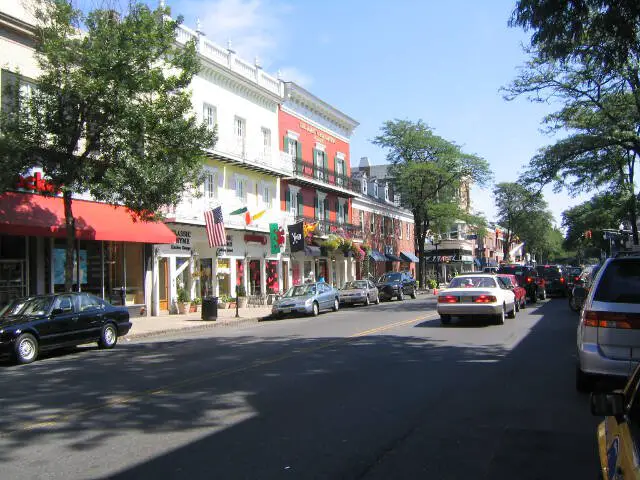
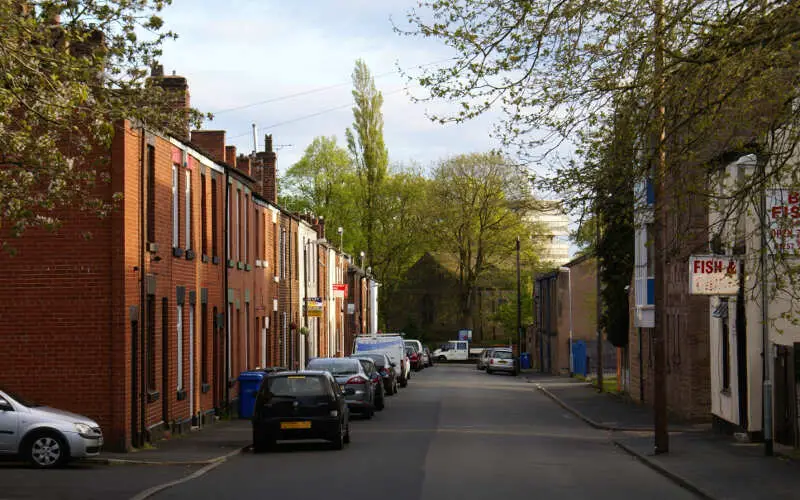
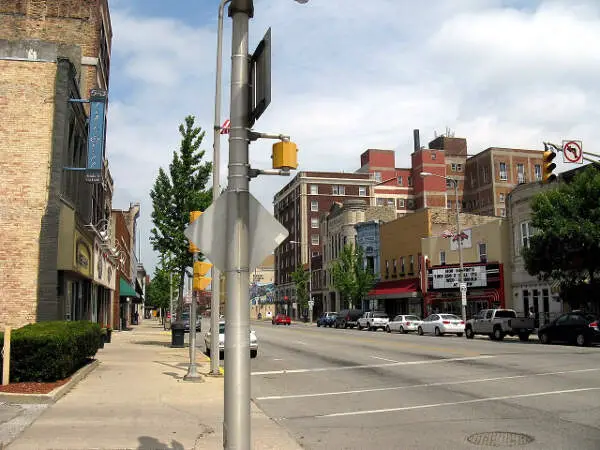
Minneapolis vs. Seattle in photos
A side-by-side look at each city.






Cost of living
Minneapolis is the cheaper city overall — 36% higher in Seattle than its rival. Index baseline: 100 = national average.
| Living expense | Minneapolis | Seattle | US average |
|---|---|---|---|
| Overall | 116 | 181 | 100 |
| Services | 103 | 107 | 100 |
| Groceries | 100 | 111 | 100 |
| Health | 142 | 326 | 100 |
| Housing | 103 | 125 | 100 |
| Transportation | 107 | 112 | 100 |
| Utilities | 105 | 123 | 100 |
Lower index = cheaper. 100 = U.S. national average. Bar inside each cell scales relative to the highest value in the table.
Sources: HomeSnacks Cost of Living indices, normalized so 100 = U.S. national average. Drill in: Minneapolis cost of living, Seattle cost of living, or the cheapest cities in America.
Housing breakdown
Home prices are higher in Seattle. Compare absolute price and price-to-income — a $500k home in a $100k-income city is very different from one in a $50k-income city.
| Metric | Minneapolis | Seattle | United States |
|---|---|---|---|
| Median Home Value | $330,882 | $868,680 | $332,700 |
| Median Rent | $1,371 | $2,030 | $1,413 |
| Median Income | $80,846 | $123,860 | $80,734 |
| Home Value To Income | 4.1x | 7.0x | 4.1x |
| Rent To Monthly Income | 0.2x | 0.2x | 0.21x |
Source: U.S. Census Bureau ACS 2020-2024. See also states with the highest rent in America.
Crime
Seattle is the safer city — total crime rate of 5,783 per 100k people vs 6,384 for Minneapolis. US average: 2,119.
| Crime (per 100k) | Minneapolis | Seattle | US average |
|---|---|---|---|
| Total crime | 6,384 | 5,783 | 2,119 |
| Murder | 17 | 7 | 5 |
| Robbery | 340 | 221 | 61 |
| Aggravated Assault | 688 | 501 | 256 |
| Violent Crime | 1,132 | 775 | 359 |
| Burglary | 606 | 1,152 | 229 |
| Larceny | 2,806 | 2,882 | 1,272 |
| Car Theft | 1,841 | 974 | 259 |
| Property Crime | 5,253 | 5,008 | 1,760 |
Lower = safer. Bar inside each cell scales relative to the highest crime rate in the table.
Source: FBI Uniform Crime Reporting (2024). All rates are per 100,000 people. City pages: Minneapolis crime, Seattle crime. See also: safest cities in America.
Diversity
Seattle is more racially diverse — lower HHI (closer to 0) means a more even mix across groups.
| Group | Minneapolis | Seattle | United States |
|---|---|---|---|
| White | 58.8% | 58.8% | 57.4% |
| African American | 18.5% | 6.4% | 11.9% |
| American Indian | 0.7% | 0.3% | 0.5% |
| Asian | 5.3% | 17.5% | 5.9% |
| Hawaiian | 0.0% | 0.2% | 0.2% |
| Other | 0.6% | 0.6% | 0.6% |
| Two Or More | 6.0% | 7.7% | 4.3% |
| Hispanic | 10.1% | 8.5% | 19.3% |
Source: U.S. Census ACS 2020-2024. Lower HHI = more even racial mix. See also: most diverse cities in America.
SnackAbility — overall quality of life
Seattle scores higher overall — 8.5/10 vs 7/10. SnackAbility is our 1–10 quality-of-life score; the median U.S. city scores a 7.
Scores are 0–10; both bars share the same scale.
SnackAbility is a HomeSnacks proprietary 1–10 score blending jobs, housing, education, commute, amenities, affordability, crime, and diversity. Median U.S. city ≈ 7. Data: Census, BLS, FBI. See also: best places to live in America.
Getting around: Minneapolis vs. Seattle
How each city handles commuting, transit, walkability, and car culture — the day-to-day reality that shapes where you'd actually want to live.
Minneapolis runs on Metro Transit's light rail: the Blue Line goes from downtown to MSP Airport, while the Green Line connects downtown to St. Paul. If you commute by bike, Minneapolis consistently ranks among the most bike-friendly large cities in the country, with protected lanes and a downtown skyway system that lets you skip winter wind chills entirely. Car traffic is manageable compared to coastal metros.
Seattle relies on King County Metro buses and Sound Transit's Link light rail, which now reaches from Angle Lake in the south up through Capitol Hill and the University District. Seattle's hills and water geography make driving genuinely frustrating; the I-5/I-90 interchange is notorious. If you work on the Eastside near Bellevue or Redmond, expect bridge bottlenecks that Minneapolis commuters simply don't deal with.
Jobs and careers in Minneapolis vs. Seattle
The local job market, dominant industries, and which city to choose based on your career.
Minneapolis has more major corporate headquarters than you'd expect for its size: Target, UnitedHealth Group, Best Buy, Medtronic, and General Mills are all based here or in close suburbs. The healthcare and medical-device sectors run especially deep, making it a strong market for life-sciences careers. The median household income of $80,846 reflects a broad, stable middle-class economy rather than a tech-skewed one.
Seattle's $123,860 median household income tells you immediately that tech dominates. Amazon's South Lake Union campus and Microsoft's Redmond headquarters pull in large pools of engineering and product talent, and a startup ecosystem follows. That income premium is real, but so is the cost of living index of 181 versus Minneapolis's 116, meaning your higher paycheck buys less than the raw numbers suggest, especially with median home values at $868,680 compared to $330,882 in Minneapolis.
Weather and climate
What to expect day-to-day — sun, fog, heat, rain, and the seasonal extremes that shape the lifestyle.
Minneapolis winters are genuinely demanding. January averages hover around 15°F, wind chills can push well below zero, and you should budget for snow tires and a serious coat. Spring and fall are short; summers run long, with lakes you can actually swim in and an outdoor festival season from May through September.
Seattle's reputation for gray drizzle is earned but slightly overstated. Winters are mild, with temperatures rarely dropping below freezing, but overcast skies and persistent light rain define October through April. You may go months without direct sun.
July and August bring reliably dry, warm days in the low-to-mid 70s with sunsets past 9 p.m. If you struggle with darkness more than cold, Minneapolis's sunny but brutal winters may suit you better than Seattle's damp gray ones.
Culture, nightlife, and entertainment
Food, music, neighborhoods, and the city vibe that gives each place its personality.
Minneapolis has a cultural footprint that surprises people unfamiliar with it. First Avenue (the venue Prince made famous) anchors a live-music scene that draws national acts despite the city's size. The Guthrie Theater on the Mississippi riverfront is one of the country's premier regional stages.
The Northeast Minneapolis Arts District has turned old industrial buildings into galleries, studios, and some of the best restaurants in the upper Midwest. Uptown and Eat Street give you dense nightlife and international food within a walkable strip.
Seattle's Capitol Hill neighborhood is its cultural and nightlife core: dense bars, independent music venues, and a long history tied to the grunge era (Nirvana, Pearl Jam, and Jimi Hendrix all claim roots here). The Museum of Pop Culture at Seattle Center is worth a full afternoon.
Pike Place Market draws tourists, but the surrounding Belltown and Lower Queen Anne neighborhoods have genuine late-night energy. Both cities have strong craft-beer scenes, though Seattle's is larger simply by population scale.
Outdoor activities and day trips
Parks, beaches, hikes, and the weekend escapes that define life outside the city limits.
Minneapolis is built around water in a way few Midwestern cities are. The Chain of Lakes (Bde Maka Ska, Lake Harriet, Cedar Lake) sits entirely within city limits and offers swimming, kayaking, and a paved loop trail used year-round by runners, cyclists, and, in winter, cross-country skiers. The Mississippi River gorge trail adds miles of wooded paths, and for longer escapes, the Boundary Waters Canoe Area is a four-hour drive north.
Seattle's outdoor access is on a different scale. Mount Rainier is roughly 90 minutes southeast with serious alpine hikes starting at Paradise, Snoqualmie Pass has ski terrain an hour from downtown, and the Olympic Peninsula (a ferry ride away) holds temperate rainforest and rugged Pacific coastline. Puget Sound works for kayakers and sailors, and if outdoor recreation is a primary factor in your decision, Seattle's proximity to Cascade and Olympic wilderness is hard to match.
Bottom line: which city is right for you?
Based on the head-to-head data above, here's the short version — pick the city that lines up with what you actually care about.
Choose Minneapolis if you prioritize…
- a lower cost of living (cheaper groceries, services, and day-to-day expenses).
Choose Seattle if you prioritize…
- lower crime — a safer place to live, work, and raise a family.
- more affordable housing relative to Minneapolis.
- a more racially diverse community (lower HHI on Census data).
- a higher overall SnackAbility quality-of-life score.
Methodology: winners are picked from public data — U.S. Census Bureau ACS (income, home value, rent, race/HHI), FBI Uniform Crime Reporting (crime rates per 100k), and HomeSnacks' proprietary SnackAbility quality-of-life score, which blends Bureau of Labor Statistics data with the above.
Other comparisons
Still weighing your options? See how these two cities stack up against other places we've compared head-to-head.