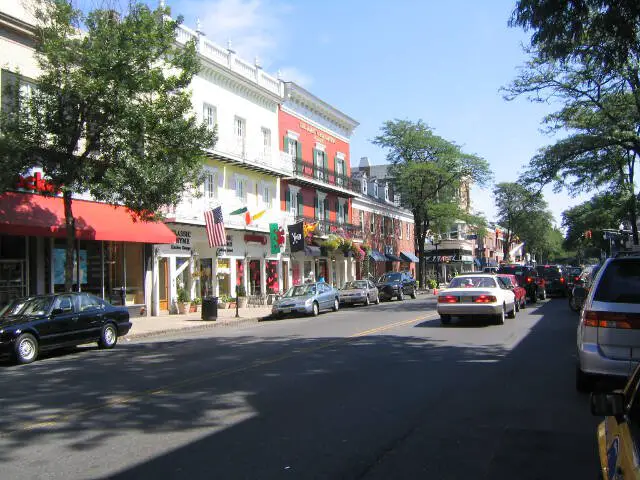
Minneapolis vs. Denver in photos
A side-by-side look at each city.





Cost of living
Minneapolis is the cheaper city overall — 18% higher in Denver than its rival. Index baseline: 100 = national average.
| Living expense | Minneapolis | Denver | US average |
|---|---|---|---|
| Overall | 116 | 142 | 100 |
| Services | 103 | 108 | 100 |
| Groceries | 100 | 107 | 100 |
| Health | 142 | 214 | 100 |
| Housing | 103 | 113 | 100 |
| Transportation | 107 | 110 | 100 |
| Utilities | 105 | 111 | 100 |
Lower index = cheaper. 100 = U.S. national average. Bar inside each cell scales relative to the highest value in the table.
Sources: HomeSnacks Cost of Living indices, normalized so 100 = U.S. national average. Drill in: Minneapolis cost of living, Denver cost of living, or the cheapest cities in America.
Housing breakdown
Home prices are higher in Denver. Compare absolute price and price-to-income — a $500k home in a $100k-income city is very different from one in a $50k-income city.
| Metric | Minneapolis | Denver | United States |
|---|---|---|---|
| Median Home Value | $330,882 | $539,666 | $332,700 |
| Median Rent | $1,371 | $1,831 | $1,413 |
| Median Income | $80,846 | $94,718 | $80,734 |
| Home Value To Income | 4.1x | 5.7x | 4.1x |
| Rent To Monthly Income | 0.2x | 0.23x | 0.21x |
Source: U.S. Census Bureau ACS 2020-2024. See also states with the highest rent in America.
Crime
Denver is the safer city — total crime rate of 5,755 per 100k people vs 6,384 for Minneapolis. US average: 2,119.
| Crime (per 100k) | Minneapolis | Denver | US average |
|---|---|---|---|
| Total crime | 6,384 | 5,755 | 2,119 |
| Murder | 17 | 10 | 5 |
| Robbery | 340 | 176 | 61 |
| Aggravated Assault | 688 | 713 | 256 |
| Violent Crime | 1,132 | 993 | 359 |
| Burglary | 606 | 708 | 229 |
| Larceny | 2,806 | 2,822 | 1,272 |
| Car Theft | 1,841 | 1,232 | 259 |
| Property Crime | 5,253 | 4,762 | 1,760 |
Lower = safer. Bar inside each cell scales relative to the highest crime rate in the table.
Source: FBI Uniform Crime Reporting (2024). All rates are per 100,000 people. City pages: Minneapolis crime, Denver crime. See also: safest cities in America.
Diversity
Denver is more racially diverse — lower HHI (closer to 0) means a more even mix across groups.
| Group | Minneapolis | Denver | United States |
|---|---|---|---|
| White | 58.8% | 54.0% | 57.4% |
| African American | 18.5% | 8.6% | 11.9% |
| American Indian | 0.7% | 0.3% | 0.5% |
| Asian | 5.3% | 3.6% | 5.9% |
| Hawaiian | 0.0% | 0.1% | 0.2% |
| Other | 0.6% | 0.5% | 0.6% |
| Two Or More | 6.0% | 4.8% | 4.3% |
| Hispanic | 10.1% | 28.0% | 19.3% |
Source: U.S. Census ACS 2020-2024. Lower HHI = more even racial mix. See also: most diverse cities in America.
SnackAbility — overall quality of life
Denver scores higher overall — 8/10 vs 7/10. SnackAbility is our 1–10 quality-of-life score; the median U.S. city scores a 7.
Scores are 0–10; both bars share the same scale.
SnackAbility is a HomeSnacks proprietary 1–10 score blending jobs, housing, education, commute, amenities, affordability, crime, and diversity. Median U.S. city ≈ 7. Data: Census, BLS, FBI. See also: best places to live in America.
Getting around: Minneapolis vs. Denver
How each city handles commuting, transit, walkability, and car culture — the day-to-day reality that shapes where you'd actually want to live.
Minneapolis built a public transit network that genuinely works for a city its size. The Metro Transit Blue and Green light rail lines connect downtown to the airport, Mall of America, and Saint Paul, and the skyway system (80 city blocks of enclosed walkways) makes car-free winters survivable. Dedicated cycling lanes throughout Uptown and along the Chain of Lakes consistently earn Minneapolis top national rankings for bike-friendliness.
Denver's RTD light rail and commuter rail system is still maturing, and most neighborhoods outside the core remain heavily car-dependent. The A Line to Denver International Airport is a genuine convenience, and the free 16th Street Mall shuttle moves people through downtown efficiently. If you commute by car, Denver's rapid growth has pushed congestion on I-25 and I-70 to frustrating levels during peak hours, a problem Minneapolis drivers on 35W know as well, though on a smaller scale given Denver's larger population.
Jobs and careers in Minneapolis vs. Denver
The local job market, dominant industries, and which city to choose based on your career.
Minneapolis punches above its weight as a corporate headquarters city. Target, Best Buy, UnitedHealth Group, General Mills, and Cargill all anchor the Twin Cities metro, giving the labor market real depth across retail, healthcare, finance, and food manufacturing. The median household income of $80,846 is solid, and a cost of living index of 116 means your paycheck goes further here than in most peer metros.
Denver's economy has tilted toward technology, aerospace, and energy, with major employers including Lockheed Martin, DISH Network, and DaVita, plus a growing tech startup corridor in RiNo and LoDo. The median household income of $94,718 looks like a clear advantage, but Denver's cost of living index of 142 (well above the national average) erodes much of it. Median rent runs $1,831 against Minneapolis's $1,371, and median home values hit $539,666 versus $330,882, so the higher salary does not go as far as the raw number suggests.
Weather and climate
What to expect day-to-day — sun, fog, heat, rain, and the seasonal extremes that shape the lifestyle.
Minneapolis winters are legitimately demanding. January averages hover around 16°F, the metro reliably collects 50-plus inches of snow per year, and the wind off the open plains makes it feel colder still.
Summers are warm, green, and long, and locals pack as much outdoor life as possible into May through September. Spring and fall are brief transitions rather than full seasons.
Denver sits at exactly one mile of elevation, which shapes its climate. Count on roughly 300 days of sunshine annually, and while the city does get snow, chinook winds frequently melt accumulations within a day or two.
Summers are hot and dry (more comfortable than Minneapolis's humidity), though afternoon thunderstorms roll through reliably from June through August. If cold, dark winters are a dealbreaker, Denver's year-round sun is a real advantage over Minneapolis.
Culture, nightlife, and entertainment
Food, music, neighborhoods, and the city vibe that gives each place its personality.
Minneapolis has a cultural footprint that surprises people who haven't visited. First Avenue (where Prince filmed "Purple Rain") still anchors a live music scene that outperforms the city's size. The Guthrie Theater overlooks the Mississippi, and the Walker Art Center brings contemporary art to the North Loop.
Neighborhoods like Uptown, Northeast Minneapolis, and Eat Street each have genuinely different dining and nightlife personalities, and the craft brewery scene runs through Nordeast and well beyond.
Denver's culture is louder and broader, matching its larger population of nearly 719,000. LoDo and the River North Arts District pack in breweries, galleries, and music venues, and Colorado's cannabis laws add a particular texture to the bar and lounge scene. Red Rocks Amphitheatre, a natural outdoor concert venue 15 miles west of downtown, hosts shows from May through October with no real Minneapolis equivalent.
Both cities reward curiosity; Denver simply offers more volume.
Outdoor activities and day trips
Parks, beaches, hikes, and the weekend escapes that define life outside the city limits.
Minneapolis leans hard into its lakes. The Chain of Lakes (Bde Maka Ska, Lake Harriet, Lake of the Isles) forms a connected trail loop drawing cyclists, runners, and paddlers from spring through fall. The Grand Rounds Scenic Byway circles much of the city on dedicated paths, and the Mississippi River gorge and Minnesota River valley offer real hiking without leaving city limits.
For genuine wilderness, the Boundary Waters Canoe Area is a long drive north but incomparable once you get there.
Denver's outdoor access stands apart for a major U.S. city. Rocky Mountain National Park sits 90 minutes away, and ski resorts including Breckenridge, Keystone, Vail, and Arapahoe Basin are within two hours. You can be hiking above treeline before lunch on a weekday.
Red Rocks Park adds trail running with dramatic elevation and views. If outdoor recreation is driving your relocation decision, Denver holds a clear advantage; Minneapolis competes on within-city accessibility, not raw mountain terrain.
Bottom line: which city is right for you?
Based on the head-to-head data above, here's the short version — pick the city that lines up with what you actually care about.
Choose Minneapolis if you prioritize…
- a lower cost of living (cheaper groceries, services, and day-to-day expenses).
Choose Denver if you prioritize…
- lower crime — a safer place to live, work, and raise a family.
- more affordable housing relative to Minneapolis.
- a more racially diverse community (lower HHI on Census data).
- a higher overall SnackAbility quality-of-life score.
Methodology: winners are picked from public data — U.S. Census Bureau ACS (income, home value, rent, race/HHI), FBI Uniform Crime Reporting (crime rates per 100k), and HomeSnacks' proprietary SnackAbility quality-of-life score, which blends Bureau of Labor Statistics data with the above.
Other comparisons
Still weighing your options? See how these two cities stack up against other places we've compared head-to-head.