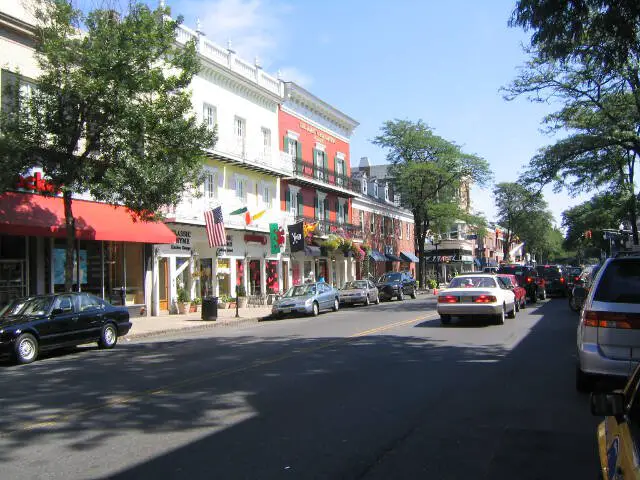
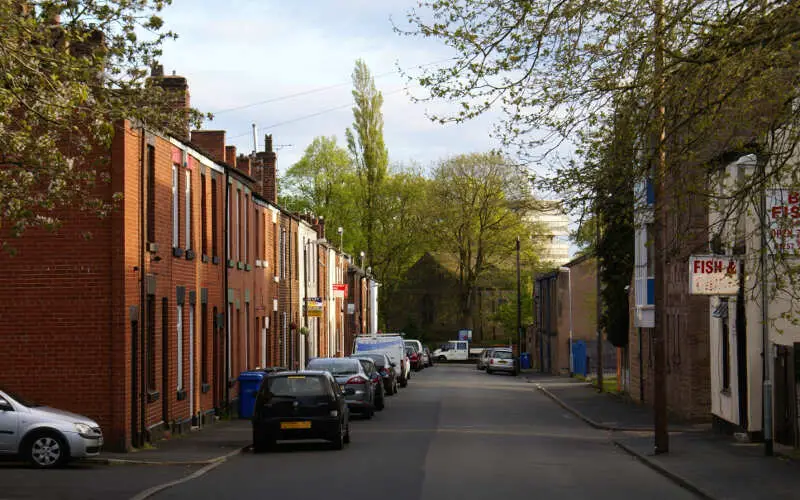
Minneapolis vs. Chicago in photos
A side-by-side look at each city.





Cost of living
Chicago is the cheaper city overall — 2% higher in Minneapolis than its rival. Index baseline: 100 = national average.
| Living expense | Minneapolis | Chicago | US average |
|---|---|---|---|
| Overall | 116 | 114 | 100 |
| Services | 103 | 103 | 100 |
| Groceries | 100 | 99 | 100 |
| Health | 142 | 140 | 100 |
| Housing | 103 | 107 | 100 |
| Transportation | 107 | 104 | 100 |
| Utilities | 105 | 103 | 100 |
Lower index = cheaper. 100 = U.S. national average. Bar inside each cell scales relative to the highest value in the table.
Sources: HomeSnacks Cost of Living indices, normalized so 100 = U.S. national average. Drill in: Minneapolis cost of living, Chicago cost of living, or the cheapest cities in America.
Housing breakdown
Home prices are higher in Minneapolis. Compare absolute price and price-to-income — a $500k home in a $100k-income city is very different from one in a $50k-income city.
| Metric | Minneapolis | Chicago | United States |
|---|---|---|---|
| Median Home Value | $330,882 | $317,282 | $332,700 |
| Median Rent | $1,371 | $1,440 | $1,413 |
| Median Income | $80,846 | $77,902 | $80,734 |
| Home Value To Income | 4.1x | 4.1x | 4.1x |
| Rent To Monthly Income | 0.2x | 0.22x | 0.21x |
Source: U.S. Census Bureau ACS 2020-2024. See also states with the highest rent in America.
Crime
Chicago is the safer city — total crime rate of 4,012 per 100k people vs 6,384 for Minneapolis. US average: 2,119.
| Crime (per 100k) | Minneapolis | Chicago | US average |
|---|---|---|---|
| Total crime | 6,384 | 4,012 | 2,119 |
| Murder | 17 | 17 | 5 |
| Robbery | 340 | 335 | 61 |
| Aggravated Assault | 688 | 128 | 256 |
| Violent Crime | 1,132 | 540 | 359 |
| Burglary | 606 | 295 | 229 |
| Larceny | 2,806 | 2,319 | 1,272 |
| Car Theft | 1,841 | 859 | 259 |
| Property Crime | 5,253 | 3,472 | 1,760 |
Lower = safer. Bar inside each cell scales relative to the highest crime rate in the table.
Source: FBI Uniform Crime Reporting (2024). All rates are per 100,000 people. City pages: Minneapolis crime, Chicago crime. See also: safest cities in America.
Diversity
Chicago is more racially diverse — lower HHI (closer to 0) means a more even mix across groups.
| Group | Minneapolis | Chicago | United States |
|---|---|---|---|
| White | 58.8% | 32.1% | 57.4% |
| African American | 18.5% | 27.4% | 11.9% |
| American Indian | 0.7% | 0.1% | 0.5% |
| Asian | 5.3% | 7.2% | 5.9% |
| Hawaiian | 0.0% | 0.0% | 0.2% |
| Other | 0.6% | 0.4% | 0.6% |
| Two Or More | 6.0% | 3.0% | 4.3% |
| Hispanic | 10.1% | 29.7% | 19.3% |
Source: U.S. Census ACS 2020-2024. Lower HHI = more even racial mix. See also: most diverse cities in America.
SnackAbility — overall quality of life
Minneapolis and Chicago tied at 7/10.
Scores are 0–10; both bars share the same scale.
SnackAbility is a HomeSnacks proprietary 1–10 score blending jobs, housing, education, commute, amenities, affordability, crime, and diversity. Median U.S. city ≈ 7. Data: Census, BLS, FBI. See also: best places to live in America.
Getting around: Minneapolis vs. Chicago
How each city handles commuting, transit, walkability, and car culture — the day-to-day reality that shapes where you'd actually want to live.
If you commute by car, both cities will test your patience. Chicago's expressways like the Dan Ryan and Kennedy can grind to a near halt during rush hour; Minneapolis traffic is lighter but still clogs on I-35W and I-94 through downtown. Chicago's CTA "L" is one of the most extensive urban rail networks in the country: the Red, Blue, and Brown lines run frequently and connect you to neighborhoods from Rogers Park to Hyde Park without a car.
Minneapolis has Metro Transit's light-rail Green and Blue lines, which are reliable but cover far less ground. Most residents drive or rely on buses for anything off the rail corridor.
For cyclists, Minneapolis is the surprise standout, consistently ranking among the top biking cities in the U.S. Protected lanes, the Midtown Greenway, and a connected trail network make it practical for daily use. Chicago has expanded its bike infrastructure significantly and Divvy bike-share is everywhere, but cycling works better in some neighborhoods than others.
If you work downtown in either city, transit is genuinely viable. If you're in the suburbs, plan on a car.
Jobs and careers in Minneapolis vs. Chicago
The local job market, dominant industries, and which city to choose based on your career.
Minneapolis punches well above its weight as a corporate headquarters city. Target, Best Buy, UnitedHealth Group, US Bancorp, General Mills, and 3M are all headquartered in the metro, giving you real depth in retail, finance, healthcare, and consumer goods. The median household income sits at $80,846, slightly above Chicago's $77,902, and the University of Minnesota anchors a growing medical research and biotech corridor.
Chicago's economy is larger and more varied. Financial services and trading firms cluster in the Loop, tech and consulting have expanded rapidly in the Fulton Market district, and United Airlines and Boeing have major operations here. The city's size means more mid-level roles and more industries to move between.
If you're early in your career and want options, Chicago's depth is hard to match. If you want a headquarters job with a real shot at leadership without relocating, Minneapolis's concentrated Fortune 500 presence is a legitimate draw.
Weather and climate
What to expect day-to-day — sun, fog, heat, rain, and the seasonal extremes that shape the lifestyle.
Minneapolis winters are serious. Average January highs hover in the teens to low 20s Fahrenheit, and wind chill can push the feels-like temperature well below zero for days at a time. Summers are warm and genuinely pleasant from June through September, and fall rivals anything in the upper Midwest.
Minneapolis residents are well-adapted to the cold; skyways connect much of downtown, so daily life doesn't stop.
Chicago earns its "Windy City" reputation in winter, though temperatures are somewhat milder than Minneapolis on average, with January highs typically in the upper 20s. The wind off Lake Michigan makes cold snaps feel brutal and can scramble weather patterns year-round. Summers are humid and hot, with July temperatures regularly pushing into the 90s.
Both cities see real seasons, but if cold winters are a dealbreaker, neither is your answer. Minneapolis is the harder assignment of the two.
Culture, nightlife, and entertainment
Food, music, neighborhoods, and the city vibe that gives each place its personality.
Minneapolis has a cultural scene that regularly surprises people expecting a quiet midwestern city. First Avenue, the club where Prince built his career, is still one of the best mid-size music venues in the country, and the local music ecosystem around it remains active. The Guthrie Theater on the Mississippi riverfront is a strong repertory company, and neighborhoods like Northeast Minneapolis and the North Loop have dense concentrations of galleries, independent restaurants, and craft breweries.
Uptown draws a younger crowd for bars and live music on weekends.
Chicago operates at a different scale. The blues and jazz traditions run deep, and venues on the North Side and in Bronzeville keep those scenes alive alongside a busy indie rock and electronic circuit. The restaurant scene runs from deep-dish institutions like Lou Malnati's to Michelin-starred spots in the West Loop.
Wicker Park, Logan Square, and Pilsen each have distinct characters worth exploring. If cultural volume and variety are priorities, Chicago is in a different tier. If you want a tight, navigable scene where you can actually become a regular, Minneapolis holds its own.
Outdoor activities and day trips
Parks, beaches, hikes, and the weekend escapes that define life outside the city limits.
Minneapolis is built around water in a way few American cities are. The Chain of Lakes, including Bde Maka Ska, Lake Harriet, and Lake of the Isles, sits inside the city limits, ringed by paved trails for running, cycling, and rollerblading. The Grand Rounds Scenic Byway connects most of these parks in a 50-mile loop.
The Mississippi River gorge on the south side of the city offers bluffs, hiking trails, and a sense of wilderness minutes from downtown. In winter, the lakes freeze solid and residents cross-country ski or fat-bike on groomed trails without leaving the city.
Chicago's lakefront is its main outdoor draw: 18 miles of continuous public parkland along Lake Michigan, anchored by Millennium Park, Grant Park, and the Lakefront Trail. The lake is swimmable at beaches like Montrose and Oak Street in summer. For day trips, Indiana Dunes National Park is about an hour southeast, and Starved Rock State Park is roughly 90 minutes away.
Minneapolis has easier access to boundary waters wilderness to the north, which is unmatched for canoe camping.
Bottom line: which city is right for you?
Based on the head-to-head data above, here's the short version — pick the city that lines up with what you actually care about.
Choose Minneapolis if you prioritize…
- more affordable housing relative to Chicago.
Choose Chicago if you prioritize…
- a lower cost of living (cheaper groceries, services, and day-to-day expenses).
- lower crime — a safer place to live, work, and raise a family.
- a more racially diverse community (lower HHI on Census data).
Methodology: winners are picked from public data — U.S. Census Bureau ACS (income, home value, rent, race/HHI), FBI Uniform Crime Reporting (crime rates per 100k), and HomeSnacks' proprietary SnackAbility quality-of-life score, which blends Bureau of Labor Statistics data with the above.
Other comparisons
Still weighing your options? See how these two cities stack up against other places we've compared head-to-head.