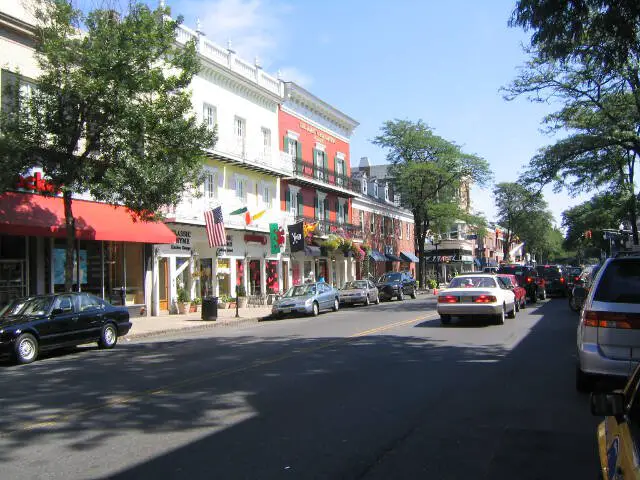
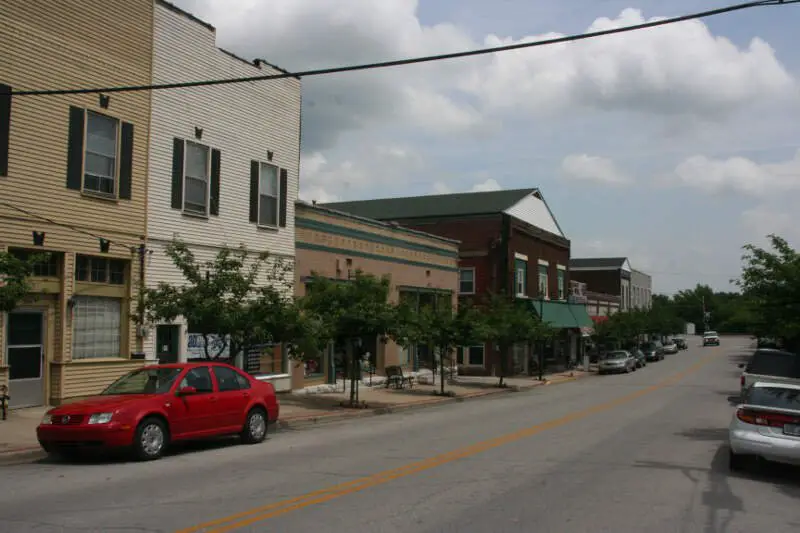
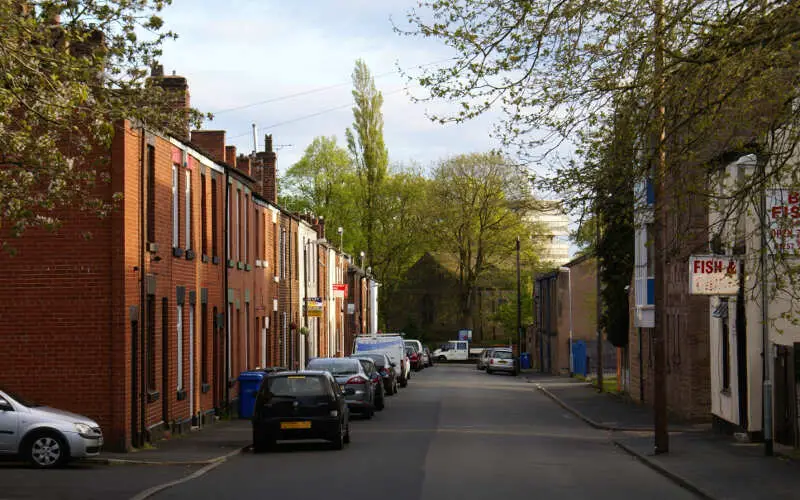
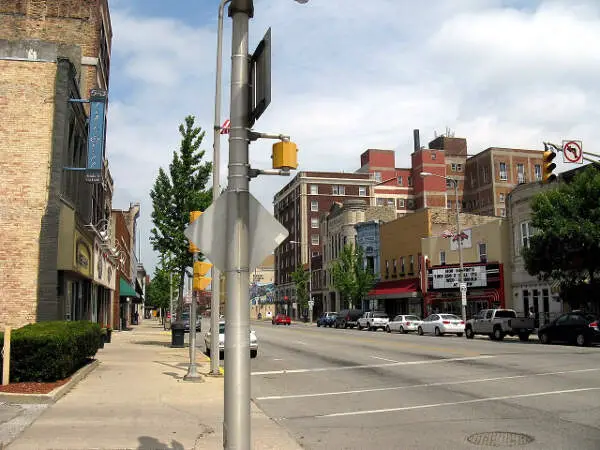
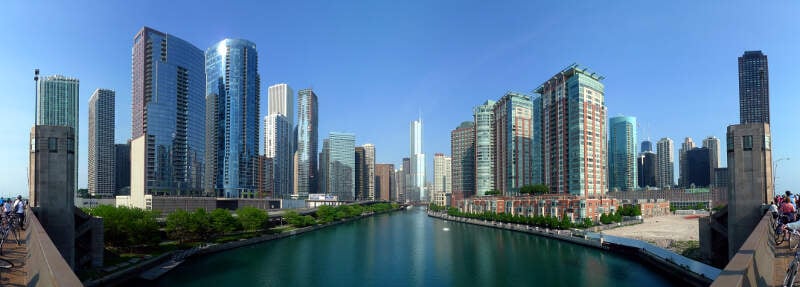
Newark vs. Chicago in photos
A side-by-side look at each city.





Cost of living
Chicago is the cheaper city overall — 6% higher in Newark than its rival. Index baseline: 100 = national average.
| Living expense | Newark | Chicago | US average |
|---|---|---|---|
| Overall | 121 | 114 | 100 |
| Services | 106 | 103 | 100 |
| Groceries | 110 | 99 | 100 |
| Health | 135 | 140 | 100 |
| Housing | 119 | 107 | 100 |
| Transportation | 110 | 104 | 100 |
| Utilities | 117 | 103 | 100 |
Lower index = cheaper. 100 = U.S. national average. Bar inside each cell scales relative to the highest value in the table.
Sources: HomeSnacks Cost of Living indices, normalized so 100 = U.S. national average. Drill in: Newark cost of living, Chicago cost of living, or the cheapest cities in America.
Housing breakdown
Home prices are higher in Newark. Compare absolute price and price-to-income — a $500k home in a $100k-income city is very different from one in a $50k-income city.
| Metric | Newark | Chicago | United States |
|---|---|---|---|
| Median Home Value | $478,454 | $317,282 | $332,700 |
| Median Rent | $1,392 | $1,440 | $1,413 |
| Median Income | $52,060 | $77,902 | $80,734 |
| Home Value To Income | 9.2x | 4.1x | 4.1x |
| Rent To Monthly Income | 0.32x | 0.22x | 0.21x |
Source: U.S. Census Bureau ACS 2020-2024. See also states with the highest rent in America.
Crime
Newark is the safer city — total crime rate of 2,539 per 100k people vs 4,012 for Chicago. US average: 2,119.
| Crime (per 100k) | Newark | Chicago | US average |
|---|---|---|---|
| Total crime | 2,539 | 4,012 | 2,119 |
| Murder | 13 | 17 | 5 |
| Robbery | 143 | 335 | 61 |
| Aggravated Assault | 385 | 128 | 256 |
| Violent Crime | 581 | 540 | 359 |
| Burglary | 152 | 295 | 229 |
| Larceny | 931 | 2,319 | 1,272 |
| Car Theft | 874 | 859 | 259 |
| Property Crime | 1,957 | 3,472 | 1,760 |
Lower = safer. Bar inside each cell scales relative to the highest crime rate in the table.
Source: FBI Uniform Crime Reporting (2024). All rates are per 100,000 people. City pages: Newark crime, Chicago crime. See also: safest cities in America.
Diversity
Chicago is more racially diverse — lower HHI (closer to 0) means a more even mix across groups.
| Group | Newark | Chicago | United States |
|---|---|---|---|
| White | 8.9% | 32.1% | 57.4% |
| African American | 44.8% | 27.4% | 11.9% |
| American Indian | 0.1% | 0.1% | 0.5% |
| Asian | 2.0% | 7.2% | 5.9% |
| Hawaiian | 0.0% | 0.0% | 0.2% |
| Other | 2.5% | 0.4% | 0.6% |
| Two Or More | 4.1% | 3.0% | 4.3% |
| Hispanic | 37.6% | 29.7% | 19.3% |
Source: U.S. Census ACS 2020-2024. Lower HHI = more even racial mix. See also: most diverse cities in America.
SnackAbility — overall quality of life
Chicago scores higher overall — 7/10 vs 4/10. SnackAbility is our 1–10 quality-of-life score; the median U.S. city scores a 7.
Scores are 0–10; both bars share the same scale.
SnackAbility is a HomeSnacks proprietary 1–10 score blending jobs, housing, education, commute, amenities, affordability, crime, and diversity. Median U.S. city ≈ 7. Data: Census, BLS, FBI. See also: best places to live in America.
Getting around: Newark vs. Chicago
How each city handles commuting, transit, walkability, and car culture — the day-to-day reality that shapes where you'd actually want to live.
Newark Penn Station connects you to NJ Transit rail and bus lines, the PATH train into Manhattan, and Amtrak, putting it among the better-connected small cities in the country. Newark Liberty International Airport is essentially in your backyard. By car, you're at the crossroads of I-95, I-78, and the NJ Turnpike, which sounds ideal until rush hour on the Pulaski Skyway proves otherwise.
Chicago's CTA "L" has eight color-coded lines threading through neighborhoods from O'Hare to Hyde Park, and Metra commuter rail extends your reach into the suburbs. For drivers, the grid street system makes navigation intuitive, but downtown parking costs are steep. Both cities have real transit bones, though Chicago's network is far denser and more self-contained: you can go carless here in a way that's trickier in Newark without leaning on New York.
Jobs and careers in Newark vs. Chicago
The local job market, dominant industries, and which city to choose based on your career.
Newark's economy is anchored by finance, insurance, and healthcare. Prudential Financial and PSEG are headquartered here, and Audible (an Amazon subsidiary) has made it a secondary tech hub. But for many residents, the bigger draw is the 20-minute PATH ride to Manhattan, even if the city's median household income of $52,060 signals that many of the best-paying jobs are still across the river.
Chicago runs as a fully self-contained major metro economy, with Boeing, United Airlines, Morningstar, and a dense cluster of trading firms anchoring the Loop. A growing tech corridor has taken root in the Fulton Market district, and the industry mix (finance, logistics, healthcare, advertising, food manufacturing) means you're not dependent on any single sector. The median household income of $77,902 is substantially higher than Newark's; if salary ceiling matters most, Chicago offers the wider runway.
Weather and climate
What to expect day-to-day — sun, fog, heat, rain, and the seasonal extremes that shape the lifestyle.
Newark sits in a humid continental zone tempered slightly by its proximity to the Atlantic. Summers frequently top 90°F in July, and winters bring cold spells, occasional nor'easters, and enough snow to complicate your commute a few times each season. Spring and fall are genuinely pleasant, good enough to make you forgive the rest.
Chicago earns its "Windy City" reputation most brutally in winter, when Arctic air off Lake Michigan can drop wind chills to dangerous lows. Snowfall is heavier and more persistent than Newark's, and the cold typically runs longer into spring. Both cities demand a tolerance for real winters, but Chicago's are measurably harsher.
Chicago summers are warm and breezy off the lake, and they power an outdoor culture that makes the winters worth tolerating. If you're moving from a mild climate, invest in proper cold-weather gear before you sign a Chicago lease.
Culture, nightlife, and entertainment
Food, music, neighborhoods, and the city vibe that gives each place its personality.
Newark's cultural scene runs through two main anchors: Prudential Center, home to the New Jersey Devils and major concerts, and NJPAC, one of the better mid-size venues on the East Coast. The Ironbound district, a dense Portuguese and Brazilian neighborhood along Ferry Street, is the city's most distinctive culinary destination. The Newark Museum of Art is underrated.
New York City's entire cultural infrastructure is a quick train ride away, which is Newark's greatest asset and the main reason its local scene has trouble building its own gravity.
Chicago sustains its cultural life without borrowing from anywhere else. Second City shaped modern American comedy, the blues and house music scenes carry real historical weight, and the dining landscape runs from Michelin-starred restaurants in the West Loop to legendary deep-dish spots and a James Beard-heavy taqueria circuit. Neighborhoods like Wicker Park, Logan Square, and Pilsen each have distinct identities, and for nightlife and cultural depth within city limits, Chicago is in a different league.
Outdoor activities and day trips
Parks, beaches, hikes, and the weekend escapes that define life outside the city limits.
Newark's best green space is Branch Brook Park, a Frederick Law Olmsted-designed stretch in the North Ward that hosts the largest cherry blossom collection in the country. For a few weeks each April, it's worth the visit on its own. Weequahic Park in the South Ward adds a lake and running paths.
For bigger escapes, the Jersey Shore beaches are about an hour south, and the Delaware Water Gap is doable as a day trip west. Gateway National Recreation Area, just outside the city, has marshland trails and Sandy Hook beach without a long drive.
Chicago's lakefront is 18 miles of continuous public trail running from Rogers Park south through Hyde Park, passing Millennium Park, Lincoln Park Zoo, and a string of free public beaches. Indiana Dunes National Park, about an hour southeast, is an underrated hiking and swimming destination. The Forest Preserves of Cook County wrap around the metro with over 70,000 acres of trails and waterways.
If you want outdoor access woven into daily city life rather than something you drive to on weekends, Chicago's lakefront makes it hard to beat.
Bottom line: which city is right for you?
Based on the head-to-head data above, here's the short version — pick the city that lines up with what you actually care about.
Choose Newark if you prioritize…
- lower crime — a safer place to live, work, and raise a family.
- more affordable housing relative to Chicago.
Choose Chicago if you prioritize…
- a lower cost of living (cheaper groceries, services, and day-to-day expenses).
- a more racially diverse community (lower HHI on Census data).
- a higher overall SnackAbility quality-of-life score.
Methodology: winners are picked from public data — U.S. Census Bureau ACS (income, home value, rent, race/HHI), FBI Uniform Crime Reporting (crime rates per 100k), and HomeSnacks' proprietary SnackAbility quality-of-life score, which blends Bureau of Labor Statistics data with the above.
Other comparisons
Still weighing your options? See how these two cities stack up against other places we've compared head-to-head.