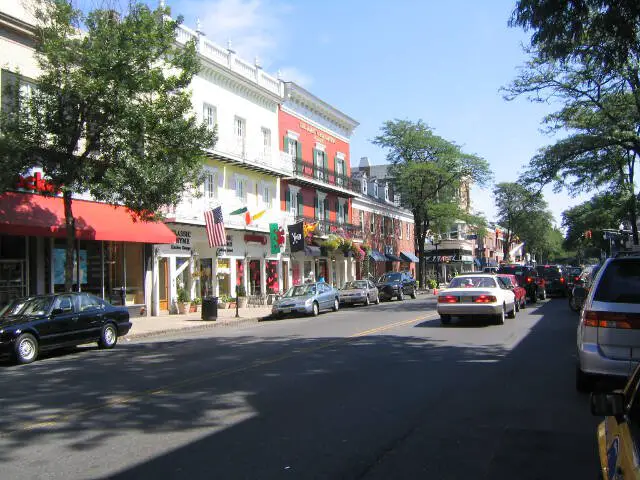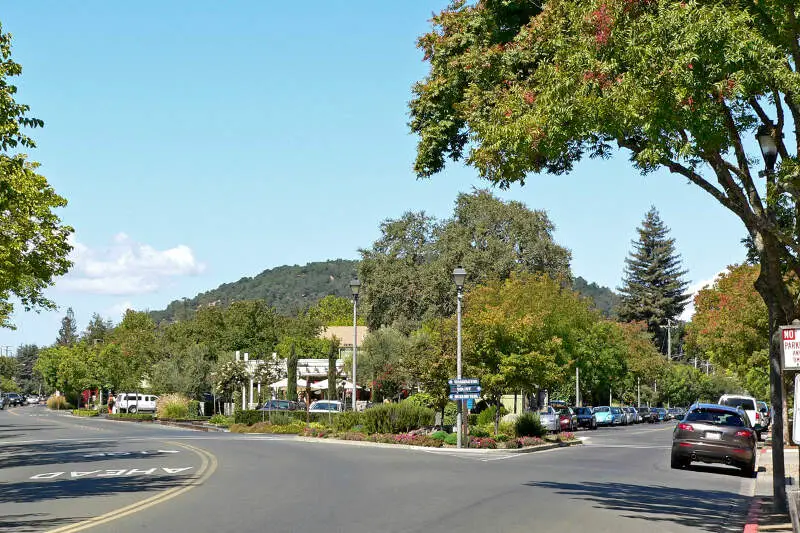
Sacramento vs. Los Angeles in photos
A side-by-side look at each city.





Cost of living
Sacramento is the cheaper city overall — 23% higher in Los Angeles than its rival. Index baseline: 100 = national average.
| Living expense | Sacramento | Los Angeles | US average |
|---|---|---|---|
| Overall | 137 | 179 | 100 |
| Services | 109 | 117 | 100 |
| Groceries | 122 | 123 | 100 |
| Health | 184 | 309 | 100 |
| Housing | 124 | 128 | 100 |
| Transportation | 121 | 128 | 100 |
| Utilities | 122 | 134 | 100 |
Lower index = cheaper. 100 = U.S. national average. Bar inside each cell scales relative to the highest value in the table.
Sources: HomeSnacks Cost of Living indices, normalized so 100 = U.S. national average. Drill in: Sacramento cost of living, Los Angeles cost of living, or the cheapest cities in America.
Housing breakdown
Home prices are higher in Los Angeles. Compare absolute price and price-to-income — a $500k home in a $100k-income city is very different from one in a $50k-income city.
| Metric | Sacramento | Los Angeles | United States |
|---|---|---|---|
| Median Home Value | $479,765 | $952,183 | $332,700 |
| Median Rent | $1,779 | $1,933 | $1,413 |
| Median Income | $87,321 | $81,939 | $80,734 |
| Home Value To Income | 5.5x | 11.6x | 4.1x |
| Rent To Monthly Income | 0.24x | 0.28x | 0.21x |
Source: U.S. Census Bureau ACS 2020-2024. See also states with the highest rent in America.
Crime
Los Angeles is the safer city — total crime rate of 2,212 per 100k people vs 3,302 for Sacramento. US average: 2,119.
| Crime (per 100k) | Sacramento | Los Angeles | US average |
|---|---|---|---|
| Total crime | 3,302 | 2,212 | 2,119 |
| Murder | 9 | 7 | 5 |
| Robbery | 192 | 210 | 61 |
| Aggravated Assault | 520 | 471 | 256 |
| Violent Crime | 755 | 728 | 359 |
| Burglary | 442 | 373 | 229 |
| Larceny | 1,596 | 852 | 1,272 |
| Car Theft | 510 | 260 | 259 |
| Property Crime | 2,547 | 1,484 | 1,760 |
Lower = safer. Bar inside each cell scales relative to the highest crime rate in the table.
Source: FBI Uniform Crime Reporting (2024). All rates are per 100,000 people. City pages: Sacramento crime, Los Angeles crime. See also: safest cities in America.
Diversity
Sacramento is more racially diverse — lower HHI (closer to 0) means a more even mix across groups.
| Group | Sacramento | Los Angeles | United States |
|---|---|---|---|
| White | 29.3% | 28.1% | 57.4% |
| African American | 11.8% | 8.1% | 11.9% |
| American Indian | 0.2% | 0.1% | 0.5% |
| Asian | 20.1% | 11.9% | 5.9% |
| Hawaiian | 1.5% | 0.1% | 0.2% |
| Other | 0.8% | 0.7% | 0.6% |
| Two Or More | 6.9% | 3.8% | 4.3% |
| Hispanic | 29.4% | 47.2% | 19.3% |
Source: U.S. Census ACS 2020-2024. Lower HHI = more even racial mix. See also: most diverse cities in America.
SnackAbility — overall quality of life
Sacramento scores higher overall — 7/10 vs 6/10. SnackAbility is our 1–10 quality-of-life score; the median U.S. city scores a 7.
Scores are 0–10; both bars share the same scale.
SnackAbility is a HomeSnacks proprietary 1–10 score blending jobs, housing, education, commute, amenities, affordability, crime, and diversity. Median U.S. city ≈ 7. Data: Census, BLS, FBI. See also: best places to live in America.
Getting around: Sacramento vs. Los Angeles
How each city handles commuting, transit, walkability, and car culture — the day-to-day reality that shapes where you'd actually want to live.
If you commute by car, Sacramento's grid layout and lighter traffic make daily drives far less punishing than the 405 or the 101. Sacramento Regional Transit's light rail covers the major corridors: downtown, Folsom, and the airport area. The city is also genuinely bikeable, which Los Angeles isn't.
Los Angeles has invested heavily in Metro Rail over the past decade, and lines like the Purple and A Line now connect real neighborhoods. The network still has gaps, though, and for most residents driving is unavoidable. If you work along a transit-connected corridor like Wilshire or the Westside, the system can work; otherwise, budget extra time and patience.
Jobs and careers in Sacramento vs. Los Angeles
The local job market, dominant industries, and which city to choose based on your career.
Sacramento's largest employer is California state government, which means steady work in administration, public health, policy, and IT if you have the right background. UC Davis Health and Sutter Health anchor a growing healthcare sector, and the region has developed an ag-tech and clean-energy cluster. With a median household income of $87,321 (slightly above LA's $81,939) and a much lower cost of living index (137 vs. 179), your paycheck stretches further here.
Los Angeles offers sheer scale: entertainment, aerospace (SpaceX, Northrop Grumman), tech (a cluster sometimes called Silicon Beach), fashion, and logistics. The trade-off is fierce competition, and a salary that sounds impressive can disappear against a median home value of $952,183, compared to Sacramento's $479,765. High earners in specialized industries often find LA worth it; everyone else should run the numbers.
Weather and climate
What to expect day-to-day — sun, fog, heat, rain, and the seasonal extremes that shape the lifestyle.
Sacramento sits in the Central Valley and runs hot in summer: triple-digit days from July through August are common, so you'll want reliable air conditioning. Winters are mild and foggy, with temperatures rarely dipping below freezing, and rain is mostly confined to December through March. If you grew up somewhere with four seasons, the relentless heat of Sacramento summers can wear on you.
Los Angeles trades Sacramento's heat spikes for near-perpetual mild weather, especially within a few miles of the coast. Inland neighborhoods like the San Fernando Valley and Pasadena can approach Sacramento-level summer heat, but coastal areas like Santa Monica and Long Beach stay in the 70s most of the year. If comfortable year-round temperatures are a priority, LA's coastal zones have a real edge, though you'll pay for that climate in housing costs.
Culture, nightlife, and entertainment
Food, music, neighborhoods, and the city vibe that gives each place its personality.
Sacramento's cultural identity has sharpened over the past decade. Midtown and East Sacramento have a dense cluster of farm-to-fork restaurants (the city markets itself as the Farm-to-Fork Capital), craft breweries, independent music venues, and a First Fridays art walk on R Street. Golden 1 Center brings major concerts and Kings games downtown, and you can actually get a reservation or find parking.
Los Angeles operates at a different scale: world-class museums like LACMA and the Getty, live music at the Hollywood Bowl or the Kia Forum, and legendary neighborhoods from Silver Lake to Koreatown to Little Tokyo. The cultural density is hard to match anywhere in the country. The trade-off is logistical: shows sell out, restaurants have month-long waits, and getting across town for a concert is its own commitment.
Outdoor activities and day trips
Parks, beaches, hikes, and the weekend escapes that define life outside the city limits.
Sacramento's biggest outdoor asset is the American River Parkway, a 32-mile greenbelt of trails and swimming holes running right through the metro area. You're also within two hours of Lake Tahoe for skiing, hiking, or paddleboarding, and Napa Valley wine country is about an hour west. The flat terrain makes cycling practical for everyday errands in a way few Western cities can match.
Los Angeles is surrounded by outdoor options: Griffith Park for hiking with city views, the Santa Monica Mountains running through the metro, and the San Gabriel Mountains a short drive from Pasadena for serious day hikes. Beaches like Venice, Malibu, and Zuma are the obvious draw, and they deliver. The catch is weekend traffic: trailheads and beaches can add an hour each way, where Sacramento's outdoor access is usually faster to reach.
Bottom line: which city is right for you?
Based on the head-to-head data above, here's the short version — pick the city that lines up with what you actually care about.
Choose Sacramento if you prioritize…
- a lower cost of living (cheaper groceries, services, and day-to-day expenses).
- a more racially diverse community (lower HHI on Census data).
- a higher overall SnackAbility quality-of-life score.
Choose Los Angeles if you prioritize…
- lower crime — a safer place to live, work, and raise a family.
- more affordable housing relative to Sacramento.
Methodology: winners are picked from public data — U.S. Census Bureau ACS (income, home value, rent, race/HHI), FBI Uniform Crime Reporting (crime rates per 100k), and HomeSnacks' proprietary SnackAbility quality-of-life score, which blends Bureau of Labor Statistics data with the above.
Other comparisons
Still weighing your options? See how these two cities stack up against other places we've compared head-to-head.