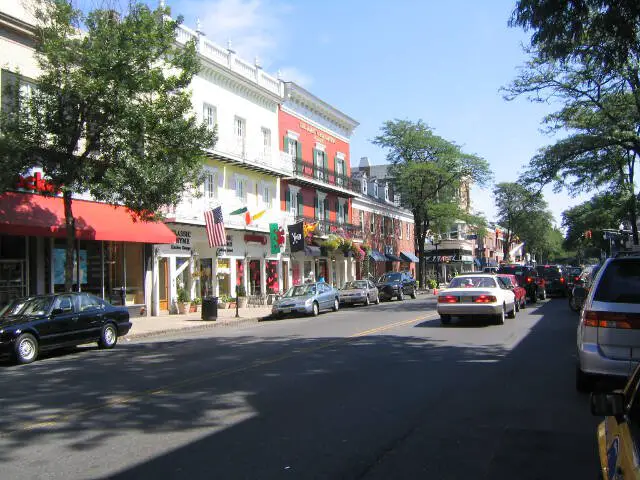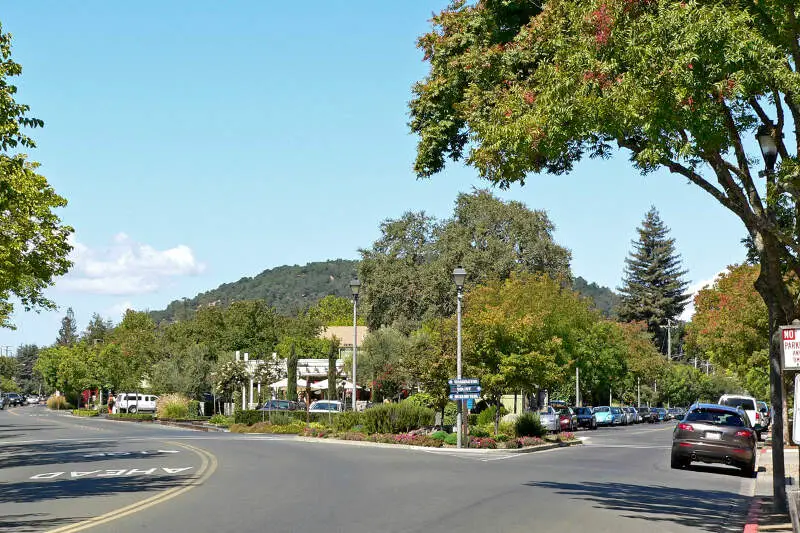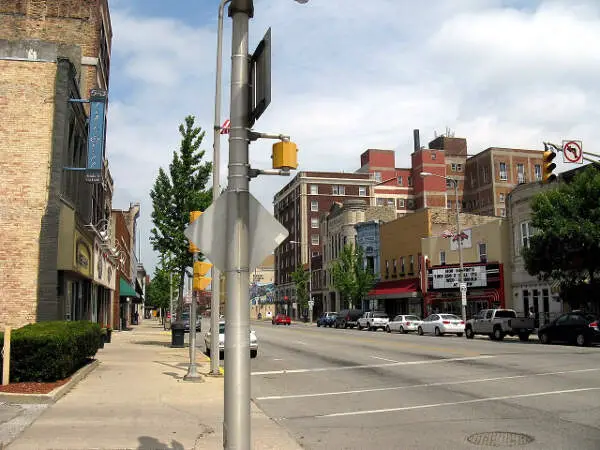
Irvine vs. Los Angeles in photos
A side-by-side look at each city.

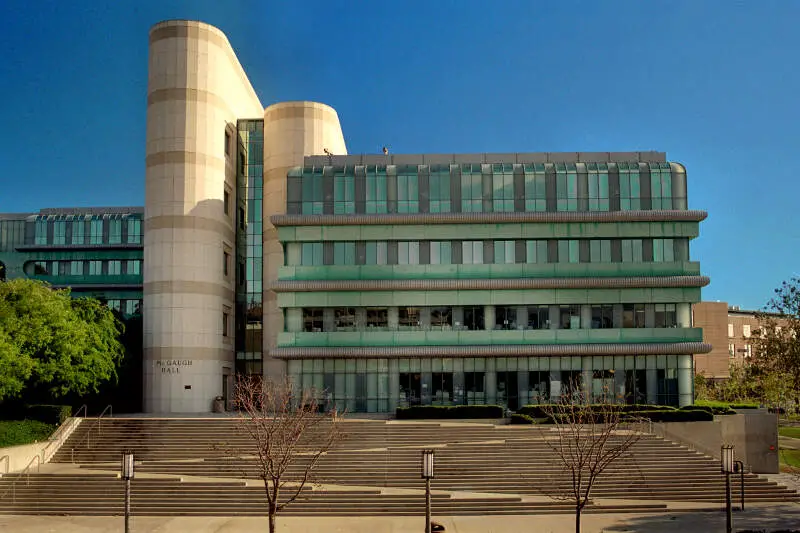
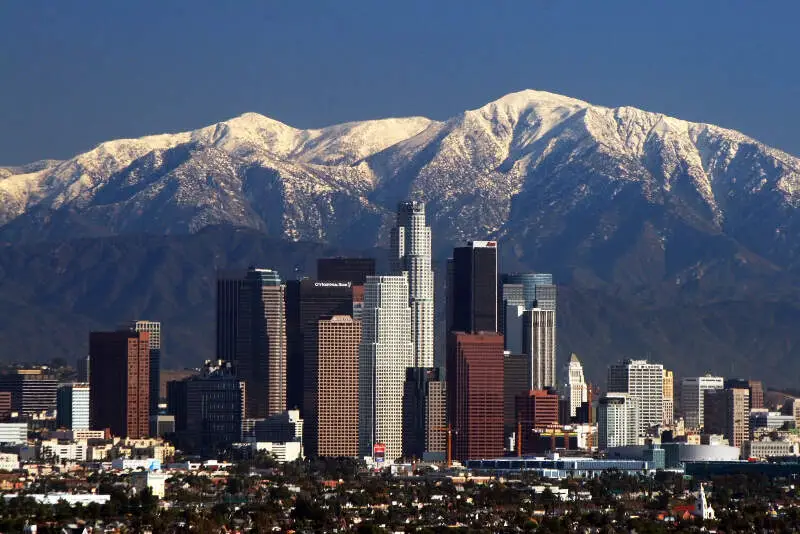


Cost of living
Los Angeles is the cheaper city overall — 17% higher in Irvine than its rival. Index baseline: 100 = national average.
| Living expense | Irvine | Los Angeles | US average |
|---|---|---|---|
| Overall | 209 | 179 | 100 |
| Services | 119 | 117 | 100 |
| Groceries | 120 | 123 | 100 |
| Health | 409 | 309 | 100 |
| Housing | 124 | 128 | 100 |
| Transportation | 125 | 128 | 100 |
| Utilities | 129 | 134 | 100 |
Lower index = cheaper. 100 = U.S. national average. Bar inside each cell scales relative to the highest value in the table.
Sources: HomeSnacks Cost of Living indices, normalized so 100 = U.S. national average. Drill in: Irvine cost of living, Los Angeles cost of living, or the cheapest cities in America.
Housing breakdown
Home prices are higher in Los Angeles. Compare absolute price and price-to-income — a $500k home in a $100k-income city is very different from one in a $50k-income city.
| Metric | Irvine | Los Angeles | United States |
|---|---|---|---|
| Median Home Value | $1,557,981 | $952,183 | $332,700 |
| Median Rent | $2,997 | $1,933 | $1,413 |
| Median Income | $136,719 | $81,939 | $80,734 |
| Home Value To Income | 11.4x | 11.6x | 4.1x |
| Rent To Monthly Income | 0.26x | 0.28x | 0.21x |
Source: U.S. Census Bureau ACS 2020-2024. See also states with the highest rent in America.
Crime
Irvine is the safer city — total crime rate of 1,474 per 100k people vs 2,212 for Los Angeles. US average: 2,119.
| Crime (per 100k) | Irvine | Los Angeles | US average |
|---|---|---|---|
| Total crime | 1,474 | 2,212 | 2,119 |
| Murder | 2 | 7 | 5 |
| Robbery | 22 | 210 | 61 |
| Aggravated Assault | 47 | 471 | 256 |
| Violent Crime | 84 | 728 | 359 |
| Burglary | 198 | 373 | 229 |
| Larceny | 1,122 | 852 | 1,272 |
| Car Theft | 70 | 260 | 259 |
| Property Crime | 1,390 | 1,484 | 1,760 |
Lower = safer. Bar inside each cell scales relative to the highest crime rate in the table.
Source: FBI Uniform Crime Reporting (2024). All rates are per 100,000 people. City pages: Irvine crime, Los Angeles crime. See also: safest cities in America.
Diversity
Los Angeles is more racially diverse — lower HHI (closer to 0) means a more even mix across groups.
| Group | Irvine | Los Angeles | United States |
|---|---|---|---|
| White | 34.3% | 28.1% | 57.4% |
| African American | 1.9% | 8.1% | 11.9% |
| American Indian | 0.1% | 0.1% | 0.5% |
| Asian | 44.6% | 11.9% | 5.9% |
| Hawaiian | 0.4% | 0.1% | 0.2% |
| Other | 0.8% | 0.7% | 0.6% |
| Two Or More | 6.4% | 3.8% | 4.3% |
| Hispanic | 11.4% | 47.2% | 19.3% |
Source: U.S. Census ACS 2020-2024. Lower HHI = more even racial mix. See also: most diverse cities in America.
SnackAbility — overall quality of life
Irvine scores higher overall — 9/10 vs 6/10. SnackAbility is our 1–10 quality-of-life score; the median U.S. city scores a 7.
Scores are 0–10; both bars share the same scale.
SnackAbility is a HomeSnacks proprietary 1–10 score blending jobs, housing, education, commute, amenities, affordability, crime, and diversity. Median U.S. city ≈ 7. Data: Census, BLS, FBI. See also: best places to live in America.
Getting around: Irvine vs. Los Angeles
How each city handles commuting, transit, walkability, and car culture — the day-to-day reality that shapes where you'd actually want to live.
Irvine was master-planned around the car, and that shows. The street grid is wide and logical, but you'll still depend on the 5 and 405 freeways to get anywhere outside the city, and both corridors back up hard during peak hours.
Metrolink's Irvine Station connects you to Los Angeles Union Station, and OCTA runs local bus service, but transit coverage is thin enough that most residents drive for nearly everything. Bike lanes are genuinely good for a Southern California suburb if your destination is nearby.
Los Angeles has more transit options but far more congestion. Metro Rail lines (the B/D Lines through Hollywood and downtown, the A Line to Long Beach, the E Line to Santa Monica) can bypass surface gridlock if you live near a station.
LA's median commute is notoriously long, and even short cross-town trips can cost you an hour. If you're moving from Irvine to LA, budget extra time daily; going the other direction, you'll gain predictability but lose flexibility.
Jobs and careers in Irvine vs. Los Angeles
The local job market, dominant industries, and which city to choose based on your career.
Irvine punches well above its population in high-paying white-collar work. The Irvine Spectrum corridor and the broader Irvine Business Complex host major employers including Edwards Lifesciences, Broadcom, Blizzard Entertainment, and Masimo, alongside a dense cluster of tech and biotech firms. UC Irvine anchors research and healthcare jobs, and that concentration of corporate headquarters helps explain the median household income of $136,719, nearly $55,000 higher than Los Angeles.
Los Angeles offers far greater breadth. Major entertainment studios (Warner Bros., NBCUniversal, Netflix, Lionsgate) make it one of the largest creative-industry centers in the world. Aerospace and defense (Northrop Grumman, SpaceX in nearby Hawthorne), healthcare, finance, and a growing tech scene in Silicon Beach add millions of positions across every sector.
LA's median household income is $81,939, and the labor market runs from six-figure tech salaries to gig and service-sector wages. If your field is entertainment, logistics, or large-scale finance, LA's scale is simply unmatched.
Weather and climate
What to expect day-to-day — sun, fog, heat, rain, and the seasonal extremes that shape the lifestyle.
Irvine's climate is classic inland Southern California Mediterranean: warm, dry summers, mild winters, and roughly 280 sunny days a year. Sitting a few miles from the coast, it escapes the thick June Gloom marine layer that blankets beach communities for weeks at a time. Summer afternoons regularly push into the low 90s, and Santa Ana wind events in fall can spike temperatures higher, but humidity stays low and nights cool off reliably.
Los Angeles spans so many microclimates that "LA weather" is almost a fiction. Santa Monica and Venice deal with persistent morning fog through May and June; the San Fernando Valley and East LA bake significantly hotter in summer; and Silver Lake or Los Feliz sit somewhere in between.
Neither city sees frost and both are effectively snow-free. For day-to-day comfort, Irvine's predictability is an edge: you'll almost never need an umbrella and rarely need heavy layers. In LA, your specific neighborhood matters as much as the city itself.
Culture, nightlife, and entertainment
Food, music, neighborhoods, and the city vibe that gives each place its personality.
Irvine's cultural calendar leans toward the institutional. UC Irvine brings touring performances, gallery shows, and lectures through its Claire Trevor School of the Arts. Irvine Spectrum Center is the social hub for shopping, dining, and the occasional outdoor concert.
The city is one of the most ethnically diverse in California, and that shows in a food scene dense with Korean, Vietnamese, Persian, and Chinese restaurants, particularly around Culver Drive and the Diamond Jamboree plaza. Nightlife, though, is genuinely limited. Bars close early, late-night venues are sparse, and the vibe skews suburban-quiet.
Los Angeles offers something in a different league entirely. Hollywood, Silver Lake, the Arts District, Koreatown, and West Hollywood each have their own distinct nightlife scenes: rooftop bars, jazz rooms, underground clubs, world-class tasting menus, and live music every night of the week. Museum Row on Wilshire puts LACMA, the Broad, and the Getty within easy reach.
If evening energy and cultural density matter to your lifestyle, LA has a commanding advantage. Irvine suits those who want a quiet home base and day-trip into the city occasionally.
Outdoor activities and day trips
Parks, beaches, hikes, and the weekend escapes that define life outside the city limits.
Irvine is unusually well-equipped for a planned city. The Irvine Open Space Preserve and Laguna Coast Wilderness Park together protect tens of thousands of acres of coastal sage scrub immediately south of the city, with trail networks accessible within minutes of most neighborhoods. The Great Park (built on the former El Toro Marine base) offers sports fields, a balloon ride, a farm, and growing event space.
Cycling infrastructure is genuinely functional: the citywide trail network connects neighborhoods and links to regional paths heading toward Newport Beach and Laguna Beach, both under 30 minutes away by car.
Los Angeles backs up to the Santa Monica Mountains and Griffith Park, one of the largest urban parks in the country, with trails running to the Hollywood Sign and the Griffith Observatory. Point Mugu, Topanga, and the Angeles National Forest extend the options dramatically. Ocean access runs from Malibu down through Manhattan Beach and Redondo Beach.
If you're an avid hiker or surfer, LA's sheer variety is hard to beat. If you want well-maintained, close-to-home bike and trail access in a quieter setting, Irvine's infrastructure is more consistently useful day to day.
Bottom line: which city is right for you?
Based on the head-to-head data above, here's the short version — pick the city that lines up with what you actually care about.
Choose Irvine if you prioritize…
- lower crime — a safer place to live, work, and raise a family.
- a higher overall SnackAbility quality-of-life score.
Choose Los Angeles if you prioritize…
- a lower cost of living (cheaper groceries, services, and day-to-day expenses).
- more affordable housing relative to Irvine.
- a more racially diverse community (lower HHI on Census data).
Methodology: winners are picked from public data — U.S. Census Bureau ACS (income, home value, rent, race/HHI), FBI Uniform Crime Reporting (crime rates per 100k), and HomeSnacks' proprietary SnackAbility quality-of-life score, which blends Bureau of Labor Statistics data with the above.
Other comparisons
Still weighing your options? See how these two cities stack up against other places we've compared head-to-head.