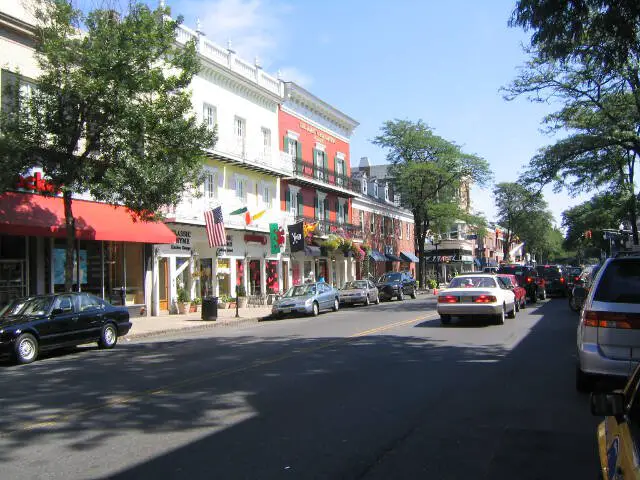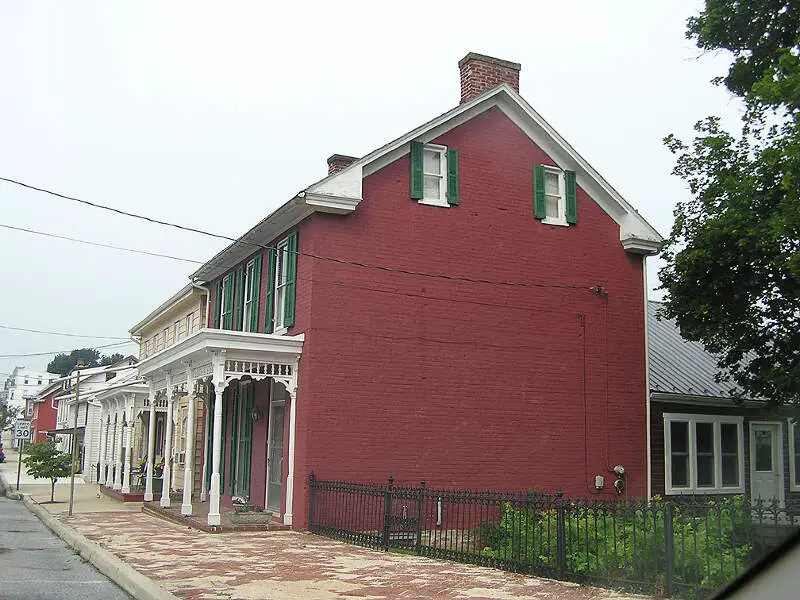
Sacramento vs. San Diego in photos
A side-by-side look at each city.





Cost of living
Sacramento is the cheaper city overall — 22% higher in San Diego than its rival. Index baseline: 100 = national average.
| Living expense | Sacramento | San Diego | US average |
|---|---|---|---|
| Overall | 137 | 175 | 100 |
| Services | 109 | 121 | 100 |
| Groceries | 122 | 121 | 100 |
| Health | 184 | 296 | 100 |
| Housing | 124 | 127 | 100 |
| Transportation | 121 | 131 | 100 |
| Utilities | 122 | 135 | 100 |
Lower index = cheaper. 100 = U.S. national average. Bar inside each cell scales relative to the highest value in the table.
Sources: HomeSnacks Cost of Living indices, normalized so 100 = U.S. national average. Drill in: Sacramento cost of living, San Diego cost of living, or the cheapest cities in America.
Housing breakdown
Home prices are higher in Sacramento. Compare absolute price and price-to-income — a $500k home in a $100k-income city is very different from one in a $50k-income city.
| Metric | Sacramento | San Diego | United States |
|---|---|---|---|
| Median Home Value | $479,765 | $1,001,264 | $332,700 |
| Median Rent | $1,779 | $2,313 | $1,413 |
| Median Income | $87,321 | $108,077 | $80,734 |
| Home Value To Income | 5.5x | 9.3x | 4.1x |
| Rent To Monthly Income | 0.24x | 0.26x | 0.21x |
Source: U.S. Census Bureau ACS 2020-2024. See also states with the highest rent in America.
Crime
San Diego is the safer city — total crime rate of 2,082 per 100k people vs 3,302 for Sacramento. US average: 2,119.
| Crime (per 100k) | Sacramento | San Diego | US average |
|---|---|---|---|
| Total crime | 3,302 | 2,082 | 2,119 |
| Murder | 9 | 3 | 5 |
| Robbery | 192 | 77 | 61 |
| Aggravated Assault | 520 | 311 | 256 |
| Violent Crime | 755 | 412 | 359 |
| Burglary | 442 | 187 | 229 |
| Larceny | 1,596 | 1,087 | 1,272 |
| Car Theft | 510 | 396 | 259 |
| Property Crime | 2,547 | 1,670 | 1,760 |
Lower = safer. Bar inside each cell scales relative to the highest crime rate in the table.
Source: FBI Uniform Crime Reporting (2024). All rates are per 100,000 people. City pages: Sacramento crime, San Diego crime. See also: safest cities in America.
Diversity
Sacramento is more racially diverse — lower HHI (closer to 0) means a more even mix across groups.
| Group | Sacramento | San Diego | United States |
|---|---|---|---|
| White | 29.3% | 40.9% | 57.4% |
| African American | 11.8% | 5.3% | 11.9% |
| American Indian | 0.2% | 0.2% | 0.5% |
| Asian | 20.1% | 17.3% | 5.9% |
| Hawaiian | 1.5% | 0.4% | 0.2% |
| Other | 0.8% | 0.7% | 0.6% |
| Two Or More | 6.9% | 5.5% | 4.3% |
| Hispanic | 29.4% | 29.8% | 19.3% |
Source: U.S. Census ACS 2020-2024. Lower HHI = more even racial mix. See also: most diverse cities in America.
SnackAbility — overall quality of life
San Diego scores higher overall — 8/10 vs 7/10. SnackAbility is our 1–10 quality-of-life score; the median U.S. city scores a 7.
Scores are 0–10; both bars share the same scale.
SnackAbility is a HomeSnacks proprietary 1–10 score blending jobs, housing, education, commute, amenities, affordability, crime, and diversity. Median U.S. city ≈ 7. Data: Census, BLS, FBI. See also: best places to live in America.
Getting around: Sacramento vs. San Diego
How each city handles commuting, transit, walkability, and car culture — the day-to-day reality that shapes where you'd actually want to live.
Sacramento runs on cars. Most residents commute along I-80, US-50, or Business 80, though the Sacramento Regional Transit light rail is a real option if you live near the Gold or Green Line corridor. Downtown, Midtown, and East Sacramento are reasonably bikeable, and the city has added protected lanes in recent years.
San Diego's Metropolitan Transit System runs the Trolley and an extensive bus network, but the metro is even more sprawling than Sacramento. In areas like Rancho Bernardo, El Cajon, or Chula Vista, you'll spend real time on I-5, I-8, or I-15. North County commuters have the Coaster rail to downtown, which helps.
Both cities are car-first in practice. San Diego's larger footprint means cross-town trips take longer even when traffic cooperates.
Jobs and careers in Sacramento vs. San Diego
The local job market, dominant industries, and which city to choose based on your career.
Sacramento's single biggest employer is the state of California, making it the top address for government, policy, lobbying, and public-sector healthcare work. Major employers include the state agencies clustered near Capitol Mall, UC Davis Medical Center, Sutter Health, Kaiser Permanente, and a growing cluster of tech-adjacent firms that followed remote workers from the Bay Area. Median household income sits at $87,321.
San Diego's economy is more diversified. The military and defense contractors (Naval Base San Diego, MCAS Miramar, General Atomics, SAIC) anchor one pillar, while the biotech corridor along Torrey Pines Road (Illumina, Neurocrine, J&J's Janssen) anchors another. Tourism and hospitality also run deep, and the higher median income of $108,077 reflects the concentration of well-paying STEM and defense roles.
Weather and climate
What to expect day-to-day — sun, fog, heat, rain, and the seasonal extremes that shape the lifestyle.
Sacramento summers are genuinely hot: triple-digit days from June through September are common, and the Sacramento Valley traps heat with few coastal breezes to rescue you. Winters are mild but foggy; tule fog can snarl the Central Valley from December into February, which affects driving more than comfort. You get about 265 sunny days a year, and spring and fall are legitimately pleasant.
San Diego is in a different category. The famous "72 and sunny" reputation is mostly earned: average highs hover between the mid-60s and low 80s year-round, hard freezes are essentially unheard of, and even summer rarely gets oppressively hot in coastal neighborhoods. The trade-off is the marine layer: May Gray and June Gloom are real phenomena on inland mornings.
If you hate sweating through summer, San Diego wins clearly.
Culture, nightlife, and entertainment
Food, music, neighborhoods, and the city vibe that gives each place its personality.
Sacramento has quietly built one of California's stronger food cultures around its "Farm-to-Fork Capital" identity. The Tuesday Night Farmers Market on Capitol Mall, restaurant rows along J Street and R Street in Midtown, and a craft beer scene anchored by Track 7 and New Glory give the city real character. Golden 1 Center brings concerts and Kings games downtown; Old Sacramento covers the history, and the Crocker Art Museum punches above its weight.
San Diego covers more ground: the Gaslamp Quarter and East Village handle late-night crowds, while North Park and South Park have the indie-bar and live-music density you'd expect from a city of 1.4 million. Little Italy is a legitimate dining destination, and San Diego is arguably America's craft-beer capital, with Stone Brewing, Ballast Point, Modern Times, and dozens of taprooms spread across the city. Rent is steeper ($2,313 median vs. $1,779), but you're paying for a fuller menu.
Outdoor activities and day trips
Parks, beaches, hikes, and the weekend escapes that define life outside the city limits.
Sacramento's outdoors card is the American River Parkway: 32 miles of paved trail used by cyclists, runners, and kayakers, plus Discovery Park and Folsom Lake for weekends. The real ace is proximity: Lake Tahoe is roughly two hours east, Napa and Sonoma wine country two hours west, and the Sierra Nevada ski resorts (Heavenly, Palisades) are a straightforward day trip.
San Diego's outdoor scene lives right at the doorstep. Pacific Beach, Mission Beach, La Jolla Cove, and Ocean Beach put saltwater within 20 minutes of most of the city. Torrey Pines State Natural Reserve offers cliff-top coastal hiking that's hard to match anywhere in California.
Balboa Park's 1,200 acres sit in the middle of the city, and Anza-Borrego Desert State Park and Palomar Mountain are under two hours away when you need a bigger escape. If daily outdoor access matters to your decision, San Diego's options are simply more varied.
Bottom line: which city is right for you?
Based on the head-to-head data above, here's the short version — pick the city that lines up with what you actually care about.
Choose Sacramento if you prioritize…
- a lower cost of living (cheaper groceries, services, and day-to-day expenses).
- more affordable housing relative to San Diego.
- a more racially diverse community (lower HHI on Census data).
Choose San Diego if you prioritize…
- lower crime — a safer place to live, work, and raise a family.
- a higher overall SnackAbility quality-of-life score.
Methodology: winners are picked from public data — U.S. Census Bureau ACS (income, home value, rent, race/HHI), FBI Uniform Crime Reporting (crime rates per 100k), and HomeSnacks' proprietary SnackAbility quality-of-life score, which blends Bureau of Labor Statistics data with the above.
Other comparisons
Still weighing your options? See how these two cities stack up against other places we've compared head-to-head.