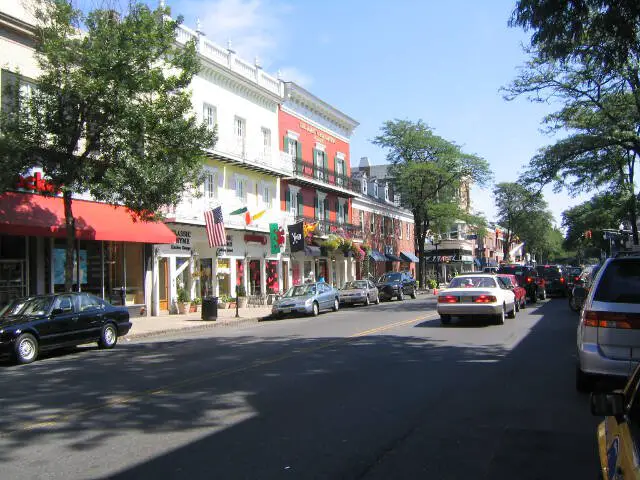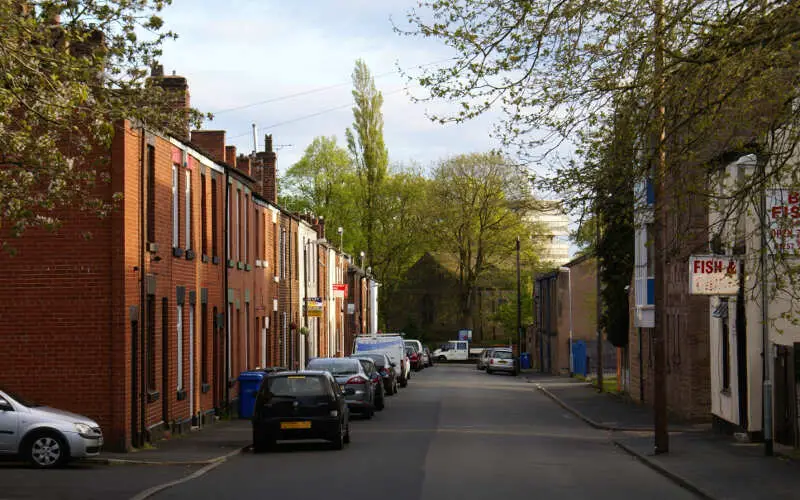
Irvine vs. San Diego in photos
A side-by-side look at each city.





Cost of living
San Diego is the cheaper city overall — 19% higher in Irvine than its rival. Index baseline: 100 = national average.
| Living expense | Irvine | San Diego | US average |
|---|---|---|---|
| Overall | 209 | 175 | 100 |
| Services | 119 | 121 | 100 |
| Groceries | 120 | 121 | 100 |
| Health | 409 | 296 | 100 |
| Housing | 124 | 127 | 100 |
| Transportation | 125 | 131 | 100 |
| Utilities | 129 | 135 | 100 |
Lower index = cheaper. 100 = U.S. national average. Bar inside each cell scales relative to the highest value in the table.
Sources: HomeSnacks Cost of Living indices, normalized so 100 = U.S. national average. Drill in: Irvine cost of living, San Diego cost of living, or the cheapest cities in America.
Housing breakdown
Home prices are higher in Irvine. Compare absolute price and price-to-income — a $500k home in a $100k-income city is very different from one in a $50k-income city.
| Metric | Irvine | San Diego | United States |
|---|---|---|---|
| Median Home Value | $1,557,981 | $1,001,264 | $332,700 |
| Median Rent | $2,997 | $2,313 | $1,413 |
| Median Income | $136,719 | $108,077 | $80,734 |
| Home Value To Income | 11.4x | 9.3x | 4.1x |
| Rent To Monthly Income | 0.26x | 0.26x | 0.21x |
Source: U.S. Census Bureau ACS 2020-2024. See also states with the highest rent in America.
Crime
Irvine is the safer city — total crime rate of 1,474 per 100k people vs 2,082 for San Diego. US average: 2,119.
| Crime (per 100k) | Irvine | San Diego | US average |
|---|---|---|---|
| Total crime | 1,474 | 2,082 | 2,119 |
| Murder | 2 | 3 | 5 |
| Robbery | 22 | 77 | 61 |
| Aggravated Assault | 47 | 311 | 256 |
| Violent Crime | 84 | 412 | 359 |
| Burglary | 198 | 187 | 229 |
| Larceny | 1,122 | 1,087 | 1,272 |
| Car Theft | 70 | 396 | 259 |
| Property Crime | 1,390 | 1,670 | 1,760 |
Lower = safer. Bar inside each cell scales relative to the highest crime rate in the table.
Source: FBI Uniform Crime Reporting (2024). All rates are per 100,000 people. City pages: Irvine crime, San Diego crime. See also: safest cities in America.
Diversity
San Diego is more racially diverse — lower HHI (closer to 0) means a more even mix across groups.
| Group | Irvine | San Diego | United States |
|---|---|---|---|
| White | 34.3% | 40.9% | 57.4% |
| African American | 1.9% | 5.3% | 11.9% |
| American Indian | 0.1% | 0.2% | 0.5% |
| Asian | 44.6% | 17.3% | 5.9% |
| Hawaiian | 0.4% | 0.4% | 0.2% |
| Other | 0.8% | 0.7% | 0.6% |
| Two Or More | 6.4% | 5.5% | 4.3% |
| Hispanic | 11.4% | 29.8% | 19.3% |
Source: U.S. Census ACS 2020-2024. Lower HHI = more even racial mix. See also: most diverse cities in America.
SnackAbility — overall quality of life
Irvine scores higher overall — 9/10 vs 8/10. SnackAbility is our 1–10 quality-of-life score; the median U.S. city scores a 7.
Scores are 0–10; both bars share the same scale.
SnackAbility is a HomeSnacks proprietary 1–10 score blending jobs, housing, education, commute, amenities, affordability, crime, and diversity. Median U.S. city ≈ 7. Data: Census, BLS, FBI. See also: best places to live in America.
Getting around: Irvine vs. San Diego
How each city handles commuting, transit, walkability, and car culture — the day-to-day reality that shapes where you'd actually want to live.
Both Irvine and San Diego default to car ownership, but the differences matter. Irvine was master-planned around the automobile: wide arterials, ample parking, and an OCTA bus network too sparse to replace a car for most errands. The Metrolink Orange County Line reaches Los Angeles, though service runs on a limited schedule.
San Diego's Metropolitan Transit System (MTS) runs the Blue, Orange, and Green Trolley lines, connecting downtown, Mission Valley, Old Town, and San Ysidro at the US-Mexico border. The COASTER commuter rail runs from downtown up to Oceanside in North County. Neither city is transit-first, but San Diego's network is meaningfully larger if going car-light matters to you.
Jobs and careers in Irvine vs. San Diego
The local job market, dominant industries, and which city to choose based on your career.
Irvine punches well above its size as an employment hub. Broadcom, Edwards Lifesciences, Blizzard Entertainment, and Cylance all have significant operations in and around Irvine Spectrum. UCI feeds a steady stream of graduates into life-sciences and semiconductor roles, and median household income sits at $136,719, among the highest in Orange County.
San Diego's economy is broader. Defense and military contracting (anchored by Naval Base San Diego and NAVWAR) sit alongside a biotech corridor stretching from Torrey Pines to Sorrento Valley, with hospitality and tourism rounding out the mix. Qualcomm remains one of the city's larger employers, and median household income is $108,077 — above the national average, though the wider job mix means more salary variation depending on your field.
Weather and climate
What to expect day-to-day — sun, fog, heat, rain, and the seasonal extremes that shape the lifestyle.
Irvine and San Diego share Southern California's Mediterranean climate, but they're not interchangeable. Irvine sits far enough inland that summer afternoons regularly push into the low 90s°F, and Santa Ana winds can send temperatures past 100°F in late summer and fall. Winters are mild and dry, with occasional overnight cold snaps, but snow is essentially unheard of.
San Diego's proximity to the Pacific keeps temperatures more moderate year-round: summer highs typically hover in the mid-70s along the coast, and winter rarely dips below the mid-50s. The trade-off is "June Gloom," a marine layer that can keep mornings overcast through early July, especially in coastal neighborhoods like La Jolla and Ocean Beach. If you want the most stable, mild climate in the continental US, San Diego wins; if you'd rather have more sun in early summer, Irvine delivers.
Culture, nightlife, and entertainment
Food, music, neighborhoods, and the city vibe that gives each place its personality.
Irvine's culture reflects its planned-community origins: polished, family-oriented, and quiet after dark. The Irvine Spectrum Center is the main hub for dining and shopping, Segerstrom Center for the Arts in nearby Costa Mesa brings Broadway tours and the Pacific Symphony, and Diamond Jamboree has one of the best concentrations of Asian dining in Orange County. Nightlife is subdued: a handful of wine bars and hotel lounges, no true bar district.
San Diego has more going on after dark. The Gaslamp Quarter has dozens of bars and clubs, while North Park and South Park have grown into a craft-beer and indie-restaurant corridor. Little Italy adds a lively farmers market and a solid restaurant row.
The city's identity also runs through its military heritage, the Latino culture concentrated in Barrio Logan, and the San Diego Zoo and Balboa Park museum campus.
Outdoor activities and day trips
Parks, beaches, hikes, and the weekend escapes that define life outside the city limits.
Irvine is better equipped for outdoor living than most planned suburbs. Paved trails run through Quail Hill and Shady Canyon open spaces, and Peters Canyon Regional Park has hiking and mountain biking with genuine canyon scenery. Newport Coast and Laguna Beach are a 15- to 20-minute drive for surf breaks and tide pools, and the Irvine Ranch open space lands add tens of thousands of acres of backcountry hiking just beyond city limits.
San Diego's outdoor options are simply broader. Torrey Pines State Natural Reserve has coastal bluffs and rare pine forest right inside the metro, Mission Bay has sailing, kayaking, and paddleboarding, and dozens of surf beaches stretch from Ocean Beach to Pacific Beach to La Jolla Cove. Inland, Cuyamaca Rancho State Park and Palomar Mountain are reachable day trips with real elevation and pine forests.
If outdoor variety is your priority, San Diego is hard to match at this price point.
Bottom line: which city is right for you?
Based on the head-to-head data above, here's the short version — pick the city that lines up with what you actually care about.
Choose Irvine if you prioritize…
- lower crime — a safer place to live, work, and raise a family.
- more affordable housing relative to San Diego.
- a higher overall SnackAbility quality-of-life score.
Choose San Diego if you prioritize…
- a lower cost of living (cheaper groceries, services, and day-to-day expenses).
- a more racially diverse community (lower HHI on Census data).
Methodology: winners are picked from public data — U.S. Census Bureau ACS (income, home value, rent, race/HHI), FBI Uniform Crime Reporting (crime rates per 100k), and HomeSnacks' proprietary SnackAbility quality-of-life score, which blends Bureau of Labor Statistics data with the above.
Other comparisons
Still weighing your options? See how these two cities stack up against other places we've compared head-to-head.