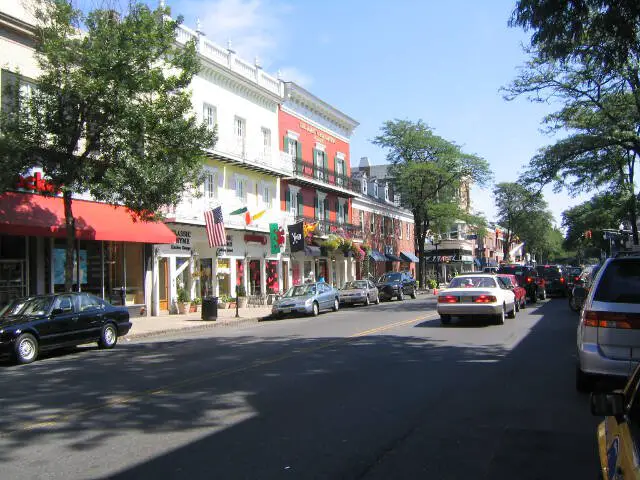
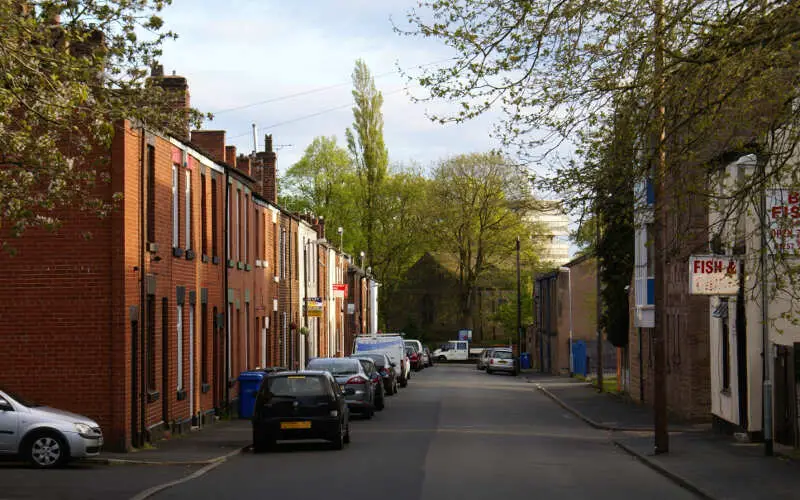
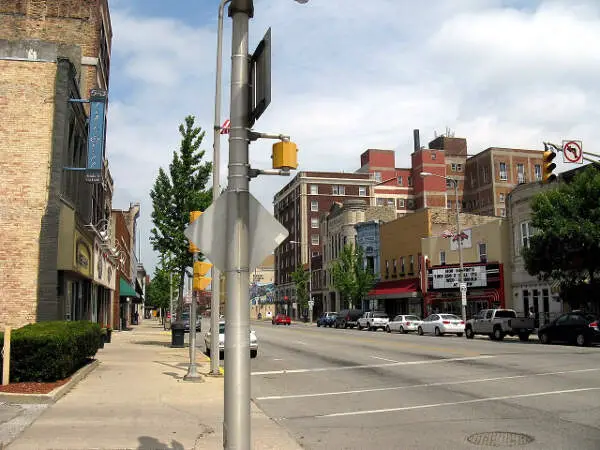
St. Louis vs. Chicago in photos
A side-by-side look at each city.






Cost of living
St. Louis is the cheaper city overall — 22% higher in Chicago than its rival. Index baseline: 100 = national average.
| Living expense | St. Louis | Chicago | US average |
|---|---|---|---|
| Overall | 89 | 114 | 100 |
| Services | 98 | 103 | 100 |
| Groceries | 96 | 99 | 100 |
| Health | 82 | 140 | 100 |
| Housing | 97 | 107 | 100 |
| Transportation | 96 | 104 | 100 |
| Utilities | 95 | 103 | 100 |
Lower index = cheaper. 100 = U.S. national average. Bar inside each cell scales relative to the highest value in the table.
Sources: HomeSnacks Cost of Living indices, normalized so 100 = U.S. national average. Drill in: St. Louis cost of living, Chicago cost of living, or the cheapest cities in America.
Housing breakdown
Home prices are higher in Chicago. Compare absolute price and price-to-income — a $500k home in a $100k-income city is very different from one in a $50k-income city.
| Metric | St. Louis | Chicago | United States |
|---|---|---|---|
| Median Home Value | $181,927 | $317,282 | $332,700 |
| Median Rent | $997 | $1,440 | $1,413 |
| Median Income | $56,160 | $77,902 | $80,734 |
| Home Value To Income | 3.2x | 4.1x | 4.1x |
| Rent To Monthly Income | 0.21x | 0.22x | 0.21x |
Source: U.S. Census Bureau ACS 2020-2024. See also states with the highest rent in America.
Crime
Chicago is the safer city — total crime rate of 4,012 per 100k people vs 7,074 for St. Louis. US average: 2,119.
| Crime (per 100k) | St. Louis | Chicago | US average |
|---|---|---|---|
| Total crime | 7,074 | 4,012 | 2,119 |
| Murder | 54 | 17 | 5 |
| Robbery | 250 | 335 | 61 |
| Aggravated Assault | 1,005 | 128 | 256 |
| Violent Crime | 1,367 | 540 | 359 |
| Burglary | 820 | 295 | 229 |
| Larceny | 3,412 | 2,319 | 1,272 |
| Car Theft | 1,475 | 859 | 259 |
| Property Crime | 5,707 | 3,472 | 1,760 |
Lower = safer. Bar inside each cell scales relative to the highest crime rate in the table.
Source: FBI Uniform Crime Reporting (2024). All rates are per 100,000 people. City pages: St. Louis crime, Chicago crime. See also: safest cities in America.
Diversity
Chicago is more racially diverse — lower HHI (closer to 0) means a more even mix across groups.
| Group | St. Louis | Chicago | United States |
|---|---|---|---|
| White | 44.4% | 32.1% | 57.4% |
| African American | 42.1% | 27.4% | 11.9% |
| American Indian | 0.2% | 0.1% | 0.5% |
| Asian | 3.5% | 7.2% | 5.9% |
| Hawaiian | 0.0% | 0.0% | 0.2% |
| Other | 0.5% | 0.4% | 0.6% |
| Two Or More | 4.0% | 3.0% | 4.3% |
| Hispanic | 5.3% | 29.7% | 19.3% |
Source: U.S. Census ACS 2020-2024. Lower HHI = more even racial mix. See also: most diverse cities in America.
SnackAbility — overall quality of life
Chicago scores higher overall — 7/10 vs 4/10. SnackAbility is our 1–10 quality-of-life score; the median U.S. city scores a 7.
Scores are 0–10; both bars share the same scale.
SnackAbility is a HomeSnacks proprietary 1–10 score blending jobs, housing, education, commute, amenities, affordability, crime, and diversity. Median U.S. city ≈ 7. Data: Census, BLS, FBI. See also: best places to live in America.
Getting around: St. Louis vs. Chicago
How each city handles commuting, transit, walkability, and car culture — the day-to-day reality that shapes where you'd actually want to live.
Getting around St. Louis means leaning heavily on a car. The MetroLink light rail connects the airport, downtown, and Clayton, and MetroBus fills some gaps, but most neighborhoods are built around driving. Surface streets and I-64 or I-44 move reasonably well outside rush hour, and the metro is small enough that true gridlock is rare.
Chicago is a different animal. The CTA's eight "L" train lines and an extensive bus grid mean you can live car-free in neighborhoods like Logan Square, Lincoln Park, or Hyde Park without much sacrifice. Metra commuter rail extends your reach to the suburbs, and Union Station puts Amtrak connections to Milwaukee and St. Paul within easy reach.
The catch is that Chicago's transit access costs money: median rent runs $1,440 versus St. Louis's $997.
Jobs and careers in St. Louis vs. Chicago
The local job market, dominant industries, and which city to choose based on your career.
St. Louis punches above its size in a handful of industries. Anheuser-Busch InBev, Centene Corporation, Edward Jones, and Boeing Defense all anchor the region, and the BJC HealthCare and Washington University medical corridor makes it a legitimate hub for health sciences. The tradeoff is a median household income of $56,160, which reflects a labor market that skews toward mid-level professional and manufacturing roles rather than high-paying finance or tech.
Chicago's economy is broader and better-compensated, with a median household income of $77,902. The Loop and Fulton Market District host major employers across finance (CME Group, Morningstar), tech, consulting, and logistics. United Airlines, Exelon, and a deep bench of professional services firms all call the city home.
Chicago's cost of living index of 114 will eat into that income advantage, but for career trajectory and sector diversity, it offers more runway.
Weather and climate
What to expect day-to-day — sun, fog, heat, rain, and the seasonal extremes that shape the lifestyle.
Both cities deliver a full four seasons with cold winters and hot, humid summers, so neither wins on comfort alone. St. Louis summers run slightly hotter, with stretches above 90°F from June through August, and the humidity off the Mississippi River makes it feel heavier than the thermometer suggests. Winters bring ice and some snow, but temperatures rarely stay below freezing for weeks at a time the way they do further north.
Chicago earns its "Windy City" reputation most fiercely in January and February, when lake-effect conditions off Lake Michigan push wind chills well below zero and snowfall accumulations can close streets overnight. Spring and fall are beautiful in both cities, though Chicago's lakefront spring runs cooler longer. If you hate brutal cold, St. Louis has a modest edge; if stifling heat is your bigger concern, Chicago's lake breezes offer occasional relief.
Culture, nightlife, and entertainment
Food, music, neighborhoods, and the city vibe that gives each place its personality.
St. Louis delivers more cultural bang per dollar than almost any city its size. Forest Park hosts the St. Louis Art Museum, the Saint Louis Science Center, and the Saint Louis Zoo, all free. The Soulard neighborhood is the heartbeat of the blues and bar scene, Midtown's Fabulous Fox Theatre brings major touring productions, and The Loop along Delmar Boulevard has independent restaurants and live venues.
The Gateway Arch and its riverfront park tie the whole downtown together in a way few American landmarks manage.
Chicago operates at a different scale. The Art Institute of Chicago and the Field Museum rank among the country's best, and the theater scene (Second City, Steppenwolf, the Goodman) is world-class. Neighborhoods like Wicker Park, Pilsen, and Andersonville each have distinct characters, nightlife, and dining identities.
If you want the full menu of a major global city, Chicago delivers; if you want a walkable, affordable, underrated cultural scene, St. Louis surprises.
Outdoor activities and day trips
Parks, beaches, hikes, and the weekend escapes that define life outside the city limits.
Forest Park is St. Louis's crown jewel. At 1,371 acres it's larger than New York's Central Park, and it holds trails, lagoons, tennis courts, and those free museum anchors all in one place. The Missouri Botanical Garden is a genuine world-class institution.
Day trips open up quickly: the Meramec Caverns, the Ozark hills, and the Katy Trail for cyclists are all within two hours. The Mississippi and Missouri rivers are scenic, though their banks aren't always accessible or pedestrian-friendly in the city proper.
Chicago's 26-mile lakefront trail along Lake Michigan is one of the great urban outdoor amenities in the country; runners, cyclists, and kayakers share it year-round. Millennium Park and Lincoln Park give the north side green breathing room, and the 606 elevated trail cuts through Wicker Park and Humboldt Park. When you need to escape the city, Indiana Dunes National Park is under an hour east, and the Morton Arboretum sits 25 miles west.
Bottom line: which city is right for you?
Based on the head-to-head data above, here's the short version — pick the city that lines up with what you actually care about.
Choose St. Louis if you prioritize…
- a lower cost of living (cheaper groceries, services, and day-to-day expenses).
Choose Chicago if you prioritize…
- lower crime — a safer place to live, work, and raise a family.
- more affordable housing relative to St. Louis.
- a more racially diverse community (lower HHI on Census data).
- a higher overall SnackAbility quality-of-life score.
Methodology: winners are picked from public data — U.S. Census Bureau ACS (income, home value, rent, race/HHI), FBI Uniform Crime Reporting (crime rates per 100k), and HomeSnacks' proprietary SnackAbility quality-of-life score, which blends Bureau of Labor Statistics data with the above.
Other comparisons
Still weighing your options? See how these two cities stack up against other places we've compared head-to-head.