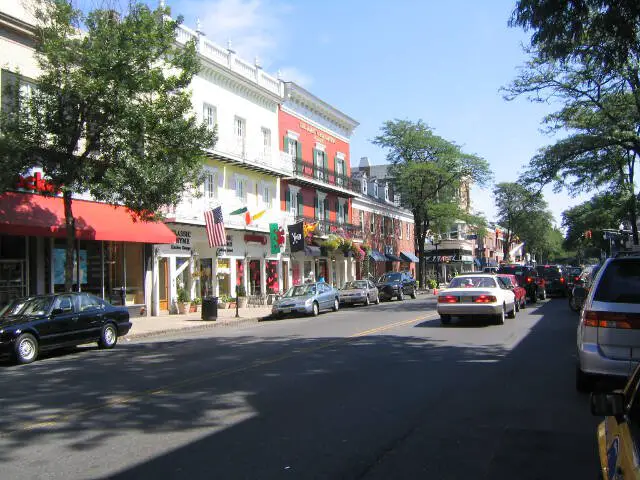
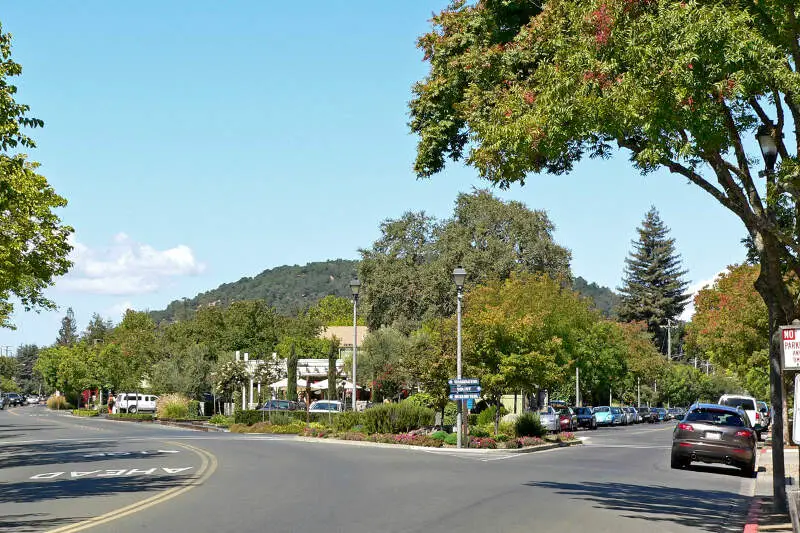
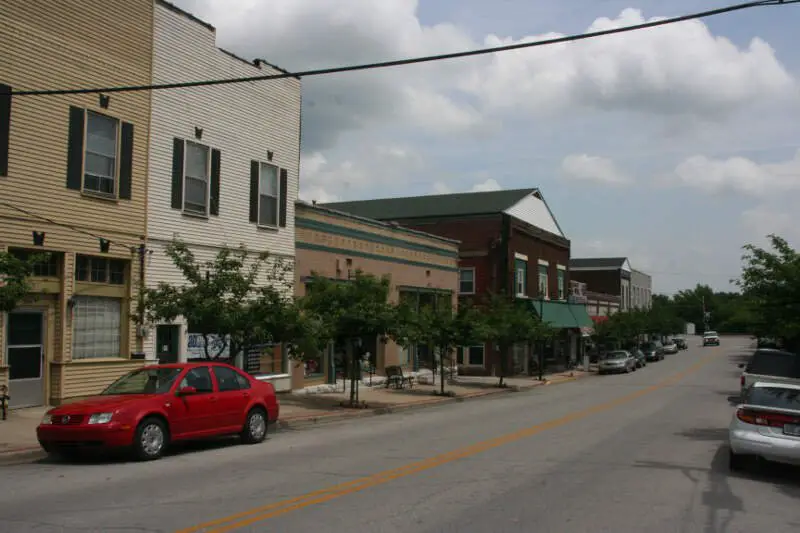
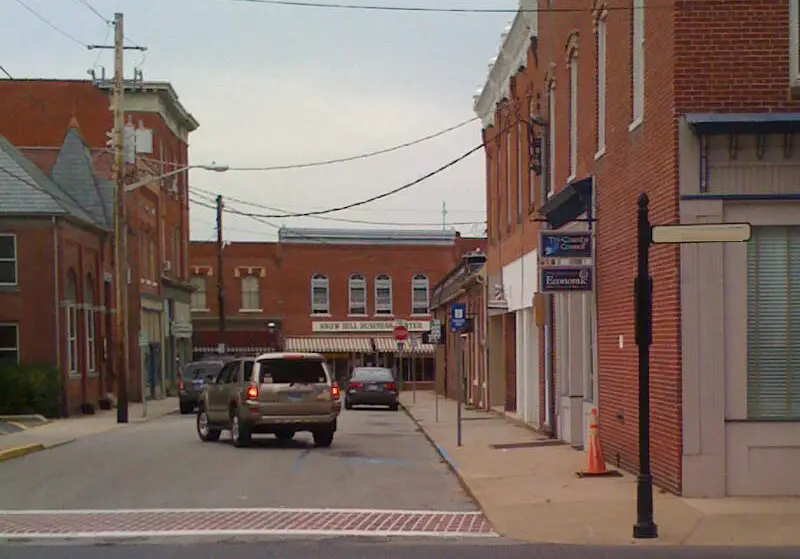
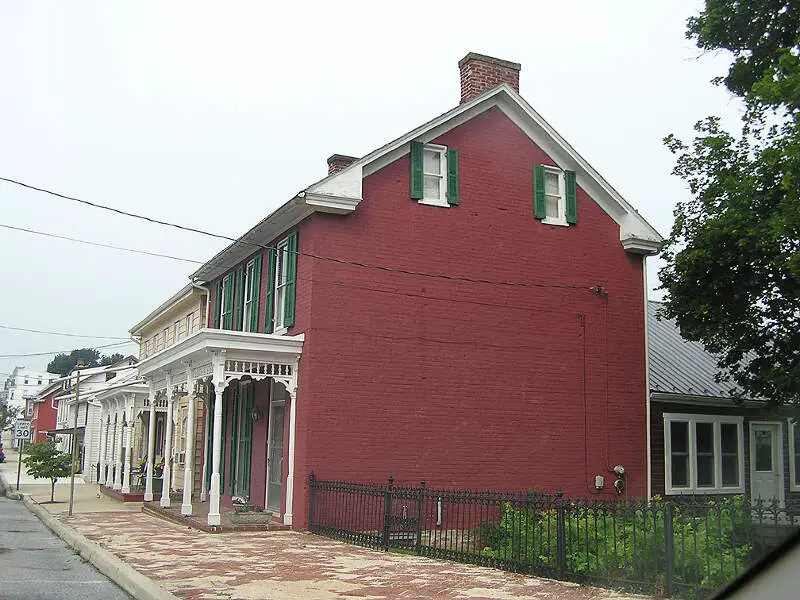
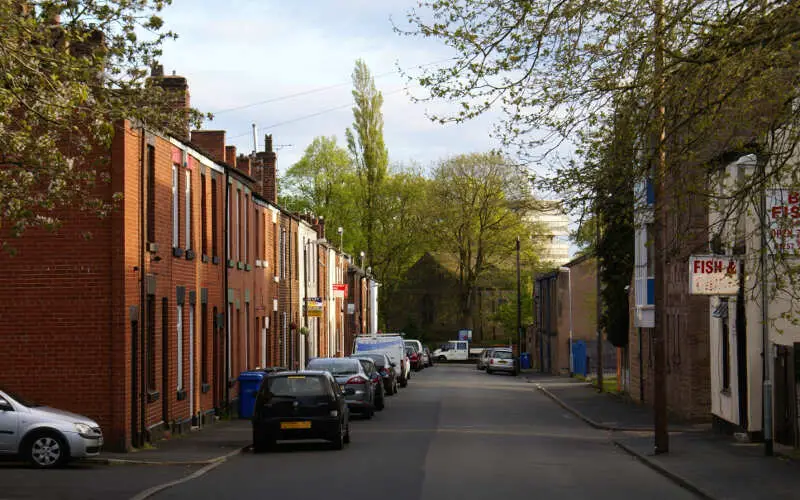
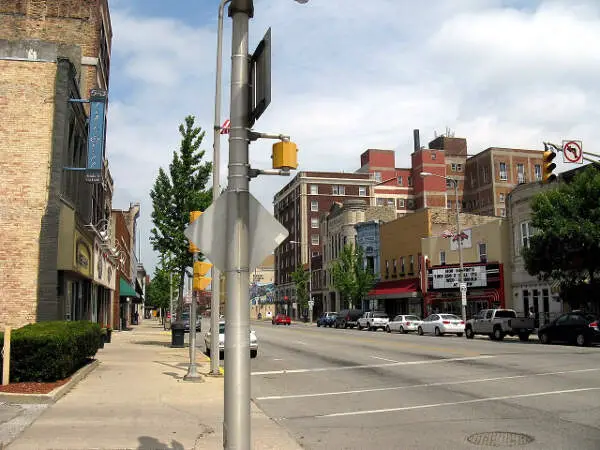
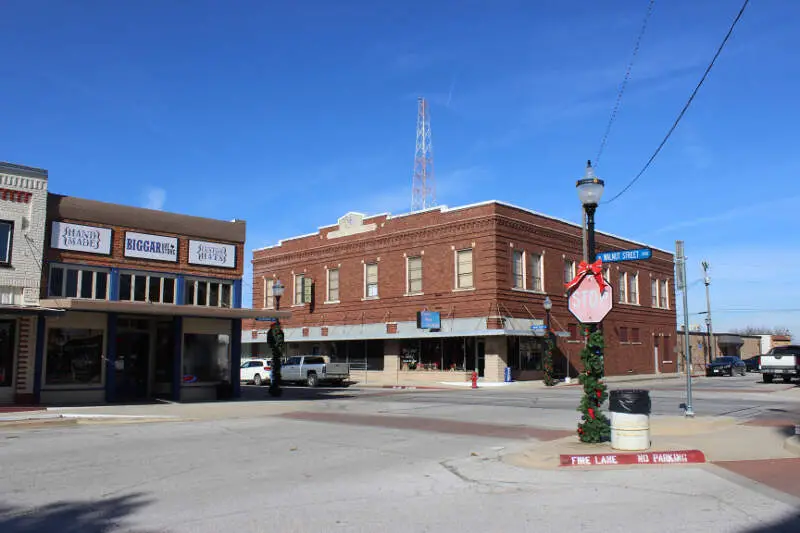
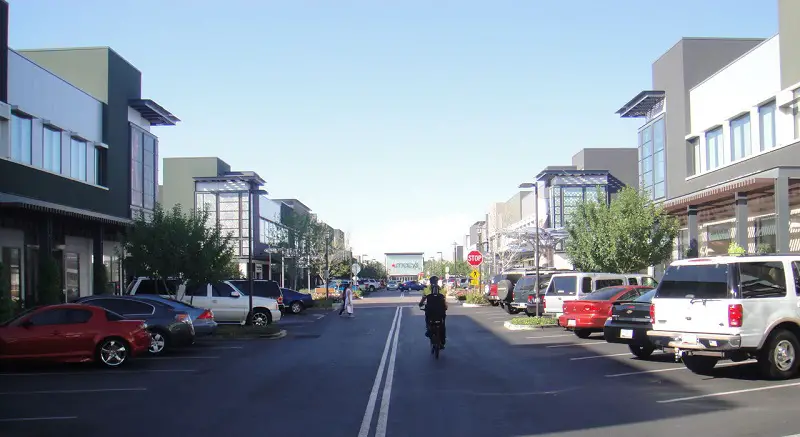
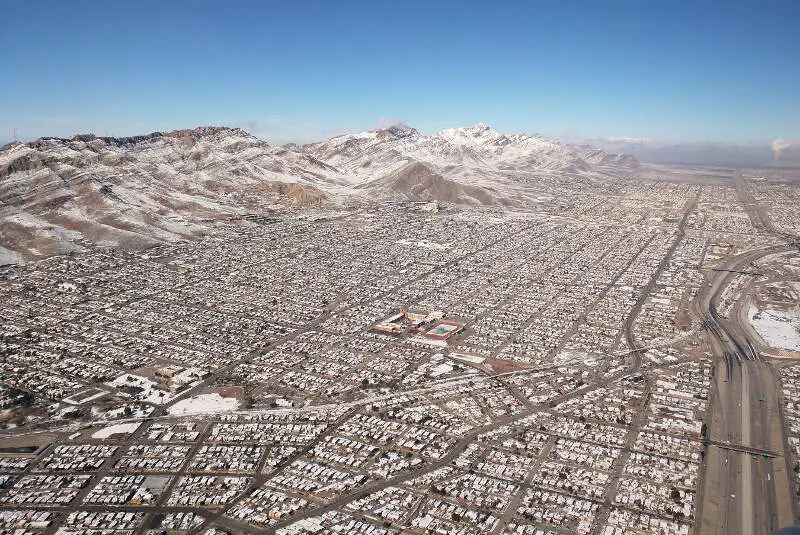
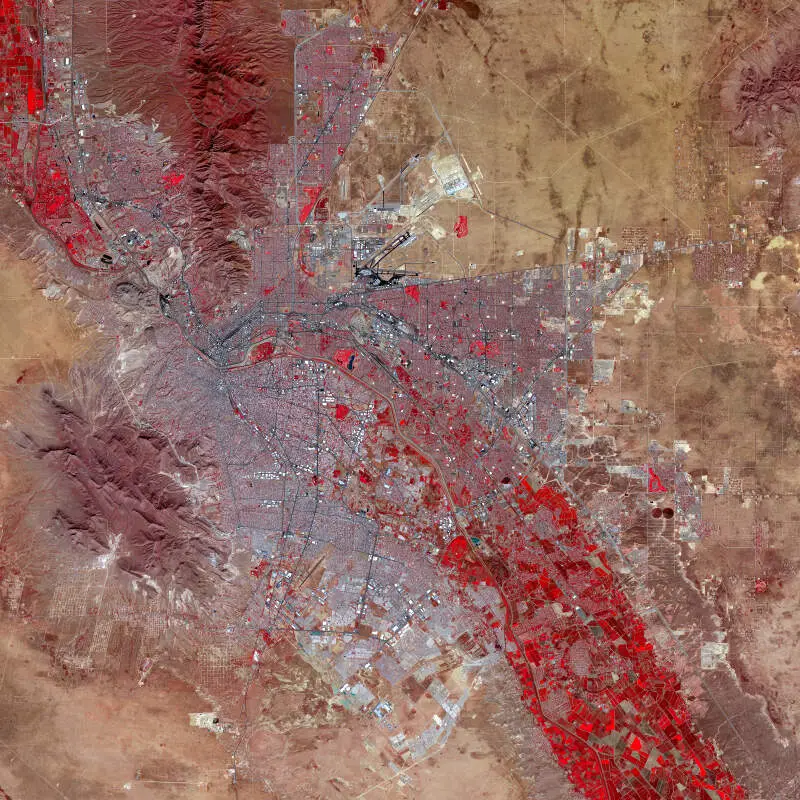
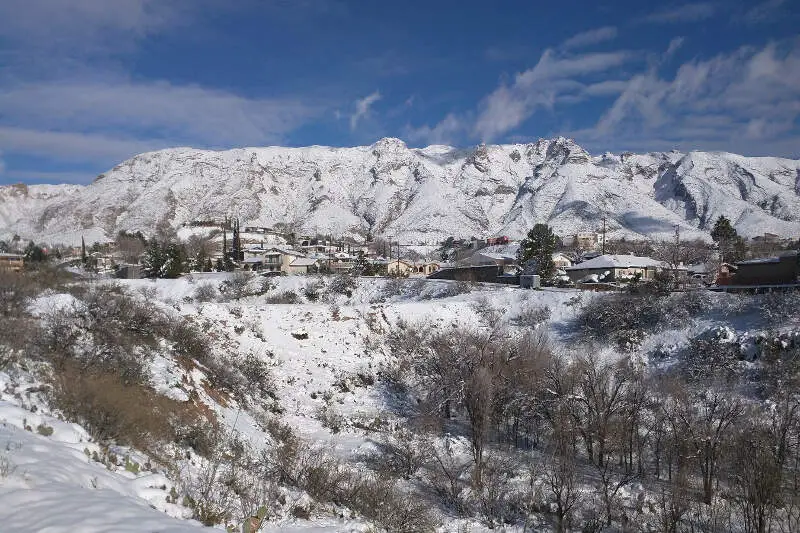
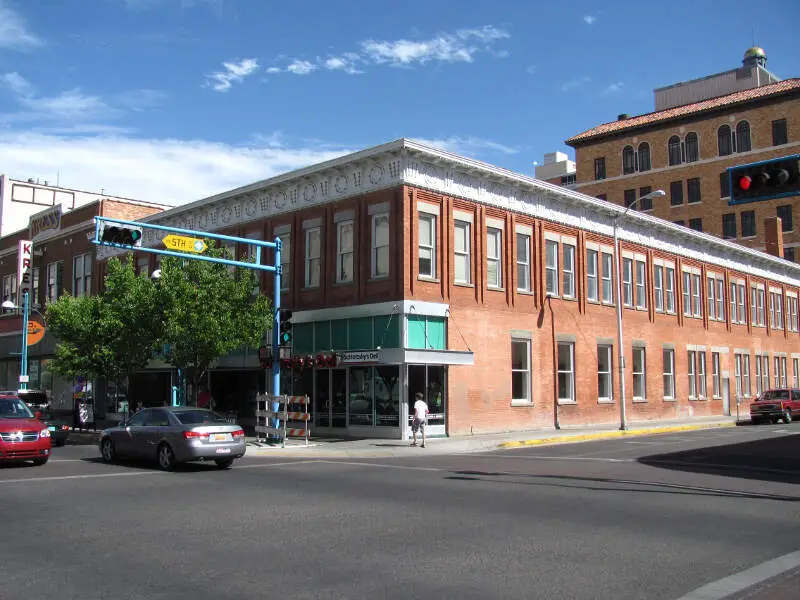
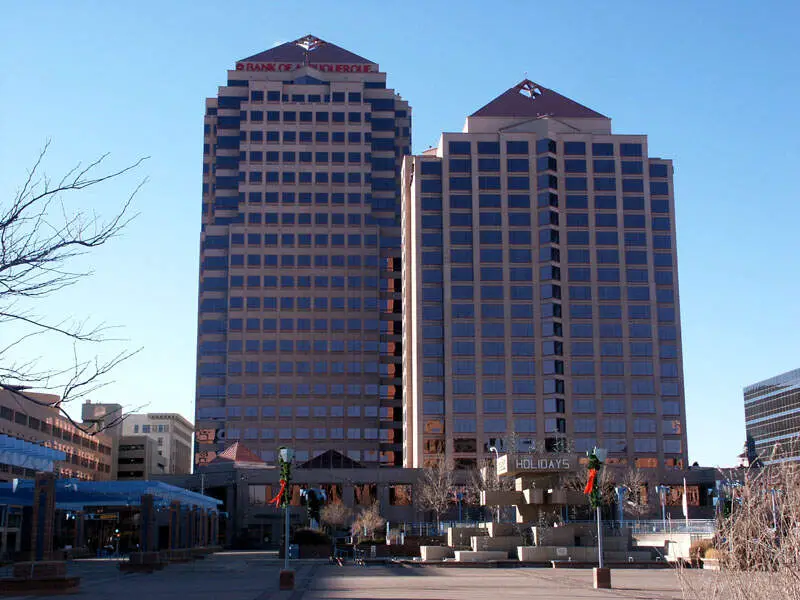
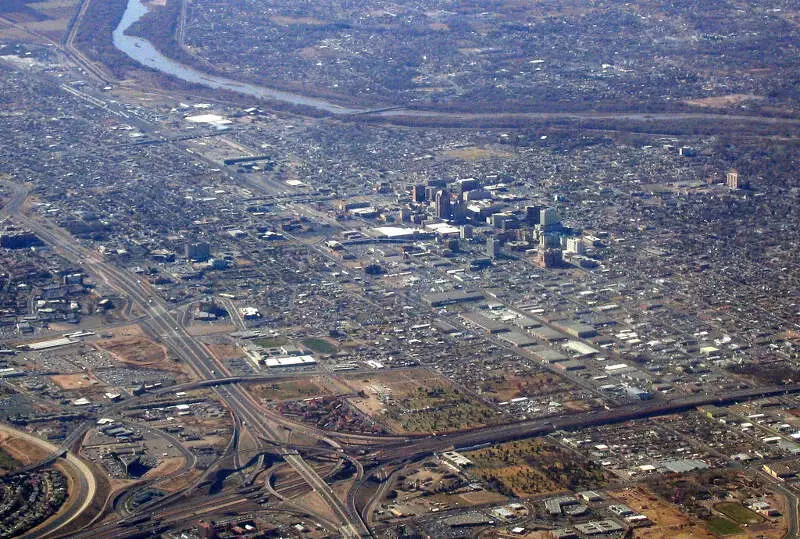
El Paso vs. Albuquerque in photos
A side-by-side look at each city.
Cost of living
El Paso is the cheaper city overall — 7% higher in Albuquerque than its rival. Index baseline: 100 = national average.
| Living expense | El Paso | Albuquerque | US average |
|---|---|---|---|
| Overall | 95 | 102 | 100 |
| Services | 99 | 97 | 100 |
| Groceries | 100 | 97 | 100 |
| Health | 79 | 110 | 100 |
| Housing | 104 | 97 | 100 |
| Transportation | 107 | 94 | 100 |
| Utilities | 98 | 97 | 100 |
Lower index = cheaper. 100 = U.S. national average. Bar inside each cell scales relative to the highest value in the table.
Sources: HomeSnacks Cost of Living indices, normalized so 100 = U.S. national average. Drill in: El Paso cost of living, Albuquerque cost of living, or the cheapest cities in America.
Housing breakdown
Home prices are higher in Albuquerque. Compare absolute price and price-to-income — a $500k home in a $100k-income city is very different from one in a $50k-income city.
| Metric | El Paso | Albuquerque | United States |
|---|---|---|---|
| Median Home Value | $234,774 | $344,457 | $332,700 |
| Median Rent | $1,073 | $1,145 | $1,413 |
| Median Income | $59,745 | $68,317 | $80,734 |
| Home Value To Income | 3.9x | 5.0x | 4.1x |
| Rent To Monthly Income | 0.22x | 0.2x | 0.21x |
Source: U.S. Census Bureau ACS 2020-2024. See also states with the highest rent in America.
Crime
El Paso is the safer city — total crime rate of 1,772 per 100k people vs 5,811 for Albuquerque. US average: 2,119.
| Crime (per 100k) | El Paso | Albuquerque | US average |
|---|---|---|---|
| Total crime | 1,772 | 5,811 | 2,119 |
| Murder | 3 | 18 | 5 |
| Robbery | 37 | 159 | 61 |
| Aggravated Assault | 238 | 942 | 256 |
| Violent Crime | 278 | 1,182 | 359 |
| Burglary | 140 | 772 | 229 |
| Larceny | 1,072 | 2,839 | 1,272 |
| Car Theft | 281 | 1,017 | 259 |
| Property Crime | 1,494 | 4,629 | 1,760 |
Lower = safer. Bar inside each cell scales relative to the highest crime rate in the table.
Source: FBI Uniform Crime Reporting (2024). All rates are per 100,000 people. City pages: El Paso crime, Albuquerque crime. See also: safest cities in America.
Diversity
Albuquerque is more racially diverse — lower HHI (closer to 0) means a more even mix across groups.
| Group | El Paso | Albuquerque | United States |
|---|---|---|---|
| White | 12.0% | 37.5% | 57.4% |
| African American | 3.2% | 2.9% | 11.9% |
| American Indian | 0.2% | 3.9% | 0.5% |
| Asian | 1.3% | 3.2% | 5.9% |
| Hawaiian | 0.2% | 0.1% | 0.2% |
| Other | 0.3% | 0.7% | 0.6% |
| Two Or More | 1.6% | 3.9% | 4.3% |
| Hispanic | 81.2% | 47.7% | 19.3% |
Source: U.S. Census ACS 2020-2024. Lower HHI = more even racial mix. See also: most diverse cities in America.
SnackAbility — overall quality of life
Albuquerque scores higher overall — 6/10 vs 5/10. SnackAbility is our 1–10 quality-of-life score; the median U.S. city scores a 7.
Scores are 0–10; both bars share the same scale.
SnackAbility is a HomeSnacks proprietary 1–10 score blending jobs, housing, education, commute, amenities, affordability, crime, and diversity. Median U.S. city ≈ 7. Data: Census, BLS, FBI. See also: best places to live in America.
Getting around: El Paso vs. Albuquerque
How each city handles commuting, transit, walkability, and car culture — the day-to-day reality that shapes where you'd actually want to live.
Both cities are car-dependent, and if you commute by car, expect that reality in El Paso and Albuquerque alike. El Paso's Sun Metro bus network covers the city reasonably well, and the Brio rapid transit corridor along Montana and Alameda avenues saves real time for eastside and westside commuters. Living near the border also means cross-traffic from Ciudad Juárez funneling through a handful of international bridges, which can add unpredictable time to trips on the south side.
Albuquerque has ABQ Ride for local bus service and a leg up on intercity travel through the Rail Runner Express, a commuter train that connects downtown to Santa Fe in about 90 minutes, useful if you work in either city. I-25 and I-40 are the main arteries, and rush-hour congestion, while not on a Phoenix or Denver scale, is a daily factor along the Big I interchange. Both cities have functional airports; El Paso International and Albuquerque's Sunport offer similar regional connectivity.
Jobs and careers in El Paso vs. Albuquerque
The local job market, dominant industries, and which city to choose based on your career.
El Paso's economy leans heavily on Fort Bliss, one of the largest Army installations in the country, which drives healthcare, defense contracting, and logistics jobs across the metro. The University of Texas at El Paso (UTEP) anchors education and research hiring, and cross-border trade through the ports of entry supports a steady warehouse and supply-chain sector. Median household income sits at $59,745, and the cost of living index of 95 means your dollar stretches a bit further than average.
Albuquerque carries a stronger professional and technical employment base. Sandia National Laboratories and Kirtland Air Force Base together employ thousands of engineers and scientists, and the University of New Mexico is a major anchor for healthcare and research work. Median household income of $68,317 reflects that mix of higher-skill roles, though the cost of living index of 102 slightly erodes the advantage.
If you're in STEM, defense tech, or higher education, Albuquerque's job market gives you noticeably more runway.
Weather and climate
What to expect day-to-day — sun, fog, heat, rain, and the seasonal extremes that shape the lifestyle.
El Paso is one of the sunniest cities in the United States, with roughly 300 days of sunshine per year, and sits at about 3,700 feet elevation, which takes the edge off summer afternoons that can still push past 100°F. Winters are genuinely mild, with daytime highs often in the 50s and 60s and only occasional light freezes. Rain is scarce, and when it arrives it usually comes as brief summer monsoon bursts in July and August.
Albuquerque is also sunny and dry but sits around 5,300 feet, which changes the texture of the seasons noticeably. Summers are warm rather than scorching, with highs in the upper 80s to low 90s most days, and evenings cool down fast. Winters bring occasional snow, especially in the Sandia foothills, and temperatures can dip into the 20s overnight.
If you find El Paso summers brutal, Albuquerque's altitude gives you a real buffer; if you hate any chance of scraping your windshield, El Paso wins.
Culture, nightlife, and entertainment
Food, music, neighborhoods, and the city vibe that gives each place its personality.
El Paso's cultural identity is inseparable from its position on the border. The food scene is defined by authentic Tex-Mex and Mexican cooking: Socorro-style burritos and red chile from places that have been around for decades. The Union Plaza entertainment district downtown draws live music on weekends, and the art deco architecture along San Jacinto Plaza gives the historic core real character.
The El Paso Museum of Art and the Chamizal National Memorial are worth knowing if you're settling in.
Albuquerque has a denser and more varied nightlife and dining scene relative to its size. Nob Hill along Central Avenue, Old Route 66, clusters independent restaurants, brewpubs, and music venues in walkable blocks. The craft beer scene is serious: Marble Brewery, Bosque Brewing, and La Cumbre all have devoted local followings.
Old Town preserves Spanish colonial architecture and hosts galleries and markets year-round. The International Balloon Fiesta each October is a genuine civic event that draws the whole city out.
Outdoor activities and day trips
Parks, beaches, hikes, and the weekend escapes that define life outside the city limits.
El Paso punches well above its weight for outdoor access. Franklin Mountains State Park, the largest urban state park in the country, sits right inside city limits and puts mountain biking, hiking, and rock climbing minutes from most zip codes. Hueco Tanks State Park to the northeast is a world-class destination for bouldering and hosts significant Native American rock art.
For bigger wilderness, the Guadalupe Mountains and White Sands National Park are both within two hours.
The Sandia Mountains define Albuquerque's eastern skyline, and the Sandia Peak Tramway lifts you to 10,378 feet for hiking in summer and skiing in winter. The Rio Grande bosque, a ribbon of cottonwood forest running through the city, offers flat trail miles for cycling and birding. Petroglyph National Monument on the West Mesa is an easy half-day from anywhere in town.
For weekend escapes, the Jemez Mountains and the Valles Caldera are under 90 minutes north, giving Albuquerque a slight edge in sheer terrain variety.
Bottom line: which city is right for you?
Based on the head-to-head data above, here's the short version — pick the city that lines up with what you actually care about.
Choose El Paso if you prioritize…
- a lower cost of living (cheaper groceries, services, and day-to-day expenses).
- lower crime — a safer place to live, work, and raise a family.
Choose Albuquerque if you prioritize…
- more affordable housing relative to El Paso.
- a more racially diverse community (lower HHI on Census data).
- a higher overall SnackAbility quality-of-life score.
Methodology: winners are picked from public data — U.S. Census Bureau ACS (income, home value, rent, race/HHI), FBI Uniform Crime Reporting (crime rates per 100k), and HomeSnacks' proprietary SnackAbility quality-of-life score, which blends Bureau of Labor Statistics data with the above.
Other comparisons
Still weighing your options? See how these two cities stack up against other places we've compared head-to-head.