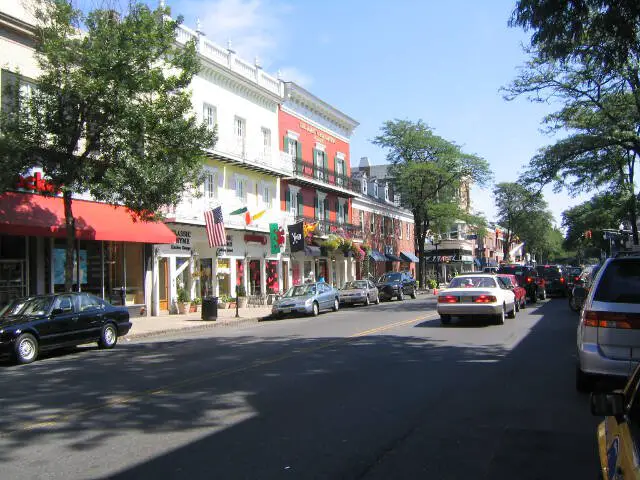
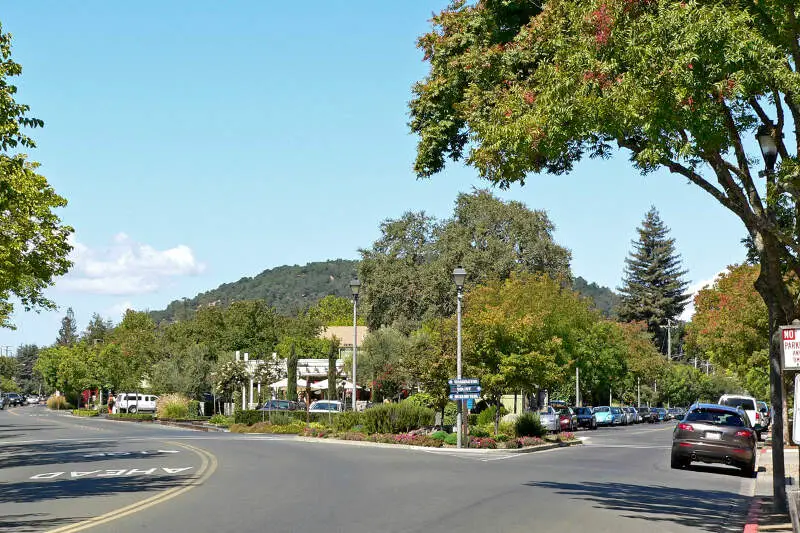
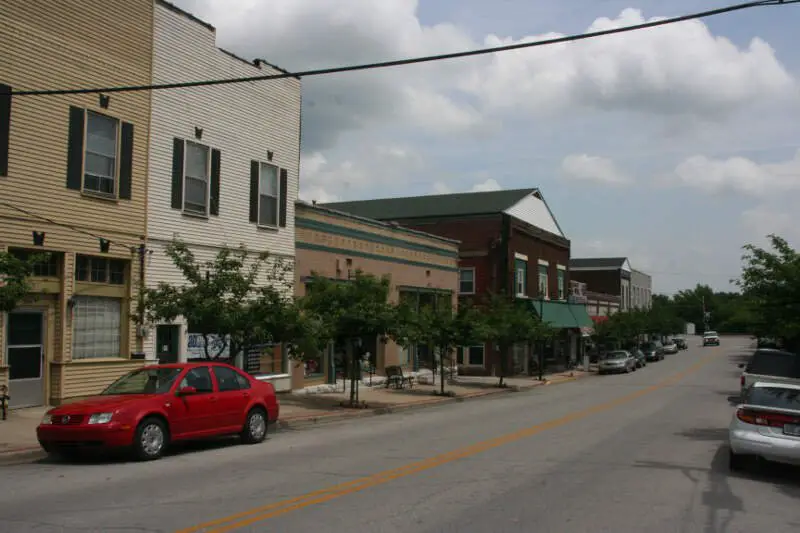
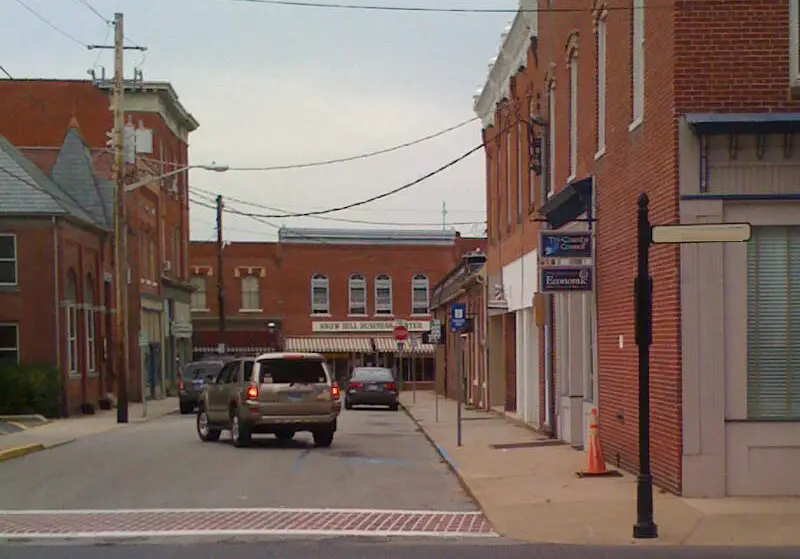
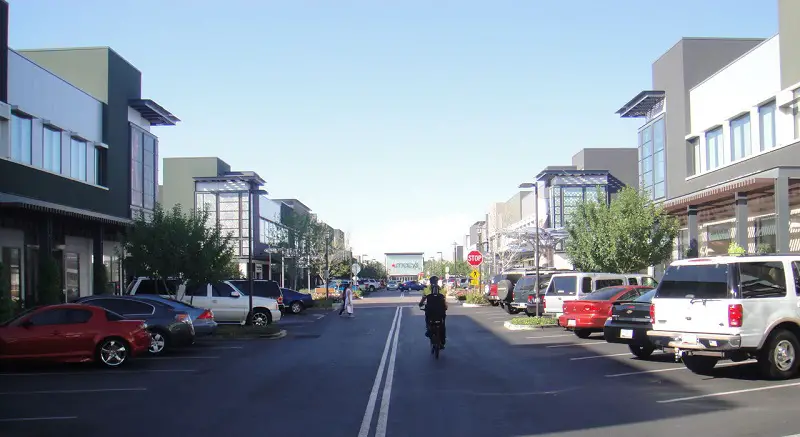
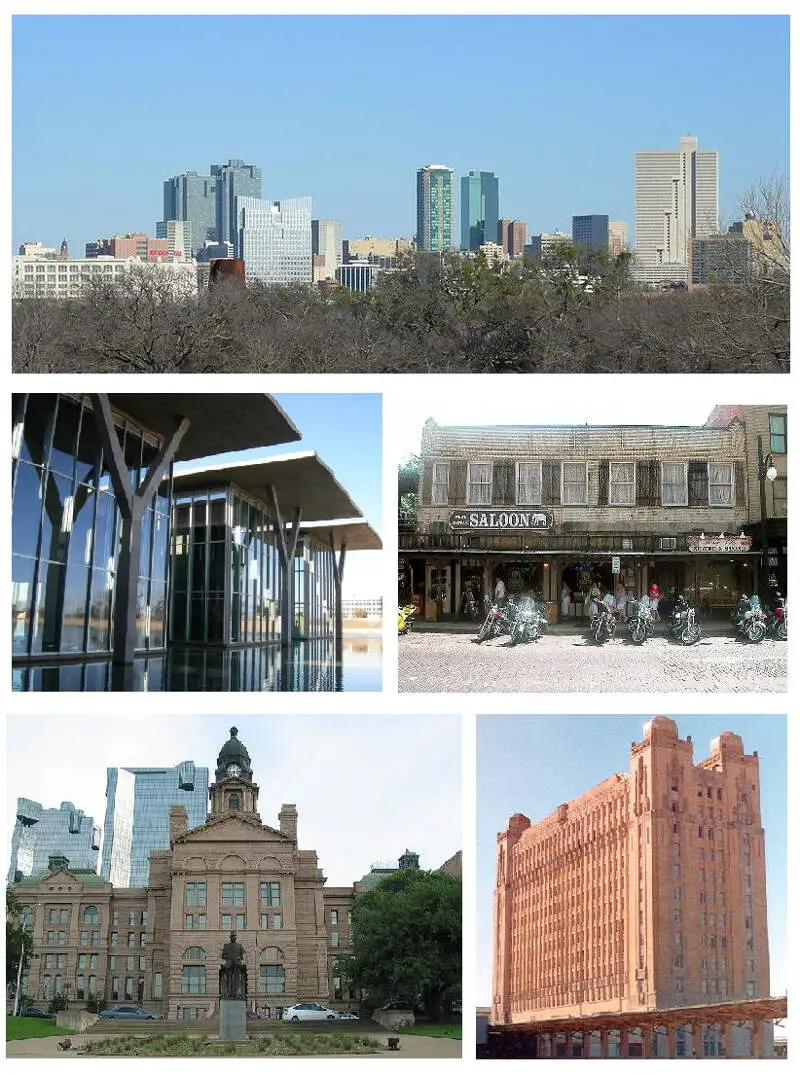
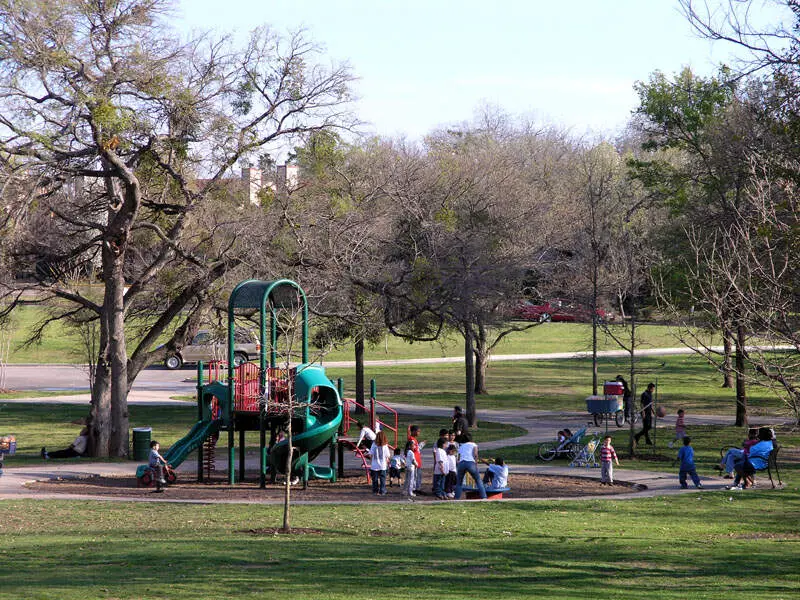
Fort Worth vs. Dallas in photos
A side-by-side look at each city.




Cost of living
Fort Worth is the cheaper city overall — 2% higher in Dallas than its rival. Index baseline: 100 = national average.
| Living expense | Fort Worth | Dallas | US average |
|---|---|---|---|
| Overall | 104 | 106 | 100 |
| Services | 101 | 102 | 100 |
| Groceries | 103 | 103 | 100 |
| Health | 105 | 115 | 100 |
| Housing | 100 | 106 | 100 |
| Transportation | 108 | 108 | 100 |
| Utilities | 101 | 104 | 100 |
Lower index = cheaper. 100 = U.S. national average. Bar inside each cell scales relative to the highest value in the table.
Sources: HomeSnacks Cost of Living indices, normalized so 100 = U.S. national average. Drill in: Fort Worth cost of living, Dallas cost of living, or the cheapest cities in America.
Housing breakdown
Home prices are higher in Dallas. Compare absolute price and price-to-income — a $500k home in a $100k-income city is very different from one in a $50k-income city.
| Metric | Fort Worth | Dallas | United States |
|---|---|---|---|
| Median Home Value | $298,050 | $309,420 | $332,700 |
| Median Rent | $1,509 | $1,472 | $1,413 |
| Median Income | $79,507 | $70,518 | $80,734 |
| Home Value To Income | 3.7x | 4.4x | 4.1x |
| Rent To Monthly Income | 0.23x | 0.25x | 0.21x |
Source: U.S. Census Bureau ACS 2020-2024. See also states with the highest rent in America.
Crime
Fort Worth is the safer city — total crime rate of 3,158 per 100k people vs 4,010 for Dallas. US average: 2,119.
| Crime (per 100k) | Fort Worth | Dallas | US average |
|---|---|---|---|
| Total crime | 3,158 | 4,010 | 2,119 |
| Murder | 7 | 14 | 5 |
| Robbery | 73 | 169 | 61 |
| Aggravated Assault | 323 | 440 | 256 |
| Violent Crime | 458 | 658 | 359 |
| Burglary | 345 | 464 | 229 |
| Larceny | 1,842 | 1,787 | 1,272 |
| Car Theft | 513 | 1,100 | 259 |
| Property Crime | 2,700 | 3,352 | 1,760 |
Lower = safer. Bar inside each cell scales relative to the highest crime rate in the table.
Source: FBI Uniform Crime Reporting (2024). All rates are per 100,000 people. City pages: Fort Worth crime, Dallas crime. See also: safest cities in America.
Diversity
Fort Worth is more racially diverse — lower HHI (closer to 0) means a more even mix across groups.
| Group | Fort Worth | Dallas | United States |
|---|---|---|---|
| White | 36.5% | 27.6% | 57.4% |
| African American | 19.3% | 22.9% | 11.9% |
| American Indian | 0.1% | 0.2% | 0.5% |
| Asian | 5.4% | 3.8% | 5.9% |
| Hawaiian | 0.1% | 0.1% | 0.2% |
| Other | 0.5% | 0.3% | 0.6% |
| Two Or More | 3.4% | 2.6% | 4.3% |
| Hispanic | 34.6% | 42.6% | 19.3% |
Source: U.S. Census ACS 2020-2024. Lower HHI = more even racial mix. See also: most diverse cities in America.
SnackAbility — overall quality of life
Fort Worth and Dallas tied at 5/10.
Scores are 0–10; both bars share the same scale.
SnackAbility is a HomeSnacks proprietary 1–10 score blending jobs, housing, education, commute, amenities, affordability, crime, and diversity. Median U.S. city ≈ 7. Data: Census, BLS, FBI. See also: best places to live in America.
Getting around: Fort Worth vs. Dallas
How each city handles commuting, transit, walkability, and car culture — the day-to-day reality that shapes where you'd actually want to live.
Both cities are built for the car, so transit experience varies sharply depending on where you land in the Metroplex. Dallas has the clearer edge: DART's light-rail network spans roughly 93 miles across four lines, connecting downtown to suburbs like Plano, Garland, and Irving, along with bus rapid transit and commuter rail. Fort Worth runs Trinity Metro's TEXRail, a commuter line that's genuinely useful for reaching DFW Airport, plus local bus service, but the overall network is thinner and far fewer destinations are reachable without a car.
For drivers, both cities deal with serious highway congestion. I-35W, I-30, and the Loop 820 interchange will test your patience in Fort Worth; Dallas's tangle of I-35E, I-45, and US-75 can be just as punishing during peak hours. Living closer to your job will matter more than which city you pick.
Jobs and careers in Fort Worth vs. Dallas
The local job market, dominant industries, and which city to choose based on your career.
Fort Worth's median household income of $79,507 actually edges out Dallas's $70,518, a notable gap given that Dallas has roughly 350,000 more residents and a reputation as the Metroplex's economic engine. Fort Worth's job base leans heavily on aerospace and defense (Lockheed Martin's largest facility is here), rail logistics (BNSF Railway is headquartered on the Near Southside), and aviation (American Airlines calls Fort Worth home). A growing healthcare sector anchored by JPS Health Network and Texas Health Resources rounds out the picture.
Dallas casts a wider net. AT&T, Southwest Airlines, Toyota North America, and a deepening tech corridor along the 75 corridor and in Uptown draw white-collar workers from finance, consulting, telecom, and software. If you're in a specialized professional field like law, finance, marketing, or enterprise tech, Dallas likely offers more options and a larger talent network for career moves.
Weather and climate
What to expect day-to-day — sun, fog, heat, rain, and the seasonal extremes that shape the lifestyle.
If weather is your deciding factor, you'll find very little daylight between these two cities. They sit about 30 miles apart and share essentially the same North Texas climate. Summers are relentless in both: expect temperatures above 95°F for weeks at a stretch from June through September, with Dallas historically running a degree or two hotter due to its greater urban heat-island effect.
Winters are mild but unpredictable. Most years you'll wear a light jacket, but ice storms do occur, as the February 2021 freeze that hit both cities hard showed. Humidity is moderate compared to Houston, but summer evenings rarely feel comfortable by most standards.
Spring is the season to watch. Both cities fall squarely in tornado alley, and severe storms with large hail are a real annual concern from March through May. Know where your safe room is regardless of which city you choose.
Culture, nightlife, and entertainment
Food, music, neighborhoods, and the city vibe that gives each place its personality.
Fort Worth leans into its Western identity without apology. The Stockyards National Historic District in North Fort Worth still hosts a twice-daily longhorn cattle drive down Exchange Avenue, and the honky-tonks and rodeo culture there are the genuine article, not a theme park imitation. Downtown's Sundance Square is a walkable entertainment hub, and the Cultural District, anchored by the Kimbell Art Museum, the Modern Art Museum of Fort Worth, and the Amon Carter Museum, rivals anything in the region for serious art lovers.
Dallas plays in a different lane: bigger, more cosmopolitan, and more focused on what's current. Deep Ellum is the city's creative heartbeat, packed with live music venues, street art, and late-night bars. Uptown and the Design District draw a younger professional crowd.
The AT&T Performing Arts Center anchors what the city bills as the largest arts district in the nation. If you want more variety in nightlife and dining, Dallas wins; if you want character and a distinct sense of place, Fort Worth holds its own.
Outdoor activities and day trips
Parks, beaches, hikes, and the weekend escapes that define life outside the city limits.
Fort Worth's signature outdoor asset is the Trinity Trails system, over 100 miles of paved paths that follow the Trinity River and its forks through the city, connecting neighborhoods in a way that's genuinely useful for cyclists and runners. Benbrook Lake on the southwest edge of the city offers boating, fishing, and lakeside hiking. The Fort Worth Nature Center and Refuge preserves more than 3,600 acres of prairies and bottomland forest just minutes from downtown.
Dallas counters with White Rock Lake, a 1,015-acre reservoir inside the city limits that anchors one of the most beloved trail loops in the Metroplex. Klyde Warren Park, built over a freeway trench, is a popular urban green space in the heart of downtown. For more serious hiking, Cedar Ridge Preserve in southwest Dallas offers limestone canyon terrain that surprises most newcomers.
Neither city is a gateway to dramatic wilderness. Big Bend and the Hill Country both require a road trip. But both Fort Worth and Dallas offer solid everyday outdoor options for a flat, urban landscape.
Bottom line: which city is right for you?
Based on the head-to-head data above, here's the short version — pick the city that lines up with what you actually care about.
Choose Fort Worth if you prioritize…
- a lower cost of living (cheaper groceries, services, and day-to-day expenses).
- lower crime — a safer place to live, work, and raise a family.
- a more racially diverse community (lower HHI on Census data).
Choose Dallas if you prioritize…
- more affordable housing relative to Fort Worth.
Methodology: winners are picked from public data — U.S. Census Bureau ACS (income, home value, rent, race/HHI), FBI Uniform Crime Reporting (crime rates per 100k), and HomeSnacks' proprietary SnackAbility quality-of-life score, which blends Bureau of Labor Statistics data with the above.
Other comparisons
Still weighing your options? See how these two cities stack up against other places we've compared head-to-head.