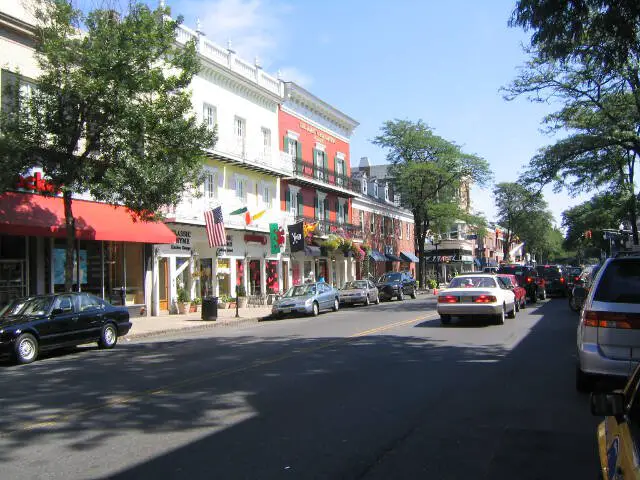
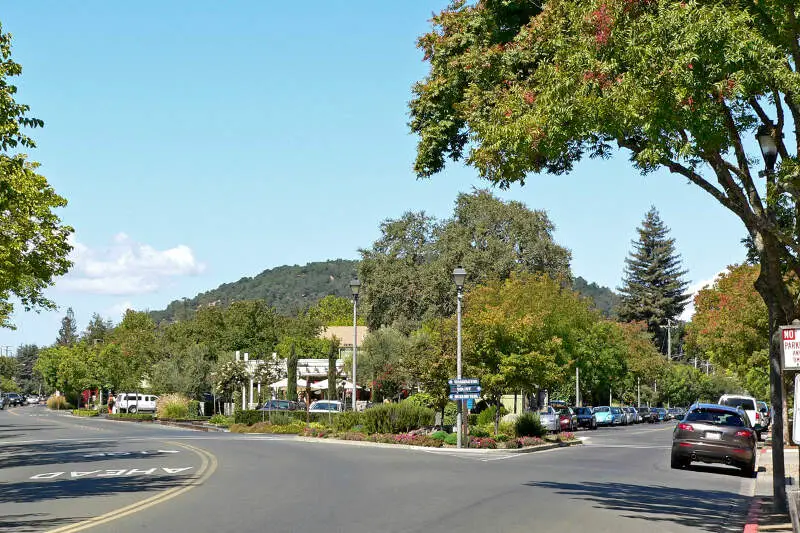
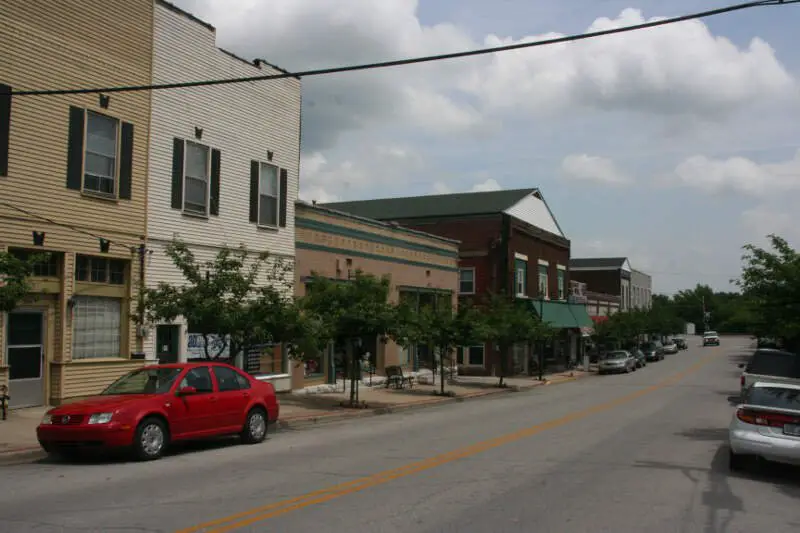
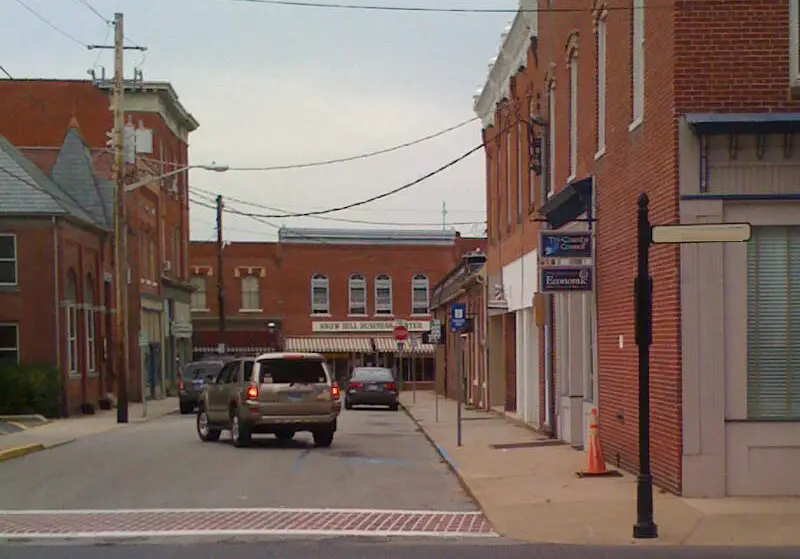
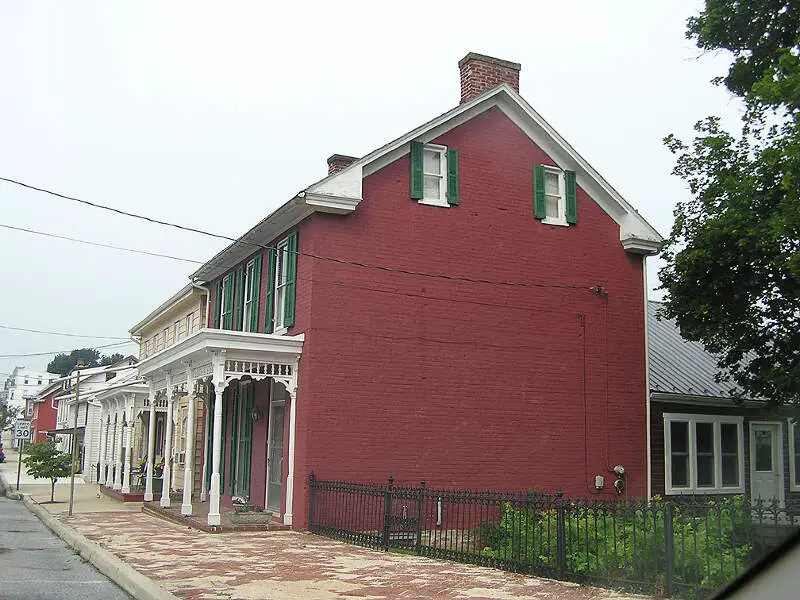
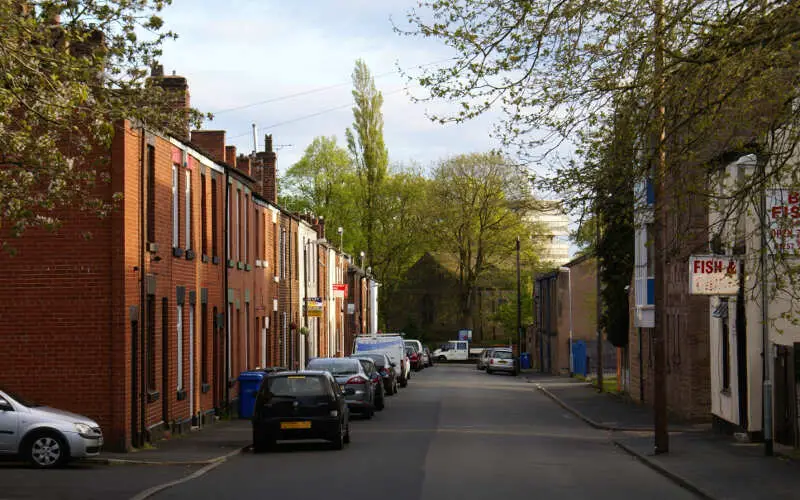
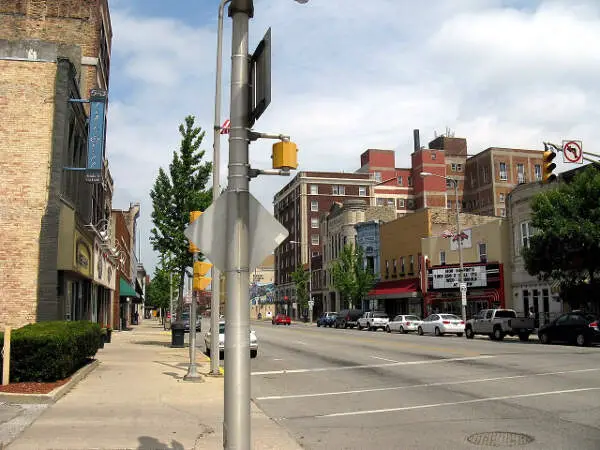
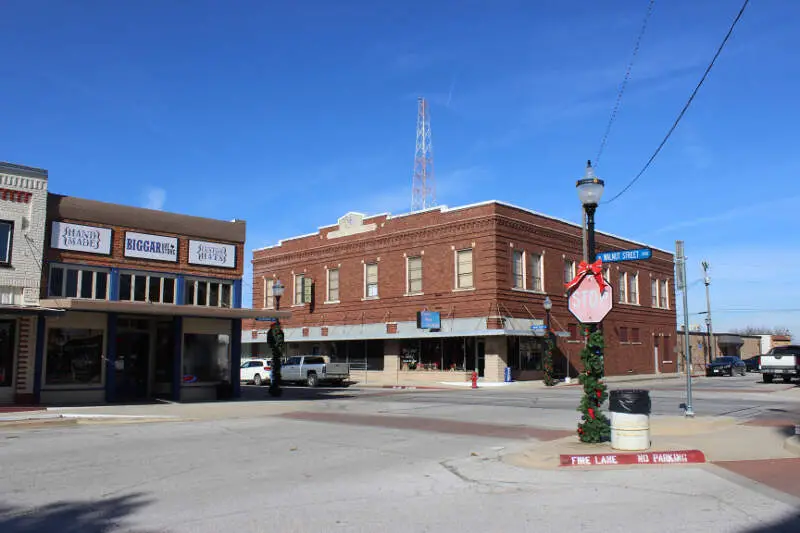
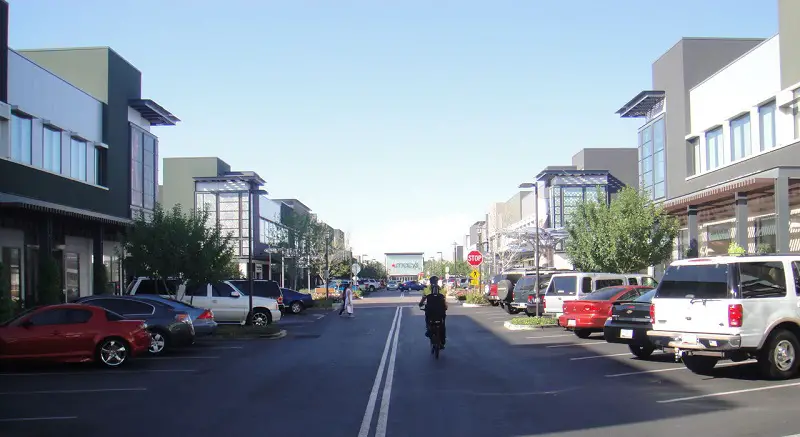
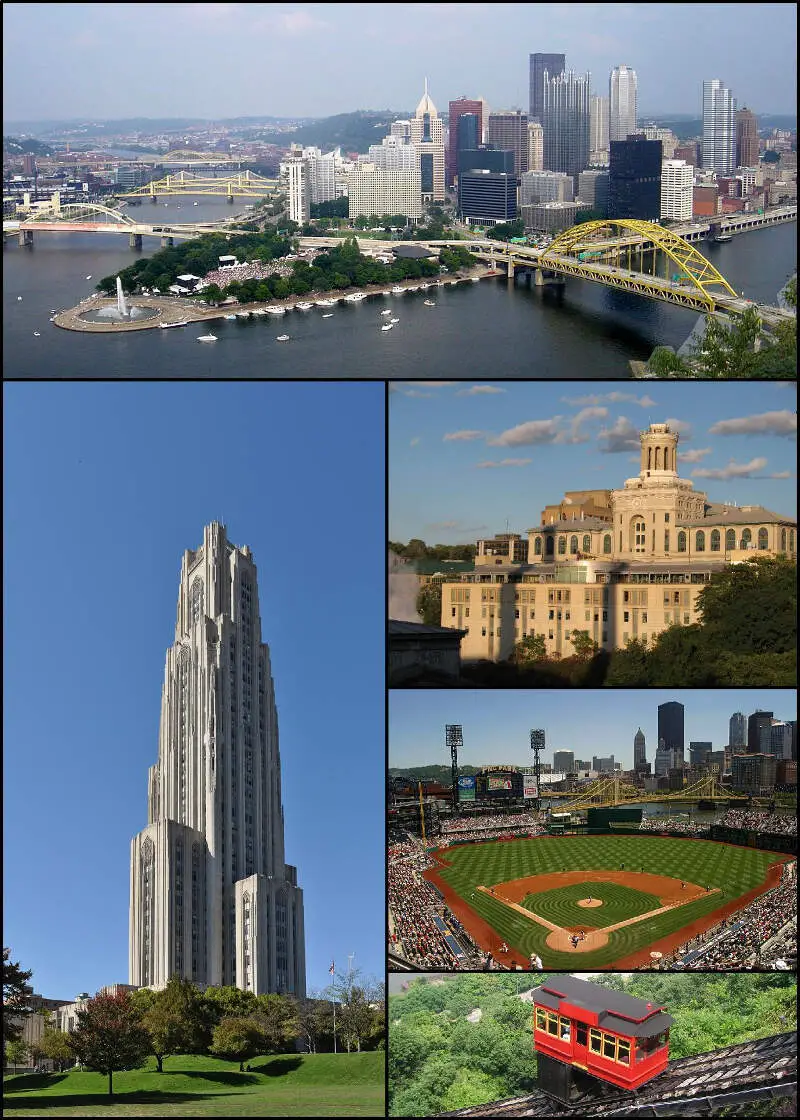
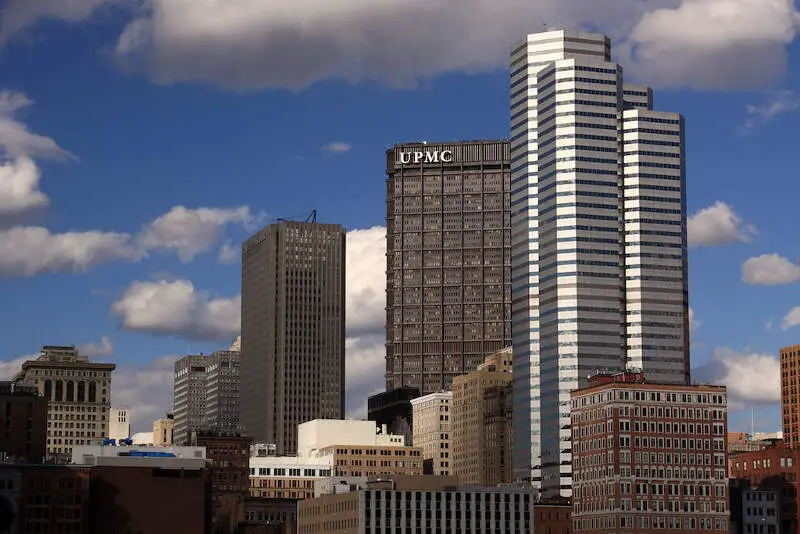
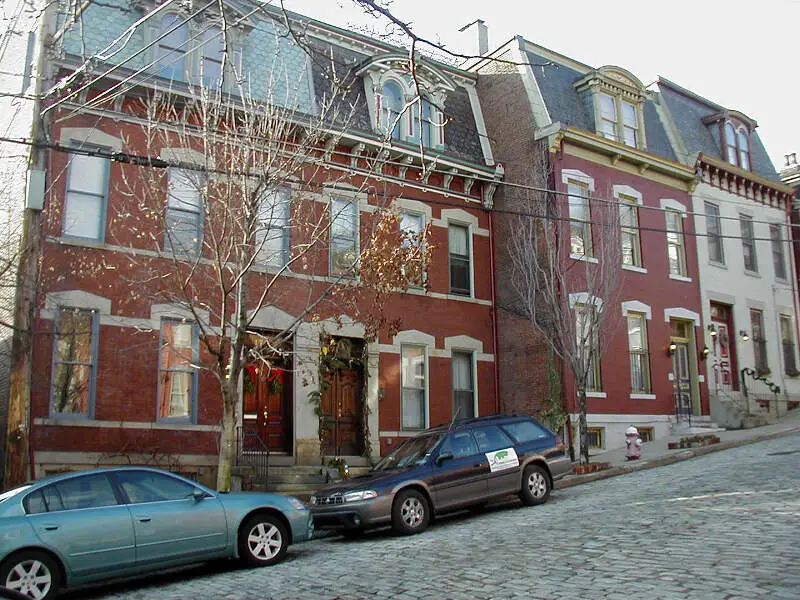
Pittsburgh vs. Baltimore in photos
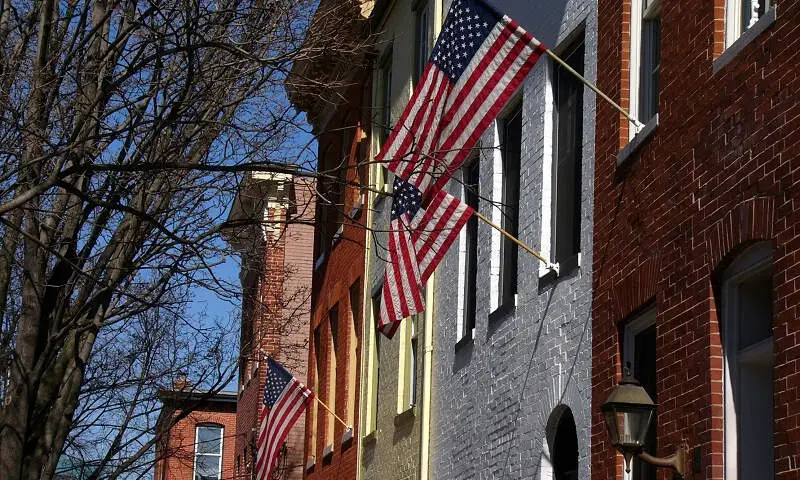
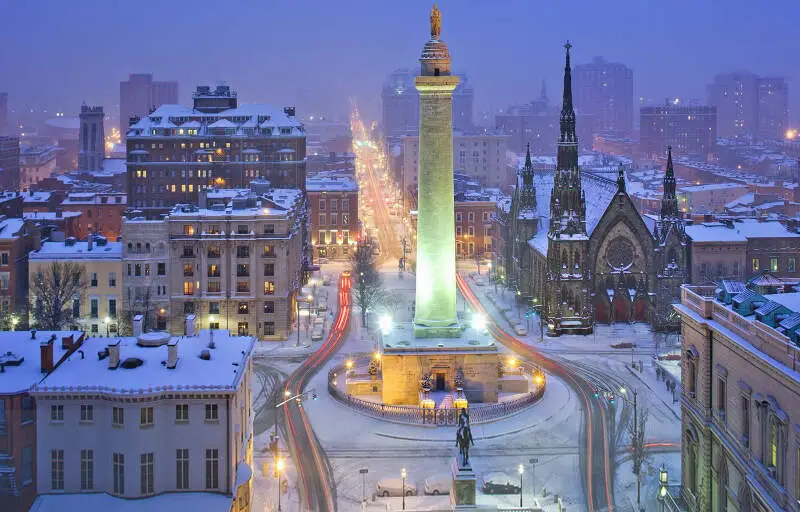
A side-by-side look at each city.

Cost of living
Pittsburgh is the cheaper city overall — 10% higher in Baltimore than its rival. Index baseline: 100 = national average.
| Living expense | Pittsburgh | Baltimore | US average |
|---|---|---|---|
| Overall | 98 | 109 | 100 |
| Services | 97 | 109 | 100 |
| Groceries | 101 | 114 | 100 |
| Health | 84 | 99 | 100 |
| Housing | 105 | 114 | 100 |
| Transportation | 106 | 112 | 100 |
| Utilities | 99 | 109 | 100 |
Lower index = cheaper. 100 = U.S. national average. Bar inside each cell scales relative to the highest value in the table.
Sources: HomeSnacks Cost of Living indices, normalized so 100 = U.S. national average. Drill in: Pittsburgh cost of living, Baltimore cost of living, or the cheapest cities in America.
Housing breakdown
Home prices are higher in Pittsburgh. Compare absolute price and price-to-income — a $500k home in a $100k-income city is very different from one in a $50k-income city.
| Metric | Pittsburgh | Baltimore | United States |
|---|---|---|---|
| Median Home Value | $237,533 | $188,101 | $332,700 |
| Median Rent | $1,261 | $1,331 | $1,413 |
| Median Income | $65,742 | $62,177 | $80,734 |
| Home Value To Income | 3.6x | 3.0x | 4.1x |
| Rent To Monthly Income | 0.23x | 0.26x | 0.21x |
Source: U.S. Census Bureau ACS 2020-2024. See also states with the highest rent in America.
Crime
Pittsburgh is the safer city — total crime rate of 2,707 per 100k people vs 5,763 for Baltimore. US average: 2,119.
| Crime (per 100k) | Pittsburgh | Baltimore | US average |
|---|---|---|---|
| Total crime | 2,707 | 5,763 | 2,119 |
| Murder | 11 | 35 | 5 |
| Robbery | 124 | 573 | 61 |
| Aggravated Assault | 240 | 941 | 256 |
| Violent Crime | 427 | 1,606 | 359 |
| Burglary | 233 | 524 | 229 |
| Larceny | 1,704 | 2,582 | 1,272 |
| Car Theft | 343 | 1,051 | 259 |
| Property Crime | 2,280 | 4,157 | 1,760 |
Lower = safer. Bar inside each cell scales relative to the highest crime rate in the table.
Source: FBI Uniform Crime Reporting (2024). All rates are per 100,000 people. City pages: Pittsburgh crime, Baltimore crime. See also: safest cities in America.
Diversity
Baltimore is more racially diverse — lower HHI (closer to 0) means a more even mix across groups.
| Group | Pittsburgh | Baltimore | United States |
|---|---|---|---|
| White | 61.9% | 26.0% | 57.4% |
| African American | 22.1% | 58.5% | 11.9% |
| American Indian | 0.1% | 0.2% | 0.5% |
| Asian | 6.1% | 2.6% | 5.9% |
| Hawaiian | 0.0% | 0.0% | 0.2% |
| Other | 0.6% | 0.6% | 0.6% |
| Two Or More | 4.8% | 3.9% | 4.3% |
| Hispanic | 4.5% | 8.2% | 19.3% |
Source: U.S. Census ACS 2020-2024. Lower HHI = more even racial mix. See also: most diverse cities in America.
SnackAbility — overall quality of life
Pittsburgh scores higher overall — 7/10 vs 6/10. SnackAbility is our 1–10 quality-of-life score; the median U.S. city scores a 7.
Scores are 0–10; both bars share the same scale.
SnackAbility is a HomeSnacks proprietary 1–10 score blending jobs, housing, education, commute, amenities, affordability, crime, and diversity. Median U.S. city ≈ 7. Data: Census, BLS, FBI. See also: best places to live in America.
Getting around: Pittsburgh vs. Baltimore
How each city handles commuting, transit, walkability, and car culture — the day-to-day reality that shapes where you'd actually want to live.
Pittsburgh's street grid is shaped by its three rivers and steep hillsides, which means driving involves tunnels (Fort Pitt, Squirrel Hill) and bridges rather than a simple grid. The Port Authority of Allegheny County (PAT) runs buses throughout the city, and the light-rail T line connects downtown to the South Hills suburbs, convenient if you live along that corridor and limited if you don't. Parking downtown is possible but gets pricey during events at PNC Park or Acrisure Stadium.
Baltimore's MTA Light RailLink runs from Hunt Valley to BWI, the Metro SubwayLink covers central neighborhoods, and MARC commuter rail gets you to Washington, D.C. in under an hour. That D.C. link is a real lifestyle asset depending on your field. Both cities work fine for drivers, but Baltimore's I-95 and Baltimore-Washington Parkway corridors back up during peak hours in ways Pittsburgh's more localized congestion usually doesn't.
Jobs and careers in Pittsburgh vs. Baltimore
The local job market, dominant industries, and which city to choose based on your career.
Pittsburgh has reinvented itself from a steel town into a tech and healthcare hub. UPMC is the region's largest employer, and Carnegie Mellon and the University of Pittsburgh have pulled Google, Apple, Amazon, and a dense cluster of robotics and AI startups to neighborhoods like the Strip District and Oakland. PNC Financial Services rounds out a solid financial sector.
Baltimore's economy leans on anchor institutions: Johns Hopkins Hospital and University alone employ tens of thousands, alongside federal agencies, biotech firms along the Baltimore-Washington corridor, and the Port of Baltimore. Under Armour, headquartered in Port Covington, and financial firms like T. Rowe Price add private-sector depth. If proximity to federal agencies or D.C. contractors matters to your career, Baltimore has a clear edge Pittsburgh can't match.
Pittsburgh's median household income sits at $65,742, modestly above Baltimore's $62,177.
Weather and climate
What to expect day-to-day — sun, fog, heat, rain, and the seasonal extremes that shape the lifestyle.
Pittsburgh winters are cold and relentless. The city logs roughly 160 overcast days a year, making it one of the cloudiest metros in the country. January averages hover in the upper 20s°F, and the region picks up around 40 inches of snow, amplified by cold air funneling through the river valleys.
Summers are warm and pleasant, with July averages in the mid-80s°F. If gray skies wear on you, be honest with yourself before committing.
Baltimore sits in a milder mid-Atlantic zone: January averages near the mid-30s°F, meaningful snowfall happens in some years but not reliably, and summers run hot and humid with stretches above 90°F from July through August. Spring and fall are the best stretches, with cherry blossoms at the Inner Harbor in April. Baltimore gets more sunshine than Pittsburgh across the year, and for many people that alone tips the scale.
Culture, nightlife, and entertainment
Food, music, neighborhoods, and the city vibe that gives each place its personality.
Pittsburgh punches above its population for arts and culture. The Carnegie Museums of Art and Natural History in Oakland, the Andy Warhol Museum on the North Shore, and Heinz Hall for the Pittsburgh Symphony give the city a cultural density that surprises visitors. Steelers, Penguins, and Pirates games function almost as civic religion.
Lawrenceville is now a walkable stretch of independent restaurants and bars, South Side draws the college-age crowd along East Carson Street, and the Strip District handles weekend mornings with produce markets and pierogi vendors.
Baltimore's culture is grittier and more eclectic. Fells Point has 18th-century rowhouse charm alongside packed bars, Federal Hill draws a young professional crowd overlooking the Inner Harbor, and Mt. Vernon is a quieter arts district anchored by the Walters Art Museum and Peabody Institute. The Baltimore Museum of Art houses a world-class Matisse collection, and admission is free.
The Chesapeake food culture (blue crabs, Old Bay, crab cakes at spots like LP Steamers) is genuinely distinctive. Ravens and Orioles fandom runs equally deep.
Outdoor activities and day trips
Parks, beaches, hikes, and the weekend escapes that define life outside the city limits.
Pittsburgh's outdoor scene is built around its rivers and ravines. Frick Park and Schenley Park together offer hundreds of acres of trail-laced forest inside city limits, rare for an urban area this size. The Three Rivers Heritage Trail lets you run or bike along the Allegheny, Monongahela, and Ohio rivers.
For bigger adventures, Ohiopyle State Park in the Laurel Highlands is 90 minutes away, with Class IV whitewater, bike trails along the Youghiogheny, and winter skiing at Laurel Mountain.
Baltimore's outdoor draw is the Chesapeake Bay. Kayaking, sailing, and fishing are accessible from marinas in Canton or Fells Point, and a short drive reaches the Eastern Shore's flat cycling and waterfowl-watching. Patapsco Valley State Park and Gunpowder Falls State Park offer hiking and stream fishing within 30 minutes of the city.
The Appalachian Trail's southern Maryland section is a two-hour drive. If water-based recreation and bay culture are what you're after, Baltimore has the edge; if you prefer forests, hills, and whitewater, Pittsburgh delivers more of that within arm's reach.
Bottom line: which city is right for you?
Based on the head-to-head data above, here's the short version — pick the city that lines up with what you actually care about.
Choose Pittsburgh if you prioritize…
- a lower cost of living (cheaper groceries, services, and day-to-day expenses).
- lower crime — a safer place to live, work, and raise a family.
- more affordable housing relative to Baltimore.
- a higher overall SnackAbility quality-of-life score.
Choose Baltimore if you prioritize…
- a more racially diverse community (lower HHI on Census data).
Methodology: winners are picked from public data — U.S. Census Bureau ACS (income, home value, rent, race/HHI), FBI Uniform Crime Reporting (crime rates per 100k), and HomeSnacks' proprietary SnackAbility quality-of-life score, which blends Bureau of Labor Statistics data with the above.
Other comparisons
Still weighing your options? See how these two cities stack up against other places we've compared head-to-head.