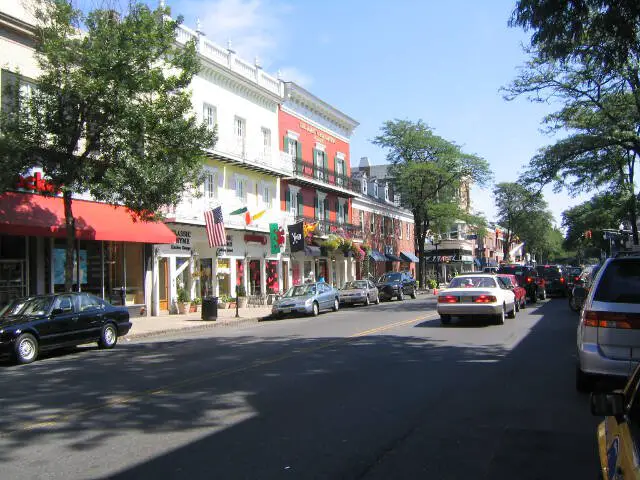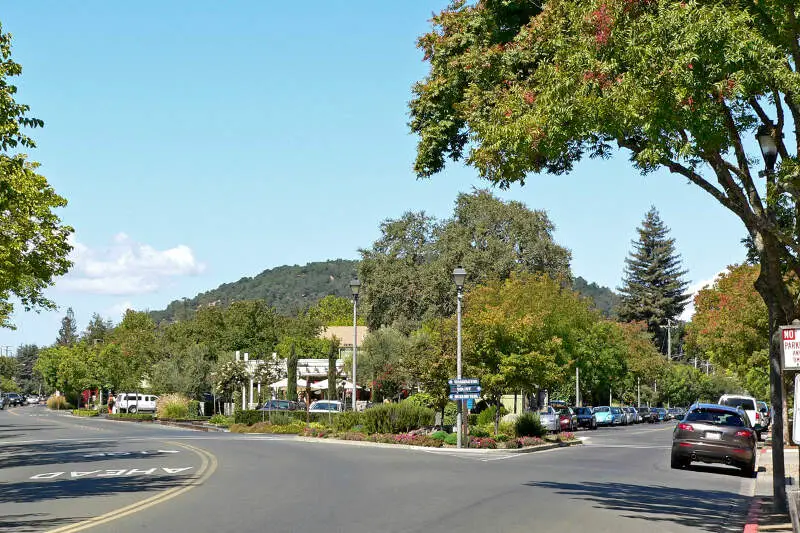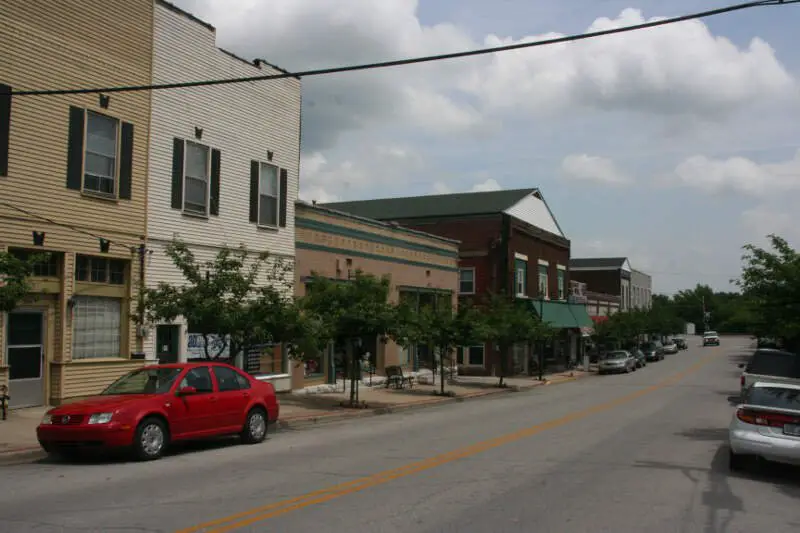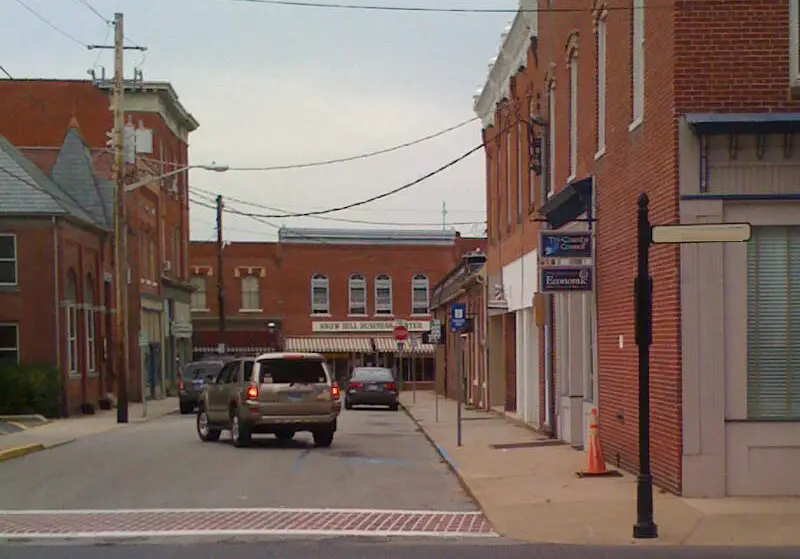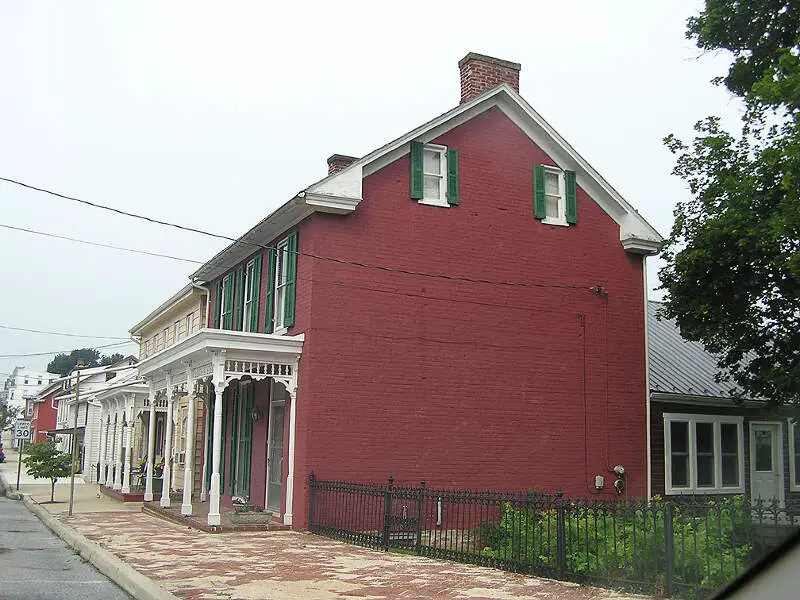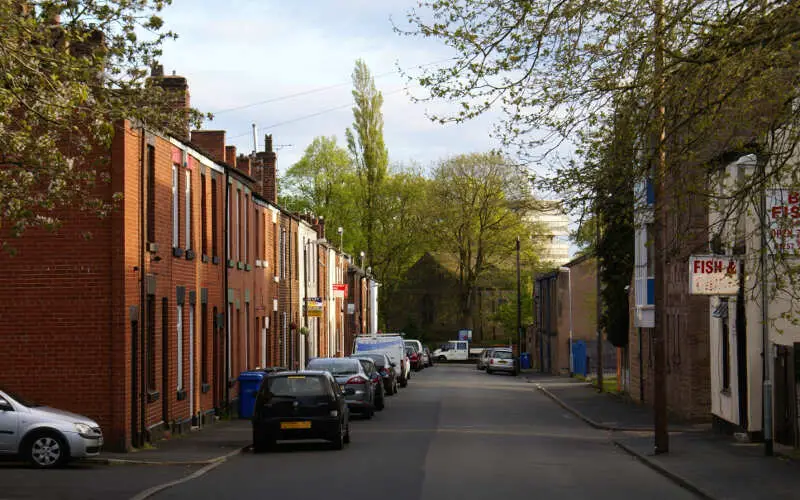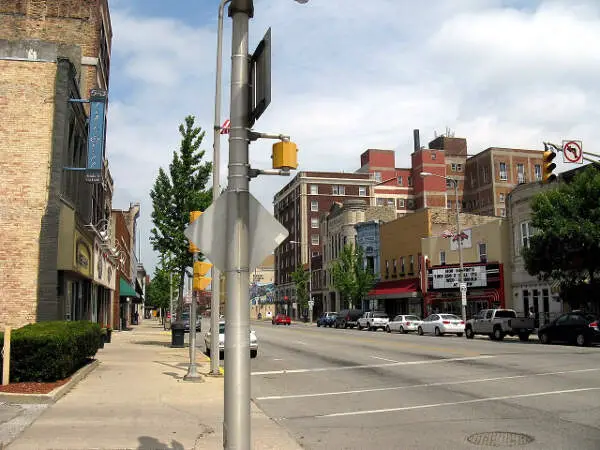
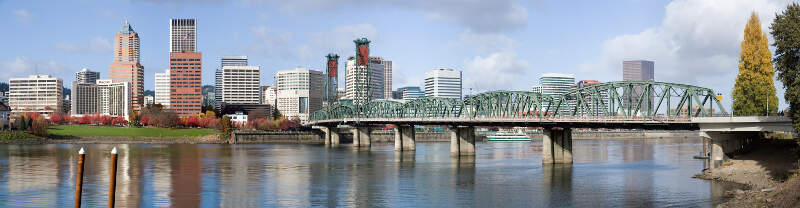
Portland vs. New York in photos
A side-by-side look at each city.



Cost of living
Portland is the cheaper city overall — 23% higher in New York than its rival. Index baseline: 100 = national average.
| Living expense | Portland | New York | US average |
|---|---|---|---|
| Overall | 139 | 180 | 100 |
| Services | 105 | 119 | 100 |
| Groceries | 108 | 124 | 100 |
| Health | 210 | 298 | 100 |
| Housing | 111 | 134 | 100 |
| Transportation | 112 | 119 | 100 |
| Utilities | 112 | 134 | 100 |
Lower index = cheaper. 100 = U.S. national average. Bar inside each cell scales relative to the highest value in the table.
Sources: HomeSnacks Cost of Living indices, normalized so 100 = U.S. national average. Drill in: Portland cost of living, New York cost of living, or the cheapest cities in America.
Housing breakdown
Home prices are higher in New York. Compare absolute price and price-to-income — a $500k home in a $100k-income city is very different from one in a $50k-income city.
| Metric | Portland | New York | United States |
|---|---|---|---|
| Median Home Value | $534,638 | $812,861 | $332,700 |
| Median Rent | $1,655 | $1,821 | $1,413 |
| Median Income | $90,919 | $80,483 | $80,734 |
| Home Value To Income | 5.9x | 10.1x | 4.1x |
| Rent To Monthly Income | 0.22x | 0.27x | 0.21x |
Source: U.S. Census Bureau ACS 2020-2024. See also states with the highest rent in America.
Crime
New York is the safer city — total crime rate of 3,039 per 100k people vs 6,246 for Portland. US average: 2,119.
| Crime (per 100k) | Portland | New York | US average |
|---|---|---|---|
| Total crime | 6,246 | 3,039 | 2,119 |
| Murder | 11 | 4 | 5 |
| Robbery | 177 | 187 | 61 |
| Aggravated Assault | 481 | 456 | 256 |
| Violent Crime | 720 | 671 | 359 |
| Burglary | 727 | 155 | 229 |
| Larceny | 3,921 | 2,015 | 1,272 |
| Car Theft | 878 | 199 | 259 |
| Property Crime | 5,526 | 2,368 | 1,760 |
Lower = safer. Bar inside each cell scales relative to the highest crime rate in the table.
Source: FBI Uniform Crime Reporting (2024). All rates are per 100,000 people. City pages: Portland crime, New York crime. See also: safest cities in America.
Diversity
New York is more racially diverse — lower HHI (closer to 0) means a more even mix across groups.
| Group | Portland | New York | United States |
|---|---|---|---|
| White | 65.8% | 31.0% | 57.4% |
| African American | 5.5% | 20.4% | 11.9% |
| American Indian | 0.4% | 0.2% | 0.5% |
| Asian | 8.0% | 14.6% | 5.9% |
| Hawaiian | 0.6% | 0.0% | 0.2% |
| Other | 0.6% | 1.4% | 0.6% |
| Two Or More | 7.2% | 3.9% | 4.3% |
| Hispanic | 12.0% | 28.5% | 19.3% |
Source: U.S. Census ACS 2020-2024. Lower HHI = more even racial mix. See also: most diverse cities in America.
SnackAbility — overall quality of life
Portland and New York tied at 8/10.
Scores are 0–10; both bars share the same scale.
SnackAbility is a HomeSnacks proprietary 1–10 score blending jobs, housing, education, commute, amenities, affordability, crime, and diversity. Median U.S. city ≈ 7. Data: Census, BLS, FBI. See also: best places to live in America.
Getting around: Portland vs. New York
How each city handles commuting, transit, walkability, and car culture — the day-to-day reality that shapes where you'd actually want to live.
Portland's TriMet network (the MAX light rail and a downtown streetcar loop) can get you across the core without a car, and the city consistently ranks among the most bikeable in the country. The Hawthorne and Burnside bridges carry dedicated bike lanes, and a flat inner east side makes cycling genuinely practical for daily errands. If you commute by car, though, congestion on I-5 and the Sunset Corridor can be real.
New York changes the picture: the MTA subway runs 24 hours and reaches virtually every neighborhood, and most Manhattanites never own a car. Commuter rail lines (the LIRR, Metro-North, and NJ Transit) extend the network into the suburbs. The system is aging and delays are common, and a monthly unlimited MetroCard adds a recurring expense, but for pure car-free living, New York is harder to beat; Portland rewards you if you're willing to ride.
Jobs and careers in Portland vs. New York
The local job market, dominant industries, and which city to choose based on your career.
Portland's economy punches above its size, with major employers like Nike (headquartered just west in Beaverton), Intel's large campus in Hillsboro, and Adidas North America. Tech startups cluster in the Pearl District and the Central Eastside, and Oregon Health & Science University drives a substantial healthcare sector. The median household income is $90,919, and a cost-of-living index of 139 means your dollar goes further than in most comparable metros.
New York's job market is simply vast — finance along Wall Street and in Midtown, media and publishing concentrated in Manhattan, a maturing tech scene in the Flatiron and Hudson Yards corridors, and one of the country's largest healthcare systems. The median household income of $80,483 is lower than Portland's, but income ceilings in competitive fields are much higher. The catch is a cost-of-living index of 180, which erodes your purchasing power compared to Portland's 139.
Weather and climate
What to expect day-to-day — sun, fog, heat, rain, and the seasonal extremes that shape the lifestyle.
Portland sits in a marine climate that means mild, persistently gray winters rather than cold, snowy ones — expect temperatures mostly in the 40s from November through February, with heavy cloud cover and steady drizzle. Snow is rare enough in the city proper that a dusting makes headlines. Summers are the reward: July and August bring long, dry, sunny days with highs in the mid-80s and almost no humidity.
New York delivers four genuine seasons: summers are hot and humid, with July temperatures regularly hitting the upper 80s and heat indices pushing higher; winters bring real snow, frozen slush, and stretches below freezing, especially in January and February. Spring and fall are crisp and colorful but short. If you find Portland's gray winters oppressive, New York won't fix that — but if you want distinct seasons and can handle summer humidity, New York delivers.
Culture, nightlife, and entertainment
Food, music, neighborhoods, and the city vibe that gives each place its personality.
Portland's culture is proudly local and DIY: the Pearl District anchors gallery nights and upscale dining, while Mississippi Avenue and SE Division Street host the indie restaurants, record shops, and live-music venues the city is known for. Portland also has more breweries per capita than almost any city in the country — hopping between taprooms in the Central Eastside is practically a civic pastime. Powell's Books, one of the largest independent bookstores in the world, is a genuine cultural landmark.
Broadway and Lincoln Center set the standard for performing arts; the Met, MoMA, and the Whitney do the same for visual culture. Williamsburg, Astoria, the Lower East Side, and Harlem each have their own scenes for nightlife, food, and music. The city doesn't close: late-night options on a Tuesday in Brooklyn surpass what Portland offers on a Saturday.
Outdoor activities and day trips
Parks, beaches, hikes, and the weekend escapes that define life outside the city limits.
Forest Park — one of the largest urban forests in the country at 5,100 acres on Portland's west hills — puts serious trail running and hiking inside city limits. Mount Hood is roughly an hour's drive for skiing in winter and wildflower hikes in summer; the Columbia River Gorge, also about an hour east, has waterfall hikes and windsurfing at Hood River. The Willamette River runs through the city itself, with a paved esplanade popular for running and cycling.
Central Park is New York's main green space — 843 acres of running paths, bike loops, and open lawn in the middle of Manhattan — and Prospect Park in Brooklyn is a more relaxed alternative. Day trips open things up: the Catskills and the Hudson Valley are two to three hours away by car or train, and Rockaway Beach and the Catskill swimming holes draw crowds in summer. Portland has the edge on accessible wilderness; New York makes up for it with quick access to mountains, beaches, and river valleys.
Bottom line: which city is right for you?
Based on the head-to-head data above, here's the short version — pick the city that lines up with what you actually care about.
Choose Portland if you prioritize…
- a lower cost of living (cheaper groceries, services, and day-to-day expenses).
Choose New York if you prioritize…
- lower crime — a safer place to live, work, and raise a family.
- more affordable housing relative to Portland.
- a more racially diverse community (lower HHI on Census data).
Methodology: winners are picked from public data — U.S. Census Bureau ACS (income, home value, rent, race/HHI), FBI Uniform Crime Reporting (crime rates per 100k), and HomeSnacks' proprietary SnackAbility quality-of-life score, which blends Bureau of Labor Statistics data with the above.
Other comparisons
Still weighing your options? See how these two cities stack up against other places we've compared head-to-head.