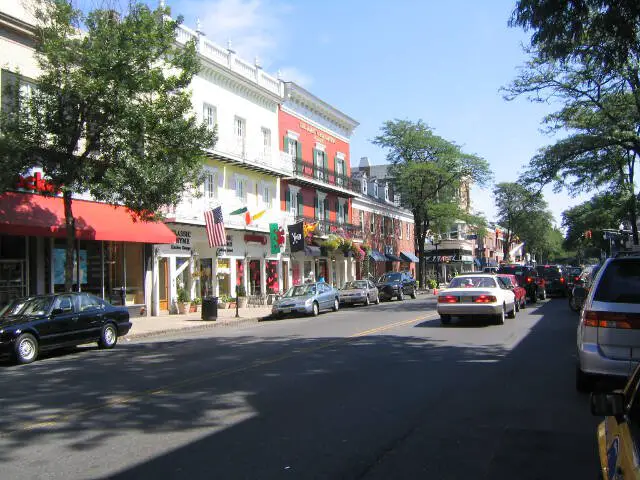
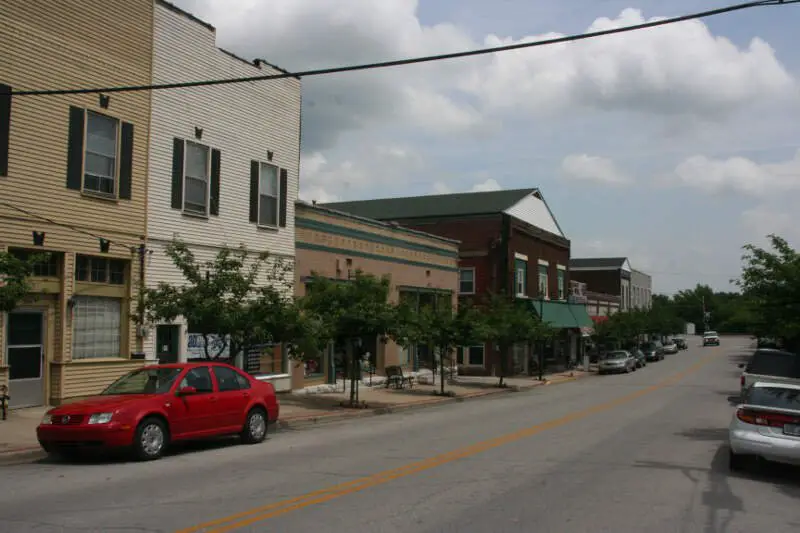
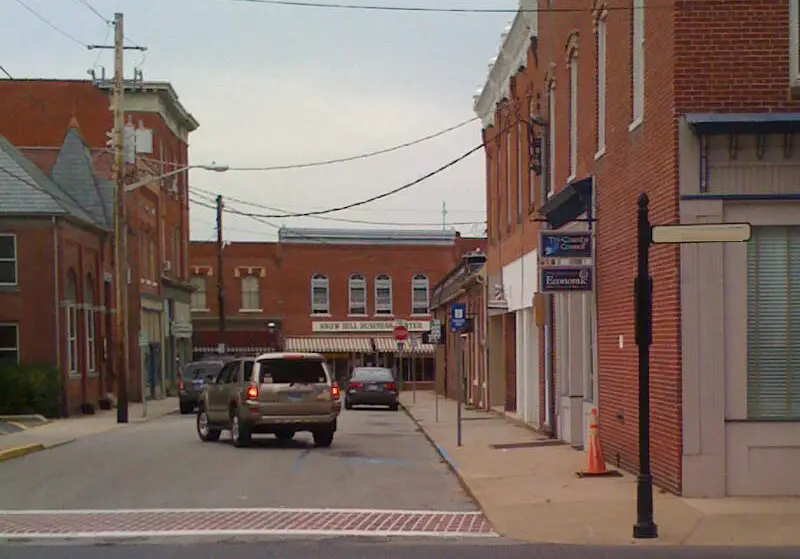
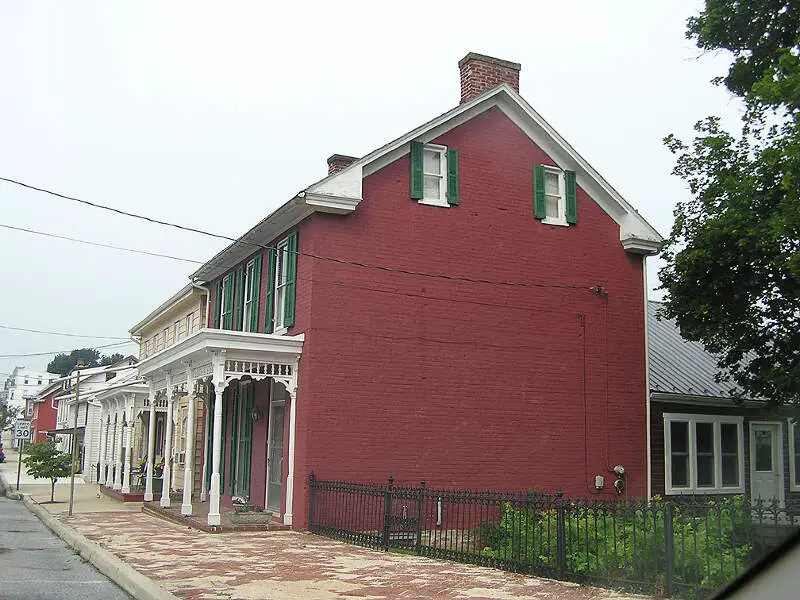
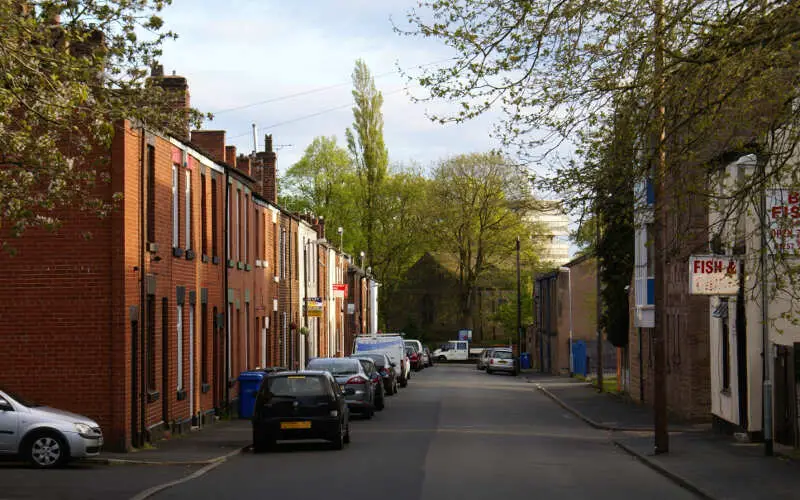
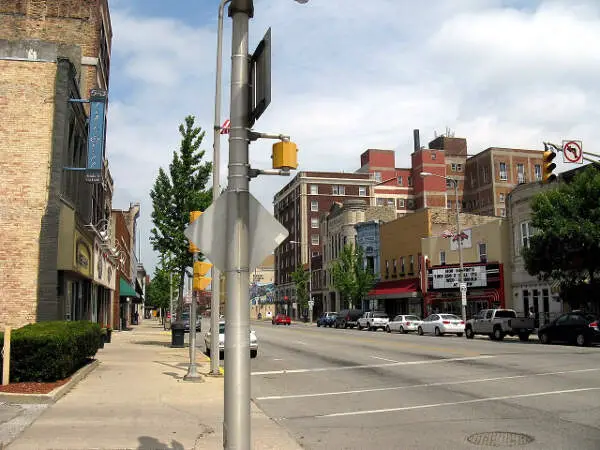
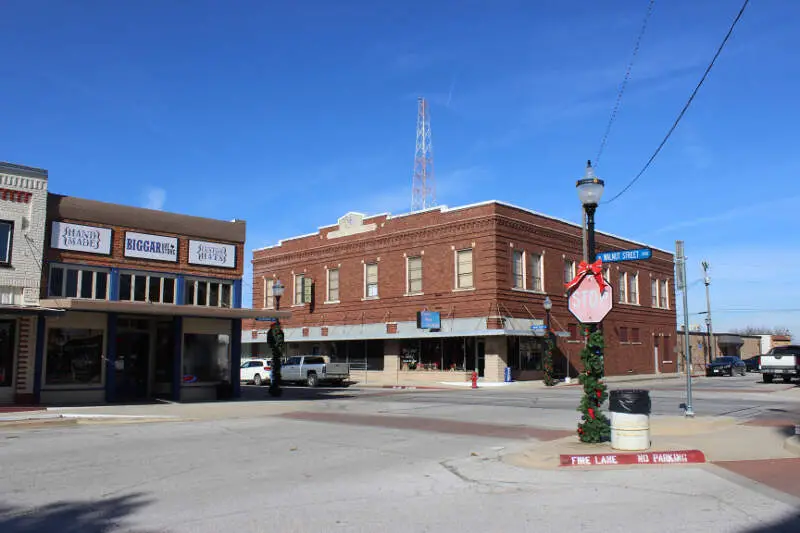
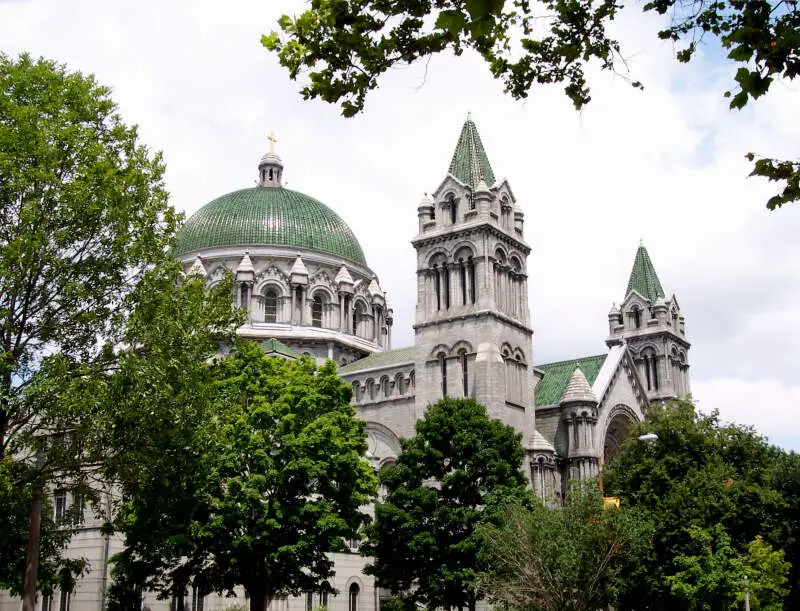
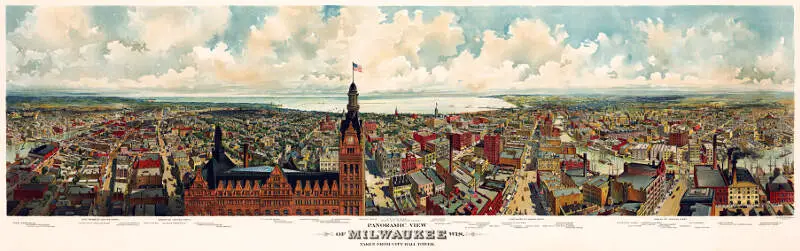
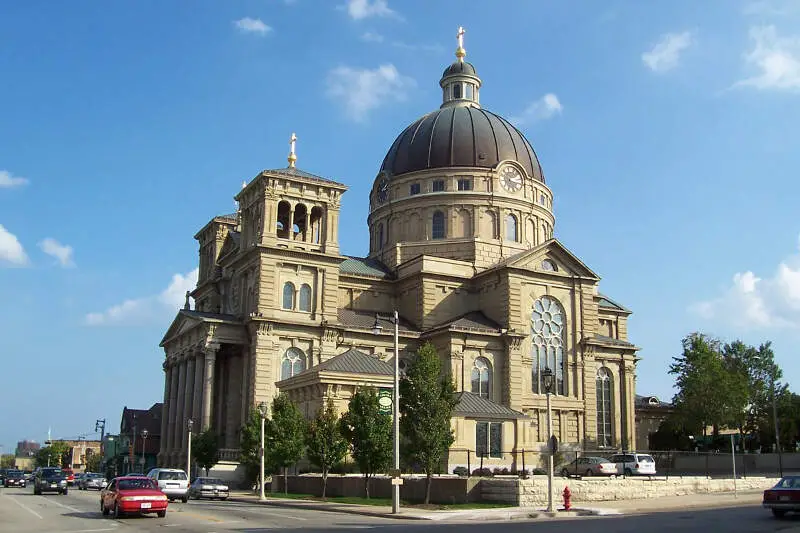
St. Louis vs. Milwaukee in photos
A side-by-side look at each city.



Cost of living
St. Louis is the cheaper city overall — 6% higher in Milwaukee than its rival. Index baseline: 100 = national average.
| Living expense | St. Louis | Milwaukee | US average |
|---|---|---|---|
| Overall | 89 | 95 | 100 |
| Services | 98 | 101 | 100 |
| Groceries | 96 | 98 | 100 |
| Health | 82 | 77 | 100 |
| Housing | 97 | 102 | 100 |
| Transportation | 96 | 104 | 100 |
| Utilities | 95 | 103 | 100 |
Lower index = cheaper. 100 = U.S. national average. Bar inside each cell scales relative to the highest value in the table.
Sources: HomeSnacks Cost of Living indices, normalized so 100 = U.S. national average. Drill in: St. Louis cost of living, Milwaukee cost of living, or the cheapest cities in America.
Housing breakdown
Home prices are higher in Milwaukee. Compare absolute price and price-to-income — a $500k home in a $100k-income city is very different from one in a $50k-income city.
| Metric | St. Louis | Milwaukee | United States |
|---|---|---|---|
| Median Home Value | $181,927 | $220,136 | $332,700 |
| Median Rent | $997 | $1,059 | $1,413 |
| Median Income | $56,160 | $54,234 | $80,734 |
| Home Value To Income | 3.2x | 4.1x | 4.1x |
| Rent To Monthly Income | 0.21x | 0.23x | 0.21x |
Source: U.S. Census Bureau ACS 2020-2024. See also states with the highest rent in America.
Crime
Milwaukee is the safer city — total crime rate of 4,132 per 100k people vs 7,074 for St. Louis. US average: 2,119.
| Crime (per 100k) | St. Louis | Milwaukee | US average |
|---|---|---|---|
| Total crime | 7,074 | 4,132 | 2,119 |
| Murder | 54 | 24 | 5 |
| Robbery | 250 | 308 | 61 |
| Aggravated Assault | 1,005 | 1,031 | 256 |
| Violent Crime | 1,367 | 1,431 | 359 |
| Burglary | 820 | 388 | 229 |
| Larceny | 3,412 | 1,255 | 1,272 |
| Car Theft | 1,475 | 1,057 | 259 |
| Property Crime | 5,707 | 2,701 | 1,760 |
Lower = safer. Bar inside each cell scales relative to the highest crime rate in the table.
Source: FBI Uniform Crime Reporting (2024). All rates are per 100,000 people. City pages: St. Louis crime, Milwaukee crime. See also: safest cities in America.
Diversity
Milwaukee is more racially diverse — lower HHI (closer to 0) means a more even mix across groups.
| Group | St. Louis | Milwaukee | United States |
|---|---|---|---|
| White | 44.4% | 31.7% | 57.4% |
| African American | 42.1% | 37.9% | 11.9% |
| American Indian | 0.2% | 0.3% | 0.5% |
| Asian | 3.5% | 5.0% | 5.9% |
| Hawaiian | 0.0% | 0.0% | 0.2% |
| Other | 0.5% | 0.3% | 0.6% |
| Two Or More | 4.0% | 3.9% | 4.3% |
| Hispanic | 5.3% | 20.9% | 19.3% |
Source: U.S. Census ACS 2020-2024. Lower HHI = more even racial mix. See also: most diverse cities in America.
SnackAbility — overall quality of life
St. Louis and Milwaukee tied at 4/10.
Scores are 0–10; both bars share the same scale.
SnackAbility is a HomeSnacks proprietary 1–10 score blending jobs, housing, education, commute, amenities, affordability, crime, and diversity. Median U.S. city ≈ 7. Data: Census, BLS, FBI. See also: best places to live in America.
Getting around: St. Louis vs. Milwaukee
How each city handles commuting, transit, walkability, and car culture — the day-to-day reality that shapes where you'd actually want to live.
Both St. Louis and Milwaukee run on cars — owning one is the practical default for most residents. St. Louis has MetroLink, a two-line light-rail system connecting Lambert Airport through downtown and into Illinois, though coverage thins quickly in South City and the suburbs. MetroBus fills some gaps, and I-70, I-44, and I-64 converge near downtown for solid highway access outside rush hour.
Milwaukee operates the Milwaukee County Transit System bus network and added The Hop, a free downtown streetcar, in 2018. It's a handy perk downtown but limited in range, and most Milwaukee residents drive. I-94 and I-43 carry the bulk of commuter traffic, and parking is cheaper and easier in both cities than in larger metros.
Neither city ranks high for bikeability nationally, though both have added protected lanes in select areas: Milwaukee's Bay View and St. Louis's Tower Grove are the clearest examples.
Jobs and careers in St. Louis vs. Milwaukee
The local job market, dominant industries, and which city to choose based on your career.
St. Louis punches above its population in corporate headquarters: Anheuser-Busch InBev, Boeing Defense, Emerson Electric, and Edward Jones are all based there, alongside a major healthcare complex anchored by BJC HealthCare and Washington University School of Medicine. The Cortex Innovation Community has added a tech and biotech layer over the past several years. Median household income sits at $56,160, roughly in line with the Midwest average.
Milwaukee's economy grew from manufacturing and has held onto that base while adding corporate depth. Northwestern Mutual, ManpowerGroup, Johnson Controls, and Rockwell Automation are all headquartered there, and Harley-Davidson remains an iconic local employer. Froedtert and Aurora Health Care are among the largest employers in the healthcare sector.
Median household income in Milwaukee sits at $54,234, close to St. Louis's $56,160. Day-to-day purchasing power is similar between the two, though St. Louis's cost-of-living index of 89 gives it a slight affordability edge over Milwaukee's 95.
Weather and climate
What to expect day-to-day — sun, fog, heat, rain, and the seasonal extremes that shape the lifestyle.
St. Louis summers are hot — expect stretches of 90°F-plus days in July and August, with humidity that pushes the heat index higher. Winters are cold but inconsistent: a January week at 20°F can give way to a stretch in the 50s. The city sits in a tornado corridor, and severe thunderstorm season in spring is worth paying attention to.
Fall and spring are genuinely pleasant, with mild temperatures and lower humidity than summer.
Milwaukee is cooler overall, largely because Lake Michigan moderates temperatures — but that cuts both ways. Summers are comfortable, rarely cracking 90°F, and lake breezes keep evenings pleasant. Winters are more reliably harsh than St. Louis, with heavier snowfall and cold that settles in from November through March.
Lake-effect snow can dump significant accumulation with little warning. If brutal heat is your main concern, Milwaukee is the easier pick; if you want a longer warm season, St. Louis edges ahead, though neither city is easy year-round.
Culture, nightlife, and entertainment
Food, music, neighborhoods, and the city vibe that gives each place its personality.
St. Louis has a legitimate claim to one of the best free cultural offerings in America — Forest Park alone houses the St. Louis Art Museum, Missouri History Museum, Saint Louis Science Center, and the St. Louis Zoo, all free to enter. Neighborhoods carry strong identities: Soulard hosts one of the country's largest Mardi Gras celebrations, Cherokee Street draws the antique and Latin food crowds, and The Grove is the center of LGBTQ nightlife. Cardinals games at Busch Stadium are a civic religion, and the Blues draw a devoted hockey following.
Milwaukee leans hard into its festival identity — Summerfest on the lakefront bills itself as the world's largest music festival and draws major headliners each June. The Historic Third Ward is the city's arts and dining hub, Brady Street runs independent and bohemian, and Walker's Point has become a strong LGBTQ nightlife corridor. Bucks games at Fiserv Forum bring real energy downtown.
The brewery scene is deep: Lakefront Brewery, Milwaukee Brewing, and dozens of craft spots trace back to the city's German heritage. Both cities reward exploration, but Milwaukee's lakefront setting gives its outdoor events a backdrop St. Louis can't quite match.
Outdoor activities and day trips
Parks, beaches, hikes, and the weekend escapes that define life outside the city limits.
Forest Park is St. Louis's standout green space — at 1,371 acres it's larger than New York's Central Park, with trails, lagoons, and open land spread across the interior. Beyond the park, you can reach Castlewood State Park along the Meramec River, the bluffs of Grafton, Illinois, and float trips on the Meramec and Current rivers within a short drive. The Missouri Botanical Garden ranks among the best in the country.
St. Louis's outdoor options are solid for a city its size, though summer heat limits comfortable activity to mornings and evenings.
Milwaukee's Lake Michigan shoreline gives the city something St. Louis doesn't have: Bradford Beach, Veterans Park, and the Oak Leaf Trail form a recreational corridor right along the water. Cooler summers extend the window for comfortable outdoor activity. Within a day's drive, you can reach the Kettle Moraine State Forest for hiking and skiing, the Apostle Islands for kayaking, and Door County for biking and sailing.
Grant Park and Lapham Peak add accessible hiking closer to the city. If proximity to water and cooler-weather recreation matter to you, Milwaukee's location is a real advantage.
Bottom line: which city is right for you?
Based on the head-to-head data above, here's the short version — pick the city that lines up with what you actually care about.
Choose St. Louis if you prioritize…
- a lower cost of living (cheaper groceries, services, and day-to-day expenses).
Choose Milwaukee if you prioritize…
- lower crime — a safer place to live, work, and raise a family.
- more affordable housing relative to St. Louis.
- a more racially diverse community (lower HHI on Census data).
Methodology: winners are picked from public data — U.S. Census Bureau ACS (income, home value, rent, race/HHI), FBI Uniform Crime Reporting (crime rates per 100k), and HomeSnacks' proprietary SnackAbility quality-of-life score, which blends Bureau of Labor Statistics data with the above.
Other comparisons
Still weighing your options? See how these two cities stack up against other places we've compared head-to-head.