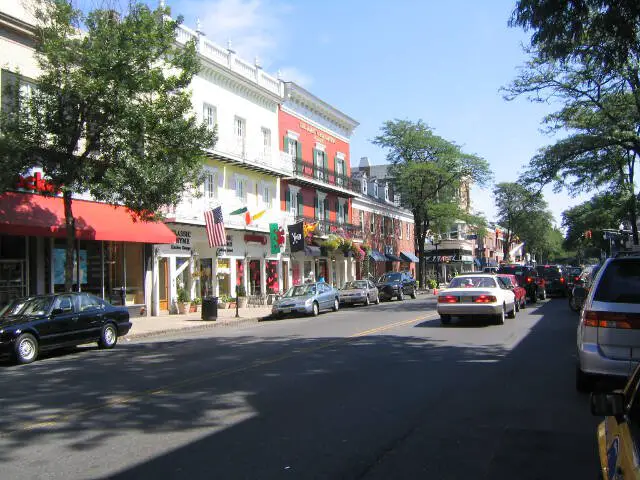
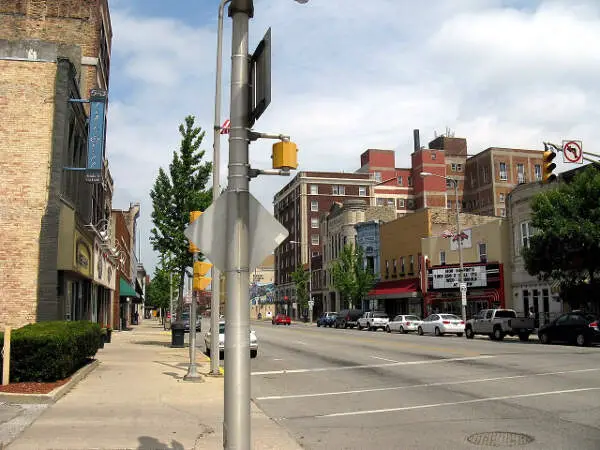
St. Louis vs. San Diego in photos
A side-by-side look at each city.






Cost of living
St. Louis is the cheaper city overall — 49% higher in San Diego than its rival. Index baseline: 100 = national average.
| Living expense | St. Louis | San Diego | US average |
|---|---|---|---|
| Overall | 89 | 175 | 100 |
| Services | 98 | 121 | 100 |
| Groceries | 96 | 121 | 100 |
| Health | 82 | 296 | 100 |
| Housing | 97 | 127 | 100 |
| Transportation | 96 | 131 | 100 |
| Utilities | 95 | 135 | 100 |
Lower index = cheaper. 100 = U.S. national average. Bar inside each cell scales relative to the highest value in the table.
Sources: HomeSnacks Cost of Living indices, normalized so 100 = U.S. national average. Drill in: St. Louis cost of living, San Diego cost of living, or the cheapest cities in America.
Housing breakdown
Home prices are higher in St. Louis. Compare absolute price and price-to-income — a $500k home in a $100k-income city is very different from one in a $50k-income city.
| Metric | St. Louis | San Diego | United States |
|---|---|---|---|
| Median Home Value | $181,927 | $1,001,264 | $332,700 |
| Median Rent | $997 | $2,313 | $1,413 |
| Median Income | $56,160 | $108,077 | $80,734 |
| Home Value To Income | 3.2x | 9.3x | 4.1x |
| Rent To Monthly Income | 0.21x | 0.26x | 0.21x |
Source: U.S. Census Bureau ACS 2020-2024. See also states with the highest rent in America.
Crime
San Diego is the safer city — total crime rate of 2,082 per 100k people vs 7,074 for St. Louis. US average: 2,119.
| Crime (per 100k) | St. Louis | San Diego | US average |
|---|---|---|---|
| Total crime | 7,074 | 2,082 | 2,119 |
| Murder | 54 | 3 | 5 |
| Robbery | 250 | 77 | 61 |
| Aggravated Assault | 1,005 | 311 | 256 |
| Violent Crime | 1,367 | 412 | 359 |
| Burglary | 820 | 187 | 229 |
| Larceny | 3,412 | 1,087 | 1,272 |
| Car Theft | 1,475 | 396 | 259 |
| Property Crime | 5,707 | 1,670 | 1,760 |
Lower = safer. Bar inside each cell scales relative to the highest crime rate in the table.
Source: FBI Uniform Crime Reporting (2024). All rates are per 100,000 people. City pages: St. Louis crime, San Diego crime. See also: safest cities in America.
Diversity
San Diego is more racially diverse — lower HHI (closer to 0) means a more even mix across groups.
| Group | St. Louis | San Diego | United States |
|---|---|---|---|
| White | 44.4% | 40.9% | 57.4% |
| African American | 42.1% | 5.3% | 11.9% |
| American Indian | 0.2% | 0.2% | 0.5% |
| Asian | 3.5% | 17.3% | 5.9% |
| Hawaiian | 0.0% | 0.4% | 0.2% |
| Other | 0.5% | 0.7% | 0.6% |
| Two Or More | 4.0% | 5.5% | 4.3% |
| Hispanic | 5.3% | 29.8% | 19.3% |
Source: U.S. Census ACS 2020-2024. Lower HHI = more even racial mix. See also: most diverse cities in America.
SnackAbility — overall quality of life
San Diego scores higher overall — 8/10 vs 4/10. SnackAbility is our 1–10 quality-of-life score; the median U.S. city scores a 7.
Scores are 0–10; both bars share the same scale.
SnackAbility is a HomeSnacks proprietary 1–10 score blending jobs, housing, education, commute, amenities, affordability, crime, and diversity. Median U.S. city ≈ 7. Data: Census, BLS, FBI. See also: best places to live in America.
Getting around: St. Louis vs. San Diego
How each city handles commuting, transit, walkability, and car culture — the day-to-day reality that shapes where you'd actually want to live.
St. Louis leans heavily on the car. MetroLink runs two light rail lines from Lambert Airport through downtown to the Illinois suburbs, and MetroBus fills the gaps, but most residents drive. Parking is cheap, the highway grid of I-64, I-70, and I-44 moves reasonably well outside rush hour, and a cost of living index of 89 means gas and insurance stretch further here too.
San Diego is car-first too, despite the MTS Trolley (Blue, Green, and Orange lines) and the COASTER commuter rail serving North County. I-5 and I-15 can grind to a halt, and parking in Little Italy or Pacific Beach will cost you. If you land near a Trolley stop, you can genuinely skip the car for some trips — that's a harder case to make in St. Louis.
Jobs and careers in St. Louis vs. San Diego
The local job market, dominant industries, and which city to choose based on your career.
St. Louis has a deeper employer base than its size suggests. Boeing's defense operations, Centene Corporation, BJC HealthCare, Washington University, Edward Jones, and Anheuser-Busch anchor the economy, with healthcare and financial services doing most of the work. The tradeoff is income: a median household income of $56,160 sits well below coastal norms, especially in non-specialized roles.
San Diego's economy runs on defense contractors (General Atomics, Leidos, Cubic), biotech and life sciences around Torrey Pines, and UC San Diego's research ecosystem. That mix produces a median household income of $108,077, nearly double St. Louis. A cost of living index of 175 means that gap closes fast, though: median rent is $2,313 versus $997 in St. Louis.
Weather and climate
What to expect day-to-day — sun, fog, heat, rain, and the seasonal extremes that shape the lifestyle.
St. Louis delivers all four seasons. Summers push into the low 90s with humidity that makes them feel hotter, winters bring cold snaps and ice storms, and the region sits in tornado country so spring severe weather is a real planning consideration. If you like seasonal variety and don't mind humidity, it works; if you're moving from somewhere mild, expect an adjustment.
San Diego's climate is the main reason people move there: mid-60s to low 80s for most of the year, low humidity, and about 266 sunny days. Winters need only a light jacket; summers stay comfortable compared to the desert interior. The one real complaint is June Gloom, a marine layer that keeps mornings gray from late May into early July.
Culture, nightlife, and entertainment
Food, music, neighborhoods, and the city vibe that gives each place its personality.
St. Louis punches above its weight culturally, and most of it is free. Forest Park (larger than Central Park) holds the St. Louis Zoo, the Saint Louis Art Museum, and the Science Center at no charge. Soulard draws people for blues bars and the city's famous Mardi Gras celebration.
The Delmar Loop is the strip for live music and independent restaurants. Cardinals games at Busch Stadium and Blues hockey at the Enterprise Center give the city a strong sports identity. Brewery tours at the Anheuser-Busch complex are worth an afternoon.
San Diego's cultural scene centers on Balboa Park, a 1,200-acre park with 17 museums and the San Diego Zoo. The Gaslamp Quarter is the main nightlife corridor, while North Park has built a serious craft beer reputation: San Diego has more craft breweries per capita than almost any US city. Little Italy draws foodies, and the Padres play at Petco Park in a well-designed downtown ballpark.
Outdoor activities and day trips
Parks, beaches, hikes, and the weekend escapes that define life outside the city limits.
St. Louis outdoor life centers on Forest Park, with running paths, cycling, and kayaking on Post-Dispatch Lake. The Gateway Arch National Park along the Mississippi riverfront is a solid green space once you get past the tourist traffic. Day trips open up quickly from there: the Ozarks are two hours south for river floating and hiking, Meramec Caverns is an hour out, and Cahokia Mounds across the river in Illinois is one of the most significant archaeological sites in North America.
San Diego's outdoor access is strong year-round. Torrey Pines State Natural Reserve has cliffside hiking above the Pacific; La Jolla Cove is a short walk from snorkeling with leopard sharks and sea lions; Mission Bay covers kayaking, paddleboarding, and sailing. Anza-Borrego Desert State Park, the largest state park in the contiguous US, is two hours east and worth the drive in wildflower season.
Bottom line: which city is right for you?
Based on the head-to-head data above, here's the short version — pick the city that lines up with what you actually care about.
Choose St. Louis if you prioritize…
- a lower cost of living (cheaper groceries, services, and day-to-day expenses).
- more affordable housing relative to San Diego.
Choose San Diego if you prioritize…
- lower crime — a safer place to live, work, and raise a family.
- a more racially diverse community (lower HHI on Census data).
- a higher overall SnackAbility quality-of-life score.
Methodology: winners are picked from public data — U.S. Census Bureau ACS (income, home value, rent, race/HHI), FBI Uniform Crime Reporting (crime rates per 100k), and HomeSnacks' proprietary SnackAbility quality-of-life score, which blends Bureau of Labor Statistics data with the above.
Other comparisons
Still weighing your options? See how these two cities stack up against other places we've compared head-to-head.