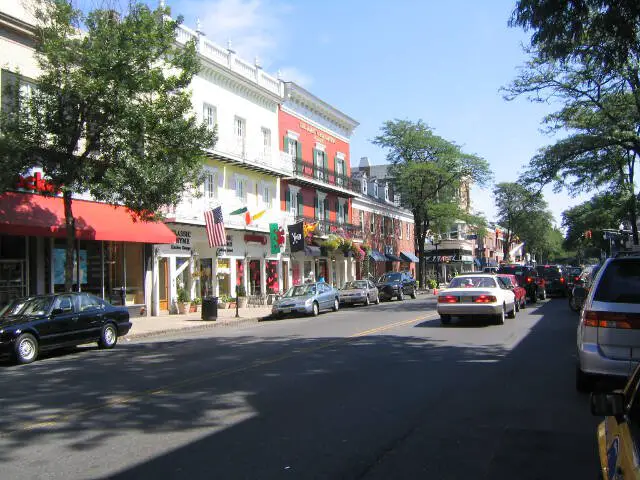
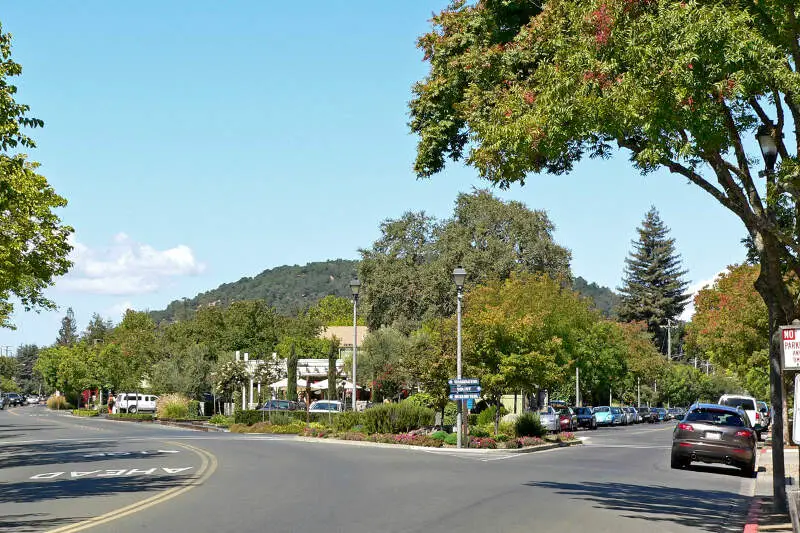
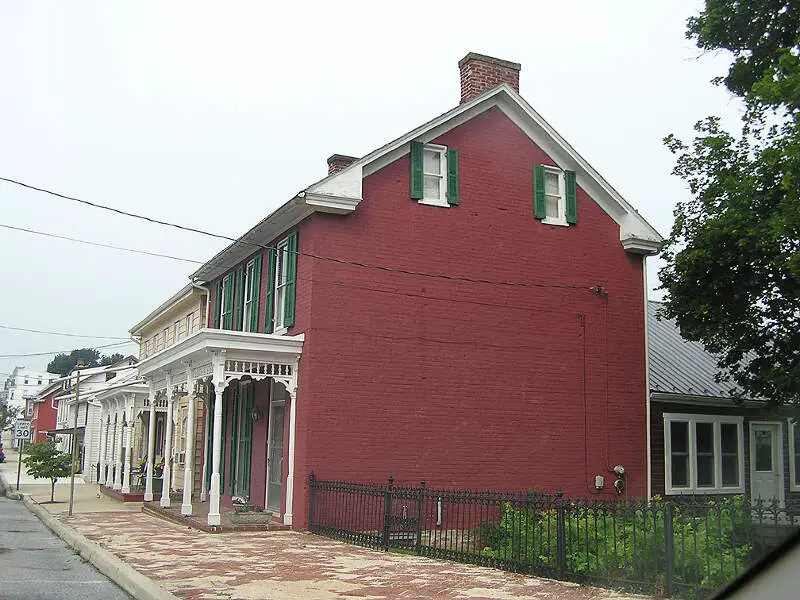
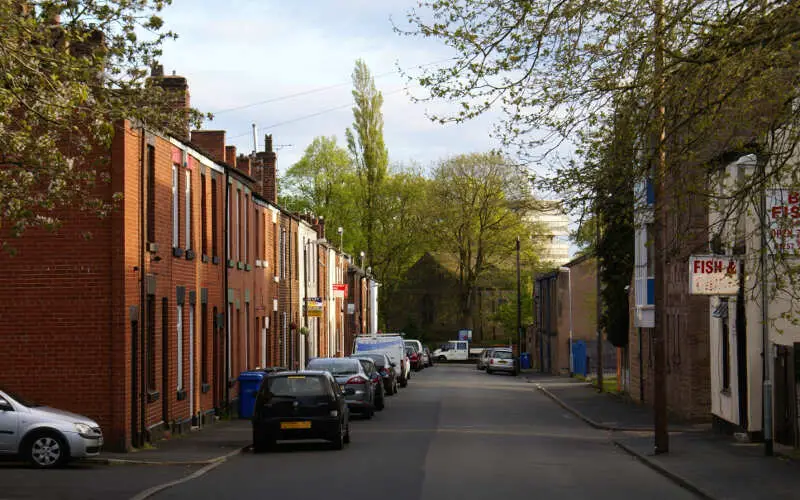
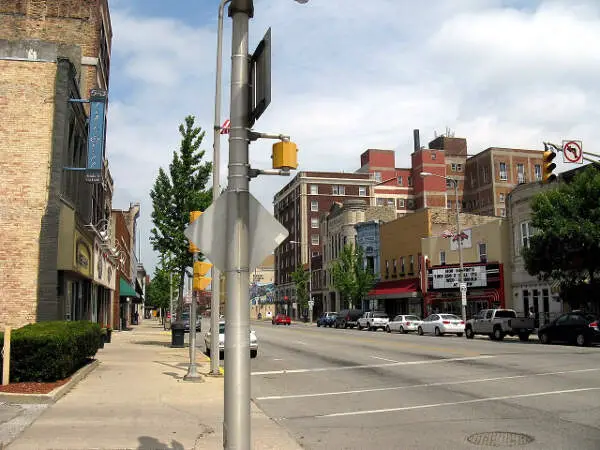
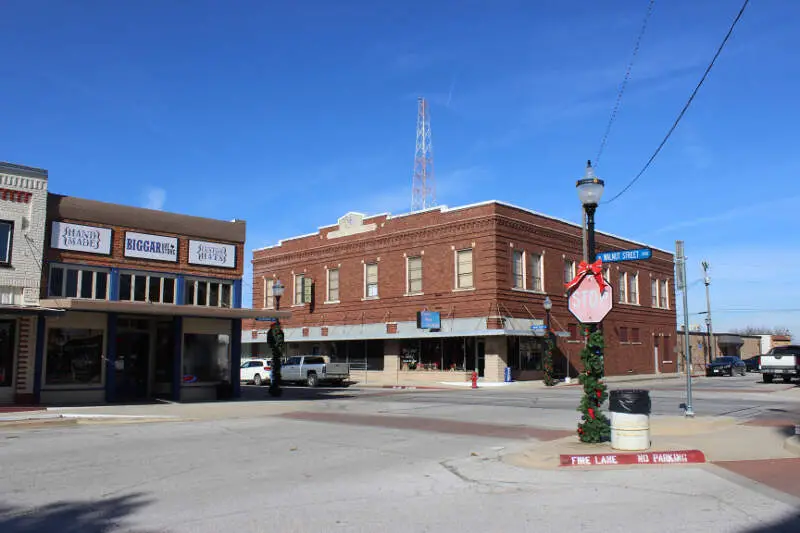
Dallas vs. Austin in photos
A side-by-side look at each city.






Cost of living
Dallas is the cheaper city overall — 15% higher in Austin than its rival. Index baseline: 100 = national average.
| Living expense | Dallas | Austin | US average |
|---|---|---|---|
| Overall | 106 | 124 | 100 |
| Services | 102 | 99 | 100 |
| Groceries | 103 | 101 | 100 |
| Health | 115 | 185 | 100 |
| Housing | 106 | 98 | 100 |
| Transportation | 108 | 109 | 100 |
| Utilities | 104 | 104 | 100 |
Lower index = cheaper. 100 = U.S. national average. Bar inside each cell scales relative to the highest value in the table.
Sources: HomeSnacks Cost of Living indices, normalized so 100 = U.S. national average. Drill in: Dallas cost of living, Austin cost of living, or the cheapest cities in America.
Housing breakdown
Home prices are higher in Austin. Compare absolute price and price-to-income — a $500k home in a $100k-income city is very different from one in a $50k-income city.
| Metric | Dallas | Austin | United States |
|---|---|---|---|
| Median Home Value | $309,420 | $508,530 | $332,700 |
| Median Rent | $1,472 | $1,729 | $1,413 |
| Median Income | $70,518 | $93,658 | $80,734 |
| Home Value To Income | 4.4x | 5.4x | 4.1x |
| Rent To Monthly Income | 0.25x | 0.22x | 0.21x |
Source: U.S. Census Bureau ACS 2020-2024. See also states with the highest rent in America.
Crime
Austin is the safer city — total crime rate of 3,709 per 100k people vs 4,010 for Dallas. US average: 2,119.
| Crime (per 100k) | Dallas | Austin | US average |
|---|---|---|---|
| Total crime | 4,010 | 3,709 | 2,119 |
| Murder | 14 | 7 | 5 |
| Robbery | 169 | 85 | 61 |
| Aggravated Assault | 440 | 307 | 256 |
| Violent Crime | 658 | 467 | 359 |
| Burglary | 464 | 445 | 229 |
| Larceny | 1,787 | 2,198 | 1,272 |
| Car Theft | 1,100 | 599 | 259 |
| Property Crime | 3,352 | 3,242 | 1,760 |
Lower = safer. Bar inside each cell scales relative to the highest crime rate in the table.
Source: FBI Uniform Crime Reporting (2024). All rates are per 100,000 people. City pages: Dallas crime, Austin crime. See also: safest cities in America.
Diversity
Dallas is more racially diverse — lower HHI (closer to 0) means a more even mix across groups.
| Group | Dallas | Austin | United States |
|---|---|---|---|
| White | 27.6% | 47.0% | 57.4% |
| African American | 22.9% | 7.3% | 11.9% |
| American Indian | 0.2% | 0.1% | 0.5% |
| Asian | 3.8% | 9.0% | 5.9% |
| Hawaiian | 0.1% | 0.0% | 0.2% |
| Other | 0.3% | 0.5% | 0.6% |
| Two Or More | 2.6% | 4.3% | 4.3% |
| Hispanic | 42.6% | 31.9% | 19.3% |
Source: U.S. Census ACS 2020-2024. Lower HHI = more even racial mix. See also: most diverse cities in America.
SnackAbility — overall quality of life
Austin scores higher overall — 7/10 vs 5/10. SnackAbility is our 1–10 quality-of-life score; the median U.S. city scores a 7.
Scores are 0–10; both bars share the same scale.
SnackAbility is a HomeSnacks proprietary 1–10 score blending jobs, housing, education, commute, amenities, affordability, crime, and diversity. Median U.S. city ≈ 7. Data: Census, BLS, FBI. See also: best places to live in America.
Getting around: Dallas vs. Austin
How each city handles commuting, transit, walkability, and car culture — the day-to-day reality that shapes where you'd actually want to live.
Both Dallas and Austin are car cities, full stop, but Dallas at least gives you a fighting chance. Its DART light rail network connects downtown to Uptown, Deep Ellum, and Plano across 93 miles of track. If you work downtown, living near a Green or Orange Line station makes rush hour on I-35E or the LBJ Freeway optional.
Austin's Capital Metro leans heavily on buses, with a single MetroRail commuter line running northwest to Leander. Project Connect will eventually add light rail, but for now most Austin commuters are stuck on I-35 or MoPac, two of the most congested corridors in Texas. Neither city is walkable by national standards, and on transit access, Dallas has the edge today.
Jobs and careers in Dallas vs. Austin
The local job market, dominant industries, and which city to choose based on your career.
Austin's tech boom reshaped its job market. Tesla's headquarters, Apple's second campus, Oracle's relocated HQ, and major offices for Google, Meta, and Amazon are all here, pushing median household income to $93,658, well above Dallas's $70,518. If you're in software, cybersecurity, or venture-backed startups, Austin's concentration of employers is hard to match in Texas.
Dallas runs on different industries: finance (Goldman Sachs, JPMorgan), telecom (AT&T is headquartered here), aviation (American Airlines calls DFW home), and a growing corporate base that includes Toyota North America and McKesson. The Dallas–Fort Worth metroplex (over 7 million people) generates enough job openings across sectors to routinely outpace Austin's total count. If you're in healthcare, logistics, or financial services, Dallas likely has more options than Austin's tech-heavy economy.
Weather and climate
What to expect day-to-day — sun, fog, heat, rain, and the seasonal extremes that shape the lifestyle.
Dallas and Austin share the same basic climate: blistering summers where triple-digit heat runs June through September. The differences show up in winter. Dallas sits far enough north to catch ice storms from the Plains; the February 2021 freeze hit both cities hard, but Dallas typically sees more frequent winter precipitation that glazes highways and shuts down schools.
Austin's winters are marginally milder and spring arrives a touch earlier. Both cities log roughly 230 sunny days per year. Allergy seasons are brutal either way; cedar fever in Austin is particularly notorious from December through February.
If you're sensitive to cold snaps and winter disruptions, Austin has a slight edge. Neither city handles them well.
Culture, nightlife, and entertainment
Food, music, neighborhoods, and the city vibe that gives each place its personality.
Austin bills itself as the live music capital of the world, and the infrastructure backs that up. Sixth Street, Rainey Street, and South Congress give you hundreds of venues any weekend, and local acts fill clubs like the Paramount and Stubb's Amphitheatre year-round. SXSW and Austin City Limits Music Festival bring global attention, but the scene runs on locals.
Dallas counters with scale. The Arts District along Flora Street (anchored by the AT&T Performing Arts Center, the Dallas Museum of Art, and the Nasher Sculpture Center) is one of the largest contiguous urban arts districts in the country. Deep Ellum has the grit and live music, while Uptown and the Bishop Arts District cover dining and nightlife.
Dallas feels more cosmopolitan; Austin feels more countercultural. Both are genuinely fun places to live.
Outdoor activities and day trips
Parks, beaches, hikes, and the weekend escapes that define life outside the city limits.
Austin's outdoor scene punches above its size. Barton Springs Pool (a natural spring-fed swimming hole inside Zilker Park) has no Dallas equivalent. The Barton Creek Greenbelt offers miles of hiking and swimming holes minutes from downtown, and Lady Bird Lake's hike-and-bike trail is packed every weekend.
Lake Travis, a 45-minute drive west, covers sailing and cliff jumping. The Hill Country starts at Austin's doorstep, so day trips to Enchanted Rock or Fredericksburg are easy.
Dallas is flatter and less scenic, but it works with what it has. White Rock Lake has a 9-mile trail loop, and Lake Lewisville and Lake Ray Hubbard offer boating and fishing within 30 minutes. The Trinity River corridor is slowly becoming a usable greenway.
If outdoor access is a top priority, Austin is the stronger choice. It's not particularly close.
Bottom line: which city is right for you?
Based on the head-to-head data above, here's the short version — pick the city that lines up with what you actually care about.
Choose Dallas if you prioritize…
- a lower cost of living (cheaper groceries, services, and day-to-day expenses).
- a more racially diverse community (lower HHI on Census data).
Choose Austin if you prioritize…
- lower crime — a safer place to live, work, and raise a family.
- more affordable housing relative to Dallas.
- a higher overall SnackAbility quality-of-life score.
Methodology: winners are picked from public data — U.S. Census Bureau ACS (income, home value, rent, race/HHI), FBI Uniform Crime Reporting (crime rates per 100k), and HomeSnacks' proprietary SnackAbility quality-of-life score, which blends Bureau of Labor Statistics data with the above.
Other comparisons
Still weighing your options? See how these two cities stack up against other places we've compared head-to-head.