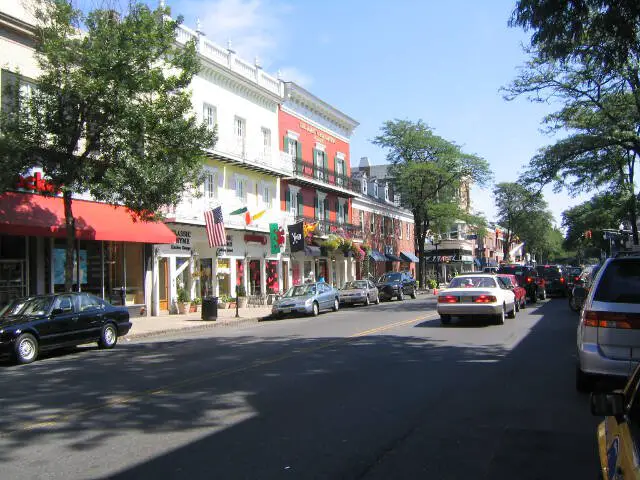
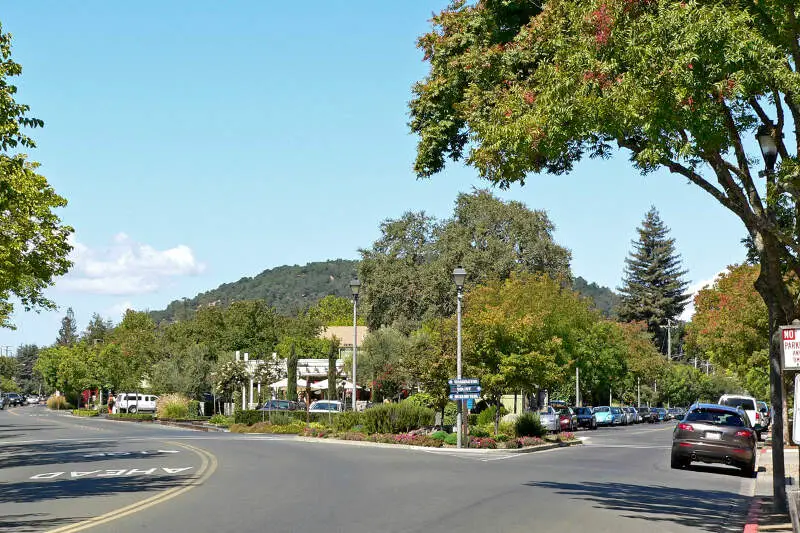
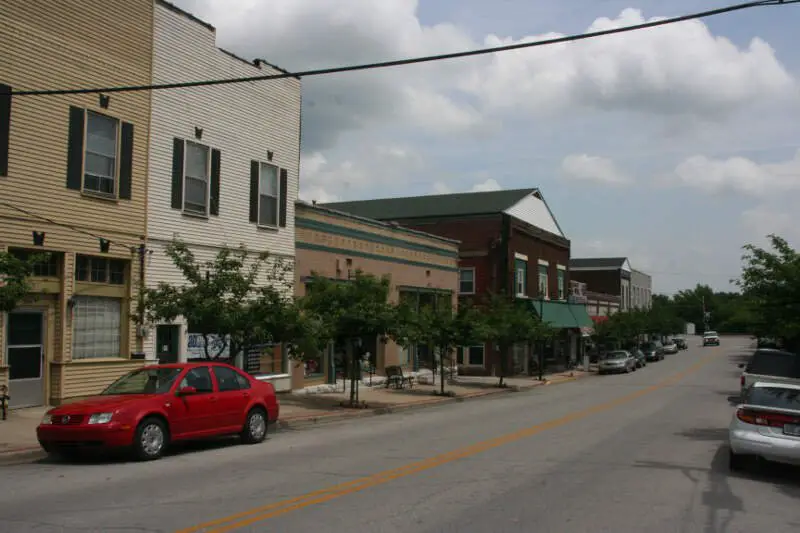
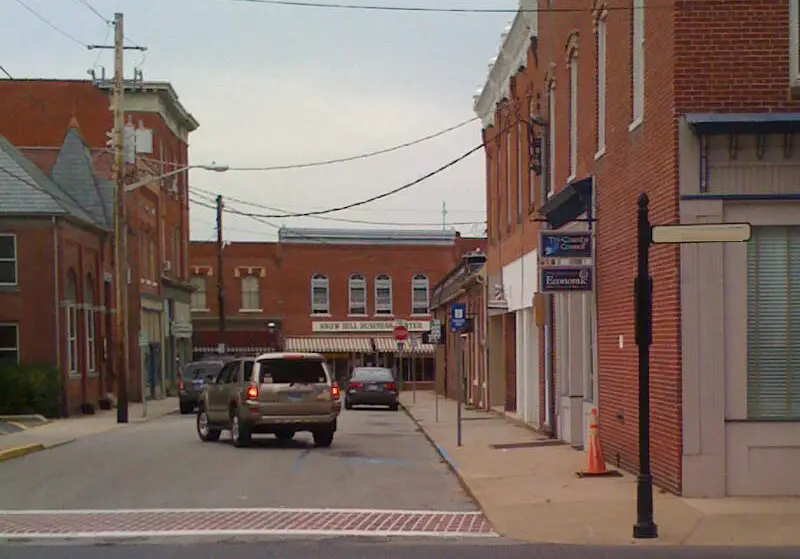
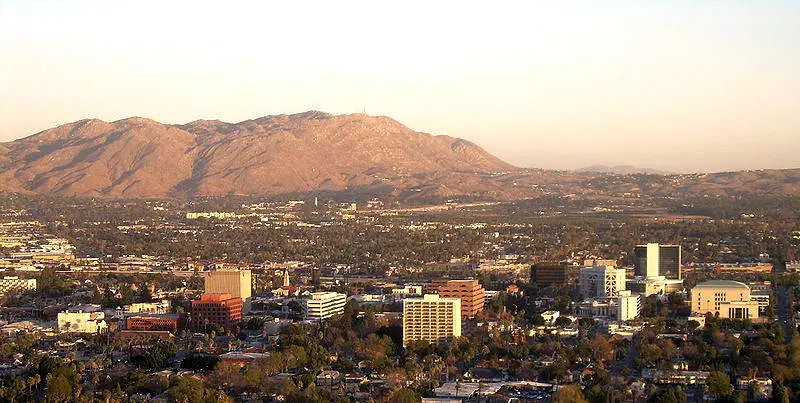
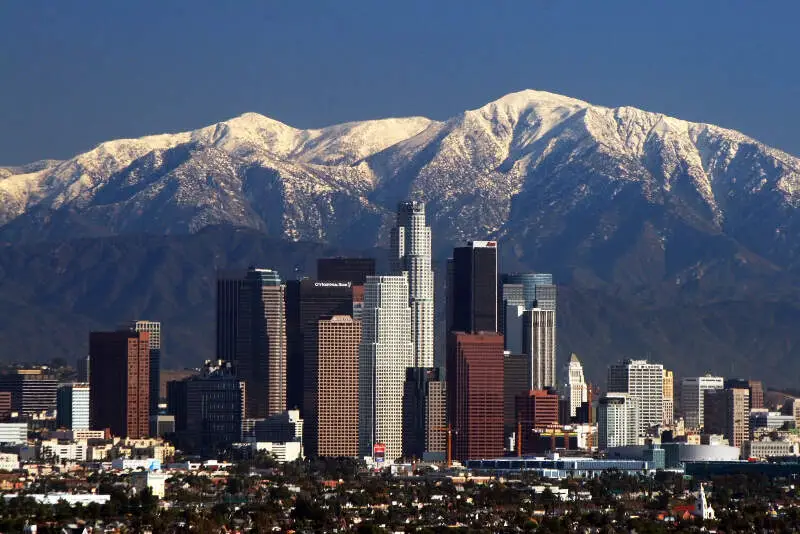
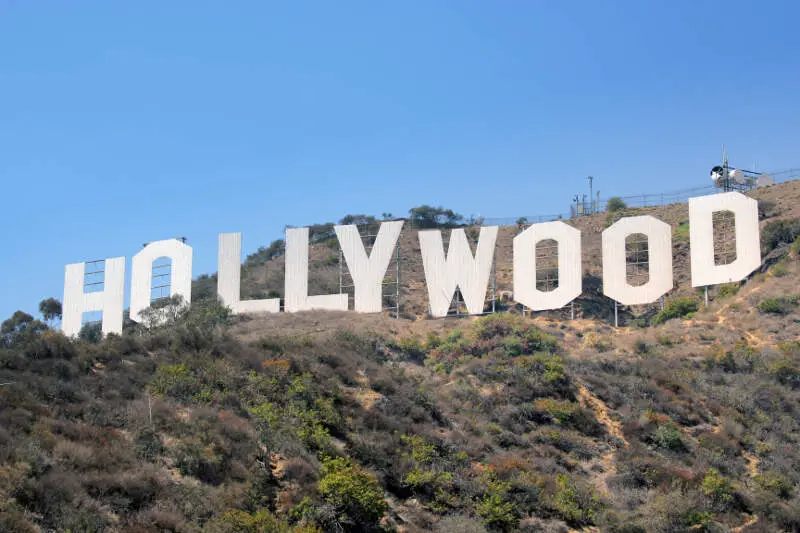
Riverside vs. Los Angeles in photos
A side-by-side look at each city.

Cost of living
Riverside is the cheaper city overall — 23% higher in Los Angeles than its rival. Index baseline: 100 = national average.
| Living expense | Riverside | Los Angeles | US average |
|---|---|---|---|
| Overall | 138 | 179 | 100 |
| Services | 110 | 117 | 100 |
| Groceries | 119 | 123 | 100 |
| Health | 191 | 309 | 100 |
| Housing | 121 | 128 | 100 |
| Transportation | 124 | 128 | 100 |
| Utilities | 116 | 134 | 100 |
Lower index = cheaper. 100 = U.S. national average. Bar inside each cell scales relative to the highest value in the table.
Sources: HomeSnacks Cost of Living indices, normalized so 100 = U.S. national average. Drill in: Riverside cost of living, Los Angeles cost of living, or the cheapest cities in America.
Housing breakdown
Home prices are higher in Los Angeles. Compare absolute price and price-to-income — a $500k home in a $100k-income city is very different from one in a $50k-income city.
| Metric | Riverside | Los Angeles | United States |
|---|---|---|---|
| Median Home Value | $646,784 | $952,183 | $332,700 |
| Median Rent | $1,914 | $1,933 | $1,413 |
| Median Income | $91,045 | $81,939 | $80,734 |
| Home Value To Income | 7.1x | 11.6x | 4.1x |
| Rent To Monthly Income | 0.25x | 0.28x | 0.21x |
Source: U.S. Census Bureau ACS 2020-2024. See also states with the highest rent in America.
Crime
Los Angeles is the safer city — total crime rate of 2,212 per 100k people vs 3,422 for Riverside. US average: 2,119.
| Crime (per 100k) | Riverside | Los Angeles | US average |
|---|---|---|---|
| Total crime | 3,422 | 2,212 | 2,119 |
| Murder | 3 | 7 | 5 |
| Robbery | 120 | 210 | 61 |
| Aggravated Assault | 412 | 471 | 256 |
| Violent Crime | 590 | 728 | 359 |
| Burglary | 396 | 373 | 229 |
| Larceny | 1,984 | 852 | 1,272 |
| Car Theft | 452 | 260 | 259 |
| Property Crime | 2,832 | 1,484 | 1,760 |
Lower = safer. Bar inside each cell scales relative to the highest crime rate in the table.
Source: FBI Uniform Crime Reporting (2024). All rates are per 100,000 people. City pages: Riverside crime, Los Angeles crime. See also: safest cities in America.
Diversity
Los Angeles is more racially diverse — lower HHI (closer to 0) means a more even mix across groups.
| Group | Riverside | Los Angeles | United States |
|---|---|---|---|
| White | 26.1% | 28.1% | 57.4% |
| African American | 5.9% | 8.1% | 11.9% |
| American Indian | 0.2% | 0.1% | 0.5% |
| Asian | 8.0% | 11.9% | 5.9% |
| Hawaiian | 0.3% | 0.1% | 0.2% |
| Other | 0.4% | 0.7% | 0.6% |
| Two Or More | 3.5% | 3.8% | 4.3% |
| Hispanic | 55.6% | 47.2% | 19.3% |
Source: U.S. Census ACS 2020-2024. Lower HHI = more even racial mix. See also: most diverse cities in America.
SnackAbility — overall quality of life
Riverside scores higher overall — 7/10 vs 6/10. SnackAbility is our 1–10 quality-of-life score; the median U.S. city scores a 7.
Scores are 0–10; both bars share the same scale.
SnackAbility is a HomeSnacks proprietary 1–10 score blending jobs, housing, education, commute, amenities, affordability, crime, and diversity. Median U.S. city ≈ 7. Data: Census, BLS, FBI. See also: best places to live in America.
Getting around: Riverside vs. Los Angeles
How each city handles commuting, transit, walkability, and car culture — the day-to-day reality that shapes where you'd actually want to live.
Getting around Riverside means owning a car. The city is built around the freeway grid, and you'll rely on the I-215, SR-91, and I-10 for most trips. Metrolink's Inland Empire–Orange County and 91/Perris Valley lines do connect Riverside to central Los Angeles, but service is limited to peak commute windows, and the trip to Union Station can run 75–90 minutes each way.
If you're commuting into LA regularly, budget your mornings accordingly.
Los Angeles has more transit variety: Metro Rail lines (including the B/D lines through the core, and the expanding Crenshaw and K lines), a dense bus network, and bike infrastructure in select neighborhoods like Silver Lake and Culver City. LA traffic is notorious, though, and driving anywhere during peak hours tests patience. For local errands, LA's walkable pockets (Los Feliz, Koreatown, Downtown) let you skip the car far more often than Riverside does.
Jobs and careers in Riverside vs. Los Angeles
The local job market, dominant industries, and which city to choose based on your career.
Riverside's economy is anchored by the Inland Empire logistics boom. Amazon, UPS, and dozens of major distribution centers have turned the region into one of the busiest warehouse corridors in the country. UC Riverside drives a good share of education and research employment, and Riverside University Health System is a top healthcare employer.
The median household income of $91,045 actually edges out Los Angeles's $81,939, partly reflecting the area's industrial wage base and lower competition for local professional roles.
Los Angeles, of course, offers scale no inland city can match: entertainment and media (Disney, Netflix, NBCUniversal), aerospace (SpaceX, Northrop Grumman, Raytheon), tech, finance, and fashion all have major footprints. The trade-off is a cost of living index of 179 versus Riverside's 138, meaning that LA income premium often gets absorbed before it hits your bank account. If you're in logistics, education, or healthcare, Riverside competes well; for entertainment or tech, LA's network effects are hard to replicate remotely.
Weather and climate
What to expect day-to-day — sun, fog, heat, rain, and the seasonal extremes that shape the lifestyle.
Riverside sits in a bowl roughly 55 miles inland, and the geography shows in summer: highs regularly push past 100°F from June through September, and the Santa Ana winds bring dry heat spikes well into fall. Winters are mild, with daytime highs in the low 60s and frost-free nights most of the season. The same geography that traps heat also traps smog, and air quality alerts are a real part of life, especially for anyone with respiratory concerns.
Los Angeles runs cooler and more consistent thanks to its coastal position. Most neighborhoods see summer highs in the mid-80s; June gloom keeps mornings overcast through early summer, and winters rarely dip below 50°F. The western side of the city (Santa Monica, Culver City) can be 10–15 degrees cooler on a hot day than the San Fernando Valley or Downtown.
If you find Riverside's summer heat punishing, the temperature gap alone makes a strong case for LA.
Culture, nightlife, and entertainment
Food, music, neighborhoods, and the city vibe that gives each place its personality.
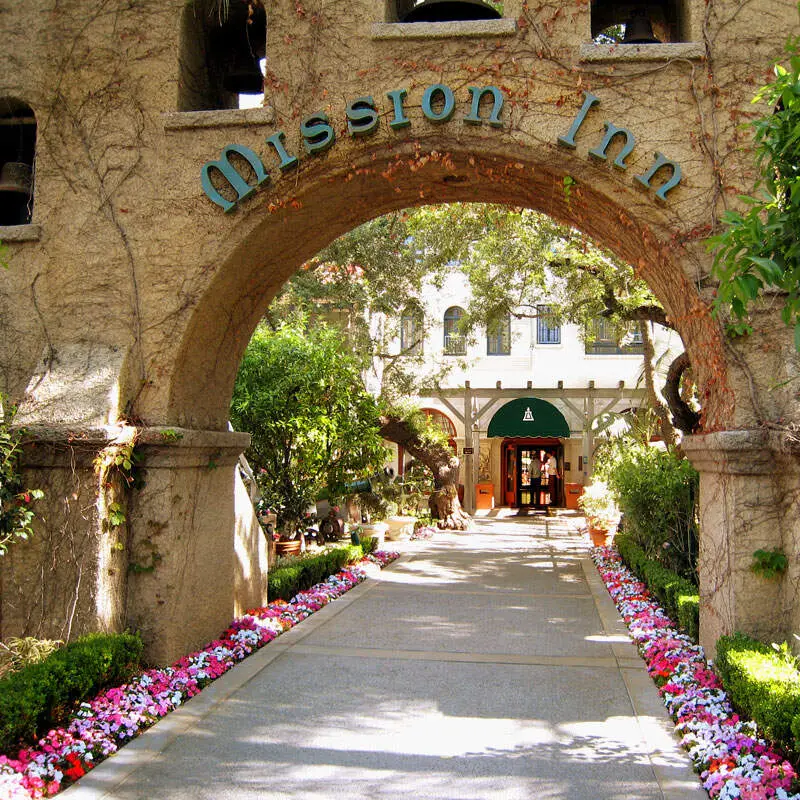
Riverside punches above its weight culturally for an Inland Empire city. The Fox Performing Arts Center and Riverside Municipal Auditorium host touring acts and local performances, and the Mission Inn anchors a genuinely charming stretch of downtown. UC Riverside brings a steady current of arts events, lectures, and festivals.
The Riverside Art Museum and the California Museum of Photography are both worth your time. The nightlife scene is modest but real along University Avenue and in the Eastside neighborhood.
Los Angeles is in a different category entirely. You're within reach of LACMA, the Getty, the Broad, and the Hollywood Bowl, alongside a nightlife scene that runs from the dive bars of Echo Park to rooftop clubs in West Hollywood. Neighborhoods like Arts District, Koreatown, and Little Tokyo each offer distinct food and cultural scenes that could fill years of weekend exploration.
Riverside offers a quieter, more affordable version of Southern California social life; LA offers almost unlimited depth if you're willing to navigate the geography to find it.
Outdoor activities and day trips
Parks, beaches, hikes, and the weekend escapes that define life outside the city limits.
Riverside has accessible outdoor options for a city its size. Mount Rubidoux Park is a local favorite for hiking with panoramic valley views, Box Springs Mountain Regional Park sits practically in the city's backyard, and the Santa Ana River Trail gives cyclists and runners a long paved corridor. The bigger draw is the day-trip radius: Big Bear Lake is about 90 minutes away, Joshua Tree National Park roughly two hours, and Idyllwild even closer for pine-forest hiking and climbing.
Los Angeles matches that day-trip radius and adds coastal access. Griffith Park is one of the largest urban parks in the country, with trails leading up to the Observatory and sweeping views of the basin. The Santa Monica Mountains offer serious hiking along Temescal Canyon and Topanga State Park.
Add easy beach access (from Malibu down to the South Bay) and Angeles National Forest for backcountry trips, and LA's outdoor footprint is impressive for a megalopolis. Riverside's options are real, but if proximity to both mountains and ocean matters to you, LA wins without debate.
Bottom line: which city is right for you?
Based on the head-to-head data above, here's the short version — pick the city that lines up with what you actually care about.
Choose Riverside if you prioritize…
- a lower cost of living (cheaper groceries, services, and day-to-day expenses).
- a higher overall SnackAbility quality-of-life score.
Choose Los Angeles if you prioritize…
- lower crime — a safer place to live, work, and raise a family.
- more affordable housing relative to Riverside.
- a more racially diverse community (lower HHI on Census data).
Methodology: winners are picked from public data — U.S. Census Bureau ACS (income, home value, rent, race/HHI), FBI Uniform Crime Reporting (crime rates per 100k), and HomeSnacks' proprietary SnackAbility quality-of-life score, which blends Bureau of Labor Statistics data with the above.
Other comparisons
Still weighing your options? See how these two cities stack up against other places we've compared head-to-head.