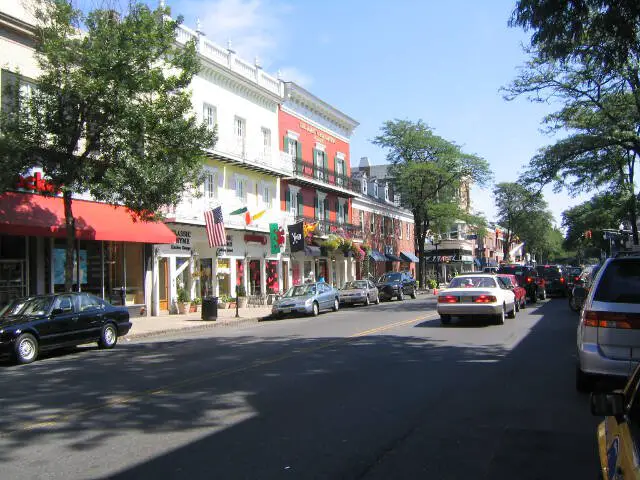
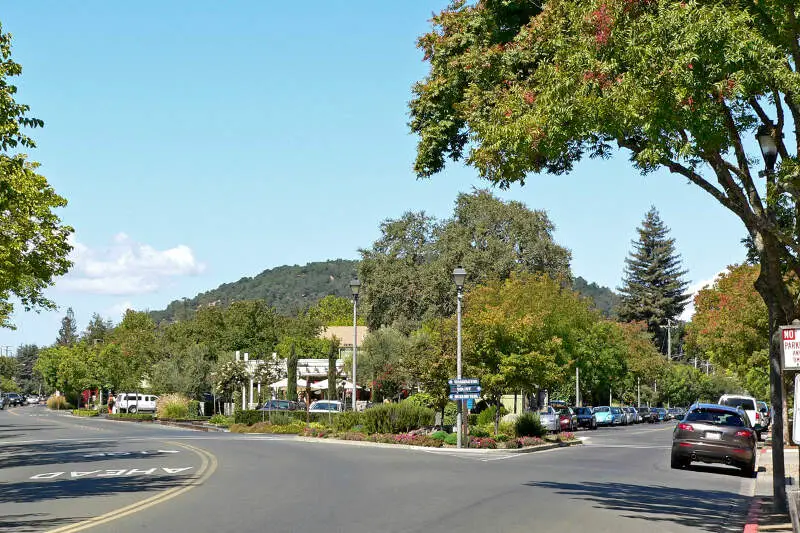
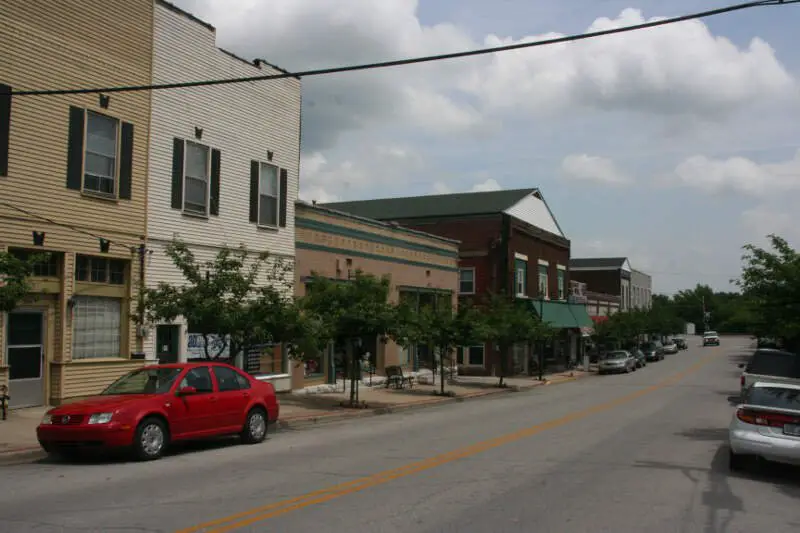
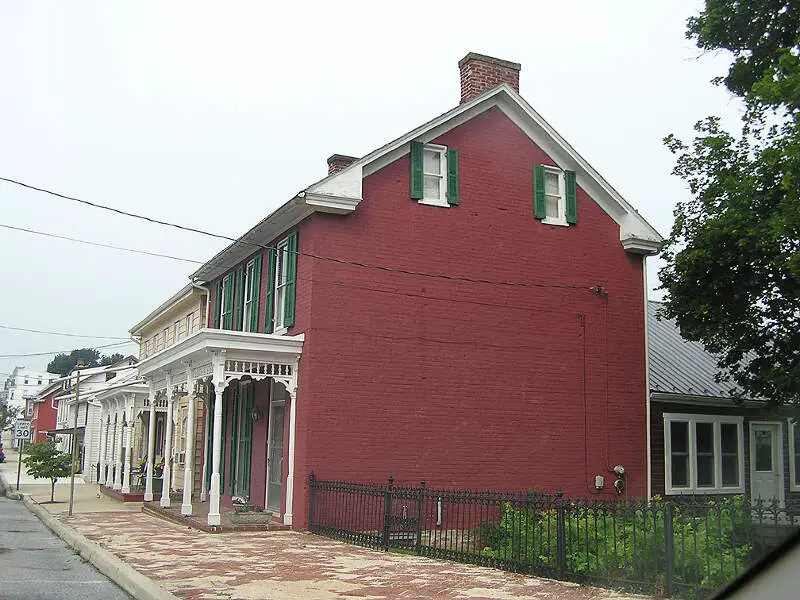
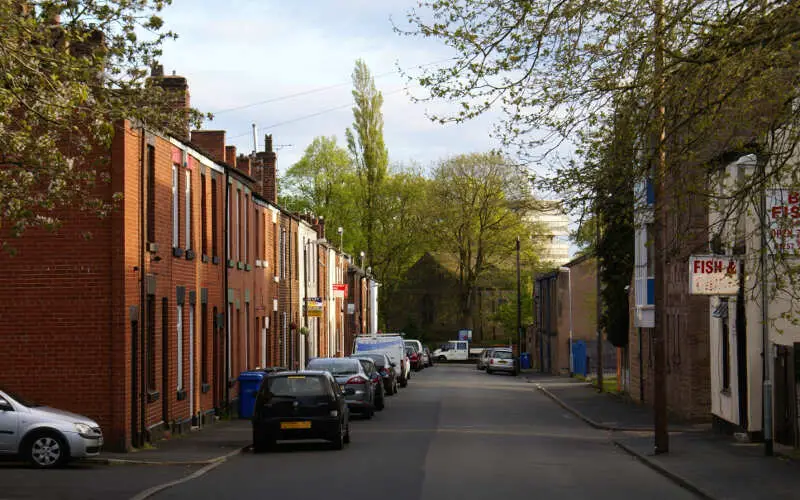
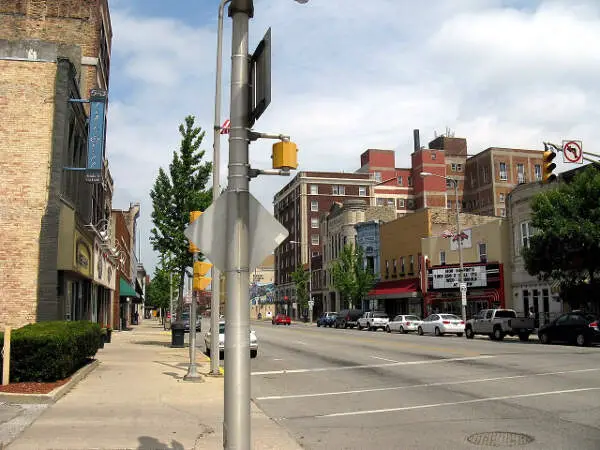
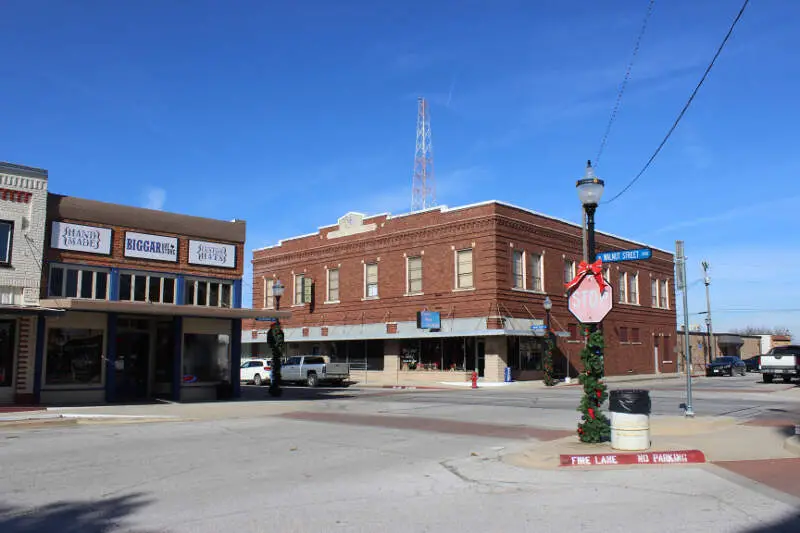
San Bernardino vs. Los Angeles in photos
A side-by-side look at each city.

Cost of living
San Bernardino is the cheaper city overall — 30% higher in Los Angeles than its rival. Index baseline: 100 = national average.
| Living expense | San Bernardino | Los Angeles | US average |
|---|---|---|---|
| Overall | 125 | 179 | 100 |
| Services | 108 | 117 | 100 |
| Groceries | 119 | 123 | 100 |
| Health | 135 | 309 | 100 |
| Housing | 120 | 128 | 100 |
| Transportation | 118 | 128 | 100 |
| Utilities | 124 | 134 | 100 |
Lower index = cheaper. 100 = U.S. national average. Bar inside each cell scales relative to the highest value in the table.
Sources: HomeSnacks Cost of Living indices, normalized so 100 = U.S. national average. Drill in: San Bernardino cost of living, Los Angeles cost of living, or the cheapest cities in America.
Housing breakdown
Home prices are higher in Los Angeles. Compare absolute price and price-to-income — a $500k home in a $100k-income city is very different from one in a $50k-income city.
| Metric | San Bernardino | Los Angeles | United States |
|---|---|---|---|
| Median Home Value | $487,988 | $952,183 | $332,700 |
| Median Rent | $1,508 | $1,933 | $1,413 |
| Median Income | $67,415 | $81,939 | $80,734 |
| Home Value To Income | 7.2x | 11.6x | 4.1x |
| Rent To Monthly Income | 0.27x | 0.28x | 0.21x |
Source: U.S. Census Bureau ACS 2020-2024. See also states with the highest rent in America.
Crime
Los Angeles is the safer city — total crime rate of 2,212 per 100k people vs 3,795 for San Bernardino. US average: 2,119.
| Crime (per 100k) | San Bernardino | Los Angeles | US average |
|---|---|---|---|
| Total crime | 3,795 | 2,212 | 2,119 |
| Murder | 11 | 7 | 5 |
| Robbery | 241 | 210 | 61 |
| Aggravated Assault | 595 | 471 | 256 |
| Violent Crime | 897 | 728 | 359 |
| Burglary | 455 | 373 | 229 |
| Larceny | 1,677 | 852 | 1,272 |
| Car Theft | 765 | 260 | 259 |
| Property Crime | 2,898 | 1,484 | 1,760 |
Lower = safer. Bar inside each cell scales relative to the highest crime rate in the table.
Source: FBI Uniform Crime Reporting (2024). All rates are per 100,000 people. City pages: San Bernardino crime, Los Angeles crime. See also: safest cities in America.
Diversity
Los Angeles is more racially diverse — lower HHI (closer to 0) means a more even mix across groups.
| Group | San Bernardino | Los Angeles | United States |
|---|---|---|---|
| White | 11.9% | 28.1% | 57.4% |
| African American | 10.6% | 8.1% | 11.9% |
| American Indian | 0.2% | 0.1% | 0.5% |
| Asian | 3.6% | 11.9% | 5.9% |
| Hawaiian | 0.4% | 0.1% | 0.2% |
| Other | 0.5% | 0.7% | 0.6% |
| Two Or More | 2.6% | 3.8% | 4.3% |
| Hispanic | 70.2% | 47.2% | 19.3% |
Source: U.S. Census ACS 2020-2024. Lower HHI = more even racial mix. See also: most diverse cities in America.
SnackAbility — overall quality of life
Los Angeles scores higher overall — 6/10 vs 4/10. SnackAbility is our 1–10 quality-of-life score; the median U.S. city scores a 7.
Scores are 0–10; both bars share the same scale.
SnackAbility is a HomeSnacks proprietary 1–10 score blending jobs, housing, education, commute, amenities, affordability, crime, and diversity. Median U.S. city ≈ 7. Data: Census, BLS, FBI. See also: best places to live in America.
Getting around: San Bernardino vs. Los Angeles
How each city handles commuting, transit, walkability, and car culture — the day-to-day reality that shapes where you'd actually want to live.
San Bernardino sits at the eastern edge of the greater LA metro, so most residents drive. The I-10 and I-215 form the daily backbone for commuters heading west. Metrolink's San Bernardino Line connects downtown to Union Station in roughly 90 minutes, but frequency is limited and many people still take the car.
Car ownership is cheaper here: a median home value of $487,988 versus Los Angeles's $952,183 leaves more budget after housing.
Los Angeles isn't a commuter's paradise either, but you get more options. Metro Rail lines (the B Line through the San Gabriel Valley, the A Line south, the D Line through the Westside), plus an extensive bus network, mean you can live car-light in neighborhoods like Koreatown, Silver Lake, or downtown. For most LA residents, though, the freeway is still the reality.
Jobs and careers in San Bernardino vs. Los Angeles
The local job market, dominant industries, and which city to choose based on your career.
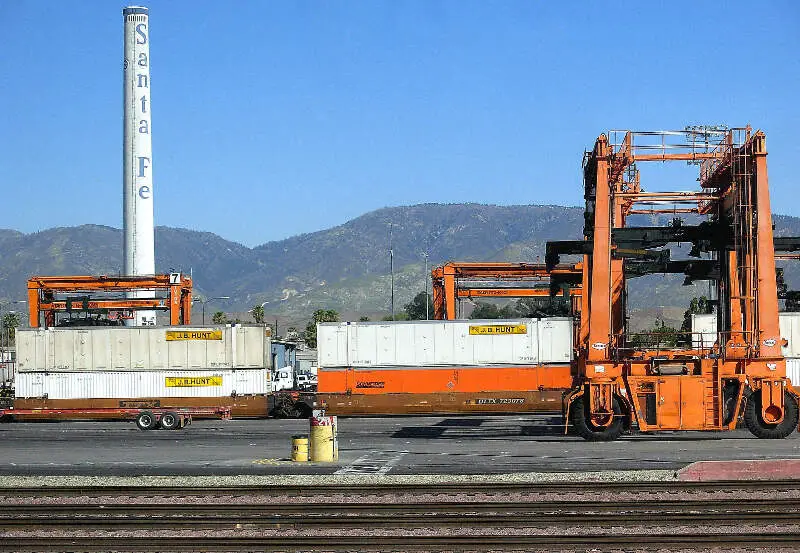
The Inland Empire's logistics and warehousing boom has made San Bernardino one of the country's busiest freight corridors. Amazon, UPS, and a parade of third-party logistics operators have large facilities here. Arrowhead Regional Medical Center anchors the healthcare sector, with county and city government rounding out the major employers.
The trade-off is a median household income of $67,415, real money but noticeably below the regional average. Many higher-paying professional roles still require a westward commute.
Los Angeles runs at a different economic scale. Entertainment and media (Disney, Netflix, Warner Bros.), aerospace (SpaceX, Northrop Grumman, L3Harris), healthcare (Cedars-Sinai, UCLA Health), and a growing tech sector centered in Santa Monica and Culver City all compete for workers. The median household income of $81,939 reflects that mix, though a cost of living index of 179 versus San Bernardino's 125 means the extra income gets absorbed quickly.
Weather and climate
What to expect day-to-day — sun, fog, heat, rain, and the seasonal extremes that shape the lifestyle.
San Bernardino runs hotter and drier than the coast. Summers routinely push past 100°F in July and August, and the basin geography traps smog; air quality days matter more here than almost anywhere else in California. Winters are mild by national standards, with lows rarely dipping below the low 30s, and the San Bernardino Mountains just above town (Big Bear is 45 minutes away) get real snow if that matters to you.
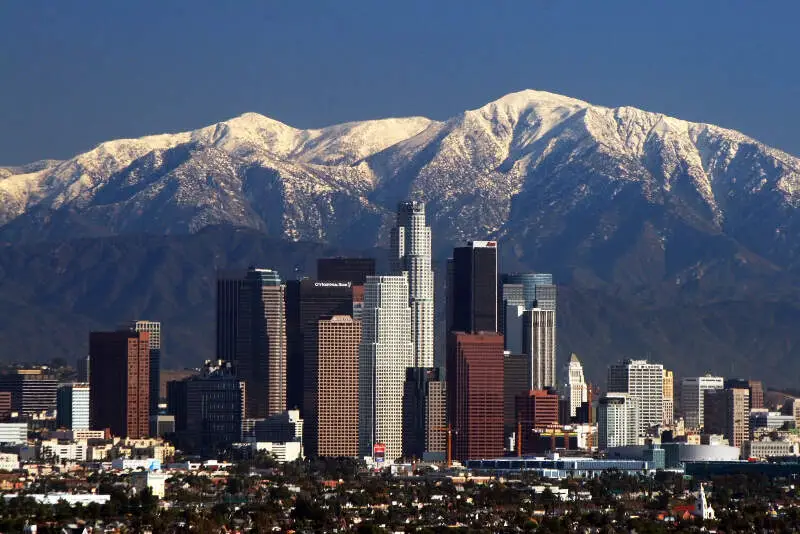
Los Angeles earns its climate reputation. The marine layer keeps coastal neighborhoods in the 60s and 70s for much of the year, and even inland areas like the San Fernando Valley, though warmer, rarely hit the extremes San Bernardino sees.
If heat sensitivity or air quality is a factor in your decision (asthma, young children, outdoor work), the gap between the two cities is real. Winter in LA's beach communities barely registers as a season.
Culture, nightlife, and entertainment
Food, music, neighborhoods, and the city vibe that gives each place its personality.
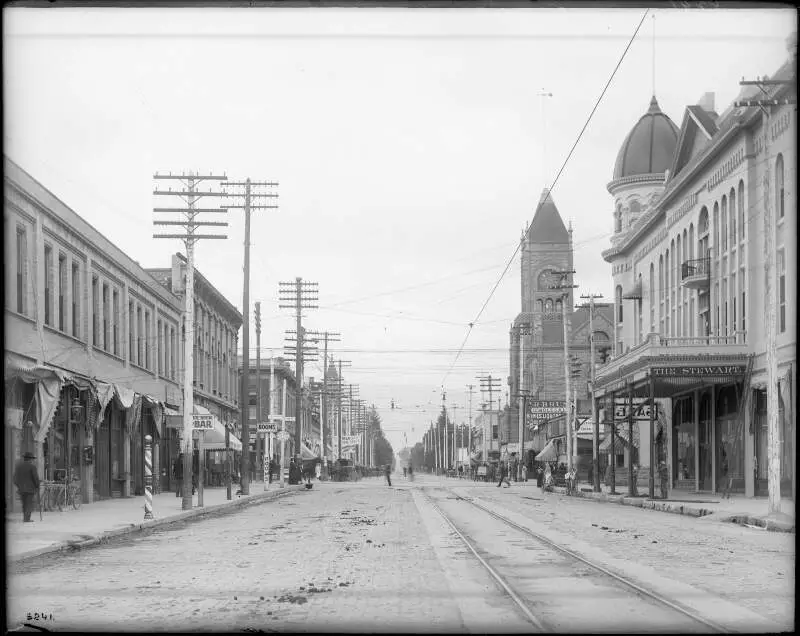
San Bernardino has real historical texture. It sits along Route 66, hosted the original McDonald's location (now a museum), and the National Orange Show Events Center draws regional crowds for concerts and festivals. The downtown core has been through decades of disinvestment but shows signs of slow revitalization.
The nightlife scene is modest: a cluster of bars and venues along E Street, plus the nearby university crowd from Cal State San Bernardino. If your social life is built around a tight local radius, you'll find options, but the calendar is thin compared to a major metro.
Los Angeles is in a different category for culture. You get live music from the Hollywood Bowl to the Troubadour, museums like the Getty and LACMA, neighborhoods with distinct identities (the Arts District, Leimert Park, Los Feliz), and a restaurant scene that competes globally. The median rent of $1,933 in LA versus $1,508 in San Bernardino is part of what pays for all of it.
Outdoor activities and day trips
Parks, beaches, hikes, and the weekend escapes that define life outside the city limits.
San Bernardino's strongest card is its proximity to mountain recreation. The San Bernardino National Forest starts at the city's edge, Big Bear Lake is less than an hour away for skiing, snowshoeing, and summer hiking, and Lake Arrowhead sits in between. Trails like the Pacific Crest Trail corridor and Cucamonga Peak are accessible without fighting freeway traffic.
If weekend mountain access is a priority, living here makes it a short drive rather than an all-day production.
Los Angeles offers different outdoor variety but at a higher logistical cost. Griffith Park is a massive urban refuge, the Santa Monica Mountains provide canyon hiking in Topanga and Malibu Creek State Park, and beaches from Santa Monica to El Matador are hard to beat. The problem is crowds: Runyon Canyon on a Saturday morning, PCH beach parking in summer.
San Bernardino's trails are less famous, but they're also less crowded. That trade-off is worth considering if you spend most weekends outside.
Bottom line: which city is right for you?
Based on the head-to-head data above, here's the short version — pick the city that lines up with what you actually care about.
Choose San Bernardino if you prioritize…
- a lower cost of living (cheaper groceries, services, and day-to-day expenses).
Choose Los Angeles if you prioritize…
- lower crime — a safer place to live, work, and raise a family.
- more affordable housing relative to San Bernardino.
- a more racially diverse community (lower HHI on Census data).
- a higher overall SnackAbility quality-of-life score.
Methodology: winners are picked from public data — U.S. Census Bureau ACS (income, home value, rent, race/HHI), FBI Uniform Crime Reporting (crime rates per 100k), and HomeSnacks' proprietary SnackAbility quality-of-life score, which blends Bureau of Labor Statistics data with the above.
Other comparisons
Still weighing your options? See how these two cities stack up against other places we've compared head-to-head.