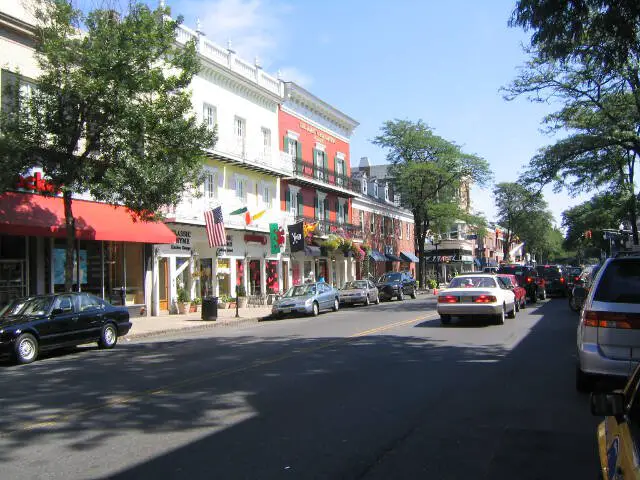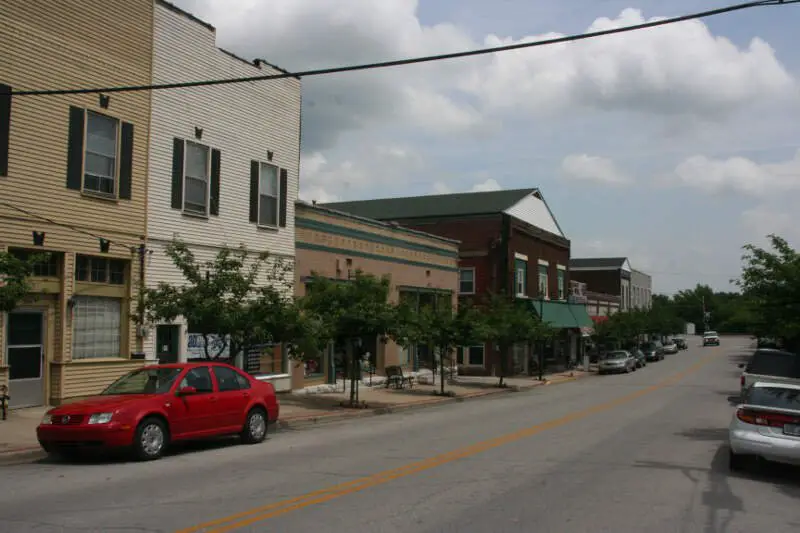
San Diego vs. Denver in photos
A side-by-side look at each city.





Cost of living
Denver is the cheaper city overall — 23% higher in San Diego than its rival. Index baseline: 100 = national average.
| Living expense | San Diego | Denver | US average |
|---|---|---|---|
| Overall | 175 | 142 | 100 |
| Services | 121 | 108 | 100 |
| Groceries | 121 | 107 | 100 |
| Health | 296 | 214 | 100 |
| Housing | 127 | 113 | 100 |
| Transportation | 131 | 110 | 100 |
| Utilities | 135 | 111 | 100 |
Lower index = cheaper. 100 = U.S. national average. Bar inside each cell scales relative to the highest value in the table.
Sources: HomeSnacks Cost of Living indices, normalized so 100 = U.S. national average. Drill in: San Diego cost of living, Denver cost of living, or the cheapest cities in America.
Housing breakdown
Home prices are higher in Denver. Compare absolute price and price-to-income — a $500k home in a $100k-income city is very different from one in a $50k-income city.
| Metric | San Diego | Denver | United States |
|---|---|---|---|
| Median Home Value | $1,001,264 | $539,666 | $332,700 |
| Median Rent | $2,313 | $1,831 | $1,413 |
| Median Income | $108,077 | $94,718 | $80,734 |
| Home Value To Income | 9.3x | 5.7x | 4.1x |
| Rent To Monthly Income | 0.26x | 0.23x | 0.21x |
Source: U.S. Census Bureau ACS 2020-2024. See also states with the highest rent in America.
Crime
San Diego is the safer city — total crime rate of 2,082 per 100k people vs 5,755 for Denver. US average: 2,119.
| Crime (per 100k) | San Diego | Denver | US average |
|---|---|---|---|
| Total crime | 2,082 | 5,755 | 2,119 |
| Murder | 3 | 10 | 5 |
| Robbery | 77 | 176 | 61 |
| Aggravated Assault | 311 | 713 | 256 |
| Violent Crime | 412 | 993 | 359 |
| Burglary | 187 | 708 | 229 |
| Larceny | 1,087 | 2,822 | 1,272 |
| Car Theft | 396 | 1,232 | 259 |
| Property Crime | 1,670 | 4,762 | 1,760 |
Lower = safer. Bar inside each cell scales relative to the highest crime rate in the table.
Source: FBI Uniform Crime Reporting (2024). All rates are per 100,000 people. City pages: San Diego crime, Denver crime. See also: safest cities in America.
Diversity
San Diego is more racially diverse — lower HHI (closer to 0) means a more even mix across groups.
| Group | San Diego | Denver | United States |
|---|---|---|---|
| White | 40.9% | 54.0% | 57.4% |
| African American | 5.3% | 8.6% | 11.9% |
| American Indian | 0.2% | 0.3% | 0.5% |
| Asian | 17.3% | 3.6% | 5.9% |
| Hawaiian | 0.4% | 0.1% | 0.2% |
| Other | 0.7% | 0.5% | 0.6% |
| Two Or More | 5.5% | 4.8% | 4.3% |
| Hispanic | 29.8% | 28.0% | 19.3% |
Source: U.S. Census ACS 2020-2024. Lower HHI = more even racial mix. See also: most diverse cities in America.
SnackAbility — overall quality of life
San Diego and Denver tied at 8/10.
Scores are 0–10; both bars share the same scale.
SnackAbility is a HomeSnacks proprietary 1–10 score blending jobs, housing, education, commute, amenities, affordability, crime, and diversity. Median U.S. city ≈ 7. Data: Census, BLS, FBI. See also: best places to live in America.
Getting around: San Diego vs. Denver
How each city handles commuting, transit, walkability, and car culture — the day-to-day reality that shapes where you'd actually want to live.
San Diego runs on cars. The I-5, I-8, and I-15 corridors define daily life for most residents, and sprawl across Mira Mesa, El Cajon, and Chula Vista puts public transit out of reach for most trips. The Metropolitan Transit System (MTS) runs three trolley lines, but coverage thins out fast beyond the urban core.
Denver's RTD is more built out, connecting downtown to suburbs like Arvada and Aurora via light rail and commuter rail, and Union Station works as a genuine central hub. If you bike, Denver's downtown grid and dedicated lanes along 15th Street and the Cherry Creek Trail are more deliberately designed than what San Diego has. Both cities reward car ownership, but Denver gives you more realistic days off from driving.
Jobs and careers in San Diego vs. Denver
The local job market, dominant industries, and which city to choose based on your career.
San Diego's economy leans heavily on biotech and life sciences. Illumina, Scripps Research, the Salk Institute, and a dense cluster of startups near Torrey Pines and Sorrento Valley make it one of the top life-sciences markets in the country. Defense and military contracting through Northrop Grumman, Raytheon, and Naval Base San Diego adds another stable layer.
The median household income of $108,077 reflects that high-skill concentration, but the cost of living index of 175 squeezes purchasing power. Denver's $94,718 median household income pairs with a cost of living index of 142, so take-home pay stretches further. Denver's job base covers aerospace (Lockheed Martin), energy, federal agencies around the Federal Center in Lakewood, and a tech sector that's grown quickly, drawing talent from CU Boulder and Colorado State.
Weather and climate
What to expect day-to-day — sun, fog, heat, rain, and the seasonal extremes that shape the lifestyle.
San Diego's weather is genuinely as advertised: mild, dry, and consistent. Summers sit in the low-to-mid 70s along the coast, winters rarely dip below 50°F, and annual rainfall averages around 10 inches. The main caveat is June Gloom, a marine layer that keeps mornings gray and cool through much of early summer before burning off by afternoon.
Denver claims about 300 days of sunshine per year, which is real, but those days can include 60°F in February and a blizzard in April. Winters bring genuine cold, with temperatures dropping below freezing regularly from November through March, and snowstorms that can shut the city down overnight.
If stable, predictable warmth is what you're after, San Diego is hard to beat. If you want four actual seasons and can handle fast-moving weather swings, Denver delivers.
Culture, nightlife, and entertainment
Food, music, neighborhoods, and the city vibe that gives each place its personality.
San Diego's cultural pull is toward the outdoors and the plate. Craft breweries like Stone and Ballast Point helped pioneer a scene that now counts hundreds of taprooms, and neighborhoods like North Park and South Park have independent restaurant and bar strips worth returning to. Balboa Park anchors the arts, with the San Diego Museum of Art, the Fleet Science Center, and the Old Globe Theatre on a single walkable campus.
Denver's RiNo (River North Art District) is one of the stronger urban arts corridors in the Mountain West, packed with murals, galleries, and cocktail bars. LoDo's Coors Field and Ball Arena keep the neighborhood active year-round, and the Red Rocks Amphitheatre (technically in Morrison, 15 miles out) is one of the best live music venues in the country. Both cities have genuine scenes; Denver's feels more concentrated and walkable downtown.
Outdoor activities and day trips
Parks, beaches, hikes, and the weekend escapes that define life outside the city limits.
San Diego's outdoor draw is the Pacific: La Jolla Cove for snorkeling and kayaking, Torrey Pines State Reserve for coastal bluff hiking, Mission Bay for paddleboarding, and 70 miles of beaches usable almost every day of the year. Anza-Borrego Desert State Park is two hours east if you want desert solitude. The limitation is altitude: San Diego tops out around 6,500 feet in the backcountry, and skiing means a long drive to Big Bear or Mammoth.
In Denver, you're 60 to 90 minutes from world-class skiing at Breckenridge, Keystone, or Arapahoe Basin, and Rocky Mountain National Park is under two hours north. Cherry Creek State Park and the South Platte River trail system cover weekday rides and runs. If mountain access is a priority, Denver wins decisively.
Bottom line: which city is right for you?
Based on the head-to-head data above, here's the short version — pick the city that lines up with what you actually care about.
Choose San Diego if you prioritize…
- lower crime — a safer place to live, work, and raise a family.
- a more racially diverse community (lower HHI on Census data).
Choose Denver if you prioritize…
- a lower cost of living (cheaper groceries, services, and day-to-day expenses).
- more affordable housing relative to San Diego.
Methodology: winners are picked from public data — U.S. Census Bureau ACS (income, home value, rent, race/HHI), FBI Uniform Crime Reporting (crime rates per 100k), and HomeSnacks' proprietary SnackAbility quality-of-life score, which blends Bureau of Labor Statistics data with the above.
Other comparisons
Still weighing your options? See how these two cities stack up against other places we've compared head-to-head.