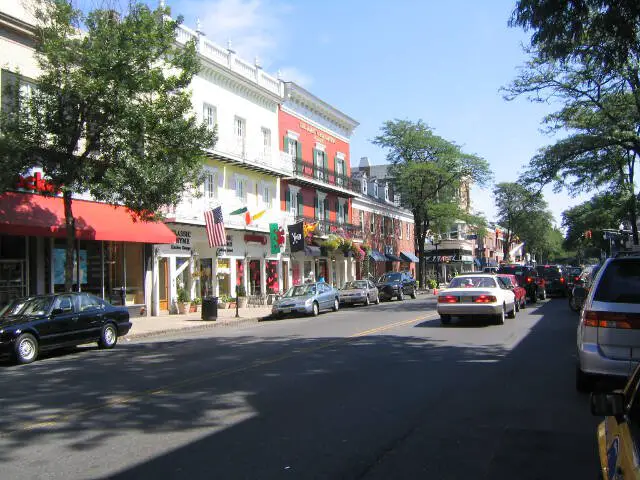
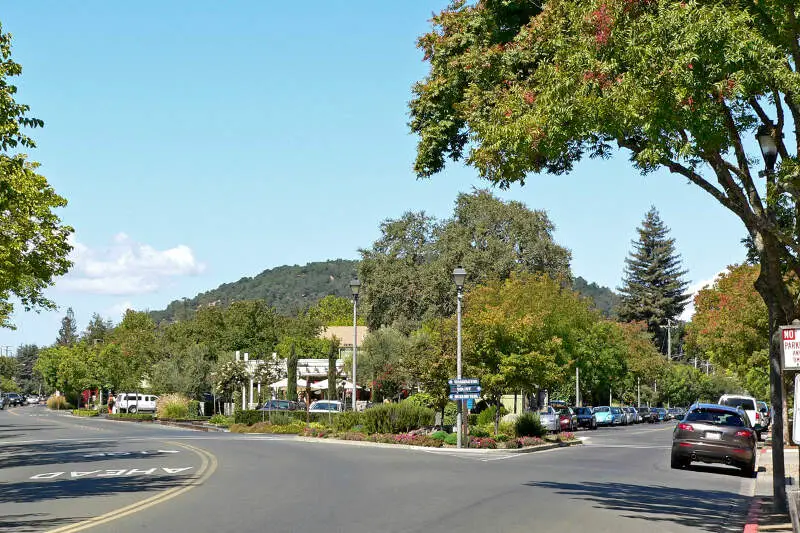
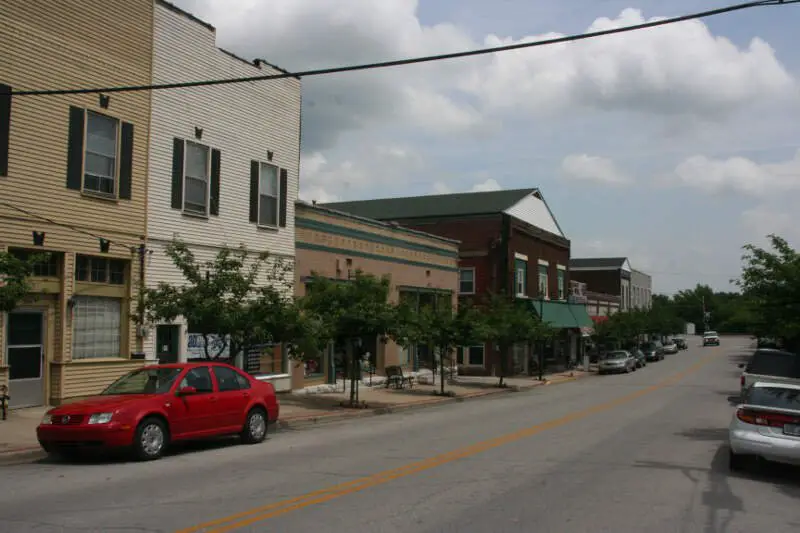
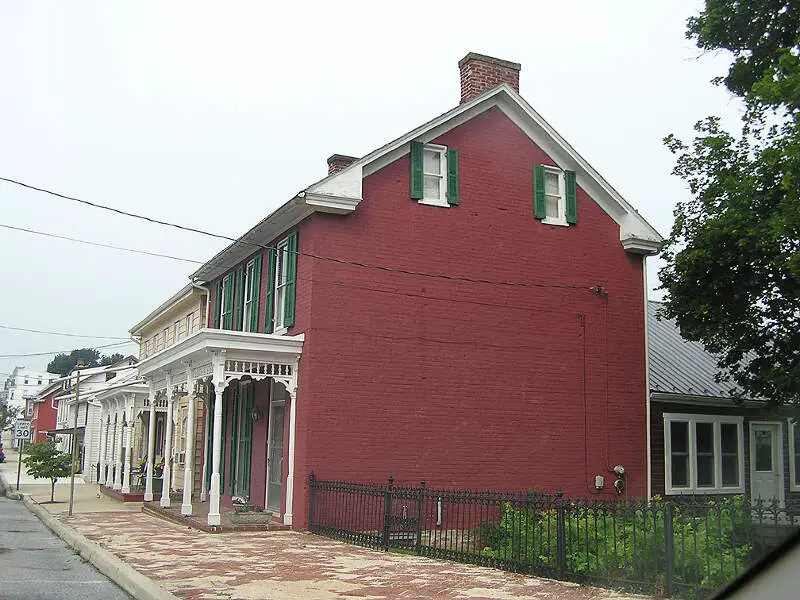
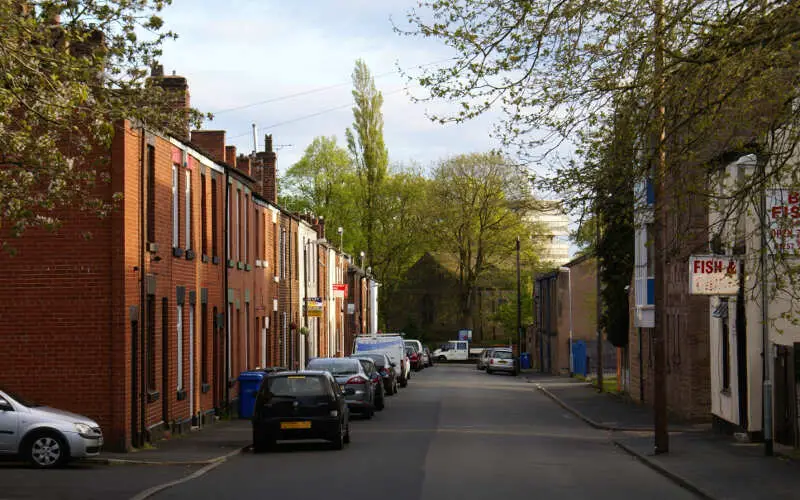
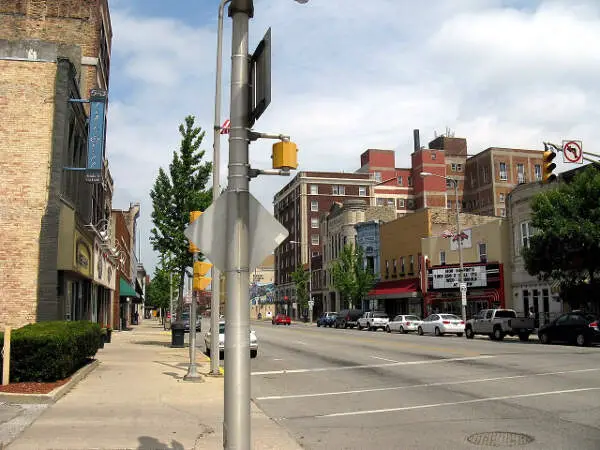
Santa Ana vs. San Diego in photos
A side-by-side look at each city.






Cost of living
Santa Ana is the cheaper city overall — 8% higher in San Diego than its rival. Index baseline: 100 = national average.
| Living expense | Santa Ana | San Diego | US average |
|---|---|---|---|
| Overall | 161 | 175 | 100 |
| Services | 116 | 121 | 100 |
| Groceries | 118 | 121 | 100 |
| Health | 259 | 296 | 100 |
| Housing | 118 | 127 | 100 |
| Transportation | 122 | 131 | 100 |
| Utilities | 128 | 135 | 100 |
Lower index = cheaper. 100 = U.S. national average. Bar inside each cell scales relative to the highest value in the table.
Sources: HomeSnacks Cost of Living indices, normalized so 100 = U.S. national average. Drill in: Santa Ana cost of living, San Diego cost of living, or the cheapest cities in America.
Housing breakdown
Home prices are higher in Santa Ana. Compare absolute price and price-to-income — a $500k home in a $100k-income city is very different from one in a $50k-income city.
| Metric | Santa Ana | San Diego | United States |
|---|---|---|---|
| Median Home Value | $866,065 | $1,001,264 | $332,700 |
| Median Rent | $2,082 | $2,313 | $1,413 |
| Median Income | $93,999 | $108,077 | $80,734 |
| Home Value To Income | 9.2x | 9.3x | 4.1x |
| Rent To Monthly Income | 0.27x | 0.26x | 0.21x |
Source: U.S. Census Bureau ACS 2020-2024. See also states with the highest rent in America.
Crime
San Diego is the safer city — total crime rate of 2,082 per 100k people vs 2,195 for Santa Ana. US average: 2,119.
| Crime (per 100k) | Santa Ana | San Diego | US average |
|---|---|---|---|
| Total crime | 2,195 | 2,082 | 2,119 |
| Murder | 5 | 3 | 5 |
| Robbery | 106 | 77 | 61 |
| Aggravated Assault | 330 | 311 | 256 |
| Violent Crime | 493 | 412 | 359 |
| Burglary | 226 | 187 | 229 |
| Larceny | 1,160 | 1,087 | 1,272 |
| Car Theft | 316 | 396 | 259 |
| Property Crime | 1,702 | 1,670 | 1,760 |
Lower = safer. Bar inside each cell scales relative to the highest crime rate in the table.
Source: FBI Uniform Crime Reporting (2024). All rates are per 100,000 people. City pages: Santa Ana crime, San Diego crime. See also: safest cities in America.
Diversity
San Diego is more racially diverse — lower HHI (closer to 0) means a more even mix across groups.
| Group | Santa Ana | San Diego | United States |
|---|---|---|---|
| White | 8.9% | 40.9% | 57.4% |
| African American | 0.7% | 5.3% | 11.9% |
| American Indian | 0.1% | 0.2% | 0.5% |
| Asian | 12.3% | 17.3% | 5.9% |
| Hawaiian | 0.1% | 0.4% | 0.2% |
| Other | 0.2% | 0.7% | 0.6% |
| Two Or More | 1.0% | 5.5% | 4.3% |
| Hispanic | 76.6% | 29.8% | 19.3% |
Source: U.S. Census ACS 2020-2024. Lower HHI = more even racial mix. See also: most diverse cities in America.
SnackAbility — overall quality of life
San Diego scores higher overall — 8/10 vs 7/10. SnackAbility is our 1–10 quality-of-life score; the median U.S. city scores a 7.
Scores are 0–10; both bars share the same scale.
SnackAbility is a HomeSnacks proprietary 1–10 score blending jobs, housing, education, commute, amenities, affordability, crime, and diversity. Median U.S. city ≈ 7. Data: Census, BLS, FBI. See also: best places to live in America.
Getting around: Santa Ana vs. San Diego
How each city handles commuting, transit, walkability, and car culture — the day-to-day reality that shapes where you'd actually want to live.
If you commute by car, and in Santa Ana you almost certainly will, expect the junction of the I-5, SR-22, and SR-55 to be a regular part of your life. OCTA buses cover the area, and the OC Streetcar connects Downtown Santa Ana to the Santa Ana Regional Transportation Center. But transit is a supplement here, not a replacement for driving.
San Diego has more options: the MTS Trolley runs three lines reaching Downtown, Mission Valley, and the US-Mexico border at San Ysidro, while the Coaster commuter rail heads north toward Oceanside. It's still car-dominated outside core neighborhoods, and its sprawl means plenty of highway time regardless. Neither city is easy to live car-free, but San Diego's transit network gives you a more realistic shot at it.
Jobs and careers in Santa Ana vs. San Diego
The local job market, dominant industries, and which city to choose based on your career.
Santa Ana is the Orange County seat, which anchors a reliable base of government and public-sector employment alongside a strong manufacturing and healthcare corridor. UCI Health and Orange County government offices are among the larger local employers. The median household income sits at $93,999, reflecting a working-class-to-middle-class mix across retail, warehousing, and construction trades.
San Diego's economy tilts toward higher-wage sectors: defense and military contracting (Naval Base San Diego and MCAS Miramar are economic pillars), life sciences clustered around Torrey Pines and Sorrento Valley, and a growing tech scene near UC San Diego. That shows in the median household income, which reaches $108,077. If your career is in biotech, cybersecurity, or defense, San Diego's job market is notably deeper; Santa Ana competes better for trades, logistics, and county government roles.
Weather and climate
What to expect day-to-day — sun, fog, heat, rain, and the seasonal extremes that shape the lifestyle.
Both cities get the Southern California Mediterranean climate that draws people here, but there are real differences. Santa Ana sits inland enough that summer afternoons routinely hit the upper 80s and occasionally push past 100°F during heat events. The city also lends its name to the Santa Ana winds, which bring hot, dry gusts each fall that raise wildfire risk.
San Diego hugs the coast, and the Pacific keeps daily highs remarkably stable, hovering in the mid-60s to low 70s for most of the year. The trade-off is June Gloom: a marine layer that grays out mornings from May through July. If you want reliable sunshine with less heat, San Diego wins; if you can handle hotter summers in exchange for slightly warmer winter nights, Santa Ana is a reasonable trade.
Culture, nightlife, and entertainment
Food, music, neighborhoods, and the city vibe that gives each place its personality.
Downtown Santa Ana punches above its size for culture and nightlife. The Artists Village along East Fourth Street has drawn galleries, indie bars, and a well-established LGBTQ+ scene for years. The Bowers Museum is one of Orange County's best.
The city's majority-Latino population shapes a food culture that stands out across Southern California. Taquerias, panaderías, and weekend mercados along Bristol Street and First Street are genuine and deeply rooted.
San Diego covers more ground. The Gaslamp Quarter is the obvious nightlife hub, but North Park's craft beer bars, Little Italy's restaurant row, and the concert venues around Downtown offer real variety. Balboa Park, with 17 museums and the San Diego Zoo, rivals most city cultural footprints on its own.
If dense urban nightlife and arts infrastructure matter to you, San Diego has the edge. If authentic neighborhood character is your priority, Santa Ana holds its own.
Outdoor activities and day trips
Parks, beaches, hikes, and the weekend escapes that define life outside the city limits.
Santa Ana is landlocked within Orange County, so beach days require a drive. Huntington Beach and Newport Beach are roughly 10 to 15 miles southwest, and on summer weekends, traffic makes that feel longer. Irvine Regional Park and Santiago Oaks Regional Park offer hiking and mountain biking in the Santa Ana Mountains foothills, and the Santa Ana River Trail gives cyclists a long flat corridor toward the coast.
San Diego is a different situation. You're a short drive or bus ride from Pacific Beach, Mission Beach, Ocean Beach, and La Jolla Cove. Torrey Pines State Natural Reserve adds coastal bluff hiking, and Mission Trails Regional Park sits within city limits for mountain biking and trail running.
Anza-Borrego Desert State Park is under two hours away for a completely different landscape. For year-round outdoor variety, San Diego is hard to match.
Bottom line: which city is right for you?
Based on the head-to-head data above, here's the short version — pick the city that lines up with what you actually care about.
Choose Santa Ana if you prioritize…
- a lower cost of living (cheaper groceries, services, and day-to-day expenses).
- more affordable housing relative to San Diego.
Choose San Diego if you prioritize…
- lower crime — a safer place to live, work, and raise a family.
- a more racially diverse community (lower HHI on Census data).
- a higher overall SnackAbility quality-of-life score.
Methodology: winners are picked from public data — U.S. Census Bureau ACS (income, home value, rent, race/HHI), FBI Uniform Crime Reporting (crime rates per 100k), and HomeSnacks' proprietary SnackAbility quality-of-life score, which blends Bureau of Labor Statistics data with the above.
Other comparisons
Still weighing your options? See how these two cities stack up against other places we've compared head-to-head.